
Fertilization
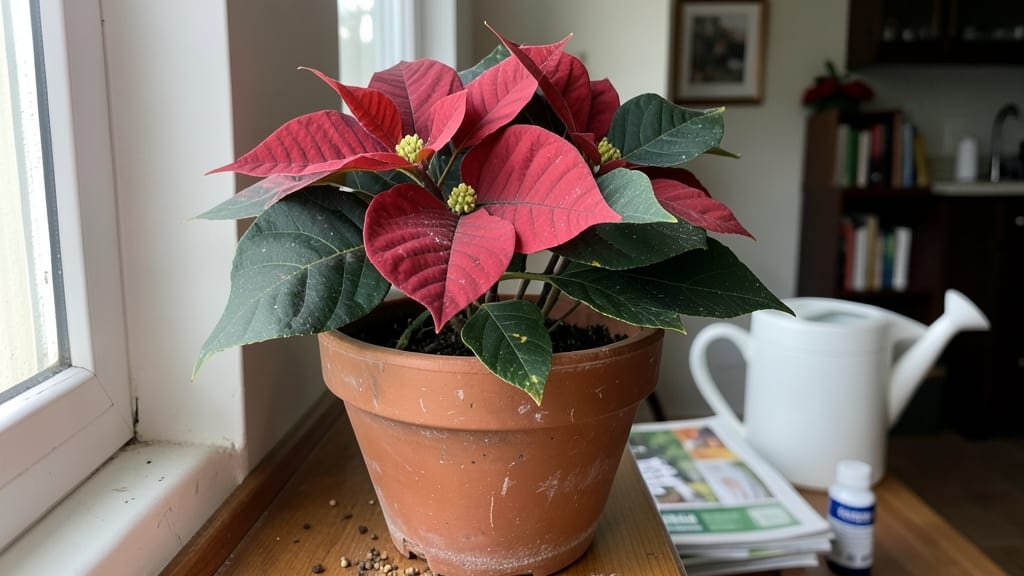
Fertilizing poinsettia plants during their spring and summer growth phase is the secret to those jaw-dropping red bracts by December—though I learned the hard way when my first one turned into a sad, leggy mess from skipping the early feeding.
The key isn’t just when you fertilize, but how you balance it with light and water to avoid burning those delicate roots.
You’ll need a balanced, water-soluble fertilizer (10-10-10 or 20-20-20) diluted to half-strength, plus a steady hand. Feed every 2-4 weeks from March through August, but stop completely by September to let the plant focus on blooming.
Overdo it, and you’ll end up with crispy leaf edges or stunted growth—trust me, I’ve seen both.
By Thanksgiving, you’ll be rewarded with vibrant, glossy bracts that last for weeks, thanks to that early nutrition boost. The trick is patience: poinsettias store energy all summer to fuel their holiday show. Just keep the soil moist (not soggy) and place them near a bright window, and you’re golden.
Outdoor poinsettias need extra care—they’ll need more frequent watering and protection from late frosts. But whether indoors or out, the same fertilizer rules apply. Let’s get those plants prepped for their big debut!
📚 In This Guide
- What you need
- Instructions
- Tips and common mistakes
- Wrapping up and next steps
What you need
- ● Balanced liquid fertilizer (e.g., 10-10-10 or 20-20-20 NPK ratio) – 1-2 tbsp per gallon of water (adjust based on product instructions).
- ● Water – Room-temperature, filtered if possible (avoid tap water with high chlorine).
- ● Spray bottle or watering can – With a fine mist setting for even distribution.
- ● Measuring spoon or dropper – For precise fertilizer dosing.
- ○ Gloves (optional but recommended) – To protect hands from fertilizer residue.
- ● Healthy poinsettia plant – No wilting, yellowing leaves, or pests (check for spider mites or aphids first!).
- ● Well-draining soil – Ensure your pot has drainage holes to prevent root rot.
- ● Bright, indirect light – Poinsettias thrive in east or south-facing windows.
- ● Consistent watering routine – Avoid soggy soil (water when top 1-2 inches are dry).
- ● Slow-release fertilizer granules – Mix into soil for long-term nutrition (follow package rates).
- ● pH testing kit – Ideal soil pH for poinsettias: 6.0–6.5.
- ● Organic amendments – Compost or worm castings (1 tbsp per pot) for natural boosts.
- ● Plant food with micronutrients – Look for calcium, magnesium, and iron to prevent deficiencies.
Instructions for fertilizing poinsettias to ensure stunning holiday blooms
Poinsettias thrive on consistency—too little fertilizer and they’ll look lackluster, too much and you’ll burn their roots.
Understand the Right Fertilizer and Timing
Use a balanced, water-soluble fertilizer with equal parts nitrogen, phosphorus, and potassium (like a 10-10-10 or 20-20-20 formula). Phosphorus is key for vibrant blooms, so avoid high-nitrogen fertilizers—they encourage leafy growth at the expense of flowers. I start fertilizing in early spring, just as the plant begins new growth after its winter dormancy.
Apply fertilizer every 2-4 weeks during the growing season (spring through early fall). Dilute it to half-strength the first time to let the plant adjust. You’ll see new leaves emerge within a week—that’s your signal everything is working. Stop fertilizing in late September to encourage the plant to focus on flower production rather than foliage.
Apply Fertilizer Correctly for Maximum Uptake
Water the poinsettia thoroughly before fertilizing—this ensures the roots are active and ready to absorb nutrients. Mix the fertilizer in a watering can with warm water (never cold) to help dissolve it completely. Pour the solution directly onto the soil, avoiding the leaves to prevent chemical burns. I like to fertilize in the morning so the plant has the whole day to process the nutrients.
After applying, water the plant again to rinse any fertilizer residue from the soil surface. This prevents salt buildup, which can damage roots over time. You’ll notice the soil may look slightly darker after watering—that’s a good sign the fertilizer has been absorbed.
Monitor Plant Response and Adjust as Needed
Watch for signs of over-fertilization, like yellowing leaves, brown leaf edges, or a white crust on the soil surface. If you see these, flush the soil by watering it thoroughly for 10-15 minutes to leach out excess salts. Under-fertilized plants, on the other hand, will have slow growth, pale leaves, and weak stems. If this happens, increase the frequency of applications slightly and ensure the fertilizer is fully dissolved in water.
By late summer, your poinsettia should start forming buds—these are tiny, leaf-like structures that will eventually turn into the vibrant bracts we associate with holiday cheer. If you don’t see buds by mid-August, it’s a sign the plant needs more phosphorus. Switch to a low-nitrogen, high-phosphorus fertilizer (like a 5-10-10) for the next few weeks to encourage flowering.
Transition to Bloom Mode for Holiday Color
To trigger the holiday color change, your poinsettia needs 12-14 hours of complete darkness each night starting in mid-October. Place it in a closet, cover it with a black plastic bag (secured tightly), or move it to a dark room after sunset. Remove it in the morning before sunrise. During this time, reduce fertilization to every 6-8 weeks—the plant is focusing its energy on producing those signature red (or pink, white, or yellow) bracts.
Keep the soil slightly moist but not soggy—overwatering now can cause buds to drop. You’ll see the first hints of color in 4-6 weeks, starting as pale green before deepening into the vibrant hues you’re aiming for. Once the bracts fully open, your poinsettia is ready for the holidays and can go back to normal light and care.
Tips & tricks for fertilizing poinsettias
These proven strategies will help you achieve those show-stopping holiday colors while avoiding common pitfalls that ruin poinsettias every year.
Phosphorus Focus: The 10-10-10 or 20-20-20 fertilizer ratio is perfect for poinsettias because phosphorus is what triggers vibrant blooms. When you notice buds forming in late summer (Step 3), switch to a 5-10-10 formula to give your plant that extra phosphorus boost. This is when phosphorus becomes your plant's best friend for developing those signature holiday colors.
Timing Secret: The 2-4 week application schedule during growing season (Step 1) gives your poinsettia just the right nutrients without overwhelming it. I've found that applying fertilizer in the morning (Step 2) makes all the difference—it gives the plant an entire day to absorb nutrients before evening. This morning routine is particularly important when you're using warm water to dissolve the fertilizer, as it activates the roots for maximum uptake.
Over-Fertilization Rescue: If you see those telltale signs of over-fertilization like yellowing leaves or brown edges (Step 3), don't panic. The 10-15 minute thorough flush I recommend isn't just about rinsing—it's about giving your plant's roots a chance to recover. I've saved many poinsettias this way by flushing the soil with room-temperature water, which helps leach out excess salts without shocking the plant.
Darkness Strategy: That 12-14 hours of complete darkness starting mid-October (Step 4) is non-negotiable for holiday colors. I use a black plastic bag secured tightly around the plant—it's a foolproof way to create that darkness without moving the plant. Remember to remove it in the morning before sunrise, and you'll start seeing those pale green hints of color in about 4-6 weeks that will deepen into your desired holiday hues.
Pro Tips for Fertilizing Poinsettia Plants
- These proven strategies will help you achieve those show-stopping holiday colors while avoiding common pitfalls that ruin poinsettias every year.
- Phosphorus Focus: The 10-10-10 or 20-20-20 fertilizer ratio is perfect for poinsettias because phosphorus is what triggers vibrant blooms.
- Timing Secret: The 2-4 week application schedule during growing season (Step 1) gives your poinsettia just the right nutrients without overwhelming it.
Frequently asked questions
Got questions about keeping your poinsettias vibrant and blooming? Here are some of the most common ones—plus straightforward answers to help you fertilize like a pro!
When is the best time to fertilize poinsettias for holiday blooms?
Start fertilizing your poinsettias in early summer (June–July) when you notice new growth. Use a balanced, water-soluble fertilizer (like 10-10-10) every 4–6 weeks until late summer. This timing mimics their natural blooming cycle and ensures vibrant colors by December.
Can I over-fertilize poinsettias? What are the signs?
Yes! Over-fertilizing can cause leaf burn, wilting, or yellowing. If you see crispy edges or stunted growth, flush the soil with water and reduce fertilizer strength. Stick to the label’s recommended dose and avoid fertilizing in winter when the plant is dormant.
What’s the difference between fertilizing potted vs. garden poinsettias?
Potted poinsettias need regular, diluted fertilizer (every 4–6 weeks) because their roots are confined. Garden poinsettias (if grown outdoors in warm climates) can handle slow-release granules in spring, but avoid heavy feeding—too much can weaken stems. Always check soil moisture first!
Are there organic alternatives to chemical fertilizers for poinsettias?
Try compost tea, fish emulsion, or worm castings for a gentle organic boost. Dilute them half-strength to avoid overfeeding. Just ensure they’re balanced (NPK ratio ~3-3-3) to support both foliage and blooms.
Why aren’t my poinsettias blooming even after fertilizing?
Poinsettias need 12+ hours of darkness daily for 6–8 weeks to trigger blooms (start in October). Check for pests, underwatering, or poor light too. If blooms still fail, adjust care: reduce water, trim leggy stems, and repeat the dark treatment. Patience pays off!
Wrapping up and next steps
Fertilizing your poinsettias doesn’t have to be complicated—just a little balance, consistency, and care will reward you with stunning holiday blooms! 🌟 By choosing the right fertilizer, timing applications wisely, and paying attention to your plant’s needs, you’ll set the stage for vibrant reds, pinks, and whites.
Now that you’re armed with the know-how, give your poinsettias the love they deserve—and enjoy the fruits of your labor this season!
Ready to take it further? Experiment with organic options or try a slow-release fertilizer next year to see what works best for your space. Happy gardening! 🌱