
Fertilization
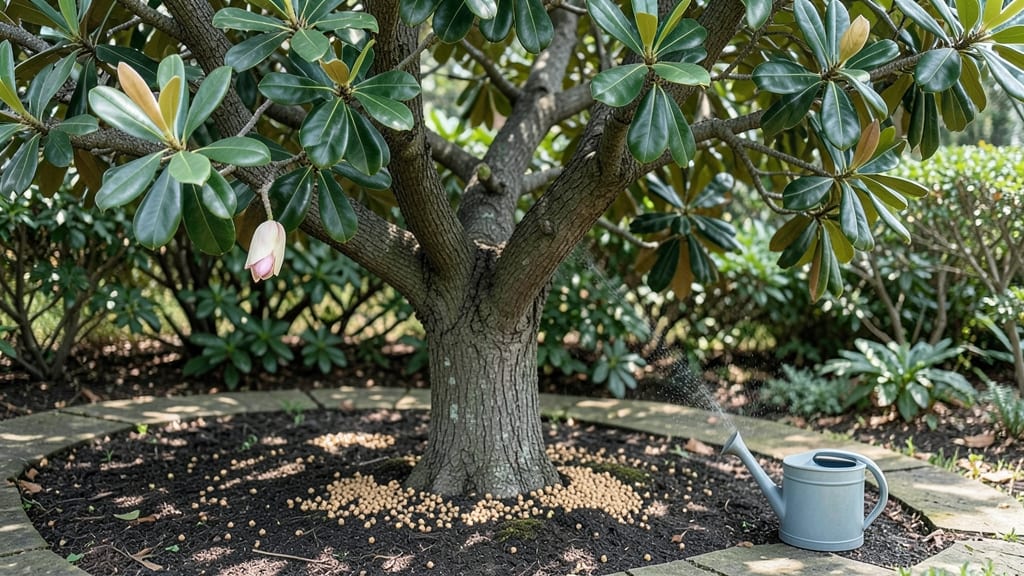
The right magnolia plant food transforms your tree from a sleepy backyard fixture into a showstopper with bold blooms and glossy foliage. I learned this the hard way—my first magnolia sat there year after year, producing half the flowers it could have, until I finally adjusted its diet.
The key isn't just feeding it; it's feeding it right—timing matters, and so does what you put in the soil.
Most gardeners overlook that magnolias need a balanced approach: too much nitrogen makes them grow leaves instead of flowers, while too little phosphorus keeps those iconic blooms from appearing.
Organic options like composted manure or fish emulsion work well, but synthetic slow-release fertilizers can be a game-changer for consistent results. I stick to a schedule of feeding in early spring and again after blooming, with a light application in late summer to prep for next year.
You'll notice the difference within a season—thicker stems, more buds, and blooms that last longer. The soil stays rich without that chalky white crust from over-fertilizing, and your neighbors will start asking how you got such a lush magnolia.
The secret isn't complicated, but it does require paying attention to what your tree is telling you.
Works for both small patio magnolias and towering backyard varieties, so don't let size hold you back. Let's get those roots fed the right way!
📚 In This Guide
- What you need
- Instructions
- Tips and common mistakes
- Wrapping up and next steps
What you need
- ● Balanced fertilizer: Choose a 10-10-10 or 20-20-20 NPK ratio (e.g., Miracle-Gro All Purpose Plant Food) – 1 lb per 100 sq ft of soil.
- ● Slow-release granules: Osmocote Smart-Release Plant Food (13-14-5 NPK) – 1 cup per 5 sq ft for long-term feeding.
- ● Organic compost: Well-aged cow manure or leaf mold – 2-3 inches mixed into top 6 inches of soil (spring/fall).
- ● Epsom salt (magnesium sulfate): 1 tbsp per gallon of water for green leaf revival (use sparingly!).
- ● Watering can or hose: With a fine-mist nozzle for even distribution.
- ● Garden gloves & trowel: For safe handling and soil mixing.
- ● Micronutrient booster: Fish emulsion (5-1-1 NPK) – 1 tbsp per gallon for extra phosphorus (bloom power!).
- ● Mulch: Pine straw or shredded bark – 2-3 inches to retain moisture and regulate soil temp.
- ● pH test kit: To check soil acidity (magnolias love pH 5.0–6.0).
- ● Rainwater or distilled water: Avoid chlorinated tap water for sensitive roots.
Step-by-Step guide to feeding magnolias for year-round blooms
Here’s the exact feeding schedule I follow to keep my magnolias blooming abundantly every season.
Apply Spring Fertilizer at the Right Time
Once new growth appears in early spring—usually when you see fresh 2-inch leaves unfurling—apply a balanced 10-10-10 fertilizer around the drip line. Magnolias are heavy feeders but sensitive to over-fertilizing, so use only ½ cup per year-old plant and 1 cup for mature trees. Spread evenly in a 3-inch-wide band and water deeply to help granules reach roots.
I always check for last year’s bloom stems as a visual cue—these should be fully brown and dry before fertilizing. This ensures the plant isn’t still directing energy toward dormant buds. Avoid applying fertilizer if rain is forecast within 48 hours, as it can burn tender roots.
Mid-Summer Feeding for Bloom Priming
Around late July, when temperatures stabilize above 75°F, switch to a low-nitrogen, high-phosphorus fertilizer like 5-10-10. This shift primes next year’s blooms while supporting current growth. Use ½ the spring rate—so ¼ cup for young plants and ½ cup for mature trees—to prevent leaf burn.
Work the fertilizer into the top 2 inches of soil with a hand fork to avoid surface scorching. Water thoroughly after application, and monitor for yellowing leaves, which signals over-fertilization. If this happens, flush the soil with 3 gallons of water to dilute excess salts.
Fall Maintenance for Winter Resilience
In early fall, when daytime highs drop below 80°F, apply a slow-release organic fertilizer like composted manure or bone meal. This provides long-term nutrients without winter shock. Use ¼ cup per plant and mix it into the top 3 inches of soil around the root zone.
This step is crucial for magnolias in colder climates. The goal isn’t to push new growth but to strengthen root systems for winter. Avoid fertilizing after October 1st in Zone 6 or earlier—new growth won’t harden off properly before frost.
Winter Care and Adjustments
Skip fertilizing entirely during winter, but top-dress with 1 inch of compost in late winter (February) if your soil is sandy or nutrient-poor. This gentle boost supports early spring growth without stressing the plant. For container-grown magnolias, use a water-soluble fertilizer at ¼ strength in early spring, followed by a balanced formula in summer.
Watch for brown leaf edges in winter—a sign of salt buildup from previous fertilizations. If you see this, leach the soil with 5 gallons of water to restore balance. Mulch with 3 inches of organic mulch (like pine straw) to protect roots and retain moisture.
Tips & tricks for year-round magnolia care
Keeping your magnolias blooming beautifully takes more than just feeding—it's about understanding the subtle cues your tree gives you. Here's what I've learned after years of nurturing these elegant plants.
Visual Cues Matter: In Step 1, when you're checking for last year's bloom stems, look for stems that are completely brown and dry—not just slightly wilted. These dried stems indicate the plant has fully shifted its energy from blooming to new growth, which is the perfect time to fertilize. I've seen many gardeners fertilize too early, when the tree is still recovering from winter, which can stress the plant and reduce bloom quality.
Temperature Timing is Critical: The instructions specify feeding in late July when temperatures stabilize above 75°F. This isn't just about warm weather—it's about consistent warmth that signals to the plant it's time to focus on next year's blooms. If you're in a cooler climate, you might need to adjust this timing by a week or two. Watch for the first consistent days above 75°F rather than relying strictly on the calendar date.
Soil Preparation Makes All the Difference: Before applying any fertilizer, especially in Step 3 with the slow-release organic options, I always loosen the top 3 inches of soil with a hand fork. This helps the nutrients reach the root zone where they're most needed. For container-grown magnolias, I go one step further and mix the fertilizer directly into the top 2 inches of potting soil to ensure even distribution.
Rainy Day Strategy: The 48-hour rule before fertilizing when rain is forecast is crucial. I've learned this the hard way—fertilizer washed away by sudden downpours means wasted money and missed nutrient opportunities. If you're unsure about weather forecasts, consider applying your fertilizer in the late afternoon so it has time to settle into the soil before evening rains.
Pro Tips for Magnolia Plant Food
- Keeping your magnolias blooming beautifully takes more than just feeding—it's about understanding the subtle cues your tree gives you.
- Visual Cues Matter: In Step 1, when you're checking for last year's bloom stems, look for stems that are completely brown and dry—not just slightly wilted.
- Temperature Timing is Critical: The instructions specify feeding in late July when temperatures stabilize above 75°F.
Frequently asked questions
Got questions about keeping your magnolia thriving with the right plant food?
You’re in the right place! Here are answers to the most common queries—from timing to troubleshooting—so you can give your magnolia the care it deserves.
When is the best time to fertilize a magnolia tree?
Feed your magnolia in early spring (just as new growth appears) and again in mid-summer (June–July). Avoid fertilizing in fall or winter—this can stimulate tender new growth that won’t survive frost. For container-grown magnolias, follow the same schedule but reduce doses by half.
How often should I apply magnolia plant food?
For established trees, apply a balanced 10-10-10 or 20-20-20 fertilizer every 4–6 weeks during the growing season (spring through summer). If using a slow-release formula, follow the label’s instructions—typically once every 2–3 months. Over-fertilizing can harm roots, so always water deeply before and after application.
Can I use regular lawn fertilizer on my magnolia?
No—magnolias need lower nitrogen and more phosphorus and potassium for blooms and root health. Lawn fertilizer is too heavy on nitrogen, which promotes leafy growth at the expense of flowers. Opt for a balanced or bloom-boosting fertilizer (like 10-10-10 or 12-6-6) or an organic option like fish emulsion or compost tea.
Why aren’t my magnolia leaves turning green after fertilizing?
Yellowing leaves could signal over-fertilization (burnt roots) or poor drainage. If the soil is soggy, flush it with water to leach excess salts. For yellowing between veins (chlorosis), your magnolia may need iron or magnesium. Try a chelated iron supplement or adjust soil pH (magnolias prefer acidic soil, pH 5.0–6.0).
Will magnolia plant food make my tree bloom more?
Magnolias love phosphorus (the middle number in NPK ratios), which encourages root and flower development. Use a bloom-specific fertilizer (like 5-10-10) in early spring to jumpstart flowering. Pair it with regular watering and mulching for best results. Patience is key—some magnolias take 3–5 years to fully mature their bloom potential!
Pro Tip:
For container magnolias, dilute fertilizer to half-strength and flush the soil every 3 months to prevent salt buildup.
Wrapping up and next steps
Choosing the right magnolia plant food is your secret weapon for vibrant blooms and thriving foliage year after year! 🌸 By understanding your magnolia’s needs—whether it’s organic matter, slow-release granules, or liquid fertilizers—you’re already on the path to a stunning garden. Now’s the time to act: grab your fertilizer, follow the feeding schedule, and watch your magnolia flourish with confidence!
🌱 Next Steps:
- Test your soil to fine-tune your feeding plan.
- Mark your calendar for seasonal applications.
- Share your progress—tag us in your magnolia’s transformation!