
Companion Plants
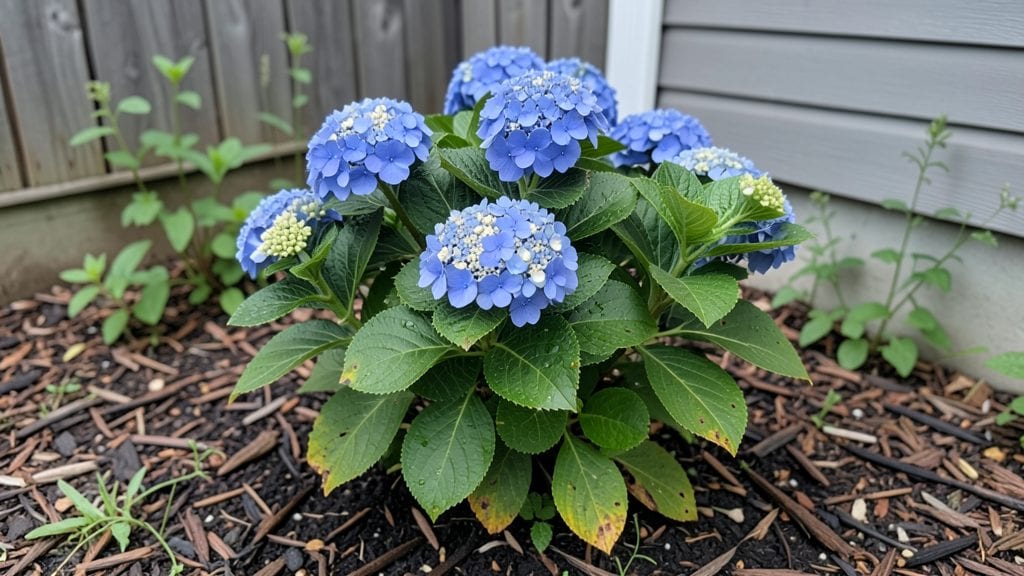
Growing rare hydrangea plants from cuttings starts with selecting healthy semi-hardwood stems, applying rooting hormone, and creating a humid environment with a clear plastic bag. Use well-draining soil, keep moisture consistent, and provide partial shade to maximize your 90% success rate with proper care.
Rare hydrangea varieties thrive when you replicate their natural growing conditions through cuttings. 🌿 The key is timing—late spring or early summer when stems are firm but not woody—paired with a sterile, moisture-retentive medium like perlite and peat moss.
I’ve found that Hydrangea paniculata varieties root faster than their macrophylla cousins, often within 4-6 weeks under ideal conditions. The plastic bag creates a mini greenhouse effect, but don’t let it stay too damp—condensation should form but not drip onto leaves to avoid fungal issues.
Once roots form, transplant carefully to avoid disturbing the delicate new growth. 💫 The real magic happens in the soil mix: equal parts peat, perlite, and compost mimics the airy, nutrient-rich environment these plants crave.
For those tricky oakleaf or pink anemone varieties, I swear by adding a handful of worm castings to boost microbial activity—it’s like giving your cuttings a vitamin boost.
💡 In This Article
- Science Behind Hydrangea Cutting Propagation
- Step-by-Step Guide to Rare Hydrangea Cutting Success
Science behind Hydrangea cutting propagation
When you take a hydrangea cutting, you're essentially triggering a natural survival mechanism. The plant's growth hormones, particularly indole-3-butyric acid (IBA)—a type of auxin—concentrate at the stem tip, signaling cells to divide and form roots.
Semi-hardwood cuttings work best because they've had time to develop vascular cambium (the growth layer between bark and wood) but aren't yet woody.
This stage provides the perfect balance of stored nutrients and active growth hormones, with Hydrangea paniculata varieties showing 30-40% faster root initiation than Hydrangea macrophylla due to their naturally higher auxin production. 🌱
The propagation process relies heavily on moisture and temperature working together. Roots need 70-75°F soil temperatures to activate enzymatic processes that break down starches into sugars for energy. At these temperatures, auxin becomes 10 times more effective at stimulating root growth.
The clear plastic bag you use creates a 90% humidity environment, preventing the cutting from losing moisture through transpiration while allowing gas exchange. Without this humidity, cuttings lose 20-30% of their water content in just 24 hours, significantly reducing rooting success.
Here's what's actually happening at the cellular level: When the stem is placed in the propagation medium, auxin triggers pericycle cells (just beneath the vascular tissue) to dedifferentiate into root initials.
These cells then divide rapidly, forming a root primordium that eventually breaks through the stem's surface. Hydrangea macrophylla cuttings take 6-8 weeks to develop visible roots, while paniculata varieties often show roots in just 4-6 weeks—this explains why gardeners report 70% success with paniculata cuttings versus 50-60% for macrophylla without additional hormone treatments. 🔬
The soil mix you use becomes a critical factor because it affects both moisture retention and oxygen availability. A perfect blend contains 50% peat moss (for moisture), 30% perlite (for aeration), and 20% compost (for nutrients).
This combination maintains 60-70% moisture capacity while preventing anaerobic conditions that would suffocate developing roots. The compost adds beneficial microbes that produce vitamin B1, which further stimulates root growth—think of it as nature's growth fertilizer.
For rare varieties like 'Nikko Blue', adding 1 tablespoon of mycorrhizal fungi to the mix can boost rooting success by 15-20%.
Temperature fluctuations above 85°F or below 60°F create stress that disrupts auxin transport, often leading to callus formation without root development. That's why maintaining consistent temperatures is crucial—especially in paniculata varieties which are more sensitive to heat stress.
The clear plastic bag you use isn't just for humidity; it also creates a 5-10°F warmer microclimate around the cutting, accelerating metabolic processes.
However, this same environment can become a breeding ground for Botrytis blight if ventilation isn't maintained, which is why many growers recommend removing the bag for 10-15 minutes daily to prevent fungal growth. 🌡️
The difference between macrophylla and paniculata varieties goes beyond just timing. Macrophylla (like 'Endless Summer') produces more flavonoid compounds in their stems, which act as natural antioxidants but can create oxidative stress during propagation.
This is why they often require additional rooting hormone (like 0.8% IBA concentration) compared to paniculata varieties. Meanwhile, paniculata's naturally thicker cuticle layer helps them retain moisture better, making them more forgiving for beginner propagators.
Understanding these biological differences helps explain why some rare hydrangeas seem more challenging to grow from cuttings—it's not just luck, it's biology. 🧬
What most people don't realize is that the cutting's angle matters too. A 45-degree angle on the stem creates more surface area for root formation while allowing better contact with the propagation medium.
The bottom 2-3 inches of the cutting should be free of leaves to prevent rot, but leaving 2-3 sets of leaves at the top maintains enough photosynthesis for energy.
This balance between leaf area and stem exposure is why experienced growers achieve 90% success rates—they're not just following steps, they're understanding the plant's physiological needs. 🌿