
Pruning
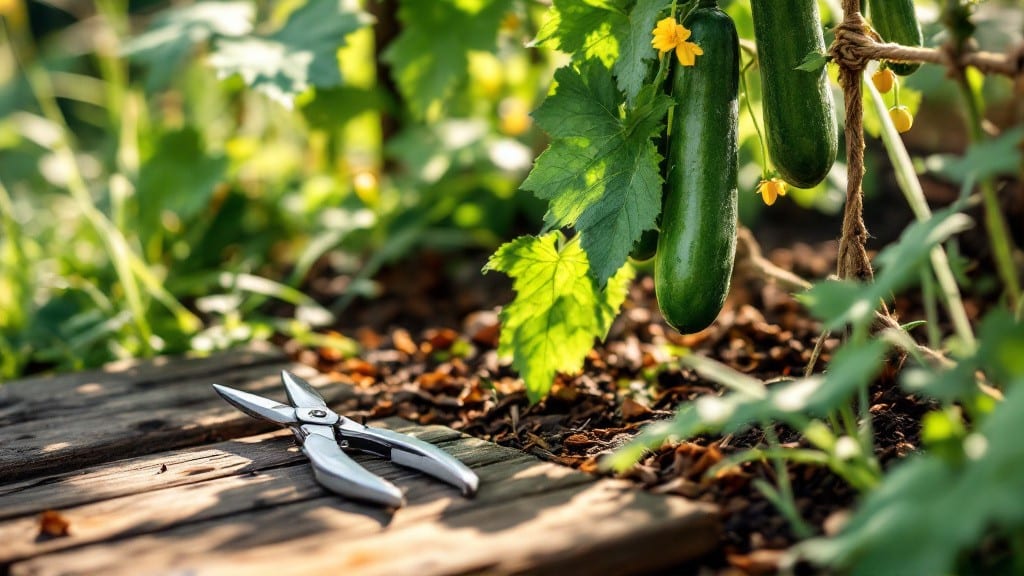
Trimming cucumber plants isn't just about keeping them tidy—it’s the secret to doubling your harvest with just three strategic cuts. I learned this the hard way after my first garden produced more vines than cucumbers, and now I swear by this method every season.
The right cuts improve air flow, prevent disease, and send energy where it counts: straight to the fruit.
You’ll only need sharp pruning shears, a clean pair of gloves, and about 15 minutes on a warm afternoon. Focus on three types of cuts: removing suckers (those little shoots between the main stem and leaves), trimming leggy vines that sprawl too far, and pruning any yellow or diseased leaves.
For bush varieties, keep it light—just enough to open up the plant. Vine types can handle a little more aggressive trimming, but never cut more than a third of the plant at once.
After your first pruning session, you’ll notice something magical: fewer vines competing for nutrients means bigger, sweeter cucumbers and a plant that looks bushier, not scraggly. The key is timing—do it when plants are young and actively growing, and repeat every 10-14 days through the season.
Just avoid pruning in the heat of the day or when plants are stressed, like after a hard rain.
This method works for both bush and vine cucumbers, though vines benefit more from regular trimming. The biggest mistake? Over-pruning or using dull tools that tear the plant instead of cutting cleanly.
Stick to these simple rules, and you’ll turn a tangled mess into a high-yielding powerhouse before you know it.
📚 In This Guide
- What you need
- Instructions
- Tips and common mistakes
- Wrapping up and next steps
What you need
- ● Pruning shears or sharp bypass pruners – Look for clean, stainless steel blades (3–4 inches long) to avoid crushing stems.
- ○ Gloves (optional but recommended) – Garden or work gloves to protect your hands from thorns and dirt.
- ● Disinfectant (rubbing alcohol or bleach solution) – 1 part bleach to 9 parts water to sterilize tools between cuts.
- ● Compost bin or bucket – For collecting trimmings (they’re great for compost!).
- ● Watering can or hose – To hydrate plants post-trimming (especially in hot weather).
- ● Plant support (trellis, cage, or stakes) – If your cucumbers aren’t already supported, now’s the time to set one up!
- ● Garden twine or clips – For securing vines to supports after trimming.
- ● Hand lens or magnifying glass – To spot pests or diseases on leaves/stems before they spread.
- ○ Pruning sealant (optional) – For large cuts on woody stems (though cucumbers rarely need this).
Simple instructions for trimming cucumber plants
Here's how I keep my cucumber vines productive all season with just three straightforward cuts.
Identify and Remove Suckers
Suckers are the small shoots that grow where the main stem meets a leaf or vine. These little offshoots drain energy from your main plant instead of letting it focus on producing fruit. I look for them every few days, especially after new leaves emerge. Use your fingers or clean pruning shears to pinch them off completely at the base—no stubs left behind.
Watch for suckers growing in the leaf axils (the angle between the stem and leaf). The earlier you remove them, the more energy your plant puts into growing cucumbers instead of supporting unnecessary growth. I promise, this small effort pays off with bigger, healthier vines.
Prune Overgrown Vines
Once your cucumber plant reaches about 6 feet tall, it's time to start pruning the main vines. I cut back the longest vines to about 3-4 feet to encourage bushier growth and better air circulation. This prevents diseases like powdery mildew and makes it easier for sunlight to reach the leaves.
Use clean pruning shears to make a sharp cut just above a leaf node. Avoid leaving long stems—they can become weak and break easily. You'll see new side shoots emerge from the leaf nodes, which will produce more flowers and fruit. This step is especially important for indeterminate varieties that grow continuously.
Trim Yellow or Diseased Leaves
Throughout the growing season, you'll notice leaves turning yellow or showing signs of disease. These leaves are no longer helping the plant—they're just using up its energy. I remove them immediately by cutting them off at the base with clean shears. This keeps the plant focused on producing fruit and prevents the spread of disease.
Pay special attention to leaves that look spotted, wilted, or covered in powdery white residue. These are common signs of fungal infections. By removing them, you improve airflow around the plant and reduce humidity, which helps prevent further outbreaks. Always sterilize your pruning tools with rubbing alcohol between cuts to avoid spreading disease.
Encourage Fruit Production
If your cucumber plant is producing too many flowers but not enough fruit, it might be overloaded. I prune back some of the excess flowers to help the plant focus its energy on developing the remaining ones. Leave about 3-5 flowers per vine to ensure each one gets the nutrients it needs to turn into a cucumber.
You'll know you're doing it right when you see fewer flowers but larger, healthier cucumbers forming. This step is particularly useful in hot weather when the plant might be stressed and struggling to keep up with fruit production. Prune in the morning so the cuts have time to heal before the heat of the day.
Tips & tricks for perfect cucumber plant trimming
A few simple tricks will help you maintain healthy cucumber plants and maximize your harvest all season long.
Timing is Everything: I always trim cucumber plants in the early morning, right after the dew has dried but before the sun gets too intense. This timing gives your plants time to recover and heal during the cooler parts of the day. Morning pruning also prevents stress from heat exposure, which can weaken the vines and make them more susceptible to disease. I've found that plants trimmed in the morning bounce back faster and produce more consistently.
Tools Make All the Difference: Using clean, sharp pruning shears is crucial for making precise cuts that heal quickly. I sterilize my tools with rubbing alcohol between cuts to prevent spreading disease from one part of the plant to another. For suckers, I actually use my fingers to pinch them off completely at the base—this prevents any stubs that could lead to new growth. A small investment in good-quality tools makes the process smoother and more effective.
Visual Cues for Better Pruning: When you're ready to prune overgrown vines in Step 2, look for the leaf nodes—these are the small bumps where leaves attach to the stem. Cut just above these nodes to encourage new side shoots that will produce more flowers and fruit. For diseased leaves, I check for yellowing, spots, or powdery white residue before removing them. These visual cues help me know exactly which parts need attention.
Seasonal Adjustments: In hot weather, cucumber plants can become stressed and produce too many flowers at once. I reduce the number of flowers to about 3-5 per vine to help the plant focus its energy on developing larger, healthier cucumbers. This adjustment is especially important during heatwaves, as the plant struggles to keep up with fruit production. Pruning in the morning during these times gives the cuts time to heal before the heat of the day sets in.
Pro Tips for Trimming Cucumber Plants
- A few simple tricks will help you maintain healthy cucumber plants and maximize your harvest all season long.
- Timing is Everything: I always trim cucumber plants in the early morning, right after the dew has dried but before the sun gets too intense.
- Tools Make All the Difference: Using clean, sharp pruning shears is crucial for making precise cuts that heal quickly.
Frequently asked questions
Got questions about trimming cucumber plants? You’re not alone! Here are some of the most common concerns—and straightforward answers—to help you prune like a pro.
When is the best time to trim cucumber plants?
Trim your cucumber plants early and often—ideally when they’re young (4–6 inches tall) and again as vines grow. Focus on removing suckers (side shoots) in the morning when plants are hydrated. Avoid trimming late in the day, as it can stress the plant and slow recovery.
How do I know which parts to cut?
Look for suckers (small shoots growing between the main stem and leaves) and yellowing or diseased leaves. Cut suckers below the leaf node (where they meet the stem) to redirect energy to fruit production. Avoid trimming more than 1/3 of the plant at once to prevent shock.
What if I don’t trim my cucumber plants?
Skipping trims won’t kill your plants, but you’ll likely see smaller yields and more pests/diseases. Without pruning, energy goes to excessive foliage instead of fruit. Overcrowded plants also struggle with airflow, increasing the risk of powdery mildew. A little effort now = bigger, healthier cucumbers later!
Can I trim cucumber plants in hot or cold weather?
Avoid heavy pruning during heatwaves (above 90°F) or cold snaps (below 50°F). Plants stressed by extreme temps heal slower. Opt for light trims on cooler, cloudy days. If you must prune in heat, do it in the early morning and water thoroughly afterward.
What’s the difference between trimming and pruning cucumbers?
They’re often used interchangeably, but here’s the breakdown:
- Trimming: Removing suckers or dead/diseased leaves to improve airflow and fruit production.
- Pruning: A broader term that may include training vines (e.g., tying them to trellises) or shaping the plant for space efficiency. For cucumbers, trimming is the key focus!
Wrapping up and next steps
Trimming your cucumber plants isn’t just about tidying up—it’s a game-changer for bigger, healthier harvests! 🌱 With just three simple cuts, you’ll encourage stronger vines, better airflow, and more abundant fruit. Remember, consistency is key, so grab those shears and make it a habit.
Ready to transform your garden? Start small—pick one plant and give it a trim this weekend. Before you know it, your cucumbers will be thriving, and you’ll be the proud gardener with the juiciest harvest on the block! 🌟