
Plants
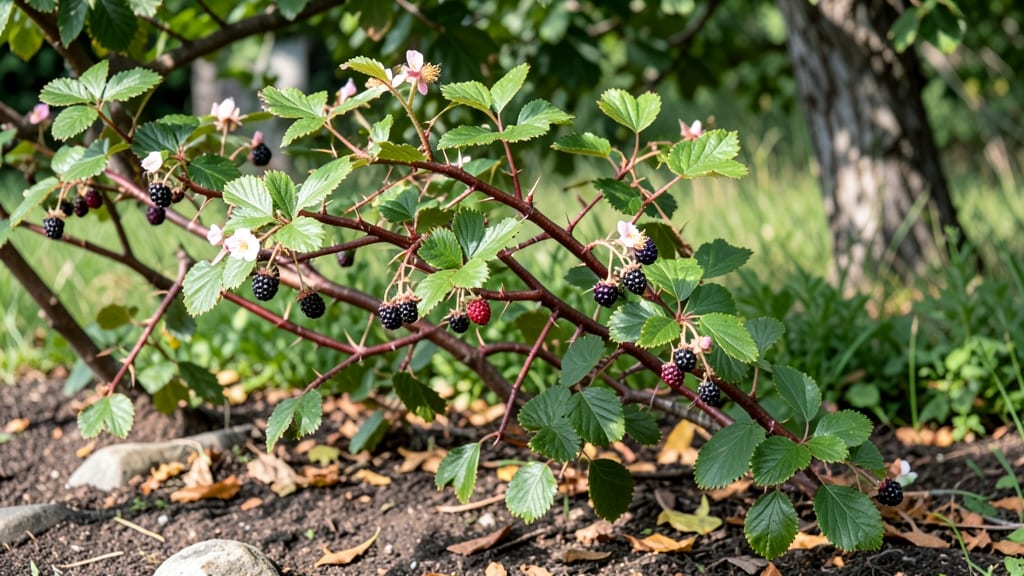
Identifying blackberry plants comes down to three key clues—leaf shape, thorn patterns, and berry texture—and I’ve used these to spot them in wild thickets and neighbor’s yards. The leaves are compound with five jagged, serrated leaflets, and the thorns curve backward like tiny hooks, while raspberries have straight, forward-pointing ones.
One wrong ID can mean the difference between thriving plants and pests taking over.
Blackberries grow on arching canes that spread aggressively, often forming dense tangles, while raspberries produce hollow cores when picked. The berries themselves are glossy and stay attached to the plant after harvest, unlike raspberries, which leave the core behind.
I’ve seen gardeners confuse them with dewberries too—just check the cane color: blackberries have green canes, dewberries have red.
Misidentifying them leads to big mistakes—raspberries need different pruning, and blackberries thrive in sunny spots where raspberries might struggle. Once you recognize these clues, you’ll spot them instantly, whether they’re sneaking into your garden or hiding in the wild. The payoff? Knowing exactly how to care for them before planting.
Even experienced gardeners mix them up, so don’t feel alone if you’ve been guessing. The good news is, once you train your eye on these details, you’ll never second-guess again—especially when those first berries start ripening in late summer.
Root Causes of Misidentification
Misidentifying blackberry plants can be frustrating, especially when similar-looking species or even other plants throw you off. Understanding the underlying reasons helps you spot the clues more accurately. Here’s why confusion happens—and how to avoid it:
Blackberries belong to the Rubus genus, which includes raspberries, dewberries, and other brambles. These plants share traits like thorny canes, compound leaves, and berries, making them easy to mix up.
Why it happens:
- Hybridization: Many blackberry cultivars (like Rubus allegheniensis or Rubus fruticosus) crossbreed with raspberries or dewberries, creating hybrids with overlapping features.
- Regional Varieties: Some blackberries (e.g., Rubus argutus, the "wild blackberry") have narrower leaves or smaller berries, resembling other Rubus species.
- Immature Plants: Young blackberry canes may lack the broad, lobed leaves of mature plants, mimicking raspberry foliage instead.
Actionable fix: Compare three key traits side by side:
- Leaf arrangement: Blackberries have 5+ leaflets (raspberries usually have 3).
- Berry attachment: Blackberries stay attached to the plant when picked; raspberries pull away from the receptacle.
- Thorn structure: Blackberry thorns are stiff and curved; raspberry thorns are often straighter.
Blackberries change color and texture as they ripen, leading to premature or late identification.
Why it happens:
- Green vs. ripe berries: Unripe blackberries are green or red, resembling other fruits like Rubus trivialis (cloudberry) or even grapes.
- Dewberries vs. blackberries: Dewberries (Rubus flagellaris) produce smaller, rounder berries that may look underdeveloped if picked early.
- Disease or pests: Fungal infections (like Phomopsis fruit rot) or spider mites can distort berry shape, making them harder to recognize.
Actionable fix:
- Wait for full ripeness: True blackberries turn deep black or purple and soften slightly when ripe.
- Check the plant’s history: If berries appear in clusters along the cane (not just at the tips), it’s likely a blackberry, not a raspberry.
- Inspect for damage: Healthy blackberries should be plump and glossy; shriveled or discolored ones may be diseased.
Blackberry plants adapt to their surroundings, altering their appearance based on sunlight, soil, and pruning habits.
Why it happens:
- Sun exposure: Shady blackberries may develop smaller leaves or lighter berries, resembling Rubus occidentalis (red raspberries).
- Pruning practices: Over-pruned canes produce fewer lateral branches, reducing leaf size and making identification harder.
- Soil nutrients: Poor soil can stunt growth, leading to narrower leaves or stunted berries, similar to Rubus idaeus (European raspberry).
Actionable fix:
- Observe leaf shape: Healthy blackberry leaves are broad, maple-like, and serrated; stressed leaves may look dull or curled.
- Check cane color: Mature blackberry canes are reddish-brown; green canes are usually primocanes (first-year growth).
- Compare to known samples: Keep a reference photo of a confirmed blackberry plant nearby for side-by-side checks.
Even experienced gardeners can misidentify plants due to bias, haste, or incomplete checks.
Why it happens:
- Focusing on one trait: Relying solely on berry color (ignoring leaves or thorns) leads to mistakes (e.g., thinking a red raspberry is a blackberry).
- Seasonal blindness: In early spring, blackberry canes look like grapevines or rose bushes before leaves emerge.
- Cultural assumptions: Assuming all brambles are blackberries without verifying other clues.
Actionable fix: Use the "Three-Point ID Rule" for blackberries:
- Leaves: 5+ leaflets, lobed and toothed edges.
- Thorns: Curved and sharp, spaced evenly along canes.
- Berries: Aggregate fruit (many small drupelets fused together), black when ripe, and stays on the plant when picked.
Infestations or infections can drastically change a blackberry’s usual look, making it resemble other plants.
Why it happens:
- Japanese beetles: Chew leaves into skeletal patterns, mimicking nutrient deficiency.
- Powdery mildew: Covers leaves with white fungus, making them look pale and unhealthy.
- Root rot: Causes yellowing leaves and stunted growth, similar to a struggling raspberry.
Actionable fix:
- Inspect the undersides of leaves for pests or fungal spots.
- Check cane health: Healthy blackberry canes are woody and upright; diseased canes may be soft, discolored, or oozing sap.
- Test soil pH: Blackberries prefer slightly acidic soil (pH 5.5–6.5); alkaline soil can stunt growth, altering leaf shape.
Pro Tip: 💡 Carry a small magnifying glass or phone with a macro lens to closely examine leaf veins, thorn bases, and berry attachment points—these details are often the giveaways!
Quick Fixes for Common Blackberry Issues
Got a thriving—or struggling—blackberry patch? Whether your plants are misidentified, diseased, or just not producing, these targeted fixes will help you diagnose and revive your berries. Below, we’ve mapped common problems to step-by-step solutions, plus prevention tips to keep your plants healthy long-term.
Fix: Confirm your plant’s identity before treating it like a blackberry!
- 🔍 Step 1: Check the Leaves
- True blackberry leaves are palmately lobed (like a hand with 3-5 fingers) and slightly hairy on the underside.
- Mistake? Raspberry leaves are pinnately lobed (like a feather) and smoother.
- 🍇 Step 2: Examine the Canes
- Blackberry canes are arching or trailing, with sharp thorns (raspberries have softer, more flexible canes).
- Pro Tip: 💡 Snap a cane—blackberries have hollow centers when young.
- 📸 Step 3: Snap a Photo & Compare
- Use a plant ID app (like PlantNet or Google Lens) or cross-reference with local nursery guides.
Prevention:
- Buy from reputable nurseries that label plants clearly.
- Start with certified blackberry varieties (e.g., ‘Triple Crown’ or ‘Natchez’) to avoid lookalikes.
Fix: Act fast—pests weaken plants and spread disease.
- 💦 Step 1: Blast Off with Water
- Spray infested areas with a strong hose stream (dislodges aphids/mites).
- 🧴 Step 2: Apply Organic Sprays
- Neem oil (1 tsp + 1 quart water + drop of dish soap) – reapply every 5–7 days.
- Insecticidal soap for soft-bodied pests (aphids, mites).
- For Japanese beetles: 🔥 Handpick (drop into soapy water) or use milky spore (long-term biological control).
- 🌿 Step 3: Encourage Natural Predators
- Plant dill, fennel, or marigolds nearby to attract ladybugs and lacewings.
Prevention:
- Mulch heavily (3–4 inches) to deter beetles.
- Prune regularly to improve airflow (pests love crowded canes).
Fix: Fungi thrive in wet conditions—drainage and fungicides are key.
- 🌧️ Step 1: Improve Airflow & Drainage
- Space canes 3–4 feet apart and prune suckers to reduce humidity.
- Raise beds if soil stays soggy (blackberries hate "wet feet").
- 🍄 Step 2: Spray Fungicides
- Baking soda spray (1 tbsp baking soda + 1 quart water + drop of soap) for powdery mildew.
- Copper fungicide (follow label) for anthracnose/botrytis.
- Best time: At dusk to avoid burning leaves.
- 🔥 Step 3: Burn or Remove Infected Debris
- Do NOT compost diseased leaves—bag and trash them.
Prevention:
- Water at the base (avoid overhead spraying).
- Choose resistant varieties (e.g., ‘Chester’ for anthracnose resistance).
Fix: Blackberries need sun, nutrients, and proper pruning to fruit well.
- ☀️ Step 1: Maximize Sunlight
- 6+ hours of direct sun is ideal—thin nearby trees/shrubs if needed.
- 🌱 Step 2: Fertilize Smartly
- Spring: Apply balanced 10-10-10 fertilizer (follow package rates).
- Summer (after harvest): Use low-nitrogen, high-potassium (e.g., 5-10-10) to boost next year’s fruit.
- ✂️ Step 3: Prune for Productivity
- Remove old canes (2+ years old) after harvest—they fruit poorly.
- Cut back new canes to 4–5 feet tall in early spring to encourage bushiness.
Prevention:
- Test soil pH (ideal: 5.5–6.5)—amend with sulfur if too alkaline.
- Mulch with compost to retain moisture and nutrients.
Fix: Blackberries are hardy but need protection in harsh climates.
- 🌡️ Step 1: Mulch Heavily
- 6+ inches of straw or leaves after first frost (insulates roots).
- 🛡️ Step 2: Use Row Covers or Burlap
- Wrap canes in burlap for temps below 10°F (-12°C).
- Frost cloth over plants for light freezes.
- ☕ Step 3: Water Before Freezes
- Deep watering 1–2 weeks before winter helps roots withstand cold.
Prevention:
- Plant in microclimates (south-facing slopes warm up faster).
- Choose cold-hardy varieties (e.g., ‘Arapaho’ for Zone 4).
Final Pro Tip: 🎯 Keep a plant journal! Note pruning dates, pest outbreaks, and harvest sizes to refine your care routine each year. Happy berry hunting! 🍇🌿
Frequently asked questions
How can I tell if my bramble plant is a blackberry instead of a raspberry?
Look for three key clues: blackberries have 5+ leaflets (raspberries usually have 3), their berries stay attached when picked (raspberries pull away), and their thorns are curved backward while raspberry thorns point forward. Also check cane color—blackberries have green canes, dewberries have red.
What are the most common blackberry lookalikes I should watch out for?
The biggest culprits are raspberries (3 leaflets, hollow core), dewberries (smaller berries, red canes), and loganberries (hybrid with raspberry traits). Even grapes can fool you in early growth stages—always verify with multiple traits, not just berry color.
Can I use a plant identification app to confirm my blackberry?
Apps like PlantNet or Google Lens work well, but upload clear photos showing leaves, thorns, and berries together. For best results, take pictures in good light and include a ruler or coin for scale—apps struggle with partial views.
Why do my blackberry plants look different from what I see in gardening books?
Blackberries adapt to their environment—shady plants may have smaller leaves, poor soil can stunt growth, and diseases like powdery mildew alter appearance. Always compare to healthy reference photos and check for pests on leaf undersides.
How do I know if my wild blackberry plant is edible?
True wild blackberries (Rubus allegheniensis) are edible when fully ripe (deep black/purple), but avoid plants near roads or sprayed areas. Test a small amount first—some wild varieties may have seeds that stain teeth or slightly tart flavors.