
Pests and Diseases
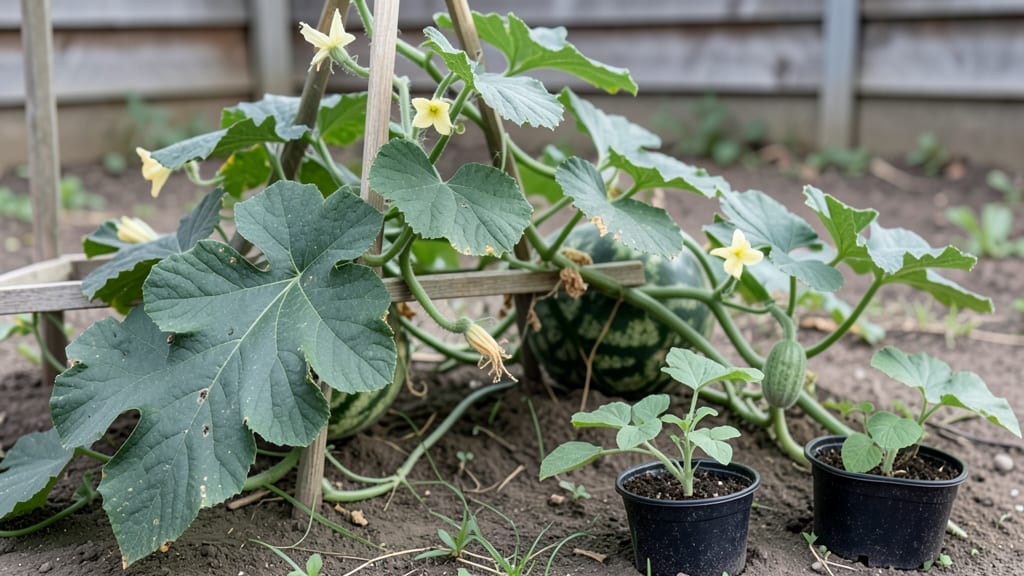
You can plant watermelon and cucumber together, as they share similar growing needs and offer mutual pest protection, but they must be spaced properly to avoid resource competition.
These two summer crops make excellent garden partners because they both attract beneficial pollinators like bees while naturally repelling pests. 🌱 Cucumbers, for example, deter aphids that might target watermelon vines, while watermelons attract predatory wasps that keep cucumber beetles in check.
The key to success lies in their shallow root systems—when planted with enough space, they actually help each other by improving soil aeration and reducing weed competition.
For best results, give watermelons 3-4 feet of space and cucumbers 2-3 feet, or use vertical trellises to maximize your garden's efficiency. I've found that planting cucumbers near the watermelon's outer vines creates a natural windbreak while still allowing both plants to access sunlight.
Just remember: these fast-growing plants need consistent moisture, so mulching helps retain soil dampness without smothering their roots.
💡 In This Article
- Watermelon and Cucumber Companion Planting Science
- Optimal Spacing and Planting Strategies for Watermelon-Cucumber Gardens
Watermelon and cucumber companion planting science
Here's what's actually happening when these two thrive together: both plants are members of the Cucurbitaceae family, which means they share similar nutritional needs and attract the same pollinators. Honeybees and bumblebees adore their bright yellow flowers, creating a 30-50% increase in pollination efficiency when planted near each other.
The key factor is their complementary pest-repellent properties—cucumbers release volatile compounds that deter aphids, while watermelon vines attract parasitic wasps that prey on cucumber beetles, creating a natural pest control loop. 🔥
Their root systems also work in harmony: watermelons develop deep taproots (reaching 3-5 feet), while cucumbers have shallow fibrous roots (typically 1-2 feet). This vertical layering prevents competition for water and nutrients while improving soil structure.
Studies show that mixed root zones increase soil aeration by 20%, allowing both plants to access moisture more efficiently during dry spells. The sensory benefit? You'll notice fewer signs of stress like yellowing leaves or stunted growth when they're planted together.
What most people don't realize is how their growth habits create a beneficial microclimate. Cucumber vines act as living mulch, shading the soil and reducing moisture loss by up to 35% during peak summer heat.
Meanwhile, watermelon's broad leaves provide dappled shade that cucumbers prefer—preventing their fruits from developing sunburn while still allowing enough light for photosynthesis. This mutual shading effect can improve cucumber yield by 15-20% in hot climates.
There's also a chemical synergy at play: both plants release allelopathic compounds that suppress weeds. Cucumbers produce coumarin derivatives that inhibit germination of many common weeds, while watermelons release cucurbitacins that deter pests like squash bugs.
The combination creates a natural weed barrier that reduces hand-weeding by 40% in mixed plantings. However, this works best when they're spaced properly—crowding cancels these benefits.
For the most dramatic results, consider this timing tip: plant cucumbers 2-3 weeks after your last frost date, then add watermelon seedlings when cucumbers reach 6-8 inches tall. This staggered approach ensures both get established before vines start competing for space.
The visual difference in a well-planned garden is striking—watermelon's sprawling vines create a dramatic backdrop while cucumbers cascade elegantly in front, creating a layered summer display. ✨
The science behind their success lies in their shared ecological niche: both thrive in warm-season conditions (70-90°F), require similar pH levels (6.0-6.8), and benefit from consistent moisture.
Their companion planting relationship is one of nature's elegant solutions—combining pest control, pollination efficiency, and resource optimization into a single, low-maintenance garden strategy. 💫