Diseases
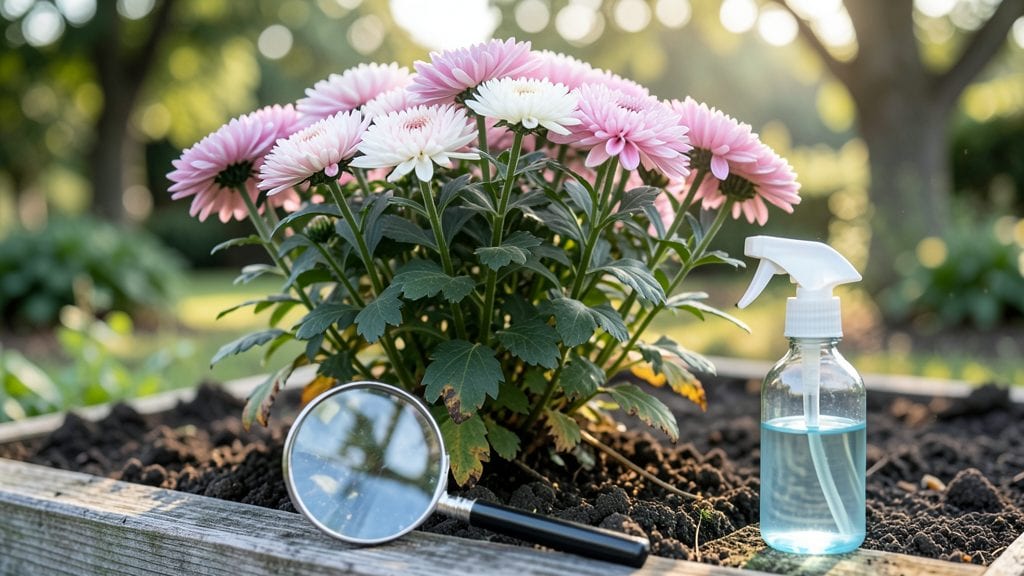
Chrysanthemum plant diseases can turn your fall garden from showstopper to sad sight overnight. 🌿 I’ve watched powdery white mildew creep across my blooms and rust spots turn leaves into Swiss cheese—each time, I learned how to stop it before it spreads.
The key isn’t panic; it’s spotting the early signs and acting fast.
Most chrysanthemum problems start with water or humidity—leaf spot thrives in damp mornings, while powdery mildew loves crowded foliage. Rust shows up as orange pustules, usually after wet weather.
The good news? Organic fixes like neem oil, copper spray, or even a simple baking soda mix can save your plants before they’re history.
You’ll catch diseases early by checking undersides of leaves weekly and spacing plants for airflow. Once treated, your chrysanthemums bounce back with bold, healthy blooms that last well into winter. The secret is consistency: treat at first sign, not when it’s too late.
Works for cut flowers, garden beds, or container plants—just adjust the spray strength for delicate blooms. Here’s how to keep yours thriving all season long.
Root Causes Of Chrysanthemum Struggles
Chrysanthemums are resilient, but when they succumb to diseases, it’s often due to a mix of environmental stress, biological invaders, or simple gardening oversights. Understanding why these issues arise is the first step to prevention and treatment.
Below, we break down the key culprits—from microscopic pathogens to human habits—that turn your vibrant blooms into sad, wilted relics.
Most chrysanthemum diseases start with an unwelcome guest: a pathogen. These tiny invaders exploit weaknesses in your plants, thriving in moist, warm conditions. Here’s how they sneak in:
- Fungal infections (e.g., Botrytis cinerea, Pythium, Septoria):
- 🌡️ Humidity and poor airflow: Fungi love dampness. Overhead watering, dense plantings, or shaded areas create the perfect breeding ground. Botrytis (gray mold) thrives when leaves stay wet for more than 12 hours.
- 🌱 Old or stressed plants: Weakened chrysanthemums—from nutrient deficiencies, overcrowding, or transplant shock—are easy targets. Fungi like Septoria attack through wounds or dead tissue.
- 🔄 Contaminated tools or soil: Fungal spores linger in old potting mix, garden tools, or even infected plant debris. Reusing containers without sterilizing them spreads spores like wildfire.
- Bacterial diseases (e.g., Xanthomonas, Erwinia):
- 💦 Water splashing: Bacteria hitch rides on water droplets during rain or irrigation, entering through leaf cuts or natural openings. Xanthomonas causes bacterial leaf spot, which spreads rapidly in wet conditions.
- 🐛 Insect vectors: Aphids, leafhoppers, and thrips can transmit bacterial or viral diseases from plant to plant. A single infestation can turn a healthy garden into a disease hotspot.
- Viruses (e.g., Tomato spotted wilt virus):
- 🦟 Thrips as carriers: These tiny insects feed on plant sap and pick up viruses along the way. Once infected, your chrysanthemum may show mosaic patterns, stunted growth, or deformed flowers—with no cure in sight.
- 🌱 Propagating infected cuttings: Using diseased stems or leaves to propagate new plants spreads viruses silently. Always source healthy stock!
💡 Pro Tip: Rotate crops annually and avoid planting chrysanthemums in the same spot where infected plants grew last season. Fungal spores can survive in soil for years.
Chrysanthemums are tough, but push them too far, and they’ll throw up disease symptoms as a distress signal. These environmental factors weaken defenses, making them vulnerable to pathogens:
| Factor | How It Harms Chrysanthemums | Actionable Fix |
|---|---|---|
| ❄️ Extreme temperatures | Cold snaps (<40°F) or heatwaves (>90°F) shock plants, slowing growth and reducing disease resistance. Powdery mildew thrives in hot, dry conditions. | Use shade cloth in summer and row covers in fall to moderate temps. Choose cold-hardy varieties if you’re in Zone 5 or lower. |
| 💧 Over- or under-watering | Soggy soil invites root rot (from Phytophthora), while drought stress makes plants susceptible to leaf spot. | Aim for 1–1.5 inches of water per week. Use drip irrigation to keep foliage dry and improve drainage with perlite or sand. |
| 🌫️ Poor air circulation | Stagnant air traps moisture, creating fungal paradises. Dense plantings or walls blocking wind worsen the problem. | Space plants 12–18 inches apart. Prune to improve airflow and avoid mulching too close to stems. |
| 🌱 Nutrient imbalances | Too much nitrogen = lush foliage but weak stems (susceptible to breakage and disease). Too little phosphorus/potassium = poor root health. | Test soil annually. Feed with a balanced 10-10-10 fertilizer in spring, then switch to a low-nitrogen, high-phosphorus blend (5-10-10) for blooming. |
✨ Fun Fact: Chrysanthemums are short-day plants, meaning they bloom based on daylight hours. Stress from erratic light cycles (like indoor lighting) can weaken them, making them more prone to disease.
Even the best gardeners make blunders that invite trouble. Here’s how common practices backfire:
- 🌿 Ignoring sanitation:
- Leaving infected leaves or debris in the garden spreads spores. Botrytis can survive on old flowers for months!
- Reusing pots or tools without cleaning them transfers pathogens to healthy plants.
- ⏰ Planting at the wrong time:
- Transplanting chrysanthemums in hot weather causes transplant shock, making them vulnerable to Fusarium wilt.
- Starting seeds too early leads to leggy, weak seedlings that struggle in the garden.
- 💊 Overusing pesticides:
- Chemicals like copper fungicides can burn leaves, creating entry points for bacteria.
- Killing beneficial insects (like ladybugs or predatory mites) disrupts the garden’s natural defense system.
- 🌱 Choosing the wrong variety:
- Some chrysanthemums are bred for disease resistance (e.g., ‘Bonanza’ series resists powdery mildew). Others are susceptible to local pathogens.
- Check your climate zone and common local diseases before selecting plants.
🎯 Quick Fix: If you suspect a gardening mistake is to blame, act fast. Remove affected plants, sterilize tools with 70% alcohol, and adjust your routine (e.g., switch to morning watering to dry leaves quickly).
Quick Fixes For Chrysanthemum Woes
When your chrysanthemums start looking sad—droopy leaves, odd spots, or wilting stems—don’t panic! Most common chrysanthemum diseases and pests have simple, effective fixes. Below, we’ve mapped out the best solutions for each issue, along with easy prevention tips to keep your plants thriving. 🌿💪
Fungal infections like powdery mildew, leaf spot, and rust can turn your chrysanthemums into a sad, spotted mess. But with the right approach, you can kick them to the curb.
🔥 Treat Powdery Mildew
- Remove infected leaves immediately—toss them in the trash (not compost!) to prevent spores from spreading.
- Spray with a homemade remedy: Mix 1 tsp baking soda, 1 tbsp vegetable oil, and 1 quart of water. Add a drop of dish soap as a surfactant. Spray the undersides of leaves where mildew loves to hide.
- Boost airflow: Prune overcrowded stems and space plants at least 12 inches apart.
- Prevent recurrence: Apply a fungicide like neem oil or copper fungicide every 7–10 days during humid weather.
🍳 Fix Leaf Spot (Brown or Black Spots)
- Prune and destroy infected leaves—don’t leave them on the soil where spores can reinfect.
- Apply a fungicide: Use a product with chlorothalonil or mancozeb, following label instructions.
- Water wisely: Water at the base (not overhead) in the early morning so leaves dry quickly.
- Rotate crops: If you replant chrysanthemums in the same spot next year, wait at least 3 years to avoid reinfection.
👨🍳 Cure Rust (Orange Pustules)
- Remove and dispose of heavily infected leaves.
- Spray with a fungicide: Products containing myclobutanil or triadimefon work well.
- Improve growing conditions: Rust thrives in damp, shady spots—ensure your plants get at least 6 hours of sunlight daily.
- Clean up debris: Rake and remove fallen leaves to eliminate rust spores.
Pests like aphids, spider mites, and whiteflies can suck the life out of your chrysanthemums. Here’s how to evict them for good.
🥘 Ditch Aphids (Green or Black Bugs)
- Blast them off: Spray aphids directly with a strong stream of water from your hose.
- Use insecticidal soap: Mix 1 tbsp mild liquid soap with 1 quart of water and spray the undersides of leaves.
- Introduce beneficial insects: Ladybugs and lacewings love aphids—buy them online or attract them with nectar-rich plants.
- Prevent future infestations: Keep your garden free of weeds, which aphids love as a hiding spot.
⏰ Stop Spider Mites (Tiny Yellow Specks)
- Wipe leaves down: Use a damp cloth to remove mites from leaves (especially the undersides).
- Spray with neem oil: Mix 2 tbsp neem oil with 1 quart of water and 1 tsp dish soap. Spray every 5–7 days until mites disappear.
- Increase humidity: Spider mites thrive in dry conditions—use a humidifier or mist plants occasionally.
- Avoid over-fertilizing: Too much nitrogen attracts mites—stick to a balanced fertilizer.
🔪 Eliminate Whiteflies (Flying White Bugs)
- Sticky traps: Hang yellow sticky traps near your plants to catch adult whiteflies.
- Spray with soapy water: Mix 1 tsp castile soap with 1 quart of water and spray directly on the bugs.
- Use kaolin clay: Apply a clay-based spray to create a barrier that repels whiteflies.
- Encourage natural predators: Parasitic wasps are whitefly’s worst nightmare—plant dill or fennel nearby to attract them.
Prevention is the best cure! Follow these golden rules to keep your chrysanthemums healthy and disease-free:
- 🌡️ Water wisely: Always water at the base, early in the day, and avoid getting leaves wet.
- 🎯 Rotate crops: Don’t plant chrysanthemums in the same spot year after year—this reduces soil-borne disease buildup.
- ✨ Clean your tools: Sterilize pruners and shears with rubbing alcohol between uses to prevent spreading pathogens.
- 🔥 Boost plant health: Healthy chrysanthemums resist diseases better—feed them with a balanced fertilizer and ensure they get enough sunlight.
With these fixes, your chrysanthemums will bounce back in no time! 🌸💛 Stay vigilant, act fast at the first sign of trouble, and your garden will stay vibrant all season long.
Frequently asked questions
What are the most common signs of fungal infections in chrysanthemums?
Look for white powdery coatings (powdery mildew), brown/black spots with yellow halos (leaf spot), or orange pustules (rust). These appear on leaf surfaces, especially undersides, and worsen in damp conditions. Check stems too for dark, sunken lesions which indicate stem rot.
Can I save a chrysanthemum already infected with powdery mildew?
Yes! Prune off all infected leaves immediately (don't compost them) and spray with a baking soda solution (1 tsp baking soda + 1 tbsp oil + 1 quart water). Space plants for better airflow and apply neem oil every 7 days until new growth appears. Severe cases may require removing the entire plant to prevent spread.
Why do my chrysanthemums get diseases even with good care?
Diseases often strike when environmental conditions align—like high humidity + poor airflow—or when beneficial microbes in soil are disrupted. Even healthy plants can succumb if stressed by extreme temperatures, improper watering, or nutrient imbalances. Test your soil annually and rotate planting locations every 3 years to break disease cycles.
Are there disease-resistant chrysanthemum varieties?
Look for series like 'Bonanza', 'Bright Lights', or 'Dynasity' which are bred to resist powdery mildew and leaf spot. These varieties often have stronger genetic defenses against common pathogens. Check seed packets or nursery labels for disease resistance ratings before purchasing.
How do I prevent diseases when growing chrysanthemums in containers?
Use sterile potting mix, ensure containers have drainage holes, and water only at the base. Space pots 12+ inches apart for airflow, and rotate containers weekly for even sunlight exposure. Sterilize tools between plants and avoid overhead watering. Container plants dry faster, reducing fungal risks.