Watering
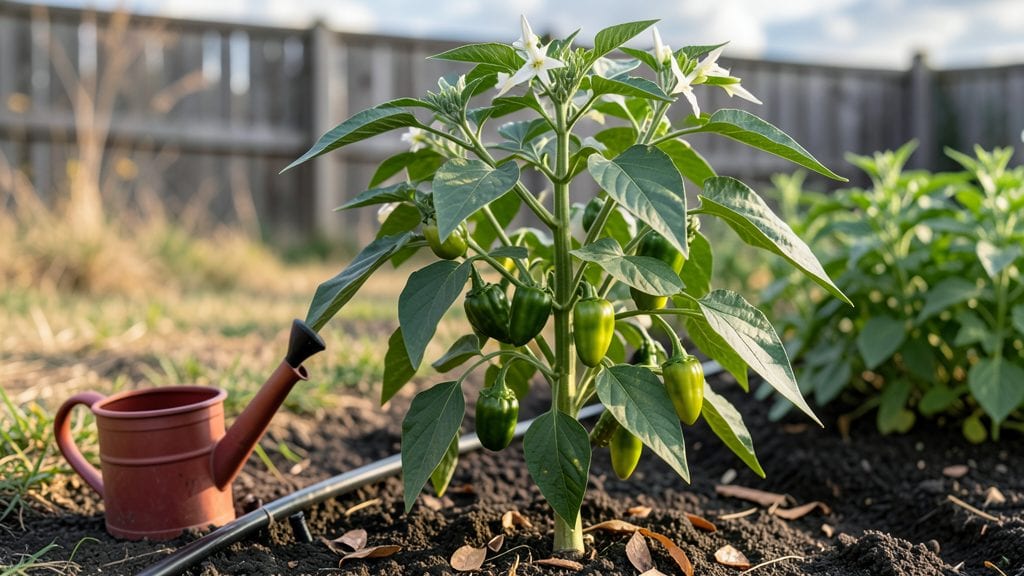
Watering jalapeno plants isn’t about keeping soil damp—it’s about giving them the deep, consistent moisture they need to produce those fiery peppers. 🌱 I learned the hard way that surface watering leads to weak roots and stunted growth, while too much water drowns out flavor.
The key is understanding when, how, and how much to water for plants that thrive in heat but hate soggy feet.
Jalapenos need 1-1.5 inches of water per week, split between deep waterings rather than daily sprinkles. In-ground plants benefit from soaker hoses buried near roots, while container growers should check soil moisture daily—containers dry out faster.
The soil should feel like a wrung-out sponge: damp but not soaked. Overwatering is the silent killer of pepper plants, causing blossom-end rot or fungal diseases that ruin harvests.
You’ll know you’re doing it right when plants stay upright, leaves stay glossy green, and new blooms appear every 10-14 days. Yellowing leaves or wilting in the heat? That’s your cue to adjust.
Jalapenos grown this way produce bold, flavorful peppers with thick walls—exactly what you want for cooking or fresh eating. The secret isn’t complicated, but it does require paying attention to the plant’s signals.
Seasonal shifts matter too—summer heat demands more frequent watering, while cooler months slow things down. Container plants need extra care in windy areas, and mulch helps retain moisture for in-ground beds. Here’s how to keep your jalapenos happy from seedling to harvest, no guesswork involved.
📚 In This Guide
- What you need
- Instructions
- Tips and common mistakes
- Wrapping up and next steps
What you need
- ● Jalapeño plants: 3–5 healthy seedlings or transplants (choose varieties like 'Early Jalapeño' or 'Large Red Jalapeño' for best results).
- ● Containers or garden bed: Containers: 5–10 gallon pots (1 per plant) with drainage holes.
- ● Garden bed: Well-draining soil in a sunny spot (6+ hours of sunlight daily).
- ● Potting mix: High-quality, well-draining blend (e.g., 60% potting soil + 40% perlite or coco coir).
- ● Watering can or hose: With a gentle spray nozzle (avoid overhead watering to prevent disease).
- ○ Moisture meter (optional but helpful): To check soil moisture (aim for 1–2 inches dry between waterings).
- ● Mulch: Organic mulch (e.g., straw or shredded leaves) to retain moisture and regulate temperature.
- ● Drip irrigation system: For automated, consistent watering (especially useful in hot climates).
- ● Fertilizer: Balanced liquid fertilizer (10-10-10 or organic options like fish emulsion) every 2–3 weeks.
- ● Shade cloth: For seedlings to protect from intense midday sun.
- ● Pruning shears: To trim excess foliage and encourage bushier growth.
Precision watering techniques for thriving jalapeno plants
Jalapenos demand consistency—too much or too little water throws off fruit production. Here’s how to strike the perfect balance.
💧 Step 1: Establish a Deep Watering Routine
Jalapenos need 1-1.5 inches of water per week, but shallow sprinkles won’t cut it. Instead, water deeply at the base—this encourages roots to grow downward where moisture lingers. I use a soaker hose or drip irrigation to deliver water slowly, avoiding wetting leaves (which invites fungal diseases like powdery mildew).
Check soil moisture by sticking your finger 2 inches down—if it feels dry, it’s time to water. Overhead watering in the evening leaves plants vulnerable to nighttime fungal growth, so I water early in the morning when foliage dries quickly. This mimics their native arid conditions while keeping roots hydrated.
☀️ Step 2: Adjust for Heat and Sun Exposure
Jalapenos in full sun (6+ hours daily) evaporate moisture faster, so I increase watering frequency during 90°F+ heatwaves—aim for 2-3 inches weekly instead of the standard 1-1.5. Mulch with 2-3 inches of organic mulch (like straw or shredded leaves) to lock in moisture and regulate soil temperature.
Watch for wilting leaves—if they droop by midday but perk up in the evening, your plants are thirsty. If they stay wilted, roots may be struggling with underwatering or poor drainage. Jalapenos hate soggy roots, so always ensure containers or beds have adequate drainage holes. I test drainage by filling a pot with water—if it drains within 30 minutes, it’s safe.
🌱 Step 3: Monitor Soil and Seasonal Shifts
Spring and fall require less frequent watering (every 5-7 days) because cooler temps slow evaporation. In summer, I water every 3-4 days, but I always check soil first—dry to the touch at 2 inches deep is the cue. Sandy soil drains fast, so I water more often but in smaller amounts; clay soil holds moisture longer, so I space out waterings.
Overwatering is just as deadly as underwatering. If leaves turn yellow or mushy, roots are drowning. Let the top 1-2 inches of soil dry out between waterings, and avoid watering if rain is forecasted within 24 hours. A moisture meter takes the guesswork out—aim for 40-60% moisture at root level.
✂️ Step 4: Fine-Tune for Fruit Production
When jalapenos start flowering, reduce water slightly to stress the plant just enough to trigger fruiting. Cut back to 1 inch of water per week until peppers form. Once fruit appears, return to 1.5 inches weekly—consistent moisture prevents blossom-end rot (those ugly dark spots on peppers).
Prune suckers (those little shoots in the leaf axils) to focus the plant’s energy on fruit, not foliage. After pruning, water deeply at the base to help the plant recover. Avoid wetting leaves or stems—this keeps diseases at bay and ensures your peppers stay spicy and healthy.
🌿 Step 5: Adapt to Containers vs. Garden Beds
Container-grown jalapenos dry out 2-3 times faster than in-ground plants, so I water daily in summer if the soil feels dry at the surface. Use self-watering pots or 5-gallon containers with drainage to give roots room to breathe. In garden beds, mulch heavily (3+ inches) to retain moisture and suppress weeds.
If your jalapenos are in hanging baskets, water every 2 days in heat—roots have less access to moisture. Drip irrigation is your best friend here, delivering water directly to the roots without splashing leaves. Always water until 10% runs out the drainage holes to ensure deep saturation.
Tips & tricks for perfect jalapeno watering
Here's what nobody tells you about keeping your jalapenos thriving through every growing stage.
Soil Moisture is Everything: The 2-inch deep soil check in Step 1 is your secret weapon—this is where jalapeno roots actively seek moisture. I learned this the hard way after watching plants wilt despite "regular" watering. Use a moisture meter for precision, especially during summer when evaporation spikes. Aim for that 40-60% moisture range at root level—any lower and your plants will signal distress with wilting leaves by midday.
Heatwave Survival Strategy: When temperatures hit 90°F+, your jalapenos need that 2-3 inch weekly adjustment from Step 2, but timing matters just as much. I water in the early morning (before 8am) to give foliage time to dry completely—this prevents fungal diseases that thrive in damp leaves. For container plants, I actually increase to daily watering during heatwaves, checking surface dryness every morning.
Fruit Production Fine-Tuning: That 1-inch weekly reduction during flowering in Step 4 is critical for triggering fruiting, but don't overdo it. I monitor closely—if leaves start curling but flowers remain, I'll add a little extra water (about 0.5 inch) to keep the plant happy while maintaining that slight stress. The goal is to mimic their natural drought conditions without pushing them too far.
Container Drainage Check: The 30-minute drainage test from Step 2 is non-negotiable for container growers. I've seen jalapenos drown in perfectly good pots because owners assumed "big pot = good drainage." Fill your container with water, then time how long it takes to drain completely. If it takes longer than 30 minutes, add perlite or vermiculite to improve drainage—your jalapenos' roots will thank you with better fruit production.
Pro Tips for Water Jalapeno Plants
- Here's what nobody tells you about keeping your jalapenos thriving through every growing stage.
- Soil Moisture is Everything: The 2-inch deep soil check in Step 1 is your secret weapon—this is where jalapeno roots ...
- Heatwave Survival Strategy: When temperatures hit 90°F+, your jalapenos need that 2-3 inch weekly adjustment from Ste...
Frequently asked questions
Got questions about keeping your jalapeño plants thriving with the perfect water balance? Here are some common concerns—and their solutions—to help you grow fiery, flavorful peppers like a pro!
How often should I water jalapeño plants?
Water jalapeños deeply but infrequently—about 1-1.5 inches per week, adjusting for heat or rain. Let the top 1-2 inches of soil dry out between waterings to prevent root rot. Mulch helps retain moisture and keeps roots cool.
Can I overwater jalapeño plants?
Absolutely!
Overwatering is the #1 killer of jalapeños—it causes root rot and fungal diseases. Signs include yellowing leaves, wilting, or mushy stems. If you suspect overwatering, stop watering immediately, repot in fresh soil, and ensure pots have drainage holes.
What’s the best way to water jalapeños in pots vs. garden beds?
| Pots | Garden Beds |
|---|---|
| Water until it drains from the bottom (every 2-3 days in hot weather). Use a self-watering pot for consistency. | Water at the base of the plant (avoid wetting leaves to prevent disease). Use drip irrigation for even moisture. |
Why are my jalapeño leaves turning yellow or crispy?
Yellow leaves often mean overwatering, while crispy edges signal underwatering or heat stress. Check soil moisture with your finger—if it’s dry 1 inch down, water thoroughly. For crispy leaves, move plants to partial shade and increase humidity with a tray of pebbles and water.
Are there alternatives to hand-watering jalapeños?
Yes! Try these low-maintenance options:
- Drip irrigation: Slow, targeted watering at the roots (great for garden beds).
- Soaker hoses: Lay them along rows to deliver steady moisture without wetting foliage.
- Self-watering containers: Perfect for pots—just refill the reservoir as needed.
- Mulch: Use straw or wood chips to lock in moisture and reduce evaporation.
Wrapping up and next steps
Growing spicy jalapeños is all about balance—and water is the secret ingredient! 🌱 With the right techniques, you’ll nurture thriving plants that reward you with bold, flavorful peppers. Whether you’re a seasoned gardener or just starting out, consistency and observation are key.
Ready to level up your harvest? Start small—test your soil moisture, adjust your routine, and watch those plants flourish. And if you’re hungry for more? Experiment with container sizes, mulching, or even indoor growing! The spicier your success, the better.