Shrubs
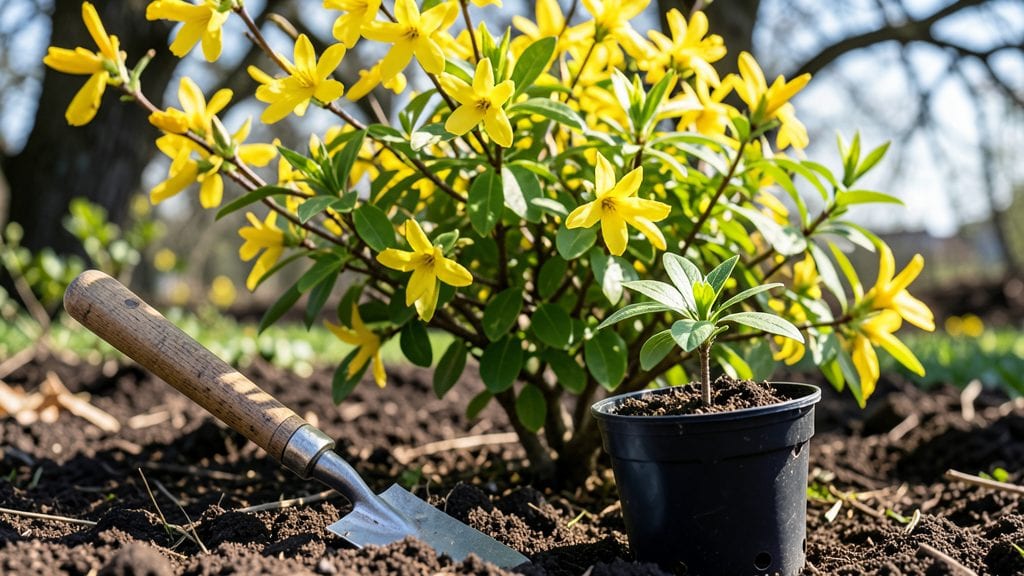
The forsythia planting distance—3 to 6 feet apart—is the secret to turning scraggly bushes into a golden-yellow spring spectacle. 🌿 create a stunning, continuous hedge.
My first attempt with plants too close ended with tangled branches and fewer blooms, so I learned the hard way: spacing matters more than you think.
Sunlight is the real game-changer here. Forsythia thrives in full sun, but proper spacing ensures every branch gets its share of light, which means more flowers next year. Well-drained soil helps too—these shrubs hate soggy roots.
If your soil is heavy clay, mix in compost before planting to give those roots room to stretch out without competition.
With the right spacing, you’ll see a wall of vibrant blooms in just two seasons. The branches stay sturdy, the flowers multiply, and you avoid the messy, overgrown look that ruins the effect.
Plus, you’ll have room to tuck in companion plants like hostas or ferns underneath—just don’t let them steal the show.
Whether you’re lining a fence or adding a focal point, this spacing rule works for both single plants and hedges. Stick to it, and your forsythia will reward you with years of effortless, sunlit beauty. Now, let’s get those plants in the ground!
📚 In This Guide
- What you need
- Instructions
- Tips and common mistakes
- Wrapping up and next steps
What you need
- ● Forsythia plants: 3–6 plants (depending on desired hedge length; 3–4 feet tall for mature size). Choose hardy, disease-resistant varieties like 'Spring Glory' or 'Northern Gold'.
- ● Shovel or spade: 1 medium-sized (12–18 inches wide) for digging holes.
- ● Garden trowel: 1 for precision planting and backfilling soil.
- ● Measuring tape or ruler: 1 (10–25 feet, depending on spacing needs).
- ● Garden gloves: 1 pair (heavy-duty for rough soil).
- ● Well-draining soil: Mix of native soil + compost (ratio: 70% soil, 30% compost).
- ● Mulch: 2–3 bags (2–3 cubic feet each) of wood chips or straw to retain moisture.
- ● Watering can or hose with nozzle: 1 with a gentle spray setting for post-planting hydration.
- ● Soil pH test kit: Ensures soil is slightly acidic to neutral (pH 6.0–7.0)—forsythia loves it!
- ● Slow-release fertilizer: 1 bag (10–20 lb) of balanced 10-10-10 for a nutrient boost.
- ● Plant stakes or labels: 3–6 stakes (18–24 inches tall) to mark spacing and varieties.
- ● Pruning shears: 1 pair for shaping after planting.
- ● Drip irrigation system: (For large plantings) to automate watering.
How to space forsythia for a thriving, sunlit shrub border
Here's the spacing method I've used for years to create bold, healthy forsythia hedges that bloom reliably every spring.
🌱 Step 1: Understand Forsythia's Natural Growth Habit
Forsythia grows into a 6-10 foot wide shrub at maturity, with spreading branches that need room to develop. The key is spacing plants 8-12 feet apart for single specimens or 6-8 feet apart when creating a hedge. This ensures each plant gets enough sunlight and air circulation to prevent fungal diseases like powdery mildew.
I always check the variety first—some like 'Northern Gold' stay more compact, while others like 'Spring Glory' reach full size faster. Planting too close forces competition for sunlight, which weakens flowering and leads to leggy growth. You'll see strong, bushy plants when they have proper space to develop their natural shape.
☀️ Step 2: Plan for Sunlight Exposure
Forsythia thrives in full sun (6-8 hours daily) and needs that space to access light from all directions. When planting multiple shrubs, arrange them in a straight line or staggered pattern—never in tight clusters. The outer branches should never be shaded by neighboring plants after 3 years of growth.
I like to sketch a rough layout first, using stakes to mark positions. This helps visualize how the shrubs will fill out over time. In shadier areas, you can reduce spacing to 5-6 feet, but expect fewer blooms and slower growth. Watch for leaves turning yellow—this often signals insufficient light.
🪴 Step 3: Dig and Plant with Proper Spacing
Dig holes twice as wide as the root ball but no deeper—forsythia roots spread horizontally, not vertically. For 4 plants, space them 8 feet apart in a row or 6 feet apart in a staggered formation. The goal is to leave room for pruning later without overcrowding the center.
Place each plant so the top of the root ball sits 1 inch above ground level. This prevents rot and encourages strong root development. Backfill with native soil, tapping gently to remove air pockets. Water deeply to settle the soil—you'll see the ground level drop slightly as moisture fills the gaps.
✂️ Step 4: Prune Strategically in First Two Years
During the first 2 years, avoid heavy pruning—let the forsythia establish its structure. In year 3, you can shape lightly by removing 1/3 of the oldest stems at the base. This encourages new growth from the base and prevents a hollow center. Space cuts 6-8 inches above the ground for a natural look.
I always prune right after flowering (late spring) to avoid cutting off next year's blooms. You'll notice new shoots emerging from the base within weeks—this is your sign the plant is happy with its space. Never prune in fall, as forsythia needs its foliage to store energy for winter.
⏰ Step 5: Maintain Spacing Through Regular Care
Mulch around the base with 2-3 inches of organic mulch (like shredded bark) to retain moisture and suppress weeds. Keep mulch 6 inches away from the trunk to prevent rot. Water deeply once a week during the first growing season to encourage deep root growth.
After establishment, forsythia becomes drought-tolerant, but you'll see the most vibrant blooms when soil stays consistently moist. If branches start touching neighbors after 5 years, it's time for a selective thinning prune—remove the worst offenders at the base. Proper spacing now means fewer headaches later when the shrubs reach maturity.
Tips & tricks for perfect forsythia planting distance
Here's what nobody tells you about spacing forsythia—these tricks will ensure your shrubs thrive and bloom like crazy.
Variety Matters: The spacing recommendations in Step 1 are averages, but some forsythia varieties like 'Northern Gold' stay more compact (6-8 feet apart) while others like 'Spring Glory' need full 10-12 feet. I always check the tag before planting—this prevents overcrowding and keeps your hedges looking lush. Remember, the goal is to leave room for those spreading branches to develop naturally without competing for sunlight.
Visualize Growth Before Planting: In Step 2, when you're sketching your layout, imagine each forsythia at full maturity. Draw circles with 8-foot diameters around each plant position—this helps visualize how the shrubs will fill out over time. I use colored chalk to mark the areas where branches will eventually spread. This simple trick prevents planting too close and ensures each plant gets its required 6-8 hours of sunlight from all directions.
Root Ball Placement Secret: Step 3 mentions placing the root ball 1 inch above ground level, but here's the thing: the top of the root ball should align with the surrounding soil line. If you bury it too deep, you risk rot; if it's too high, the plant may dry out. I like to use a level tool to check this—it makes all the difference in establishing strong root systems. This small detail prevents future headaches with weak growth.
Pruning Timing Tip: The instructions say to prune right after flowering in late spring, but here's my secret: I actually prune in early spring before buds swell. This gives you a clearer view of the plant's structure and lets you make more precise cuts. Just be gentle—you're shaping, not hacking. The 6-8 inch spacing for cuts mentioned in Step 4 creates that perfect natural look while encouraging new growth from the base.
Pro Tips for Forsythia Planting Distance
- Here's what nobody tells you about spacing forsythia—these tricks will ensure your shrubs thrive and bloom like crazy.
- Variety Matters: The spacing recommendations in Step 1 are averages, but some forsythia varieties like 'Northern Gold' stay more compact (6-8 feet apart) while others like 'Spring Glory' need full 10-12 feet.
- Visualize Growth Before Planting: In Step 2, when you're sketching your layout, imagine each forsythia at full maturity.
Frequently asked questions
Got questions about planting forsythia just right? You’re not alone! Here are some of the most common concerns—and straightforward answers—to help you nail that perfect spacing for vibrant blooms and healthy growth.
What’s the ideal forsythia planting distance for small gardens?
For compact spaces, plant forsythia 3 to 4 feet apart. This keeps their airy habit from overwhelming smaller yards while still allowing sunlight to reach all branches. If you’re growing dwarf varieties (like Forsythia ‘Little Lens’), reduce spacing to 2 to 3 feet for a cozy, dense look.
Can I plant forsythia too close together, and what happens if I do?
Yes, overcrowding leads to stunted growth, poor flowering, and disease risks (like powdery mildew) due to poor airflow. If you’ve already planted too close, thin out seedlings or transplant mature shrubs to 4–6 feet apart during dormancy (late fall or early spring). Prune back overgrown branches to open up the center.
Does forsythia planting distance change based on sunlight exposure?
In full sun (6+ hours/day), space them 5–6 feet apart to prevent shading. For partial shade (3–6 hours/day), reduce spacing to 4 feet—they’ll grow slightly slower but still thrive. Always face shrubs south or west to maximize bloom exposure.
Are there alternatives to forsythia for tight spaces?
If your space is super limited, consider these low-maintenance, compact shrubs:
- Dwarf ninebark (Physocarpus opulifolius ‘Little Devil’) – 3–4 ft wide
- Abelia (Abelia × grandiflora ‘Kaleidoscope’) – 3–4 ft tall
- Potentilla (Dasiphora fruticosa ‘Goldfinger’) – 2–3 ft wide
When’s the best time to adjust forsythia spacing if I planted too close?
Wait until late fall or early spring (before buds swell) to transplant or prune. Avoid adjusting spacing in summer or winter—hot weather stresses roots, and frozen soil makes handling difficult. Water deeply 1–2 weeks before moving to reduce shock.
Pro Tip:
Use a spacer grid (or even a DIY wooden frame) when planting to mark ideal distances. It’s a game-changer for keeping rows straight and shrubs evenly spaced—no guesswork!
Wrapping up and next steps
Planting forsythia with the right spacing ensures vibrant blooms and healthy growth—whether you’re lining a fence, adding color to a border, or creating a privacy screen. 🌸 Remember, 3–6 feet apart is ideal for most varieties, but adjust based on your shrub’s mature size and sunlight exposure.
With proper care, your forsythia will reward you with cheerful yellow blooms year after year!
Ready to transform your garden? Grab your tools, mark those planting spots, and get growing! For extra tips, check out our guide on forsythia pruning to keep your shrubs thriving.