Size
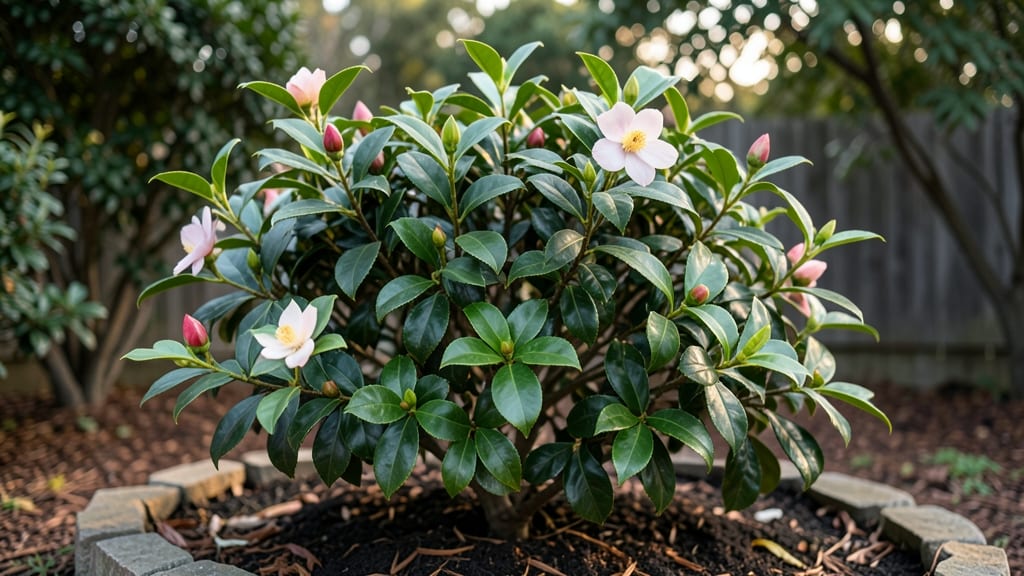
To grow tea plants, you'll need a subtropical climate with well-draining, acidic soil (pH 4.5-5.5), partial shade, and consistent moisture. Start with seeds or cuttings, maintain 60-70°F temperatures, and prune regularly to encourage bushy growth. Harvest young leaves for processing into tea after 3-5 years.
Tea plants thrive in conditions that mimic their native subtropical environments, where humidity and temperature work together to support steady growth. 🌿 The right balance of shade—about 50% sunlight—helps prevent leaf scorch while still allowing enough light for photosynthesis.
I’ve found that organic compost mixed into the soil improves drainage and nutrient absorption, which is crucial for those delicate young leaves. Many gardeners also swear by mulching to retain moisture, especially in warmer months when evaporation speeds up.
If you're starting from seeds, expect a slower process—it can take up to two years before your plant is mature enough to harvest. Cuttings, on the other hand, root faster and give you a head start.
Just be patient: the first harvest won’t be ready until the plant has established a strong root system and reached at least 3-4 feet in height.
Pruning isn’t just about shaping the plant—it’s a way to stimulate new growth and keep the leaves tender, which is key for that prized tea flavor.
💡 In This Article
- Optimal Tea Plant Growing Conditions and Climate Needs
- Step-by-Step Guide to Planting and Maintaining Tea Plants
Optimal tea plant growing conditions and climate needs
Tea plants, scientifically known as Camellia sinensis, evolved in subtropical regions where temperatures hover between 60-70°F year-round. This range is critical because tea plants are sensitive to extreme cold—below 45°F can damage leaves, while temperatures above 85°F stress the plant and reduce flavor quality.
The key here is consistency: sudden temperature swings disrupt photosynthesis and nutrient uptake, leading to stunted growth or leaf drop. In tropical climates, where humidity often exceeds 80%, tea plants struggle with fungal diseases unless airflow is carefully managed.
Sunlight needs are equally precise: tea plants require partial shade, ideally receiving 40-60% sunlight daily. Direct sun causes leaf scorch, turning tender shoots brown and crispy, while too little light results in pale, weak growth.
Think of it like growing tea in its natural understory habitat—dappled light through canopy trees creates the perfect balance. For gardeners, this means positioning plants near taller shrubs or using shade cloth (30-50% coverage) during peak afternoon sun.
The leaves themselves are delicate, with a waxy coating that helps retain moisture but can crack under intense UV exposure.
Soil composition is where science meets practicality. Tea plants demand well-draining, acidic soil with a pH between 4.5-5.5—this acidity mimics their native forest floors, where organic matter slowly decomposes.
A soil test kit is your best friend here; if your soil runs neutral (pH 7), amend it with sulfur or peat moss. The drainage requirement is non-negotiable: waterlogged roots rot quickly, while sandy soil drains too fast, starving roots of nutrients.
The ideal mix combines 60% loam, 30% organic compost, and 10% perlite for aeration.
Humidity plays a hidden but vital role. Tea plants thrive in 60-80% relative humidity, which keeps leaves supple and prevents bud dormancy. In arid climates, misting systems or placing plants on trays with pebbles and water can recreate this environment.
The trade-off? Higher humidity increases pest risks like spider mites, so regular inspections are a must. Interestingly, the first flush of tea leaves—harvested in spring—develops its signature delicate flavor precisely because of cooler temperatures and increased humidity during dormancy.
Comparing tropical vs. subtropical suitability reveals why most commercial tea farms avoid equatorial regions. While tropical climates offer year-round warmth, the lack of seasonal temperature shifts disrupts the plant's natural growth cycles.
Subtropical zones, with their distinct seasons, allow tea plants to enter a mild dormancy in winter, then burst into vigorous growth in spring.
This cycle directly impacts leaf quality: spring harvests yield the most prized first flush teas, prized for their bright, floral notes, while summer leaves tend to be bolder and more astringent.
One often-overlooked factor is wind exposure. Tea plants dislike strong winds, which desiccate leaves and break tender shoots. A windbreak—like a hedge or lattice—can protect plants while still allowing airflow.
In my own experiments, I’ve noticed that tea plants grown with gentle breezes (5-10 mph) develop stronger stems and thicker leaves compared to those in still air. The movement helps distribute nutrients and prevents fungal buildup, much like how forest canopies naturally ventilate their understories.
For those in cooler climates, microclimates can be a game-changer. South-facing slopes, greenhouses, or even large containers that can be moved indoors in winter can extend the growing season. The goal is to replicate the subtropical microclimate tea plants crave—warmth, shade, and moisture—even in less-than-ideal macroclimates.
With patience and attention to these details, you can coax even a single plant into producing harvestable leaves within 3-5 years, just like commercial farms.