Watering
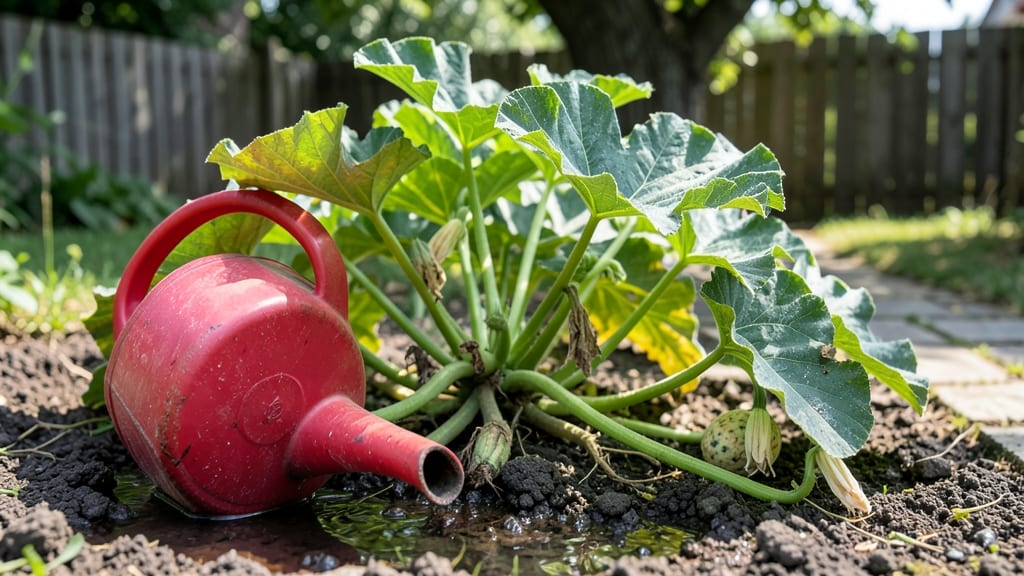
Overwatered squash plants can turn your garden from productive to pathetic in days—yellowing leaves, mushy stems, and vines that flop like overcooked noodles. 🌱 I’ve nursed back more than a dozen squash plants from this exact mess, and the fixes are simpler than you’d think.
The key isn’t just cutting back on water; it’s about giving roots room to breathe and stopping the rot before it spreads.
The damage starts when soil stays soggy for more than 24 hours, drowning roots and inviting fungal invaders like powdery mildew. You’ll spot the trouble first in the oldest leaves—yellowing, then browning edges, and vines that sag even when thirsty.
The good news? Squash is resilient. With the right adjustments, those vines bounce back within 3-5 days, and new growth appears within a week.
Start by watering only when the top inch of soil feels dry—stick your finger in, and if it’s damp, wait another day. Add a 2-inch layer of straw mulch around plants to keep moisture steady without smothering roots.
For plants already struggling, trim any blackened or mushy stems with clean shears, and let the soil dry out completely for 48 hours before resuming care.
This method works for zucchini, summer squash, and pumpkins alike, and it’s foolproof even for beginners. The secret? Patience and consistency. Once you adjust your watering rhythm, your squash will reward you with healthier vines and bigger harvests all season long.
Root Causes Of Overwatered Squash
When your squash plants start looking like they’ve been left in a swamp, it’s rarely an accident—it’s usually a mix of well-meaning mistakes and environmental factors. Understanding why this happens is the first step to fixing it. Let’s dig into the science (and soil) behind the soggy squash situation.
Squash plants thrive on consistency, not spontaneity. Their root systems are shallow and fibrous, meaning they rely on steady moisture to absorb nutrients efficiently. When you water them too much at once—especially after a dry spell—they can’t keep up. Here’s what’s happening:
- Oxygen Starvation: Soil pores fill with water, pushing out the oxygen roots need to respire. Without oxygen, roots suffocate, leading to root rot (a fungal infection that turns roots mushy).
- Nutrient Lockout: Excess water washes away essential nutrients like nitrogen and potassium, which squash plants crave for vine growth and fruit production.
- Weak Structure: Overwatered plants develop flimsy stems because they divert energy to surviving waterlogged conditions instead of strengthening their framework.
Pro Tip: 💡 Use the finger test—stick your index finger 1–2 inches into the soil. If it’s damp but not soggy, your squash is happy. If it’s drenched, hold off on watering for a day or two.
Not all soil is created equal, and squash plants hate being trapped in a waterlogged prison. If your garden has:
- Clay-heavy soil: Acts like a sponge, holding onto water for days after rain or overwatering. Roots drown because water can’t escape.
- No mulch or organic matter: Compacted soil repels water, creating a crust that prevents drainage. The surface stays saturated while roots below stay dry—a classic case of uneven moisture.
- Low-lying or sloped beds: Water pools in depressions or runs off, leaving roots in a wet-dry cycle that stresses plants.
Science Alert: 🔬 Overwatered squash in compacted soil also suffers from anaerobic conditions, where harmful bacteria thrive and release toxins that further damage roots.
Mother Nature plays a big role in whether your squash plants are swimming or thriving. Here’s how weather can turn your garden into a water park:
| Factor | How It Causes Overwatering |
|---|---|
| Frequent Rain | Heavy or consistent rainfall can deliver more water than your soil can handle, especially if you’re still watering on top of it. Squash roots can’t process excess moisture fast enough. |
| High Humidity | Humid air slows evaporation, keeping soil moisture high for longer. Combined with poor drainage, this creates a perfect storm for root rot. |
| Cooler Temperatures | Cold soil (below 60°F) reduces root activity, so plants can’t absorb water efficiently. Overwatering in these conditions leads to waterlogging. |
| Windbreaks Or Shade | If your squash is sheltered from wind or sun, soil stays cooler and wetter longer. Without evaporation, excess moisture lingers. |
Action Step: ✨ If rain is in the forecast, skip your scheduled watering. Use a moisture meter to check soil conditions—if it’s already saturated, let it dry out naturally.
Now that you know why your squash plants are throwing a pity party, the next step is to revive them—without repeating the same mistakes. Stay tuned!
Revive Your Squash Plants Now
Overwatering can feel like a silent killer for your squash plants—soft, mushy stems and yellowing leaves are clear signs your vines need a rescue mission. The good news? With the right steps, you can nurse them back to health and even prevent future water woes.
Below, we’ll tackle the most common causes of overwatering and provide practical, step-by-step fixes to get your squash thriving again.
---
Cause: Excess moisture suffocates roots, starving leaves of nutrients and oxygen. Solution: 1. 🔥 Pause Watering Immediately Let the soil dry out 2–3 inches deep before watering again. Stick your finger in the soil—if it’s damp past your first knuckle, wait.
2. 🍳 Improve Drainage Fast - For pots: Add a layer of perlite or coarse sand to the bottom before repotting (if needed). - For garden beds: Mix in compost or aged manure to loosen compacted soil. Avoid heavy clay—amend with organic matter.
3. 👨🍳 Prune Damaged Foliage Snip off yellow or blackened leaves with clean scissors to redirect energy to healthy growth. Focus on the bottom leaves first—they’re most vulnerable.
4. 🥘 Support Weak Stems If vines are floppy, prop them up with small stakes or cages to prevent further stress.
💡 Prevention Tip: Use a moisture meter or the "squeeze test" (gently press soil—it should crumble, not squish). Aim for 1 inch of water per week, adjusting for rain.
---
Cause: Soggy soil promotes fungal/bacterial rot, turning roots black and mushy. Solution: 1. ⏰ Act Fast—But Don’t Overdo It - Mild rot? Trim affected roots with sterilized pruners, then replant in fresh, dry soil. - Severe rot? Sadly, the plant may not recover. Start fresh with healthy seedlings.
2. 🔪 Disinfect Containers & Soil - Wash pots with 1 part bleach to 9 parts water, then rinse. - Solarize garden soil: Cover beds with clear plastic for 4–6 weeks to kill pathogens.
3. 🌡️ Boost Soil Health - Fungicide spray: Use neem oil or copper fungicide (follow label rates) to prevent spread. - Beneficial microbes: Add mycorrhizal fungi or compost tea to outcompete bad bacteria.
🎯 Pro Tip: Space squash plants 3–5 feet apart for airflow—crowding traps moisture and invites rot.
---
Cause: Ignoring soil type, weather, or plant signals leads to chronic sogginess. Solution: 1. 📊 Choose the Right Soil Mix Squash loves well-draining, loose soil with a pH of 6.0–6.8. Avoid garden centers’ "heavy potting mixes"—opt for: - 50% compost - 30% coconut coir or peat moss - 20% perlite or vermiculite
2. 💪 Water Smart, Not by Schedule - Morning watering (6–8 AM) reduces evaporation and fungal risk. - Drip irrigation or soaker hoses deliver water directly to roots, minimizing leaf wetness. - Mulch heavily (3–4 inches of straw or wood chips) to retain moisture without drowning roots.
3. 🥗 Monitor Weather & Adjust - Rainy days? Skip watering and let nature do the work. - Hot/dry spells? Increase frequency but reduce volume (short, frequent drinks > long soaks).
✨ Bonus Hack: Plant companion crops like marigolds or nasturtiums—they repel pests that stress squash, reducing the urge to overcompensate with water.
--- Remember: Squash plants are tough—they bounce back faster than you think when you address the real issue (too much love in the wrong form). Follow these steps, and you’ll be harvesting plump, happy squash in no time! 🎉
Frequently asked questions
How do I tell if my squash plant is overwatered vs. underwatered?
Check the soil first—if it's damp 2+ inches deep and leaves are yellow with mushy stems, it's overwatered. Underwatered plants have crispy, brown leaf edges and dry soil 1+ inch deep. For squash, drooping vines usually mean overwatering, while curled leaves signal thirst.
Can I save a squash plant with root rot from overwatering?
Only if the rot is mild! Trim blackened roots with sterilized shears, replant in fresh, dry soil with perlite, and avoid watering for 3-4 days. For severe cases, start fresh—squash can't recover from deep rot. Neem oil spray helps prevent spread to other plants.
Why do my squash leaves turn yellow first at the bottom?
Older leaves yellow first because they're the plant's "sacrificial zone"—they break down to feed new growth. Overwatering accelerates this by starving roots of oxygen. If all leaves yellow or stems soften, it's definitely water stress. Prune only the worst-affected leaves to help the plant focus energy.
How often should I water squash plants in containers vs. garden beds?
Containers dry faster—water when the top 1 inch feels dry (every 2-3 days in hot weather). Garden beds need 1 inch per week, adjusting for rain. Use your finger to check depth—squash roots need air, not soggy soil. Morning watering prevents fungal issues.
Will mulch help or hurt overwatered squash?
Mulch helps only if your soil drains well! Use 2-3 inches of straw to regulate moisture, but keep it 2 inches away from stems to prevent rot. Avoid thick layers on compacted clay—it traps water. For recovery, remove old mulch first to let soil dry out.