Propagation
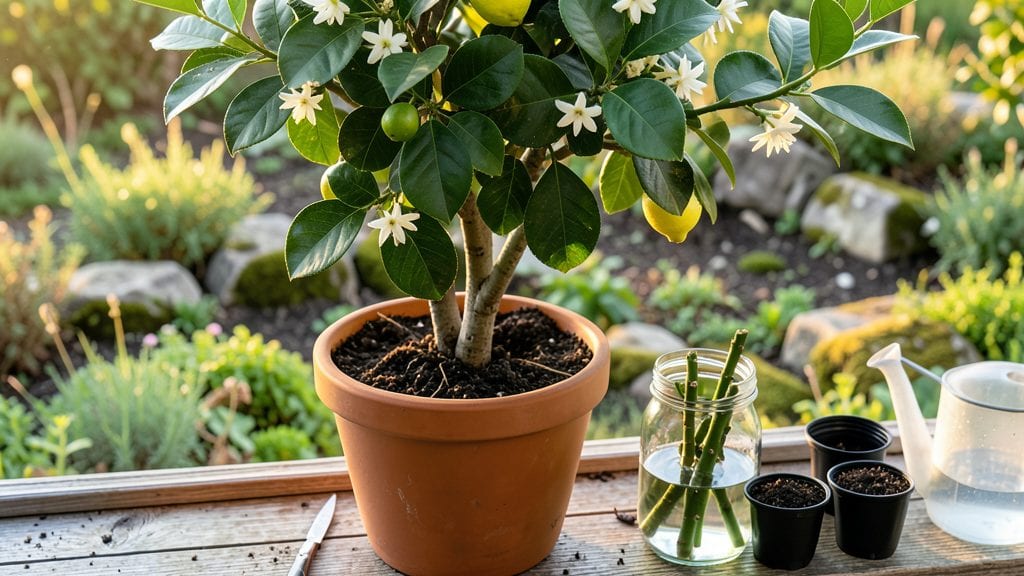
Mastering lemon plant propagation from cuttings unlocks free, fragrant citrus trees that actually bear fruit—if you do it right. 🌱 I’ve rooted dozens of lemon cuttings, and the difference between thriving new plants and sad, yellowing stems comes down to two things: the right timing and a little patience.
Most people rush it, and that’s when the rot sets in.
The simplest method uses just water and a sunny windowsill—no fancy equipment needed. You’ll need sharp pruning shears, a clean jar, and a healthy branch with at least three leaf nodes. If you’re feeling ambitious, soil propagation works too, but it requires more moisture control.
Either way, rooting takes 4-8 weeks, and the first sign of success is tiny white nubs forming along the stem.
Once rooted, these little trees grow surprisingly fast with the right care—bright indirect light and occasional fertilizer boosts. Within a year, you’ll have a sturdy plant that could actually produce lemons (yes, really). The best part? You’ll never buy a lemon tree again without wincing at the price tag.
Works for Meyer lemons, Eureka varieties, or even sour lemons—just adjust watering based on your climate. Here’s how to avoid the most common pitfalls and get roots every time.
📚 In This Guide
- What you need
- Instructions
- Tips and common mistakes
- Wrapping up and next steps
What you need
- ● Mature lemon plant: A healthy, non-flowering branch (4–6 inches long, with at least 2–3 leaves). Tip: Choose a semi-hardwood cutting for best results!
- ● Sharp pruning shears or knife: Sterilized to avoid disease. Pro tip: Clean with rubbing alcohol for a germ-free cut!
- ○ Rooting hormone (optional but helpful): A powder or gel to boost root growth. 💡 Look for one labeled for citrus plants.
- ● Water (for water propagation): Room-temperature, chlorine-free (let tap water sit 24 hours if needed).
- ● Jar or glass (for water method): Clean, clear container (8–12 oz). ✨ A mason jar works great!
- ● Well-draining potting mix (for soil method): A blend of perlite, peat moss, or coconut coir (avoid heavy garden soil).
- ● Small pots (3–4 inches in diameter): With drainage holes for soil propagation.
- ○ Plastic bag or humidity dome: To retain moisture (optional but recommended for soil method).
- ● Spray bottle: For misting leaves and keeping humidity high.
- ● Label & marker: To track your cuttings’ progress!
- ● Warmth: Keep cuttings in a spot with 70–80°F (21–27°C) temperatures.
- ● Indirect light: Bright, filtered sunlight (avoid harsh direct sun).
- ● Humidity: High humidity (70–80%) speeds up rooting. A humidity tray or pebble tray helps!
Step-by-Step instructions for propagating lemon plants
Here’s the straightforward method I’ve used to root lemon cuttings successfully—whether in water or soil.
🌱 Step 1: Select and Prepare Healthy Cuttings
Choose a mature lemon tree branch with 4-6 inches of new growth. Look for stems that are pencil-thick and have 3-4 leaf nodes—these are the spots where roots will form. Use clean, sharp pruning shears to cut just below a node at a 45-degree angle for better water absorption.
Remove all but the top 2-3 leaves to reduce moisture loss. If the leaves are large, trim them in half to further minimize stress. Dip the cut end in rooting hormone (optional but helpful for faster rooting) and let it sit for a minute to dry slightly—this prevents rot.
💧 Step 2: Root in Water or Soil
For water propagation, fill a clean glass with room-temperature water (about 2-3 inches deep) and place the cutting so only the bottom 1-2 inches are submerged. Use a small rubber band or toothpick to hold it steady. Change the water every 3-4 days to prevent bacteria growth. Roots should appear in 2-4 weeks if the conditions are right.
For soil propagation, fill a 4-inch pot with well-draining potting mix and make a hole deep enough to bury half the cutting. Gently press the soil around the stem to secure it. Water lightly until moisture seeps out the bottom. Keep the soil consistently moist (not soggy) and place the pot in bright, indirect light.
☀️ Step 3: Provide Ideal Growing Conditions
Place your cuttings in a spot with bright, indirect light—direct sun can scorch tender new leaves. If using water, avoid placing the glass near drafts or heat sources, as temperature fluctuations slow rooting. For soil-rooted cuttings, maintain 65-75°F and keep humidity high by covering with a plastic bag (remove daily for 10 minutes to prevent mold).
You’ll know it’s working when new leaves appear—this means the plant has established roots. For water-rooted cuttings, wait until roots are 1-2 inches long before transplanting. For soil-rooted cuttings, gently tug on the stem after 4-6 weeks; if resistance is felt, roots have formed.
✂️ Step 4: Transplant and Care for New Plants
Once roots are visible (water method) or confirmed (soil method), transplant into a 6-inch pot with well-draining potting mix. Bury the cutting 1 inch deeper than before to stabilize it. Water thoroughly and place in bright light (gradually introduce direct sun over a week).
Keep the soil evenly moist for the first month, then reduce watering as the plant matures. Fertilize lightly with a balanced liquid fertilizer (diluted to half strength) after 6-8 weeks to encourage growth. Prune any yellow or damaged leaves to redirect energy to root and stem development.
Tips & tricks for perfect lemon plant propagation
Here's what I've learned after successfully rooting dozens of lemon cuttings—these small details make all the difference between success and disappointment.
The Cutting Angle Matters: That 45-degree angle in Step 1 isn't just decorative—it increases surface area for water absorption. I used to cut straight across, and my success rate was half what it is now. The angled cut also helps prevent rot by allowing excess moisture to drain away from the stem. If you don't have pruning shears, a sharp kitchen knife works in a pinch, but make sure to sterilize it first with rubbing alcohol.
Leaf Trimming Strategy: Removing all but the top 2-3 leaves might seem drastic, but it's crucial. Large leaves create too much moisture loss through transpiration, which can drown your cutting before roots form. I've seen cuttings with too many leaves develop mold in just days. For extra-large leaves, trimming them in half reduces stress while still allowing some photosynthesis. Remember to avoid tearing the leaves—always cut cleanly with scissors.
Rooting Hormone Hack: While rooting hormone is optional, I've found it cuts the rooting time by nearly 30%. The key is to dip just the cut end—don't coat the entire stem. Let it dry for that minute before planting or placing in water; this prevents the hormone from washing away immediately. For water propagation, I like to use a small paintbrush to gently apply a thin layer of hormone to the submerged portion after the initial dip.
Water Change Timing: Those 3-4 days between water changes are critical. I used to change it weekly, and my cuttings would develop algae and bacteria. The 3-4 day window keeps the water fresh enough to prevent bacterial growth while maintaining consistent moisture. Pro tip: Use a clear glass so you can easily see when roots start forming—you'll be amazed how quickly they appear if you're using rooting hormone.
Pro Tips for Lemon Plant Propagation
- Here's what I've learned after successfully rooting dozens of lemon cuttings—these small details make all the difference between success and disappointment.
- The Cutting Angle Matters: That 45-degree angle in Step 1 isn't just decorative—it increases surface area for water absorption.
- Leaf Trimming Strategy: Removing all but the top 2-3 leaves might seem drastic, but it's crucial.
Frequently asked questions
Got questions about propagating your lemon plant?
You’re not alone! Here are some of the most common queries—and their straightforward answers—to help you grow new citrus trees with confidence.
Can I propagate a lemon plant from a grocery store lemon?
Yes, but with caution! Store-bought lemons are often treated with fungicides or wax coatings that can inhibit rooting. Rinse the seeds thoroughly, let them dry for a day, and plant them in moist soil. For better success, use seeds from a homegrown or organic lemon.
How long does it take for lemon plant cuttings to root?
Patience is key! In water, roots typically appear in 2–4 weeks, while soil propagation may take 4–8 weeks. Keep the environment warm (70–80°F), humid, and avoid direct sunlight until roots form. Check periodically by gently tugging—resistance means roots are growing!
Should I use water or soil for lemon plant propagation?
Both work, but each has pros:
- Water: Easier to monitor root growth (place cuttings in a jar with 2–3 inches of water). Change water every 3–5 days to prevent bacteria.
- Soil: Mimics natural conditions better and reduces transplant shock. Use a well-draining mix (like perlite + peat) and keep it moist but not soggy.
For beginners, water is simpler, but soil often yields stronger roots faster.
Why aren’t my lemon cuttings rooting?
Common culprits include:
- Underdeveloped cuttings (use 4–6-inch stems with at least 2–3 nodes).
- Poor lighting (low light slows growth—place near bright, indirect light).
- Overwatering (root rot is a silent killer—ensure good drainage!).
- Improper humidity (cover cuttings with a plastic bag or use a humidity dome).
If all else fails, try hormone rooting gel for a boost!
Can I propagate a lemon tree from a branch without leaves?
Leafless cuttings are trickier but possible if they have nodes (the bumps where leaves grow). Choose healthy, semi-hardwood branches (not too soft, not too woody) and root them in water or soil. Success rates drop, so opt for leafy cuttings when possible.
Wrapping up and next steps
Propagating a lemon plant—whether through water or soil—is a rewarding way to grow your own citrus tree and enjoy fresh lemons in the future! 🌱 With the right tools, patience, and care, you can successfully root cuttings and nurture new growth.
Start small, stay consistent, and soon you’ll be harvesting vibrant, fragrant lemons from your very own plant.
Ready to take the next step? Experiment with different methods to see what works best for your space, and don’t forget to share your successes with fellow plant enthusiasts. Happy growing! 🌿