
Pests and Diseases
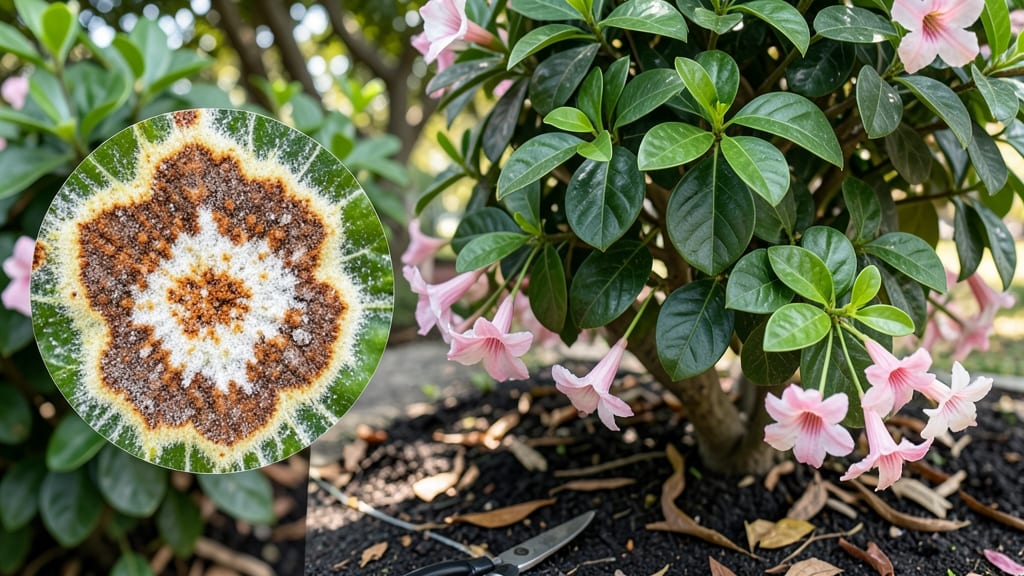
Mandevilla plant diseases can turn your vibrant tropical climber into a sad, spotted mess if you don’t catch them early. 🌿 I’ve seen powdery mildew turn glossy leaves white in just two weeks, and leaf spot turn those rich green leaves into a sad, brown canvas.
The good news? Most of these fungal blights respond well to quick action—once you know what to look for.
Fungal diseases like powdery mildew or leaf spot thrive when Mandevillas get too wet, lack airflow, or sit in shady spots. Bacterial infections often show up as oozing lesions, while environmental stress—like sudden temperature drops—can mimic disease symptoms.
The key is acting fast: prune infected leaves immediately, improve airflow, and avoid overhead watering to keep your plants healthy.
You’ll learn to spot early signs—like tiny yellow spots or fuzzy white patches—and how to treat them with simple, organic fixes. A mix of neem oil and water, applied at the first sign of trouble, can stop powdery mildew in its tracks.
With the right care, your Mandevilla will bounce back stronger, with glossy leaves and those showstopping blooms you love.
This works for both potted Mandevillas on patios and those climbing trellises in your garden. Whether you’re dealing with a single plant or a whole collection, these steps will keep your tropical beauty thriving all season long.
Root Causes Behind Mandevilla Struggles
Mandevilla plants, with their vibrant blooms and lush foliage, are stunning additions to any garden—but they’re not invincible. When diseases strike, they often do so because of underlying environmental or care-related factors. Understanding why these issues pop up is half the battle in prevention.
Below, we break down the science behind the most common culprits, so you can address the real problems, not just the symptoms.
Fungal diseases like powdery mildew and leaf spot thrive in damp, stagnant environments. Here’s why:
- Poor Air Circulation: Mandevillas love humidity, but excessive moisture—especially when airflow is restricted—creates the perfect breeding ground for fungal spores.
Think of it like a sauna for pathogens: warmth + moisture = fungal feast. 🍄 - Why it happens: Dense foliage or crowded plantings trap humidity near leaves, while heavy morning dew or overhead watering keeps surfaces damp for too long. - Science alert: Fungi like Oidium (powdery mildew) release spores that germinate within 4–6 hours of leaf wetness.
That’s why a single night of poor drainage or improper watering can trigger an outbreak.
- Overwatering or Waterlogged Soil: - Mandevillas are drought-tolerant once established, but soggy roots weaken the plant’s defenses, making it susceptible to root rot (caused by Phytophthora or Pythium). - How it starts: Waterlogged soil cuts off oxygen to roots, stressing the plant.
Weak roots can’t absorb nutrients efficiently, and fungal pathogens seize the opportunity to invade through root wounds or cracked bark.
A malnourished mandevilla is like a person with a weakened immune system—easy pickings for pests and diseases.
- Lack of Potassium or Phosphorus: - These nutrients are critical for cell wall strength and disease resistance.
A deficiency (often seen as yellowing leaves or stunted growth) makes plants more prone to bacterial leaf spot or anthracnose. - Why it happens: Over-fertilizing with nitrogen (for lush green leaves) while neglecting potassium/phosphorus creates an imbalance. Mandevillas need balanced 6-10-10 or 8-3-9 fertilizer ratios for resilience.
- Iron or Magnesium Deficiencies: - Yellowing between leaf veins (interveinal chlorosis) signals poor uptake of these micronutrients.
Weakened chlorophyll production = less energy to fight off pathogens like Alternaria (a common cause of dark, crinkled lesions). - Science note: Iron deficiency disrupts the plant’s oxidative stress response, making it harder to combat fungal invasions. 🧪
Pests don’t just eat leaves—they injure plant tissues, creating entry points for bacteria and fungi.
- Sap-Sucking Insects (Aphids, Whiteflies, Scale): - These pests excrete honeydew, a sticky residue that attracts sooty mold (Capnodium fungi).
The mold coats leaves, blocking sunlight and further stressing the plant. - How it escalates: Honeydew also fosters bacterial growth (like Erwinia species), leading to soft, mushy spots on stems and leaves.
- Chewing Insects (Caterpillars, Spider Mites): - Physical damage from feeding creates wounds where fungal spores can land and infect.
For example, gray mold (Botrytis cinerea) often invades through torn leaf edges or flower petals. - Pro tip: Inspect new growth and undersides of leaves—silver or bronze speckling often signals mite activity before visible damage appears.
Mandevillas are tropical plants, but temperature swings, harsh sun, or sudden changes can shock their systems, making them disease-prone.
- Temperature Fluctuations: - Dropping below 50°F (10°C) or sudden cold snaps weaken the plant’s cuticle (the waxy leaf coating that repels pathogens).
Cold-stressed leaves are 3x more likely to develop fungal infections. - Why it matters: The cuticle acts as a barrier—when it cracks (from cold or windburn), spores land on exposed tissue and germinate rapidly.
- Intense Sunlight Without Acclimation: - While mandevillas love sun, sudden exposure (like moving them from shade to full sun) causes sunburn, which looks like white or brown patches.
These damaged areas are hotspots for secondary infections like Septoria leaf spot. - Solution: Harden off plants gradually—2–3 weeks of partial sun before full exposure.
Fungal spores and bacteria linger in garden tools, soil, and debris. Here’s how they hitch a ride:
- Reusing Contaminated Tools: - Pruners, trowels, or stakes can transfer pathogens from diseased plants to healthy ones.
For example, Phytophthora (root rot) spores survive in soil for years and spread via dirty tools. - Action step: Disinfect tools with 70% rubbing alcohol or a 10% bleach solution between uses.
- Not Removing Infected Plant Debris: - Leaving fallen leaves, spent blooms, or pruned stems on the ground creates a spore buffet for next year’s plants.
Fungi like Colletotrichum (anthracnose) overwinter in dead tissue, ready to reinfect. - Rule of thumb: Clean up debris within 48 hours of falling to starve pathogens.
Not all mandevillas are created equal—some hybrids are more prone to specific diseases due to their parentage.
- Hybrid Vulnerabilities: - For example, Mandevilla ‘Alice du Pont’ is stunning but highly susceptible to powdery mildew due to its thick, glossy foliage (which traps moisture).
Other varieties like ‘Sunset Rouge’ may struggle with bacterial blight if grown in humid climates. - What to do: Research your specific cultivar’s disease resistance ratings before planting. Ask local nurseries which varieties thrive in your microclimate.
- Rootstock Issues: - Many mandevillas are grafted onto hardy rootstock (like Dipladenia) for cold tolerance.
If the graft union fails or the rootstock is weak, the entire plant becomes stressed and disease-prone. - Signs to watch: Sudden wilting, stunted growth, or unusual leaf drop near the base may indicate rootstock problems.
Most mandevilla diseases are opportunistic—they exploit weaknesses caused by water, nutrients, pests, or stress. By addressing these root causes, you can dramatically reduce the risk of fungal blights and bacterial infections.
Think of it like building a fortress: strong walls (healthy leaves), guards (pest control), and clean surroundings (sanitation) keep invaders out.
💡 Pro Tip: Keep a plant health journal to track watering, fertilizing, and environmental changes. Patterns often reveal the real triggers behind outbreaks!
How to Fix Mandevilla’s Fungal Foes
Reviving your Mandevilla from fungal infections starts with quick action and smart prevention. Below, we map the most common diseases to their fixes—plus pro tips to keep your plant thriving. Think of this as your emergency repair kit for leaf spots, powdery mildew, and root rot.
Cause: Alternaria, Cercospora, or bacterial blight (water-soaked lesions, yellow halos). Fix It Fast:
- 🔪 Prune the Problem – Snip off infected leaves (sterilize scissors with rubbing alcohol).
- 💦 Spray Fungicide – Use copper-based or neem oil (1 tsp per quart of water) every 7–10 days.
- 🌡️ Boost Airflow – Space plants 18–24 inches apart; avoid overhead watering.
Prevention Pro Tips: ✔ Water at the base (never leaves) in the morning so foliage dries by night. ✔ Clean up debris—fallen leaves = fungal hotels. Remove weekly. ✔ Space for sunshine—Mandevillas love 6+ hours of sun but hate soggy feet.
Cause: Oidium fungus (white, powdery coating on leaves). Fix It Fast:
- 🧼 Soap It Off – Mix 1 tbsp baking soda + 1 tsp dish soap + 1 gallon water. Spray every 3 days until gone.
- 🌿 Boost Humidity Control – If indoors, use a dehumidifier or fan. Outdoors? Plant in full sun (fungus thrives in shade).
- 🌱 Repot if Needed – If roots are cramped, upgrade to a well-draining pot (terracotta > plastic).
Prevention Pro Tips: ✔ Wipe leaves monthly with a damp cloth (keeps spores at bay). ✔ Avoid wetting foliage—use a soaker hose for deep watering. ✔ Rotate plants every few weeks for even sunlight exposure.
Cause: Phytophthora or Pythium (yellowing leaves, mushy stems, foul smell). Fix It Fast:
- 🚰 Drain & Dry – Remove the plant, rinse roots in water, and trim black/mushy roots with sterilized shears.
- 🏡 Repot in Fresh Mix – Use a cactus/succulent blend (add perlite or orchid bark for drainage).
- 💧 Adjust Watering – Let soil dry 1–2 inches deep between waterings. Use a moisture meter if unsure.
Prevention Pro Tips: ✔ Check pots—if water sits in saucers for >30 mins, drill drainage holes. ✔ Mulch lightly (1 inch) with orchid bark to wick away excess moisture. ✔ Skip the saucer—water directly into the pot to avoid soggy bottoms.
Cause: Xanthomonas bacteria (watery lesions, oozing sap). Fix It Fast:
- 🔥 Quarantine Immediately – Isolate the plant to stop spread.
- 🧴 Antibacterial Spray – Use copper fungicide + 1% hydrogen peroxide (1 part peroxide to 9 parts water). Spray every 5 days.
- 🗑️ Destroy Bad Leaves – Burn or trash heavily infected foliage (do not compost).
Prevention Pro Tips: ✔ Sterilize tools after pruning—bleach solution (1:10) or 70% isopropyl alcohol. ✔ Avoid overhead watering—use a watering wand for targeted base watering. ✔ Rotate crops if growing in garden beds (bacteria linger in soil).
- 💡 Light Check – Mandevillas need bright, indirect light (south/west windows or grow lights indoors).
- 🌡️ Temperature Sweet Spot – Keep between 60–85°F (avoid cold drafts or AC vents).
- 🍽️ Fertilize Lightly – Use a balanced 10-10-10 fertilizer once a month (diluted to half strength during recovery).
🎯 Final Tip: When in doubt, act fast—fungus and bacteria spread like wildfire. A little pruning + fungicide + airflow can turn a dying Mandevilla into a bloom machine again! 🌸
Frequently asked questions about Mandevilla plant diseases
What are the first signs my Mandevilla has a fungal infection?
Watch for tiny yellow spots with brown centers (leaf spot) or a white, powdery coating (powdery mildew) on leaves. Early signs also include stunted growth or wilting—these often mean root rot or bacterial blight. Check undersides of leaves first, as fungal spores love damp, hidden spots.
Can I save a Mandevilla with root rot? What should I do?
Yes, but act fast! Remove the plant, rinse roots, and trim away any black or mushy sections with sterilized shears. Repot in fresh, well-draining soil (cactus mix works well) and reduce watering until the soil dries 1-2 inches deep between waterings. Avoid saucers that trap moisture.
Is neem oil safe to use on Mandevilla flowers and blooms?
Neem oil is generally safe when used properly, but avoid spraying directly on open flowers or buds. Apply in the early morning or late afternoon when blooms are closed, and rinse off any residue before flowers open. For heavy infestations, focus treatments on leaves and stems instead.
Why does my Mandevilla keep getting powdery mildew even after treatment?
Powdery mildew often returns when humidity stays high and airflow is poor. Boost airflow by spacing plants 18-24 inches apart, and avoid overhead watering. Prune dense foliage to improve circulation, and consider a small fan indoors if humidity exceeds 60%.
Can I use the same fungicide on both my Mandevilla and other tropical plants?
Not always—some fungicides contain ingredients that may harm sensitive tropical plants. Always check product labels for compatibility. Copper-based fungicides are generally safe for most tropicals, but neem oil is a safer universal option for Mandevillas and their neighbors.