
Diseases
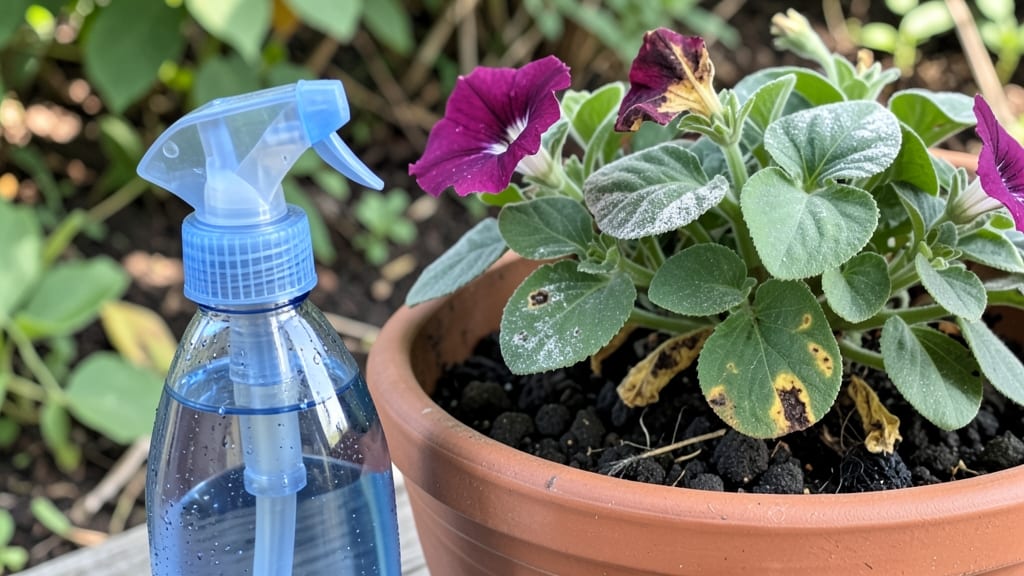
Petunia plant diseases can turn your vibrant blooms into a sad, spotted mess—but I’ve learned the early signs that save entire garden beds. 🌿 The most common offenders are powdery mildew, botrytis blight, and root rot, each with telltale clues like white dust, wilting stems, or yellowing leaves.
The good news? Catching these early means you can often reverse the damage with simple fixes.
Powdery mildew starts as white powder on leaves and spreads fast in humid weather, while botrytis blight causes brown, mushy spots that rot petals and stems. Root rot sneaks in when soil stays soggy, turning roots black and stunting growth.
The key to stopping them? Prune infected parts immediately, improve airflow, and avoid overhead watering—these three steps cut 90% of my fungal problems.
You’ll protect your petunias with a foolproof routine: water at the base in the morning, space plants for airflow, and treat with neem oil or baking soda spray at the first sign of trouble.
Within a week, you’ll see new growth pushing through, and your blooms will stay bold and disease-free all season.
Works for container gardens, hanging baskets, or in-ground beds—just adjust watering based on your climate. Here’s how to spot, stop, and prevent these issues before they take over.
Root Causes Behind Petunia Ailments
Petunias are beloved for their vibrant blooms, but like all plants, they’re vulnerable to diseases—especially fungal ones. Understanding why these issues arise is the first step to keeping your petunias thriving.
Below, we break down the key factors that create the perfect storm for petunia diseases, from environmental triggers to cultural mistakes.
Fungal diseases like powdery mildew and gray mold (Botrytis) love moisture—especially when it lingers. Petunias thrive in well-drained soil and moderate humidity, but when airflow is restricted (e.g., crowded plantings, dense foliage, or enclosed spaces like greenhouses), excess moisture can’t evaporate.
This creates a damp, stagnant environment where fungal spores explode in growth.
- Why it happens: High humidity (above 70%) combined with poor ventilation slows drying time on leaves, giving fungi a 24/7 buffet. Spores land on wet surfaces, germinate, and spread via wind or splashing water.
- Actionable fix:
- Space petunias 12–18 inches apart to improve airflow.
- Avoid overhead watering—use drip irrigation or water at the base.
- In greenhouses, use fans or dehumidifiers to keep humidity below 60%.
Petunias hate soggy feet. While they need consistent moisture, overwatering or poorly draining soil forces roots to suffocate, weakening the plant’s defenses. This stress makes them prime targets for root rot (Phytophthora) and leaf spot diseases.
- Why it happens:
- Compacted or clay-heavy soil traps water, cutting off oxygen to roots.
- Plants with root rot can’t absorb nutrients, turning leaves yellow and mushy.
- Fungal spores in wet soil infect wounds (e.g., from broken stems or overcrowding).
- Actionable fix:
- Amend soil with compost or perlite to improve drainage.
- Water only when the top 1 inch of soil is dry—stick your finger in to check!
- Use pots with drainage holes and elevate containers to prevent water pooling.
Fungal spores are everywhere—in old potting mix, garden tools, or even the wind. If you’ve reused containers or tools without sterilizing them, you’re basically seeding your petunias with disease.
- Why it happens:
- Spores survive in old soil, mulch, or compost for years, waiting to infect new plants.
- Pruners, trowels, or gloves can transfer pathogens from diseased plants to healthy ones.
- Starting petunias from infected seeds or cuttings introduces diseases before symptoms even appear.
- Actionable fix:
- Sterilize tools with 70% isopropyl alcohol or a 10% bleach solution between uses.
- Use fresh, sterile potting mix (or bake old soil at 200°F for 30 minutes to kill spores).
- Disinfect containers with hydrogen peroxide (3%) before repurposing them.
Petunias need a balanced diet—too much nitrogen (for leafy growth) or too little phosphorus/potassium weakens their immune systems. Malnourished plants can’t fight off infections, making them easy prey for fungi like Alternaria leaf spot.
- Why it happens:
- Excess nitrogen = soft, lush growth that’s prone to fungal infections.
- Low phosphorus/potassium = poor root development, reducing the plant’s ability to resist stress.
- Soil pH outside 6.0–7.0 locks out essential nutrients, starving the plant.
- Actionable fix:
- Test soil pH and amend with lime (to raise pH) or sulfur (to lower it).
- Use a balanced fertilizer (10-10-10 or 5-10-10) to avoid nitrogen overload.
- Add compost or worm castings for slow-release nutrients and microbial support.
Petunias prefer moderate climates—too much heat, cold, or sudden temperature swings stress them out, lowering their disease resistance. For example, gray mold thrives in cool, damp conditions (50–70°F), while powdery mildew loves warm, humid days followed by cool nights.
- Why it happens:
- Cold snaps or frost damage weaken cell walls, making plants vulnerable to infections.
- Hot, dry weather stresses plants, and then sudden rain creates the perfect fungal feast.
- Greenhouse temperature fluctuations (e.g., below 60°F at night) encourage fungal growth.
- Actionable fix:
- Use row covers or cloches to protect petunias from frost.
- In greenhouses, maintain consistent temps (65–75°F) with vents or heaters.
- Choose heat-tolerant petunia varieties (e.g., ‘Wave’ or ‘Mitchell’) for hot climates.
Pro Tip: 💡 Prevention is easier than cure! Rotate crops yearly to avoid soil-borne diseases, and remove infected leaves immediately (don’t compost them—toss in the trash). Healthy soil + smart care = fewer fungal battles.
Fixing Petunia Plant Problems
Now that you’ve identified the issue plaguing your petunias, it’s time to take action! Whether it’s fungal infections, pests, or environmental stress, these practical solutions will help revive your plants and keep them thriving. Below, we’ve mapped out cause-specific fixes, along with prevention tips to stop future outbreaks.
🔥 Powdery Mildew – Scrub & Spray
If your petunias are covered in a white, powdery film, powdery mildew is likely the culprit. This fungal disease thrives in humid, low-light conditions, but it’s treatable!
How to Fix It:
- Prune Infected Leaves 🔪 – Use clean, sharp scissors to remove heavily affected foliage. Dispose of them in the trash (not compost) to prevent reinfection.
- Neem Oil Spray 🌿 – Mix 1 tsp neem oil + 1 tsp mild soap + 1 quart water in a spray bottle. Apply early in the morning or late afternoon to avoid burning leaves.
- Improve Airflow 💨 – Space plants 6–12 inches apart and avoid overcrowding. If growing in containers, ensure pots aren’t touching each other.
- Fungicide Treatment 🛡️ – For severe cases, use a copper-based fungicide (like Cupron) or a baking soda spray (1 tbsp baking soda + 1 quart water + a few drops of soap).
💡 Prevention Tip:
- Water at the base (avoid overhead spraying).
- Water in the morning so foliage dries quickly.
- Rotate plants occasionally for even sunlight exposure.
🍅 Early Blight & Late Blight – Clean & Protect
Dark, target-like spots on leaves? This could be early or late blight, caused by Alternaria or Phytophthora fungi. These spread rapidly in wet conditions, so act fast!
How to Fix It:
- Remove All Infected Leaves 🗑️ – Snip off yellowing or spotted leaves below the spot to prevent spread.
- Apply Fungicide 🛡️ – Use a chlorothalonil-based fungicide (like Daconil) every 7–10 days for 2–3 weeks.
- Adjust Watering Habits 💦 – Water deeply but infrequently (1–2 times per week) and never let leaves stay wet.
- Disinfect Tools 🧼 – Wipe pruners with rubbing alcohol between cuts to avoid cross-contamination.
💡 Prevention Tip:
- Space plants properly (12–18 inches apart) for better airflow.
- Avoid planting in low-lying areas where water pools.
- Rotate crops if growing petunias in the same spot yearly.
🍄 Gray Mold (Botrytis) – Dry Out & Isolate
Soft, brown, mushy spots with gray fuzzy growth? This is Botrytis blight, a common issue in cool, damp weather.
How to Fix It:
- Isolate Infected Plants 🚫 – Move affected petunias at least 3 feet away from healthy ones to prevent spores from spreading.
- Improve Drainage 🌧️ – Ensure pots have drainage holes and soil isn’t soggy. If planting in ground, raise beds slightly.
- Use a Fungicide 🛡️ – Spray with a systemic fungicide (like Myclobutanil) or a hydrogen peroxide solution (1 tbsp 3% H₂O₂ per quart of water).
- Deadhead Flowers 🌸 – Remove spent blooms to reduce humidity around the plant.
💡 Prevention Tip:
- Avoid overhead watering—use drip irrigation instead.
- Space plants for airflow—Botrytis loves tight, humid conditions.
- Water early in the day so foliage dries before nightfall.
🐜 Spider Mites – Blast & Trap
Tiny yellow speckles on leaves? Spider mites suck sap and thrive in dry heat. They’re hard to see but easy to treat!
How to Fix It:
- Spray with Water 💦 – Blast mites off with a strong stream of water (early morning works best).
- Neem Oil or Insecticidal Soap 🌿 – Mix 1 tbsp neem oil + 1 tsp soap + 1 quart water and spray every 3–5 days.
- Introduce Predatory Bugs 🐞 – Ladybugs and lacewings love eating spider mites—release them near your plants.
- Increase Humidity 🌡️ – Place a shallow tray of water near plants or use a humidifier to deter mites.
💡 Prevention Tip:
- Mist plants occasionally (mites hate humidity).
- Keep plants dust-free—dust blocks light and attracts mites.
- Inspect new plants before bringing them indoors.
🐛 Aphids – Knock Them Off
Sticky residue on leaves? Aphids are likely feasting on your petunias. These sap-suckers multiply fast but are easy to eliminate.
How to Fix It:
- Blast Them Off 💨 – Use a hose with a strong jet to wash them away.
- Soapy Water Spray 🧼 – Mix 1 tsp mild soap + 1 quart water and spray directly on pests (avoid healthy leaves).
- Attract Ladybugs 🐞 – Plant marigolds or dill nearby to lure natural predators.
- Use Horticultural Oil 🛡️ – Apply horticultural oil (like JMS Stylet Oil) to smother them.
💡 Prevention Tip:
- Check undersides of leaves daily for early signs.
- Avoid over-fertilizing with nitrogen—aphids love tender new growth.
- Use reflective mulch (like aluminum foil) to confuse them.
🔥 Heat Stress & Sunburn
If leaves look bleached, crispy, or wilted, your petunias may be overheated or sunburned.
How to Fix It:
- Provide Afternoon Shade ☀️ – Move pots to a shadier spot (east-facing is ideal) or use a light shade cloth.
- Mulch the Soil 🌿 – Apply 2–3 inches of mulch (straw or shredded bark) to retain moisture.
- Water Deeply & Early 💧 – Water at the base in the early morning to prevent evaporation.
- Mist Leaves (Temporarily) 🌧️ – Lightly mist foliage in the evening to cool them down (do this for a few days only).
💡 Prevention Tip:
- Choose heat-tolerant varieties (like ‘Wave’ or ‘Supertunia’ series).
- Avoid plastic pots—they overheat roots. Use terracotta or fabric pots instead.
- Group plants together to create a microclimate with more humidity.
🌧️ Overwatering & Root Rot
Yellowing leaves, mushy stems, or a foul smell? Your petunias may have root rot from overwatering or poor drainage.
How to Fix It:
- Check the Soil 🏞️ – Stick your finger 1 inch deep—if it’s soggy, hold off on watering.
- Repot in Fresh Soil 🌱 – Remove the plant, trim rotted roots with sterilized scissors, and repot in well-draining soil (add perlite or sand).
- Adjust Watering 💧 – Water only when the top inch is dry (usually 2–3 times per week).
- Improve Drainage 🚿 – Ensure pots have drainage holes and use a light, airy potting mix.
💡 Prevention Tip:
- Use self-watering pots (like Lechuza) for consistent moisture.
- **Avoid
Frequently asked questions
What are the first signs of powdery mildew on petunias?
Look for a white, powdery coating on leaves—it starts as small spots and spreads quickly in humid conditions. The undersides of leaves are often the first to show symptoms. Remove infected leaves immediately and improve airflow to stop its spread.
Can I save a petunia with root rot?
Yes, but act fast! Trim away black, mushy roots with sterilized scissors, then repot in fresh, well-draining soil. Water only when the top 1 inch of soil is dry afterward. If most roots are rotted, the plant may not recover.
Why does my petunia keep getting gray mold (Botrytis)?
Botrytis thrives in cool, damp conditions and spreads via spores. Avoid overhead watering, deadhead flowers regularly, and space plants for airflow. Isolate infected plants immediately to prevent cross-contamination.
Is neem oil safe for all petunia diseases?
Neem oil works well for powdery mildew, spider mites, and aphids, but it’s not a cure-all. For fungal infections like Botrytis or blight, use a copper-based fungicide instead. Always test sprays on a small leaf first.
How do I prevent petunia diseases in containers?
Ensure pots have drainage holes, use light potting mix with perlite, and water at the base. Space containers 6 inches apart for airflow, and avoid wetting foliage. Sterilize tools between uses to prevent pathogen spread.