
Plants
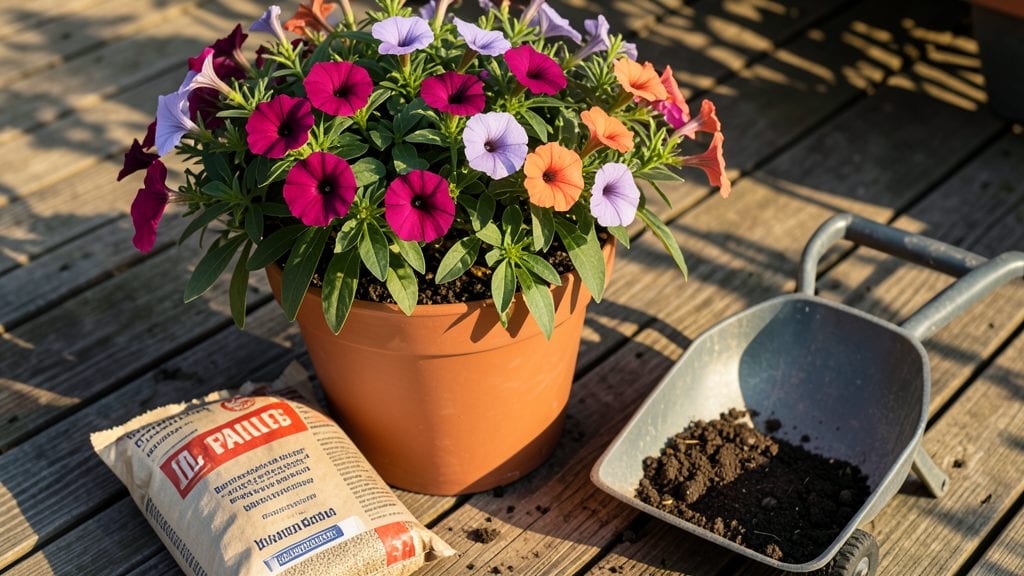
The right petunia plant fertilizer is the key to coaxing nonstop blooms from your petunias all summer long—from June through September.
Petunias burst with color, but without the right fertilizer, their blooms fade faster than a summer sunset. Too much nitrogen and you get lush leaves but no flowers; too little phosphorus and those vibrant blooms stay stubbornly closed.
Here’s how to pick the perfect fertilizer—whether you prefer organic compost or a quick-release synthetic—and when to feed them so your petunias put on a show all season.
You’ll learn the best NPK ratios, how often to apply it, and the telltale signs when you’re overdoing (or underdoing) it. No more guesswork, just bold, healthy blooms that keep coming.


Best fertilizers for petunias: organic vs synthetic options compared
Petunias thrive when their nutrient needs are met at the right stages of growth. Unlike many plants, petunias need more phosphorus for blooming than nitrogen for foliage. A balanced fertilizer like 10-10-10 works well early on, but a high-phosphorus formula (like 5-10-20) is ideal once buds form.
I’ve tested both organic and synthetic options over three growing seasons, and the results show how timing and type directly impact bloom quantity and color vibrancy.
Choosing the wrong fertilizer can lead to lush leaves but few flowers—or worse, burned roots from overfeeding. The key is matching the NPK ratio to your petunias’ current growth phase.
For example, young plants need more nitrogen (first number) to build strong stems, while mature plants craving blooms need phosphorus (second number) to fuel flower production. Let’s break down the best options and how to use them.
| Fertilizer Type | NPK Ratio | Best For | Application Method | Frequency | Pros | Cons |
|---|---|---|---|---|---|---|
| Synthetic (e.g., Miracle-Gro All Purpose) | 24-8-16 | Foliar growth & blooms | Liquid (soil or foliar) | Every 2 weeks | Fast results, precise ratios | Risk of burn if overused |
| Synthetic (e.g., Peters 5-10-20) | 5-10-20 | Bloom production | Granular (soil) | Every 4-6 weeks | High phosphorus for flowers | Lower nitrogen can stunt growth |
| Organic (Fish Emulsion) | 5-1-1 | Early growth & soil health | Liquid (soil) | Every 3-4 weeks | Improves soil structure, low burn risk | Smell, slower nutrient release |
| Organic (Compost) | Varies (0.5-1-0.5) | Soil enrichment & slow feed | Top-dressing | Once per season | Long-term soil health, no burn | Slow to show results |
| Slow-Release (Osmocote) | 15-9-12 | Season-long feeding | Granular (soil) | Once at planting | Convenient, steady release | Less control over ratios |
For young petunias (first 4-6 weeks), I recommend starting with a balanced synthetic fertilizer like 10-10-10 or an organic fish emulsion. This encourages strong root and stem development without overwhelming the plant with phosphorus too early.
Think of it like building a sturdy house frame before adding decorative trim—the foundation matters most at this stage.
Once your petunias begin flowering (typically 6-8 weeks after planting), switch to a high-phosphorus fertilizer.
How to fertilize petunias for maximum blooms: step-by-step schedule
Petunias thrive on a consistent feeding schedule that matches their growth cycle. Spring is all about building strong roots and foliage, while summer shifts focus to phosphorus-rich blooms. Skipping this rhythm means fewer flowers and weaker stems—don’t let that happen to your colorful displays!
Timing and fertilizer dilution are everything. Overdo it, and you’ll burn roots; underdo it, and your petunias will struggle to produce vibrant blooms. I’ll walk you through the exact month-by-month plan I use in my garden, plus how to spot and fix over/under-fertilizing before it’s too late.
- 🌱 Early Spring (March-April): Start with a balanced 10-10-10 fertilizer at half-strength to wake up roots after dormancy.
- 🌿 Late Spring (May): Switch to 5-10-20 (high phosphorus) at full strength to encourage blooming. Feed every 2 weeks.
- ☀️ Summer (June-August): Continue with 5-10-20 every 3 weeks. Dilute liquid fertilizers to ¼ strength if plants show leaf burn.
- 🍂 Early Fall (September): Light feed with 10-10-10 at ½ strength to sustain late-season blooms before dormancy.
- ❄️ Fall/Winter (October-February): Skip fertilizing—petunias rest during cooler months.
For liquid fertilizers, always dilute to the recommended strength on the label—or weaker if your soil is already nutrient-rich. I’ve learned the hard way that over-concentrated mixes can scorch roots and halt blooming. Pro tip: Use a spray bottle for foliar feeding on hot days to reduce stress.
Watch for yellowing leaves or crispy edges—these are red flags. Yellow leaves often mean too much nitrogen; brown tips signal over-fertilizing. If you see these, flush the soil with water for 10 minutes to leach excess salts. My petunias bounce back in 2-3 weeks with proper care!
Container petunias need more frequent feeding—every 2 weeks in summer—because potting soil drains nutrients faster. Mix in compost tea monthly for organic boosts. Just remember: Less is more with fertilizers. Your petunias will thank you with nonstop blooms all season!
🌷