
Transplanting
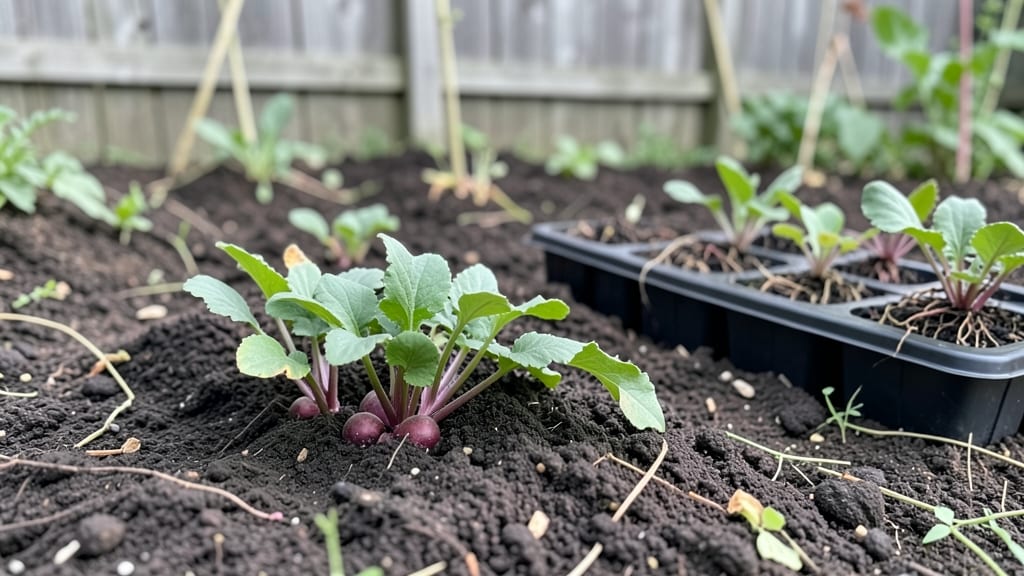
Planting radish seedlings is my go-to for quick, satisfying greens—those first sprouts push through soil in 7 days, and the harvest starts just 3 weeks later.
I’ll never forget the first time I watched my seedlings transform a patchy garden bed into a sea of vibrant red and purple tops, all because I got the spacing and soil right the first time.
You’ll need well-draining soil, a sunny spot, and just a few basic tools: a small trowel, watering can, and maybe some row markers. Radishes are tough little transplants, but they reward patience—start them indoors if your spring is chilly, or direct-sow in warmer weather for even faster results.
The key is keeping them evenly spaced so roots don’t compete.
After planting, give them a deep drink of water and watch them grow. Mulch lightly to keep moisture in, and you’ll see those first leaves unfurl within days.
The best part? No fussy care—just consistent water and rich soil, and you’ll have a harvest that outpaces anything you’d buy at the store.
Works whether you’re filling gaps in your spring garden or extending your fall harvest. Let’s get those seedlings in the ground!
📚 In This Guide
- What you need
- Instructions
- Tips and common mistakes
- Wrapping up and next steps
What you need
- ● Radish seedlings: 10–20 healthy, 2–3 week-old seedlings (choose fast-maturing varieties like Cherry Belle or French Breakfast for quick harvests).
- ● Garden bed or containers: For in-ground planting: A well-draining, loose soil bed (6–12 inches deep) with full sun (6+ hours/day).
- ● For containers: 6–12 inch deep pots (at least 12 inches in diameter for 4–5 seedlings) with drainage holes.
- ● Fertilizer: Balanced, water-soluble fertilizer (5-5-5 or 10-10-10) or compost (1–2 tbsp per planting hole).
- ● Watering can or hose: With a gentle spray nozzle for even moisture.
- ○ Gloves (optional but recommended): To protect your hands from soil and thrips.
- ● Row cover or shade cloth: To protect seedlings from pests or harsh sun (especially in hot climates).
- ● Mulch (straw or grass clippings): 1–2 inches to retain moisture and suppress weeds.
- ● Plant markers: Small sticks or labels to track varieties (radishes grow fast—you’ll forget which is which!).
- ● Epsom salt (1 tbsp per gallon of water): A foliar spray for extra magnesium if leaves look yellow.
Step-by-Step instructions for planting radish seedlings
Here's how to get your fast-growing radishes thriving in just a week.
Prepare the Planting Site
Radishes grow best in loose, well-draining soil that warms up quickly. Choose a location with full sun—at least 6 hours daily—and work the soil to a depth of 12 inches. If your soil feels compacted, mix in 2 inches of compost to improve drainage and fertility. Radishes hate soggy roots, so avoid planting in low spots where water pools.
Use your fingers to loosen the soil surface until it crumbles easily. The ideal texture should resemble a fine, sandy loam—think of how cake batter feels when mixed just right. If your soil is heavy clay, add a handful of perlite or coarse sand to each planting hole to keep roots aerated.
Space Seedlings Properly
Radishes grow quickly but need room to develop their signature round shapes. Plant seedlings 1 inch apart in rows spaced 12 inches apart. This spacing gives them enough elbow room to expand without competing for nutrients. If you're planting multiple varieties, keep each type in its own row to prevent cross-pollination and ensure consistent maturity.
Use a small trowel to dig a hole just deep enough to cover the seedling's roots. Gently remove the seedling from its container, keeping the root ball intact. Place it in the hole so the top of the root ball sits ½ inch below soil level. This prevents the stem from rotting later when watered.
Water and Mulch Lightly
After planting, water the seedlings thoroughly until the soil is moist to a depth of 2 inches. Use a gentle stream from a watering can to avoid disturbing the soil around the roots. Radishes need consistent moisture, but their soil should never feel soggy—think of a wrung-out sponge, not a dripping wet one.
Apply a 1-inch layer of straw mulch around each plant, leaving a 2-inch gap around the stems to prevent rot. Mulch helps retain moisture and keeps soil temperatures stable, which speeds up germination and growth. Avoid using wood chips, as they can tie up nitrogen in the soil and slow down radish development.
Monitor for Fast Growth
Radishes are one of the fastest vegetables to harvest, so keep an eye on them daily. Within 7 days, you should see the first signs of true leaves—small, rounded greens emerging from the soil. If the soil surface dries out before then, water lightly to keep it consistently moist but not waterlogged.
Watch for signs of stress: if leaves turn yellow or wilt, it’s often a sign of uneven watering. Too much water causes rot, while too little leads to bitter radishes. Thin seedlings if they become overcrowded, leaving the strongest plants with 2 inches of space between them. This ensures each radish has enough room to develop properly.
Harvest at Peak Maturity
Radishes are ready to harvest when they reach their mature size, typically 3-4 weeks after planting. Gently loosen the soil around the radish with your fingers or a small fork, then grasp the greens and pull upward. Avoid using a knife to dig—this can damage the root and make storage difficult.
Harvest on a dry day to prevent soil from sticking to the radishes. Rinse them gently if needed, but avoid soaking, as this can cause them to spoil faster. Store in a cool, dark place like a root cellar or refrigerator for up to 2 weeks. For the fastest, sweetest radishes, harvest when the roots are firm and fully colored—don’t wait too long, or they’ll become woody and tough.
Tips & tricks for planting radish seedlings
Fast-growing radishes thrive when you pay attention to the little details that make all the difference in their speed and health.
Soil Preparation is Everything: When working the soil to a depth of 12 inches in Step 1, focus on creating that cake batter-like texture. If you're unsure about your soil's drainage, do a simple test: take a handful of moist soil and squeeze it. If it holds its shape but crumbles when touched, it's perfect. If it stays in a ball, you need more compost or sand. This preparation ensures roots grow quickly without waterlogging, which is crucial for that promised 7-day germination.
Planting Depth Matters: In Step 2, planting seedlings with the top of the root ball just ½ inch below soil level might seem like a small detail, but it's vital. Too deep and the stem will rot; too shallow and roots won't anchor properly. I've learned this the hard way—once I planted too shallow and lost half my seedlings to wind. Use your trowel to create a small dimple to gauge the exact depth before placing each seedling.
Watering Wisdom: The 2-inch moisture depth in Step 3 is non-negotiable for fast growth. I recommend using a moisture meter or even a wooden skewer to check—insert it 2 inches deep after watering. If it comes out dry, water again. Overwatering is just as bad as underwatering, so aim for that wrung-out sponge consistency. Morning watering works best as it gives plants time to dry slightly before evening, reducing disease risk.
Mulch Selection Tip: While straw mulch is ideal for radishes, don't overlook the importance of that 2-inch gap around stems in Step 3. This prevents rot while still keeping soil temperatures stable. If you're using shredded leaves as an alternative, make sure they're disease-free and not too thick—radishes need that quick warmth to germinate fast.
Pro Tips for Planting Radish Seedlings
- Fast-growing radishes thrive when you pay attention to the little details that make all the difference in their speed and health.
- Soil Preparation is Everything: When working the soil to a depth of 12 inches in Step 1, focus on creating that cake batter-like texture.
- Planting Depth Matters: In Step 2, planting seedlings with the top of the root ball just ½ inch below soil level might seem like a small detail, but it's vital.
Frequently asked questions
Got questions about planting radish seedlings? You’re not alone—these speedy greens have quirks! Here are answers to the most common concerns to help you grow a thriving crop with confidence.
How soon can I plant radish seedlings after buying them?
Plant radish seedlings as soon as possible—ideally within 1–2 days of purchase. They’re delicate and can stress easily if left in pots too long. If you must delay, keep them in a cool, shaded spot and water lightly to prevent wilting.
What’s the best time of day to transplant radish seedlings?
Transplant seedlings in the early morning or late afternoon to avoid midday heat stress. Overcast days are ideal! Water the soil thoroughly before and after transplanting to help roots establish quickly in their new home.
Can I plant radish seedlings directly in the ground, or do they need starter pots?
Radish seedlings can be direct-sown (planted straight from seed) or transplanted from starter pots. If using seedlings, ensure they’re 3–4 inches tall with strong stems. Avoid overcrowding—space them 1–2 inches apart in rows 12–18 inches apart.
Why are my radish seedlings turning yellow or wilted after planting?
Yellowing or wilting often signals overwatering, underwatering, or transplant shock. Check soil moisture—it should stay consistently damp but not soggy. If leaves droop, give them a deep watering and shade them for a day or two to recover.
Do radish seedlings need special care in hot or cold weather?
Radishes thrive in cool weather (50–70°F). In heat, they bolt (go to seed) quickly—plant them in spring or fall for best results. For cold snaps, use row covers to protect tender seedlings until they’re established.
Can I replant radish seedlings if they’re leggy or weak?
Leggy or weak seedlings may not recover well, but you can try trimming and replanting if the roots are healthy. Snip off the top half of the stem, replant the base, and keep the soil moist. Success isn’t guaranteed, so consider starting fresh with new seedlings if possible.
Wrapping up and next steps
Planting radish seedlings is a rewarding and quick way to enjoy fresh, crisp greens in just 7 days! With the right soil, spacing, and care, you’ll soon be harvesting vibrant radishes that add a peppery kick to your meals. Don’t wait—your garden (and taste buds) will thank you!
Ready to take the next step? Try experimenting with fast-growing varieties like Cherry Belle or French Breakfast, or even mix radishes with lettuce for a dual harvest. Happy planting—and enjoy the satisfaction of a speedy, homegrown success! 🌱✨