
How To
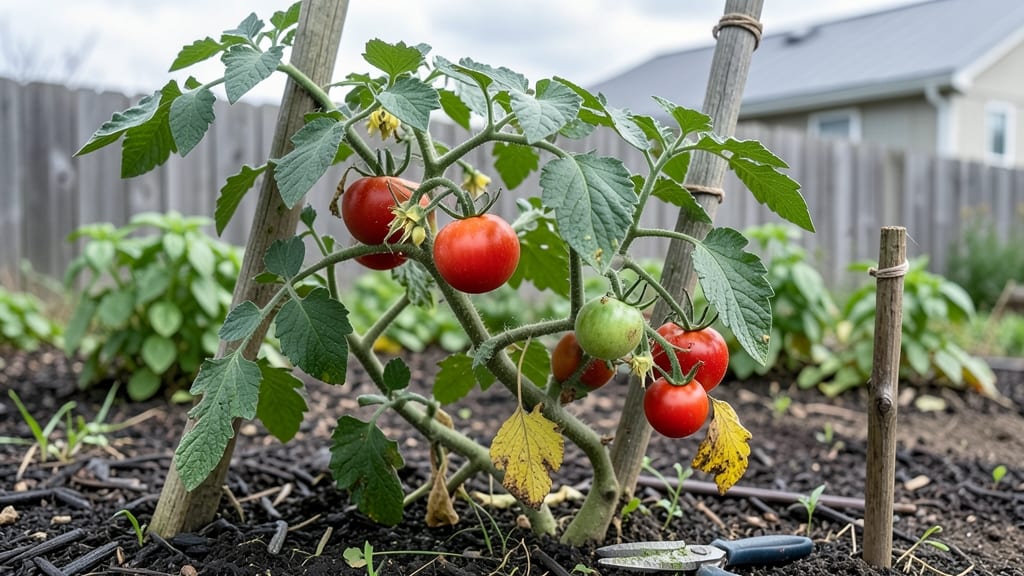
Pruning tomato plants for more fruit isn't rocket science—just three strategic cuts can turn a decent harvest into a jaw-dropping one. 🌱 I learned this the hard way after letting my plants grow wild and ending up with a tangled mess of leaves and just a handful of tomatoes.
The key is focusing on airflow, sunlight, and energy redirection, not just hacking away at anything green.
Start early in the season by removing the lower leaves up to the first flower cluster—this keeps soil-borne diseases at bay and lets sunlight hit the fruit. Then, snip off those little side shoots (suckers) that grow between the main stem and branches, as they drain energy from producing fruit.
Finally, trim back any crowded branches that block light from reaching the center of the plant. These three cuts redirect the plant’s energy where it matters most: bigger, juicier tomatoes.
📚 In This Guide
- What you need
- Instructions
- Tips and common mistakes
- Wrapping up and next steps
What you need
- ● Sharp pruning shears or scissors – Bypass pruners (clean cut, no crushing) or sterilized garden shears (for larger stems). Spec: 5-7" blades, stainless steel.
- ● Gloves – Garden gloves (nitrile-coated for grip) or thick leather gloves (if plants have thorns). Spec: Cut-resistant for extra protection.
- ● Disinfectant – Rubbing alcohol (70%+) or bleach solution (1 part bleach to 9 parts water) to sterilize tools between cuts.
- ● Garden twine or plant ties – Soft, stretchy twine (1/8" width) or Velcro plant ties to support pruned plants. Quantity: 1-2 rolls.
- ● Stake or trellis system – Bamboo stakes (5-6 ft tall), tomato cages (5-6 ft), or wooden trellis for indeterminate varieties.
- ○ Pruning sealant (optional but helpful) – Pruning wax or horticultural sealant to prevent disease entry on larger cuts. Spec: Non-toxic, fast-drying.
- ● Timing – Prune on a dry, sunny morning (avoid wet leaves to reduce disease risk). Best time: Early in the growing season (when plants are 12-18" tall).
- ● Plant health check – Ensure your tomato plants are healthy and pest-free before pruning. Skip if plants are stressed or diseased.
- ● Variety awareness – Indeterminate tomatoes (e.g., Cherry, Beefsteak) – Prune heavily (requires stakes/trellises).
- ● Determinate tomatoes (e.g., Roma, Bush Early Girl) – Minimal pruning (focus on lower leaves only).
- ● Safety first – Wear long sleeves and closed-toe shoes (thorns + sharp tools = ouch!).
- ● Magnifying glass – For spotting tiny pests or diseases before they spread.
- ● Pruning saw – If dealing with thick, woody stems (rare for tomatoes but useful for older plants).
- ● Compost bin nearby – To dispose of pruned leaves/stems on-site (avoid composting diseased material).
- ● Plant food or fertilizer – Balanced 10-10-10 or tomato-specific fertilizer to give your plant a post-pruning boost.
Step-by-Step instructions for pruning tomato plants for more fruit
Here’s the straightforward method I use to maximize fruit production—just three key cuts that work for both determinate and indeterminate varieties.
✂️ Step 1: Remove Suckers Below the First Flower Cluster
Start by identifying the main stem and the first flower cluster. Suckers are the small shoots that grow in the crotch between the main stem and a branch. These compete for energy with your fruit, so you’ll want to remove them early. Use clean, sharp pruning shears to snip suckers that appear below the first flower cluster—this directs the plant’s energy upward to produce more fruit.
I check for suckers every 5-7 days during active growth. If you wait too long, they’ll grow larger and become harder to remove without damaging the plant. Always cut just above the leaf where the sucker emerges to prevent stubs that can rot.
✂️ Step 2: Thin Out Overcrowded Branches
Once your tomato plant has multiple branches, focus on spacing them out. For indeterminate varieties, aim to keep branches 12-18 inches apart along the main stem. This improves airflow and sunlight penetration, which reduces disease risk and helps fruit ripen faster. Use your fingers or shears to gently pinch off or cut back any branches that grow too close together.
Watch for branches that grow inward or cross over each other. These create shaded areas where fruit may not develop properly. Remove any that are growing toward the center of the plant—this ensures even light exposure and better fruit set. I like to step back every few days to assess the plant’s shape from a distance.
✂️ Step 3: Prune Lower Leaves to Improve Airflow
As your tomato plant grows taller, remove the lower leaves—those within 6-12 inches of the ground. These leaves often touch the soil, where they can rot or harbor pests. By pruning them away, you create space for better airflow and reduce humidity around the base of the plant. Use your fingers to gently twist off leaves or snip them with shears just above the leaf stem.
Don’t remove more than 20-30% of the plant’s foliage at once—this can stress the plant. Focus on the lowest leaves first, then work your way up as the plant matures. You’ll notice the plant’s energy shifts from maintaining unnecessary leaves to producing more fruit. This step is especially critical in humid climates where fungal diseases like blight spread quickly.
⏰ Step 4: Monitor and Adjust After Flowering
Once your tomato plant begins flowering, shift your focus to the fruit-bearing branches. Remove any suckers that appear above the first flower cluster—these won’t contribute to early fruit production. Instead, let the plant concentrate its resources on the existing flowers and developing fruit. Check the plant every 3-5 days during the flowering stage to stay on top of new suckers.
If you notice any branches with only a few small flowers but no fruit, consider pruning them back. This encourages the plant to focus its energy on branches that already have fruit set. You’ll see the difference in just a few weeks—more robust growth and a heavier harvest. Real talk: this step saves me from overcrowded vines that produce small, underdeveloped tomatoes.
Tips & tricks for pruning tomato plants for more fruit
These simple tricks will help you maximize your tomato harvest with minimal effort—no gardening degree required.
Timing Secret: The 5-7 day check interval in Step 1 is perfect for catching suckers early. I've found that morning pruning works best because plants are turgid (full of water) and easier to handle. Avoid pruning after rain or when leaves are wet—this reduces disease risk and prevents tearing. Confession: I skipped this timing rule once and ended up with stubborn, large suckers that were harder to remove without damaging the plant.
Visual Cue for Step 2: When spacing branches 12-18 inches apart, imagine a clock face around your main stem. Each branch should have its own "time slot" with no overlap. This spacing creates a natural airflow pattern that prevents fungal diseases. Between us, I used to prune by feel—now I actually step back and visualize that clock face, and the difference in fruit quality is noticeable.
Pruning Technique Tip: For Step 3, use your fingers to gently twist off lower leaves rather than cutting with shears. This method preserves more of the plant's energy by avoiding clean cuts that can expose the stem to disease. If you must use shears, always cut just above the leaf stem to prevent stubs that can rot. I learned this the hard way after seeing several plants develop fungal issues from improper pruning cuts.
Seasonal Adjustment: In Step 4, your 3-5 day monitoring schedule works well during active flowering, but you can extend to 7-10 days once fruit begins to set. This gives the plant time to develop fruit while still maintaining control over sucker growth. Don't make my mistake: I used to prune too aggressively late in the season, which actually reduced my yield—less is more as the season progresses!
Pro Tips for Prune Tomato Plants For More Fruit
- These simple tricks will help you maximize your tomato harvest with minimal effort—no gardening degree required.
- Timing Secret: The 5-7 day check interval in Step 1 is perfect for catching suckers early.
- Visual Cue for Step 2: When spacing branches 12-18 inches apart, imagine a clock face around your main stem.
Frequently asked questions
Got questions about pruning tomato plants? You’re not alone!
Here are answers to the most common concerns—so you can prune with confidence and harvest a bountiful crop.
When is the best time to prune tomato plants?
Prune determinate (bush) tomatoes sparingly—only to remove diseased leaves or suckers after flowering. For indeterminate (vining) types, start pruning when plants are 12–18 inches tall, then continue every 1–2 weeks during the growing season. Avoid heavy pruning late in the year, as it can reduce fall harvests.
How often should I prune my tomato plants?
Check your plants weekly for suckers (side shoots) or yellowing leaves. Indeterminate tomatoes need regular pruning (every 7–14 days) to redirect energy to fruit production. Determinate types rarely need pruning—just remove dead or diseased foliage as needed to prevent pests.
What if I skip pruning entirely?
You’ll still get tomatoes, but yields may be smaller and less uniform. Without pruning, indeterminate plants waste energy on excessive foliage and suckers instead of fruit. Determinate types might produce more blossom-end rot (cracked fruit) due to overcrowding. Pruning improves airflow, reducing disease risk too!
Can I prune tomatoes too much?
Yes! Over-pruning—especially late in the season—can stress plants and limit fruit set. Never remove more than 1/3 of the plant’s foliage at once. For indeterminate types, leave 3–4 main stems (or the recommended number for your variety) and avoid pruning below the first flower cluster.
What should I do if my tomato plant looks sad after pruning?
Give it time! Pruned plants may temporarily wilt or drop leaves, but they’ll bounce back in 3–5 days. Water deeply the day after pruning and avoid fertilizing until new growth appears. If leaves turn yellow or black, check for pests or disease—pruning can sometimes reveal hidden issues.
Pro Tip:
Use sterilized pruners (wipe with rubbing alcohol) to prevent spreading disease. Prune on cloudy mornings to reduce stress from sun exposure, and always cut just above a leaf node (where new growth emerges) for the cleanest regrowth.
Wrapping up and next steps
Pruning your tomato plants doesn’t have to be intimidating—just a few strategic cuts can transform your harvest and keep your plants thriving! 🌱 By removing suckers, balancing growth, and ensuring proper airflow, you’re giving your tomatoes the best chance to flourish.
Start small, stay consistent, and soon you’ll be rewarded with buckets of juicy, vine-ripened fruit.
Now that you’re ready to prune like a pro, why not take the next step? Try experimenting with different pruning techniques or even growing heirloom varieties for a unique twist on your garden. Happy pruning—and enjoy that bountiful harvest! 🍅✨