Pruning
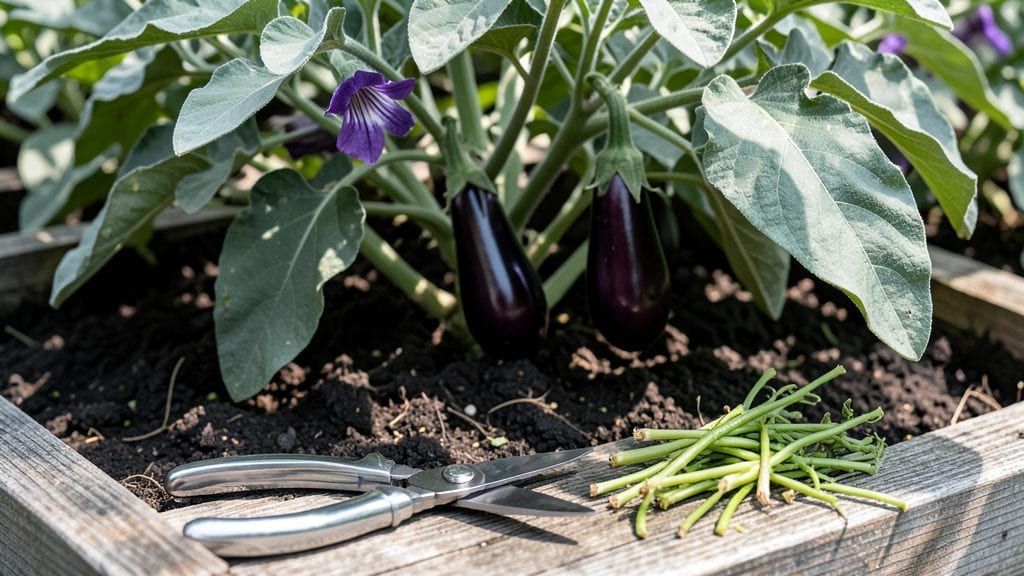
Pruning aubergine plants isn’t just about cutting back—it’s about unlocking bigger, healthier fruit and preventing disease before it starts. ✨ I’ve seen firsthand how strategic trimming turns scraggly bushes into productive powerhouses, with yields that make store-bought eggplants look puny by comparison.
The key isn’t aggressive pruning but smart cuts that balance growth and fruit production.
You’ll need sharp pruning shears, a clean cutting surface, and about 30 minutes to shape a mature plant. Focus on removing suckers (those tiny shoots between the stem and branches) and thinning crowded foliage to let sunlight and air reach the center.
This isn’t just about looks—better airflow means fewer fungal issues and more energy going into fruit instead of leaves.
By the end of summer, you’ll be harvesting glossy, 12-16 inch eggplants with thick skins and minimal seedy cores. The plants stay compact, making them easier to manage, and the fruit ripens more evenly.
Plus, you’ll avoid the heartbreak of blight or mildew ruining your harvest midseason—something that’s happened to me more times than I’d like to admit.
Works for both greenhouse and outdoor plants, whether you’re growing in containers or in-ground beds. The same principles apply, just adjust the timing based on your local growing season. Let’s get those shears ready—your next big harvest starts with a few strategic cuts.
📚 In This Guide
- What you need
- Instructions
- Tips and common mistakes
- Wrapping up and next steps
What you need
- ● Pruning shears or sharp bypass pruners: Choose a pair with clean, sharp blades (4-6 inches long) to make precise cuts without crushing stems. Sterilize with rubbing alcohol before and after use to prevent disease spread.
- ● Gloves: Wear gardening gloves (nitrile or leather) to protect your hands from thorns and sap.
- ● Disinfectant (70% isopropyl alcohol or bleach solution): Mix 1 part bleach to 9 parts water for sterilizing tools.
- ● Compost or mulch: A small bag (5-10 gallons) to cover pruned areas and retain moisture.
- ● Watering can or hose with a gentle nozzle: For post-pruning hydration (1-2 gallons capacity).
- ● Plant ties or soft twine: To support main stems if heavy pruning is done (2-3 feet per plant).
- ● Garden twine or rubber bands: For securing branches if you’re training vines.
- ○ Pruning sealant: A small tube of tree wound sealant (optional for large cuts to prevent rot).
- ● Label markers: If you’re experimenting with pruning techniques, label plants for tracking.
- ● Knee pad or stool: For comfort if your aubergine patch is sprawling!
Step-by-Step guide to pruning aubergine plants for bountiful harvests
Here’s how to shape your aubergine plants for stronger growth and bigger yields—without sacrificing fruit production.
🌿 Step 1: Identify Key Growth Points and Tools
Start by examining your aubergine plants for primary stems (the main vertical growth) and secondary stems (side branches). Use clean, sharp pruning shears to avoid crushing stems, which invites disease. I always disinfect my tools with rubbing alcohol between cuts—this prevents bacterial spread that can rot stems.
Focus on removing suckers—those small shoots that grow in the crotch between the main stem and a branch. These compete for energy with your fruit. Wait until the plant has at least 3-4 true leaves before pruning; younger plants need all their energy for root development.
✂️ Step 2: Prune Suckers for Airflow and Energy Focus
Pinch or cut suckers just above the leaf node (where the leaf meets the stem) to encourage stronger growth. Leave 1-2 suckers per branch if you’re growing bush varieties, but for indeterminate types, remove all but the top 2-3 suckers to direct energy upward. I prune in the early morning when plants are turgid—cuts heal faster and stress is minimized.
Watch for yellowing leaves after pruning; this signals over-pruning. If it happens, reduce future cuts by 25%. Aubergines are sensitive to aggressive trimming, so I never remove more than 20% of the plant’s foliage at once. Thin out crowded branches to 6-8 inches apart—this improves airflow and reduces fungal risks.
☀️ Step 3: Shape the Plant for Light Penetration
Step back and assess the plant’s canopy structure. Remove any branches growing straight upward (they block light) or too close to the ground (they rot). Aim for a pyramidal shape with the widest part at the top. I prune just above a leaf node at a 45-degree angle to prevent water pooling on the cut.
If your aubergine has flower buds, avoid heavy pruning nearby—these require energy. Instead, focus on non-fruiting branches. After trimming, give the plant a light watering to reduce stress. You’ll see new growth in 7-10 days; if it’s leggy, your plant needs more light.
🌱 Step 4: Maintain Through the Season
Prune weekly during peak growth (spring to early summer) but reduce to every 2 weeks as plants mature. Remove yellow or diseased leaves immediately—don’t wait for them to spread. I also trim old wood (brown, woody stems) to encourage new, productive growth.
By late summer, focus on harvesting first before pruning. Aubergines need energy to ripen fruit, so limit trimming to removing spent flowers and shaping for airflow. Stop pruning 4-6 weeks before first frost—new growth won’t harden off in time.
Tips & tricks for pruning aubergine plants
Pruning aubergine plants isn't just about trimming—it's about strategic shaping that boosts both yield and plant health. Here are the insights I've learned after years of trial and error in the garden.
The Timing Secret: Early morning pruning is non-negotiable. The plant's natural turgor (water pressure) is highest then, which helps cuts heal faster and minimizes stress. I always schedule my pruning sessions between 6-8 AM when the plants are fully hydrated. This also gives any sap that might ooze out time to dry before afternoon heat, reducing fungal risks.
Canopy Structure Matters: That pyramidal shape isn't just aesthetic—it's functional. When shaping in Step 3, focus on creating a "light funnel" where sunlight can penetrate to the lower branches. I make a habit of removing any branches growing straight upward that would block light from reaching the fruit-bearing areas below. Think of it like designing a greenhouse canopy where every leaf has access to sunlight.
Pruning Intensity: The 20% foliage rule is your safety net. Aubergines are sensitive to aggressive pruning, and removing more than 20% of the plant's leaves at once can shock the system. I track my cuts by visually estimating the leaf mass removed—if I'm unsure, I err on the side of caution. For bush varieties, this means leaving more foliage than with indeterminate types which have more natural vigor.
Post-Pruning Care: That light watering after trimming isn't just a suggestion—it's essential. Pruning creates small wounds that need immediate hydration to begin the healing process. I always follow with a gentle watering at the base, avoiding wetting the leaves to prevent fungal spores from taking hold. The 7-10 day waiting period for new growth is actually a good time to monitor your plants for stress signs like wilting or yellowing.
Pro Tips for Pruning Aubergine Plants
- Pruning aubergine plants isn't just about trimming—it's about strategic shaping that boosts both yield and plant heal...
- The Timing Secret: Early morning pruning is non-negotiable. The plant's natural turgor (water pressure) is highest th...
- Canopy Structure Matters: That pyramidal shape isn't just aesthetic—it's functional. When shaping in Step 3, focus on...
Frequently asked questions
Got questions about pruning your aubergine (eggplant) plants? You’re not alone! Here are some of the most common concerns—plus clear, actionable answers to keep your harvest thriving.
When is the best time to start pruning aubergine plants?
Prune your aubergines after they’ve established 4–5 healthy leaves and a strong stem (usually 4–6 weeks after transplanting). Focus on removing lower leaves and suckers (side shoots) to redirect energy to fruit production. Avoid heavy pruning late in the season—stop 4–6 weeks before your first frost to allow remaining fruit to mature.
How do I prune aubergine plants without hurting them?
Use clean, sharp pruners to make cuts at a 45-degree angle just above a leaf node or branch. Avoid tearing stems—this invites disease. For large branches, cut in stages if needed, but never remove more than one-third of the plant’s foliage at once. Always sterilize your tools with rubbing alcohol between cuts to prevent bacterial spread.
Will pruning increase my aubergine yield?
Yes! Pruning improves airflow, reduces disease risk, and helps the plant focus energy on fewer, larger fruit. Studies show pruned aubergines can yield 20–30% more high-quality fruit compared to unpruned plants. Just balance it—over-pruning stresses the plant, leading to fewer blooms. Aim for a moderate approach: trim suckers and lower leaves, but leave 6–8 main branches.
What should I do if my aubergine plant looks stressed after pruning?
Stress is normal after pruning, but monitor for wilting, yellowing leaves, or slow recovery (beyond 7–10 days). Boost care by:
- Watering deeply at the base (not overhead) to avoid fungal issues.
- Applying a balanced fertilizer (like 10-10-10) 1–2 weeks post-pruning.
- Providing shade cloth if temps exceed 90°F (32°C) for a few days.
Can I prune aubergine plants if I’m growing them in containers?
Container-grown aubergines benefit even more from pruning since space is limited. Use the same techniques as above, but:
- Trim more aggressively to control size (containers restrict root growth).
- Remove lower leaves that touch the pot’s edge to prevent rot.
- Choose compact varieties (like ‘Fairy Tale’ or ‘Patio Baby’) if space is tight.
What’s the difference between suckers and leaves I shouldn’t prune?
Suckers are the small shoots growing in the crotch between a main stem and a branch—these compete with fruit and should be removed. Never prune:
- Healthy upper leaves (they photosynthesize for fruit).
- Flowers or young fruit (even if small).
- More than 2–3 leaves per branch after pruning.
Wrapping up and next steps
Pruning your aubergine (eggplant) plants might feel like a puzzle at first, but with the right techniques, you’ll unlock bigger, healthier harvests and stronger plants. 🌱 By removing suckers, thinning foliage, and shaping growth, you’re not just trimming—you’re investing in your garden’s success.
Now that you’re armed with the know-how, grab those shears and get pruning with confidence!
Next step: Start small—prune just one plant as a test, observe how it responds, and adjust your approach. Before you know it, you’ll be a pruning pro, reaping the rewards of your green thumb! 🌟