Pruning
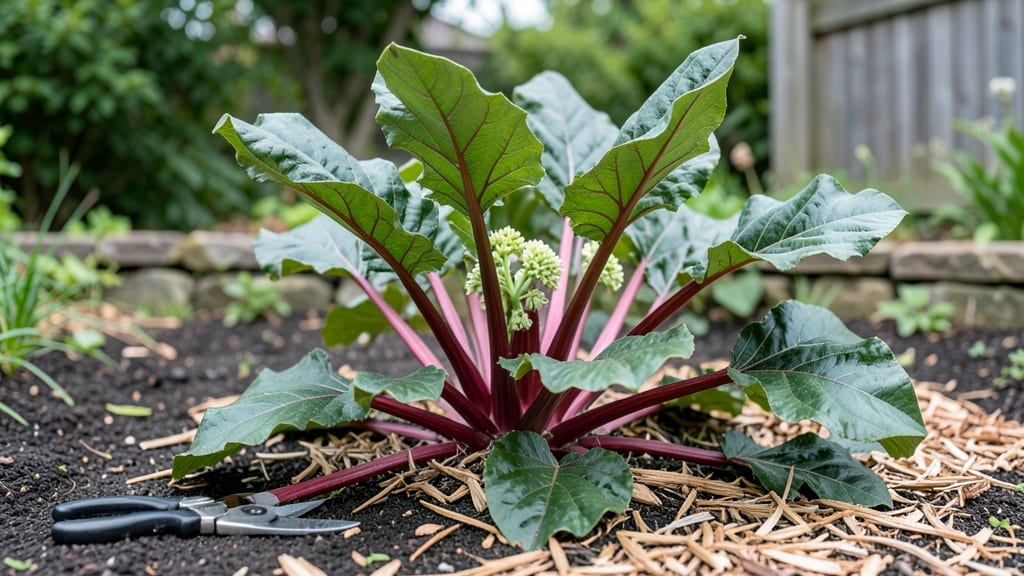
Pruning rhubarb plants isn't complicated once you know the three simple cuts that keep them productive for decades. ✨ I learned the hard way that aggressive pruning backfires—my first rhubarb crown nearly died after I hacked away too much. The secret is patience and precision, not enthusiasm with the shears.
You only need two tools: sharp pruning shears and a clean knife for stubborn stalks. Time it right—wait until after the first harvest, when the plant has already sent energy into new growth.
Most gardeners make the mistake of pruning too late in the season, which stresses the plant before winter dormancy.
With the right cuts, you'll harvest thick, crisp stalks for years without weakening the crown. The plant actually rewards careful pruning by sending up more stalks next season. My rhubarb now produces enough for pies, compotes, and sharing with neighbors—all from three simple cuts each year.
This method works in zones 3 through 8, whether you're growing in full sun or partial shade. The key is consistency: same cuts, same timing, same care every year. Let's get those stalks growing strong again.
📚 In This Guide
- What you need
- Instructions
- Tips and common mistakes
- Wrapping up and next steps
What you need
- ● Sharp pruning shears or secateurs – Choose bypass-style (not anvil) to avoid crushing stems. (1 pair)
- ● Garden gloves – Protect your hands from thorns and sap irritation. (1 pair, preferably heavy-duty)
- ● Disinfectant (70% isopropyl alcohol or bleach solution) – Clean tools between cuts to prevent disease spread. (Small spray bottle or wipe)
- ○ Compost bin or mulch – For disposing of pruned stems (optional but eco-friendly!).
- ● Watering can or hose – To hydrate plants post-pruning.
- ● Garden twine or labels – Mark new growth if you’re training plants for specific shapes.
- ● Pruning saw – Only needed if stems are extremely thick (rare for rhubarb).
- ● Plant food or compost – Feed plants after pruning to boost recovery.
- ● Knee pad or stool – For comfort if your rhubarb patch is sprawling!
How to prune rhubarb for bigger harvests
Three strategic cuts will transform your rhubarb patch into a high-yielding powerhouse.
✂️ Step 1: Remove Dead or Damaged Stems
Start by inspecting your rhubarb plants for any stems that are brown, mushy, or hollow—these are clear signs of disease or winter damage. Grab a pair of clean, sharp pruners and cut these stems at the base, just above the soil line. You’ll want to work methodically around the plant, removing only what’s clearly unhealthy.
Here’s the thing—rhubarb is tough, but it can’t recover from rot or pests. Removing damaged stems early prevents the problem from spreading to healthy growth. Once you’ve cleared out the bad stems, you’ll notice the plant’s center looks more open and airy. This airflow helps the remaining stems stay strong and productive.
✂️ Step 2: Cut Back Overcrowded Stems
Now focus on the healthy stems. Rhubarb plants produce new growth from the center, and if too many stems cluster together, they compete for nutrients and sunlight. Look for stems that are growing too close—aim to space them about 6-8 inches apart at the base. Use your pruners to cut back any extra stems at the base, leaving only the strongest, most upright ones.
This step is where you’ll see real improvement in yield. Overcrowded stems produce smaller, weaker stalks, but by thinning them out, you’re giving each remaining stem room to grow thicker and sweeter. You’ll know you’ve done it right when the plant’s center looks open and the remaining stems stand tall and straight.
✂️ Step 3: Trim Flower Stems Before They Bloom
The final cut is the most critical for long-term yield. As soon as you see flower stalks emerging—usually in late spring—snip them off at the base. Flowering drains energy from the plant, redirecting it away from stalk production. Even if you love rhubarb flowers, removing them ensures the plant focuses all its energy on growing more stalks for you to harvest.
I always set a reminder to check for flower stalks every few days in early spring. The moment you spot one, cut it immediately. This might feel counterintuitive, but trust me—your future harvests will thank you. A well-pruned rhubarb plant can produce stalks for decades, while one left to flower will weaken over time.
⏰ Step 4: Time Your Pruning for Peak Growth
Do all your pruning in early spring, just as new growth begins to push through the soil. Avoid pruning in fall or winter, as the plant is dormant and won’t recover well from cuts. Wait until you see fresh, green shoots about 2-3 inches tall—that’s your signal to start pruning. This timing ensures the plant has energy to bounce back quickly and focus on producing stalks.
Real talk: If you miss the early-spring window, don’t panic. You can still prune in late spring, but you’ll sacrifice some of the season’s early yield. The key is to act as soon as you see new growth. Once stalks reach 10-12 inches tall, they’re safe from pruning—focus only on the base cuts described earlier.
Tips & tricks for pruning rhubarb plants
These simple tricks will help you maximize your rhubarb harvest with minimal effort—and save you from common pruning mistakes that waste potential yield.
Tool Tip: Invest in a good pair of bypass pruners—these clean cuts heal faster than jagged ones from dull blades. I always sanitize my pruners with rubbing alcohol between plants to prevent spreading any potential diseases. Clean tools also make the job feel more satisfying, and you'll notice healthier regrowth when you're done.
Visual Cue: In Step 2, when spacing stems about 6-8 inches apart, imagine a baseball diamond shape around the plant center. This creates ideal airflow and sunlight distribution. The goal is to leave only the strongest stems—look for ones that stand straight up rather than leaning or twisting. You'll know you've done it right when the plant looks like it's breathing room to grow.
Seasonal Strategy: Don't wait until you see flower stalks to prune! Set a calendar reminder for early spring when you notice those first 2-3 inch green shoots. I always mark my calendar for late March/early April in my climate zone. This timing ensures you're pruning at the optimal window for maximum stalk production. Missing this window means sacrificing some of your early harvest.
Long-Term Payoff: The flower stalk removal in Step 3 might feel counterintuitive, but trust me—this is where you'll see the biggest difference in your harvests. I've seen plants that flowered heavily produce only a handful of small stalks the following year, while properly pruned plants give me pounds of thick, sweet stalks. Think of it as an investment in your plant's future productivity.
Pro Tips for Pruning Rhubarb Plants
- These simple tricks will help you maximize your rhubarb harvest with minimal effort—and save you from common pruning mistakes that waste potential yield.
- Tool Tip: Invest in a good pair of bypass pruners—these clean cuts heal faster than jagged ones from dull blades.
- Visual Cue: In Step 2, when spacing stems about 6-8 inches apart, imagine a baseball diamond shape around the plant center.
Frequently asked questions
Got questions about pruning rhubarb? You’re not alone—this hardy perennial can be tricky to manage at first. Below, we’ve rounded up the most common questions (and answers!) to help you keep your rhubarb thriving with confidence.
When is the best time to prune rhubarb?
Prune rhubarb after harvest, ideally in early spring (March–April) before new growth starts. Avoid cutting in fall or winter, as this can damage the crown. If you harvest leaves, do so sparingly—never remove more than ⅓ of the plant in one season.
How do I prune rhubarb for bigger yields?
Focus on three key cuts:
- Deadheading: Remove spent flower stalks (they drain energy from the plant).
- Thinning: Trim overcrowded stalks to improve airflow and reduce disease risk.
- Rejuvenation: Cut back old, woody stalks at the base in early spring to encourage fresh growth.
Can I prune rhubarb in the fall?
No—fall pruning stresses rhubarb and invites rot or pests. Instead, wait until early spring (after the last frost) to prune. If your plant looks messy in fall, simply mulch heavily to protect the crown over winter.
What if my rhubarb leaves turn yellow after pruning?
Yellowing leaves often signal over-pruning or nutrient deficiency. Check these fixes:
- Stop harvesting for 2–3 weeks to let the plant recover.
- Fertilize with balanced 10-10-10 or compost in spring.
- Ensure the plant gets 6+ hours of sun daily.
Do I need special tools to prune rhubarb?
Not necessarily! Use:
- A sharp bypass pruner (for clean cuts on stalks).
- Garden shears (for thicker stalks).
- Gloves (rhubarb leaves can be prickly!).
Wrapping up and next steps
Pruning your rhubarb plants may seem like a small task, but it’s the secret to unlocking their full potential—bigger stalks, healthier growth, and years of harvests ahead! 🌱 By mastering just three simple cuts, you’ll ensure your rhubarb thrives while avoiding common pitfalls.
Now that you’re armed with the know-how, there’s no better time to grab those shears and give your plants the care they deserve.
Ready to take the next step? Mark your calendar for late winter or early spring—your rhubarb’s pruning season—and watch your garden flourish. Happy pruning! 🌟