
Pests and Diseases
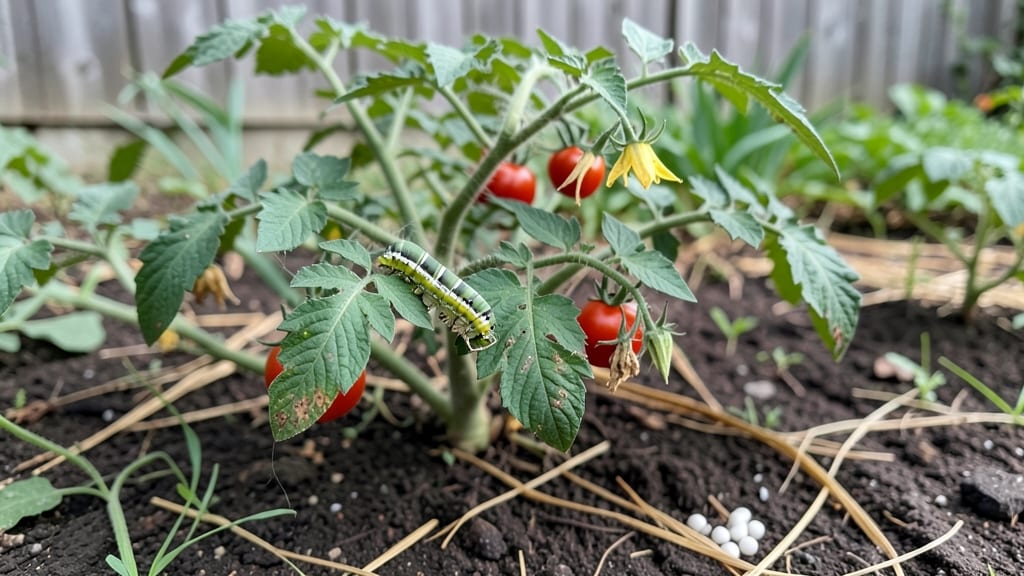
Protect your garden with effective tomato plant pest control using organic sprays that stop damage in 24 hours—no harsh chemicals needed. I’ve battled aphid swarms and hornworm raids in my garden, and these targeted solutions cut infestations faster than store-bought pesticides ever did.
The key is acting fast and choosing the right spray for each pest.
Most gardeners panic when they see holes in leaves or sticky residue on plants, but the right spray—like neem oil for soft-bodied bugs or Bacillus thuringiensis for caterpillars—can turn things around within a day.
You’ll need a spray bottle, a few household ingredients, and about 10 minutes to mix and apply. Prevention is easier than cleanup, but even a late-season infestation can be halted before it spreads.
Imagine plucking a ripe tomato from the vine without a single blemish or chewed spot—that’s the result when you catch pests early. These sprays don’t just kill what’s there; they deter future visitors, so your plants stay lush and productive.
The best part? No waiting weeks for results—you’ll see a difference by morning.
Whether you’re dealing with aphids, whiteflies, or hornworms, the solution scales to any garden size. Small containers or sprawling rows—these methods adapt to your space. Let’s get those tomatoes thriving again without the guesswork.
Root Causes Of Tomato Plant Attacks
Tomato plants are a magnet for pests—not because they’re weak, but because they’re too successful. Their lush foliage, sweet fruit, and nutrient-rich sap create the perfect buffet for hungry invaders.
But why do these pests target your tomatoes in the first place? Let’s break down the science behind the chaos.
When tomato plants grow too close together, they create the ideal microclimate for pests. Poor air circulation traps moisture, making leaves damp and sticky—just what aphids, whiteflies, and fungal gnats crave. Root competition also weakens plants, making them more susceptible to stress-related attacks like spider mites.
Why it happens:
- Shade and humidity: Dense foliage blocks sunlight, keeping leaves moist longer. Pests like slime molds thrive in these damp conditions.
- Nutrient depletion: Overcrowded roots compete for water and nutrients, stressing plants and making them less resistant to pests.
- Pest highways: Tight spaces make it easier for insects to spread from one plant to another.
💡 Pro Tip: Space tomato plants 18–24 inches apart (or 36 inches for indeterminate varieties) to improve airflow and reduce pest pressure.
Stressed tomatoes—whether from nutrient deficiencies, overwatering, or disease—send out distress signals that pests detect. For example, hornworms zero in on plants with high nitrogen levels (lush, soft leaves), while blossom end rot (from calcium deficiency) makes fruit more vulnerable to fruitworms.
Why it happens:
| Stress Factor | Pest Attraction | Science Behind It |
|---|---|---|
| Overwatering | Aphids, whiteflies, fungal gnats | Excess moisture softens plant tissue, making it easier for pests to pierce and feed. |
| Underwatering | Spider mites, thrips | Drought-stressed plants produce more sugars in leaves, attracting sap-sucking insects. |
| Nutrient imbalance (e.g., too much nitrogen) | Hornworms, cutworms | High nitrogen = softer, more tender leaves—perfect for chewing pests. |
🌡️ Watch For: Yellowing leaves, stunted growth, or wilting—these are red flags that your plants are vulnerable.
Tomato plants release volatile organic compounds (VOCs) when damaged or flowering. These chemical signals act like a dinner bell for pests. For instance:
- Damaged leaves emit green leaf volatiles (GLVs), which attract whiteflies and aphids within minutes.
- Ripe fruit releases ethylene gas, luring fruit flies and hornworms.
- Root exudates (sugary fluids from roots) draw nematodes and grubs underground.
Why it happens: Pests have evolved to detect these scents from miles away. Even a single damaged leaf can trigger a mass migration of insects.
✨ Natural Defense: Interplant tomatoes with basil, marigolds, or garlic—their strong scents mask tomato odors, confusing pests.
Pests don’t attack randomly—they follow seasonal patterns tied to temperature, rainfall, and plant life cycles. For example:
- Early season (cool, damp): Fungal diseases (like early blight) and slugs thrive.
- Mid-season (warm, dry): Spider mites and aphids explode in numbers as plants grow rapidly.
- Late season (hot, humid): Hornworms and stink bugs become rampant as fruit ripens.
Why it happens: Pests have optimal temperature ranges for reproduction. A sudden heatwave can double aphid populations in days.
🎯 Preventative Move: Monitor your garden weekly and rotate organic sprays (like neem oil or pyrethrin) to disrupt pest life cycles.
Quick fixes for tomato plant pests
Tomato plants are a gardener’s pride—until pests crash the party! 🍅🐛 But don’t stress: with the right organic fixes, you can turn the tide fast. Below, we’ve mapped out practical, fast-acting solutions for common tomato pests, including prevention tips to keep your plants thriving long-term.
No harsh chemicals needed—just smart, nature-backed tactics.
Cause: These green caterpillars (up to 4 inches long!) devour leaves overnight, leaving your tomato plants skeletal in days.
How to Fix It: 🔥 Step 1: Manual Removal (Best for Immediate Action)
- When? Early morning or evening (they’re sluggish then).
- How? Wear gloves and pluck them off by hand—drop them in soapy water to kill them instantly. Check the undersides of leaves and stems; they love to hide!
- Pro Tip: 💡 If you’re squeamish, use tongs or a small net to avoid direct contact.
🍳 Step 2: Organic Sprays (Prevent Future Attacks)
- Bacillus thuringiensis (Bt): A natural bacteria that targets caterpillars but is harmless to humans and beneficial insects. Spray every 7–10 days or after rain.
- Neem Oil: Mix 1 tbsp neem oil + 1 tsp mild soap + 1 quart water. Spray leaves thoroughly (avoid flowering plants to protect pollinators).
- Spinosad: Derived from soil bacteria, this kills hornworms within 24–48 hours. Use at dusk for best results.
🌡️ Prevention Tips:
- Plant companions: Interplant with basil, dill, or marigolds to repel pests naturally.
- Row covers: Use lightweight fabric to shield young plants until they’re established.
- Encourage predators: Ladybugs and parasitic wasps love hornworms—invite them with diverse plantings!
Cause: These tiny green/black bugs cluster on new growth, sucking sap and spreading viruses. They leave a sticky residue (honeydew) that attracts mold.
How to Fix It: 👨🍳 Step 1: Blast Them Off
- How? Use a strong stream of water from a hose to dislodge them. Repeat every 2–3 days until gone.
- Pro Tip: 🌡️ Add a drop of dish soap to the water for extra slippery (and deadly) results.
🥘 Step 2: Homemade Sprays (Fast Relief)
- Garlic spray: Blend 2 garlic cloves + 1 tsp cayenne pepper + 1 quart water. Strain and spray directly on aphids (reapply every 3–4 days).
- Insecticidal soap: Store-bought or DIY (2 tbsp castile soap + 1 quart water). Test on a small leaf first—some plants are sensitive!
- Ladybugs: Release them in the evening (they’ll hunt aphids overnight).
🎯 Prevention Tips:
- Sticky traps: Yellow cards coated with petroleum jelly catch aphids before they multiply.
- Healthy plants: Overcrowded or stressed tomatoes attract aphids—prune for airflow and fertilize with compost.
- Companion plants: Onions, garlic, and chives deter aphids with their strong scent.
Cause: These tiny white moths cluster on leaf undersides, weakening plants and excreting honeydew (which fosters black sooty mold).
How to Fix It: ⏰ Step 1: Trap Them at Night
- How? Place a yellow sticky trap near plants. Whiteflies are attracted to yellow and get stuck overnight.
- Pro Tip: 🔥 Shake plants gently over a bucket of soapy water to knock them off during the day.
🔪 Step 2: Smother and Spray
- Neem oil: Spray undersides of leaves thoroughly (whiteflies hide there!). Repeat every 5–7 days.
- Kaolin clay: Mix 1 tbsp kaolin clay + 1 gallon water. The clay coats leaves, making it hard for them to land or feed.
- Beneficial wasps: Tiny Encarsia formosa wasps parasitize whiteflies—order them online for severe infestations.
✨ Prevention Tips:
- Reflective mulch: Use silver or aluminum mulch to disorient and repel whiteflies.
- Regular pruning: Remove yellowing leaves where they like to hide.
- Avoid over-fertilizing: Nitrogen-heavy soils attract whiteflies—balance with phosphorus and potassium.
Cause: These microscopic red/yellow pests thrive in dry heat, sucking juices and weaving fine webs on leaves. Infested plants turn yellow and crispy.
How to Fix It: 🌡️ Step 1: Increase Humidity
- How? Mist plants daily (especially in hot climates) or use a humidifier nearby. Spider mites hate moisture.
- Pro Tip: 💡 Place a tray of water with pebbles under pots to boost humidity naturally.
🍳 Step 2: Soap and Oil Sprays
- Insecticidal soap: Spray every 3–4 days until mites disappear (they reproduce fast!).
- Horticultural oil: Mix 2 tbsp oil + 1 tsp soap + 1 quart water. Spray in the evening to avoid burning leaves.
- Predatory mites: Release Phytoseiulus persimilis mites—they eat spider mites and are safe for your plants.
🎯 Prevention Tips:
- Dust control: Keep leaves dry and clean—dust attracts mites.
- Prune heavily: Remove heavily infested leaves and dispose of them in sealed bags.
- Diverse ecosystem: Plant flowers like marigolds or alyssum to attract predatory insects.
🔥 Bonus: Universal Prevention Checklist
- Rotate crops: Avoid planting tomatoes in the same spot yearly to break pest cycles.
- Healthy soil: Amend with compost to boost plant resilience.
- Monitor daily: Check undersides of leaves and stems 2–3 times a week for early signs.
- Early intervention: Act at the first sign of pests—organic sprays work best before infestations explode!
With these fast, organic fixes, your tomato plants will bounce back stronger than ever. 🍅💪 Happy gardening!
Frequently asked questions
What’s the fastest way to stop hornworms from destroying my tomato plants?
Pick them off by hand in the morning or evening (they’re sluggish then) and drop them in soapy water. For faster results, spray with Bacillus thuringiensis (Bt)—it kills hornworms within 24 hours without harming beneficial insects. Reapply every 7–10 days or after rain.
Can I use dish soap to kill aphids on my tomato plants?
Yes! Mix 2 tablespoons of mild dish soap with 1 quart of water and spray directly on aphids. The soap disrupts their protective coating and dehydrates them. Test on a small leaf first—some plants may be sensitive. Spray in the evening to avoid harming bees.
How do I know if my tomato plant has spider mites instead of just dust?
Check the undersides of leaves for tiny red/yellow specks (the mites) or fine webbing. Dust looks fluffy and stays on top of leaves, while mites leave a silky, sticky web. Increase humidity by misting plants daily or placing a tray of water nearby to deter them.
Are there any companion plants that naturally repel tomato pests?
Plant basil, marigolds, or garlic near your tomatoes—their strong scents confuse pests. Basil also improves tomato flavor! For aphids, try onions or chives. These companions create a natural barrier without chemicals.
Will neem oil work for all tomato pests, or do I need different sprays?
Neem oil is effective against aphids, whiteflies, and spider mites, but it won’t kill hornworms. For caterpillars, use Bacillus thuringiensis (Bt) or spinosad. Rotate sprays to prevent pests from building resistance. Always spray in the evening to protect pollinators.