
Pruning
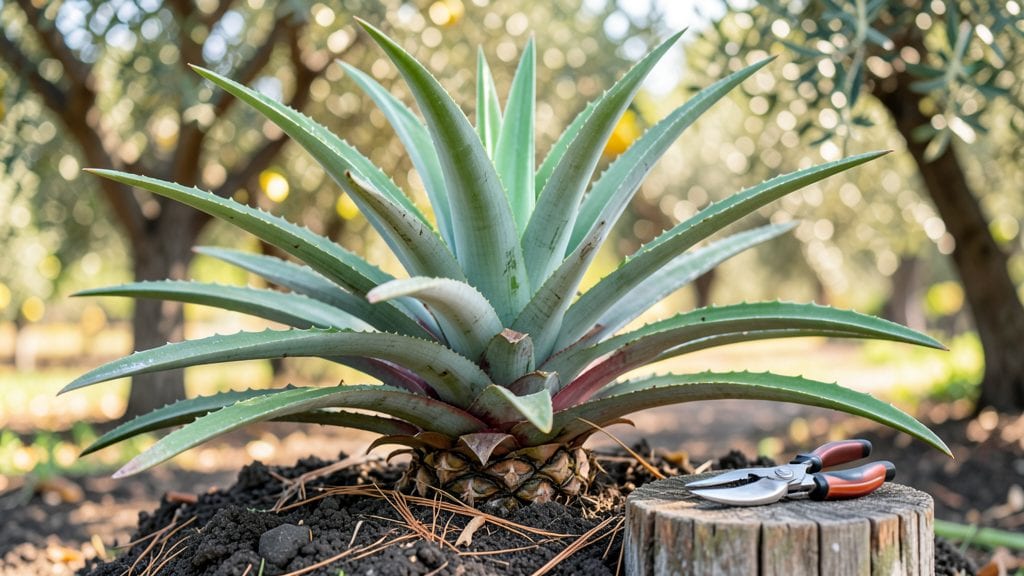
Trimming your pineapple plant isn't just about cleaning up—it's the secret to getting more fruit and healthier growth. 🌱 I learned this the hard way after my first pineapple plant bolted upward with no side shoots, leaving me with just one lonely fruit.
The right cuts encourage new growth where you want it, and you can even propagate those trimmings into new plants.
You only need three things: sharp pruning shears, a clean cutting board, and a small pot with well-draining soil. Timing matters too—trim after fruiting when the plant starts looking tired, or in late winter to kickstart new shoots.
The key is cutting just above a leaf node where new growth can emerge, and never more than a third of the plant at once.
What you end up with is a bushier plant that produces multiple pineapples instead of one, plus extra plants from your trimmings. The first regrowth appears in about 4-6 weeks, and those side shoots will eventually bear fruit too.
It's like getting a free second harvest from the same plant.
This method works for both container-grown plants and those in the ground, though containers make it easier to monitor moisture and soil conditions. Once you try it, you'll never let a pineapple plant go to waste again—every cut becomes a chance for more fruit or a new plant to grow.
📚 In This Guide
- What you need
- Instructions
- Tips and common mistakes
- Wrapping up and next steps
What you need
- ● Sharp pruning shears or clean, sterilized scissors – Look for bypass pruners (not anvil-type) to avoid crushing stems.
- ● Rubbing alcohol (70% or higher) or hydrogen peroxide – For sterilizing tools between cuts (1–2 tbsp per quart of water).
- ○ Garden gloves – Optional but recommended to protect hands from thorns and sap.
- ○ Pruning sealant (optional) – Like tree wound paint, to prevent infection on larger cuts.
- ● Small trowel or knife – For digging up offsets (if repotting).
- ● Well-draining potting mix – Cactus/succulent blend or a mix of perlite, sand, and peat (1:1:1 ratio).
- ● New pots (3–4 inches in diameter) – For repotting offsets, with drainage holes.
- ● A mature pineapple plant (1–2 years old) with visible pups (offsets) or overgrown leaves.
- ● Warm, dry weather – Avoid trimming after rain or in freezing temps.
- ● Bright, indirect sunlight – Pineapples thrive in 6+ hours of light daily.
- ● Patience (2–3 months for recovery) – Give your plant time to heal and regrow!
How to prune a pineapple plant for bigger fruit and healthier growth
Pruning isn’t just about shaping—it’s how you coax your pineapple plant into producing larger, sweeter fruit.
🌿 Step 1: Identify the Right Time to Prune
Wait until your pineapple plant has grown to 18-24 inches tall and developed 8-12 healthy leaves. This is when it’s strong enough to handle pruning without stress. I prune in early spring just as new growth begins, but avoid pruning during flowering or fruiting—this disrupts energy flow to the fruit.
Look for leaves that are yellowing at the base or showing brown tips. These are your first targets. Healthy leaves should be deep green, firm, and upright. If you prune too early, the plant may not have enough energy to recover and produce fruit.
✂️ Step 2: Remove Damaged or Yellow Leaves
Use clean, sharp pruning shears to cut off any leaves that are yellow, brown, or mushy at the base. Make your cut about ½ inch above the leaf collar—the swollen area where the leaf meets the stem. This prevents water from pooling and causing rot.
Don’t pull leaves off by hand—this can tear the plant and leave jagged edges that invite pests. If a leaf is mostly healthy but just has brown tips, you can trim just the damaged portion. Watch for sap oozing from the cut—this is normal, but if it’s excessive, your shears might be too dull.
🌱 Step 3: Trim the Oldest Leaves to Encourage New Growth
Once your plant has 12-15 mature leaves, remove the 3-4 oldest, outermost leaves at the base. These leaves are no longer photosynthesizing efficiently and are draining energy from the plant. Cut them off cleanly at the base, leaving a small stub.
Here’s the thing—this might look harsh, but it’s what triggers the plant to redirect energy toward the center, where the fruit develops. You’ll notice new, vibrant leaves sprouting from the center within 2-3 weeks. If your plant is flowering, wait until after fruiting to do this step.
☀️ Step 4: Prune Suckers for Stronger Fruit Production
Suckers are the small offshoots that grow from the base of the main plant. These compete with the main fruit for nutrients. If you want a single, large pineapple, remove all suckers by twisting them off gently or cutting them at the base with clean shears.
If you’re growing multiple plants, you can keep one or two of the strongest suckers and repot them. But if your goal is a single, showstopping pineapple, eliminate them all. You’ll know you’ve done it right when the main plant’s leaves perk up and the center tightens—this is where the fruit will form.
💧 Step 5: Post-Pruning Care for Recovery
After pruning, reduce watering slightly for 1-2 weeks to give the plant time to heal. The roots and stem need to adjust to the reduced leaf surface. Water only when the top 2 inches of soil feel dry, and avoid getting water on the cut stems.
Move your plant to a spot with bright, indirect light for a few days—this helps it recover without stress. You’ll see new growth in 3-4 weeks, and the plant will start looking fuller and healthier. If you notice yellowing leaves after pruning, it’s usually just the plant adjusting—don’t panic unless it spreads beyond the cut area.
Tips & tricks for perfect pineapple plant pruning
Here's what I've learned after helping my pineapple plants grow from scraps to fruit-bearing giants.
Timing Secret: The early spring timing in Step 1 is critical because that's when your plant naturally shifts energy from growth to fruit production. I've found that pruning at this exact moment—just as new leaves start unfurling—gives the plant the perfect window to redirect its energy. If you prune too early, the plant might not have enough reserves to recover, and if you wait too late, you could disrupt flowering.
Leaf Selection Tip: When removing those 3-4 oldest leaves in Step 3, focus on the ones with a slight brown tint at the base or that feel slightly softer than the others. These are the energy vampires—dragging nutrients away from your future pineapple. I always run my thumb along the base of each leaf before deciding; if it feels mushy or pulls away easily, it's time to go.
Sucker Strategy: For that single, showstopping pineapple you're dreaming of, don't hesitate to remove every sucker you see in Step 4. I know it feels wasteful—those little shoots look so promising—but they're actually stealing nutrients from your main plant. The key is to do this consistently; I check for new suckers every two weeks until flowering begins. What you'll get in return is a pineapple that's often 20-30% larger than average.
Recovery Wisdom: That 1-2 week water reduction in Step 5 is more important than you might think. I've seen plants go from thriving to struggling just because I didn't adjust my watering schedule. The roots need time to adjust to the reduced leaf surface area, and watering too much can actually drown the plant as it recovers. Think of it like giving your plant a spa day—less water, more light, and plenty of patience.
Pro Tips for Trim Pineapple Plant
- Here's what I've learned after helping my pineapple plants grow from scraps to fruit-bearing giants.
- Timing Secret: The early spring timing in Step 1 is critical because that's when your plant naturally shifts energy from growth to fruit production.
- Leaf Selection Tip: When removing those 3-4 oldest leaves in Step 3, focus on the ones with a slight brown tint at the base or that feel slightly softer than the others.
Frequently asked questions
Got questions about trimming your pineapple plant? You’re not alone! Here are some of the most common concerns—and their straightforward answers—to help you keep your plant thriving.
When is the best time to trim a pineapple plant?
Trim your pineapple plant after it’s produced fruit, typically 2–3 months post-harvest. This removes spent growth and redirects energy to new shoots. Avoid trimming during flowering or fruiting—focus on healthy foliage instead. Pro tip: Early spring or late summer are ideal for pruning.
How much of the pineapple plant should I cut off?
Remove 1/3 to 1/2 of the oldest, outermost leaves when trimming. These leaves are less productive and can harbor pests. Avoid cutting into the crown (the top cluster of leaves)—this is where new growth emerges. Warning: Never remove more than 50% of the plant at once.
What do I do with the trimmed leaves?
Trimmed leaves can be repurposed! Use them as mulch around the base of the plant to retain moisture, or compost them for nutrient-rich soil. Avoid throwing them away—they’re packed with organic matter. Bonus: Some gardeners propagate new plants from healthy pups that grow at the base!
My pineapple plant looks sad after trimming. Is this normal?
Yes! A slight setback is normal as the plant adjusts. Yellowing leaves or wilting are temporary signs of stress. Keep the soil moist (but not soggy) and place the plant in bright, indirect light. New growth should appear within 4–6 weeks. Red flag: If leaves turn brown and crispy, you may have over-trimmed.
Can I trim a pineapple plant that’s not producing fruit?
Trimming encourages healthier, bushier growth and can even stimulate fruiting. Focus on removing dead or damaged leaves to improve airflow and reduce pests. Key tip: If your plant is overcrowded, trimming can help it redirect energy toward producing that sweet, juicy pineapple!
Wrapping up and next steps
Trimming your pineapple plant isn’t just about aesthetics—it’s the secret to healthier growth, bigger fruit, and a thriving tropical beauty! 🌿 By mastering the art of pruning, you’ll encourage stronger roots, more pups (future plants!), and a plant that stays lush year-round.
Whether you’re a seasoned gardener or a beginner, these tips make the process simple and rewarding.
Ready to give your pineapple plant the TLC it deserves? Start small—pick one technique from this guide, practice it, and watch your plant transform. Before you know it, you’ll be harvesting sweet, juicy pineapples (or sharing pups with fellow plant lovers!). Happy pruning! 🌟