Watering
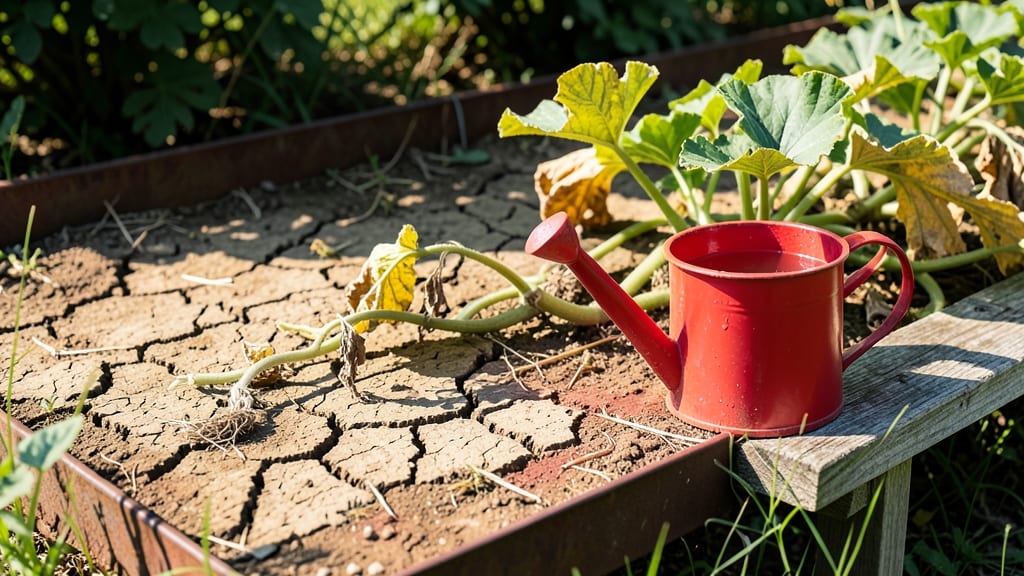
This underwatered pumpkin plant is desperate for hydration when its leaves curl into crispy parchment and the soil crumbles like a baked brick.
I’ve pulled wilting pumpkins back from the brink more times than I can count—usually by mid-July when the heat kicks in—and these three steps work every time without drowning the roots.
The key is acting fast before the plant collapses entirely, but even severely stressed vines can bounce back with the right care.
First, check the soil 2 inches deep—if it’s dry, water deeply until it’s moist 6 inches down, then let the surface dry slightly between waterings. Pumpkins need 1-2 inches of water per week, but clay soil or hot sun can dry them out faster.
I use a soaker hose to deliver water slowly at the base, avoiding wilted leaves that can’t recover from overhead sprinklers. Mulch helps too—3-4 inches of straw keeps moisture locked in while cooling the roots.
Within 24-48 hours, you’ll see new life: leaves unfurling, vines firming up, and those telltale yellow patches fading to a healthy green. The plant might drop a few flowers at first, but it’ll rebound faster than you’d expect.
For extra insurance, give the soil a boost with a balanced fertilizer (like 10-10-10) to help it recover its strength. Once it’s back on track, adjust your schedule to water early morning when evaporation is lowest.
Here’s the secret no one tells you: prevention is easier than rescue. Next season, install a simple rain gauge near your patch and water based on actual rainfall—not guesswork.
And if your soil drains like a sieve, mix in 2-3 inches of compost before planting to hold onto moisture better. Trust me, your pumpkins will thank you at harvest time.
Root Causes Of Thirsty Vines
When your pumpkin plants start wilting despite your best efforts, the issue often boils down to a few key factors tied to their water needs. Understanding these causes helps you diagnose the problem quickly and take corrective action before it’s too late.
Let’s dive into the science behind why pumpkins—those thirsty, sprawling giants—end up underwatered.
Pumpkins have deep, extensive root systems that can stretch several feet underground. Unlike shallow-rooted plants, they need steady moisture at depth to thrive. Skipping watering days or relying on sporadic showers leaves the roots high and dry, triggering stress signals that cause wilting.
- Why it happens: Pumpkins thrive in consistent soil moisture—ideally, the top 6 inches of soil should stay damp (not soggy) at all times. If you water only when the leaves look sad, the roots may already be struggling to access water.
- Science behind it: When soil dries out, roots shrink slightly and lose efficiency in absorbing water. The plant then closes stomata (tiny leaf pores) to conserve moisture, leading to wilting and stunted growth.
- Actionable fix: Water deeply 2–3 times per week (adjust for climate) to encourage roots to grow deeper. Use a soaker hose or drip irrigation to deliver water slowly and evenly.
If your pumpkin patch sits in clay-heavy or compacted soil, water pools on the surface instead of seeping down where the roots need it. Over time, this creates a waterlogged top layer while the deeper soil stays bone-dry—a classic case of surface hydration failing to reach the roots.
- Why it happens:
- Clay soil: Holds water like a sponge but doesn’t release it when roots need it, leading to anaerobic conditions (lack of oxygen) that suffocate roots.
- Compacted soil: Prevents water from infiltrating deeply, forcing roots to grow in a shallow, stressed layer where they’re more prone to drying out.
- Science behind it: Roots require oxygen to function. Waterlogged soil displaces air, causing root rot or reduced nutrient uptake, while dry, compacted layers create a moisture desert below the surface.
- Actionable fix:
- Amend soil with compost or aged manure to improve drainage and aeration.
- Use a garden fork to loosen soil around plants (but avoid disturbing roots too much).
- Mulch with straw or wood chips to retain moisture and prevent evaporation.
Pumpkins are heat-loving plants, but when temperatures soar—especially above 90°F (32°C)—they transpire (lose water) at an alarming rate. If rainfall or irrigation can’t keep up, the plant wilts rapidly as it struggles to replace lost moisture.
- Why it happens:
- High evaporation: Hot, dry air pulls moisture from leaves faster than roots can replenish it.
- Root system slowdown: Extreme heat can temporarily stall root growth, reducing the plant’s ability to absorb water.
- Science behind it: Pumpkins close stomata to prevent water loss, but this also stops photosynthesis, weakening the plant. Prolonged stress leads to leaf scorch and fruit abortion (dropping flowers/fruit).
- Actionable fix:
- Water early morning or late evening to minimize evaporation.
- Use shade cloth (30–50% coverage) during peak heat to reduce stress.
- Group plants together to create a microclimate with higher humidity around the vines.
Young pumpkin plants with limited root space—often due to overcrowding or container gardening—compete fiercely for water. If roots can’t spread out, they can’t access enough moisture to sustain the plant’s rapid growth.
- Why it happens:
- Small containers: Roots hit the edges of pots quickly, limiting their ability to forage for water.
- Close spacing: Plants steal water from each other, leaving everyone slightly dehydrated.
- Science behind it: Pumpkin roots need 12–18 inches of depth to thrive. In restricted spaces, roots grow horizontally instead of vertically, creating a shallow, water-starved network.
- Actionable fix:
- Space vines 4–6 feet apart in gardens to allow root expansion.
- For containers, use large pots (15+ gallons) with fast-draining soil and deep watering every 1–2 days.
- Transplant crowded seedlings to give roots more room to explore.
By pinpointing the real reason your pumpkins are thirsty—whether it’s inconsistent watering, soil issues, heat, or root restrictions—you can target the fix and bring your vines back to full, hydrated glory. 🚀
Reviving Your Pumpkin Plant: Step-by-Step Fixes
Your pumpkin vines may be drooping, but with the right care, they can bounce back to full, thriving glory! The key is identifying the root cause of the stress—whether it’s drought, poor soil, or overzealous pruning—and addressing it with targeted solutions.
Below, we’ll break down practical fixes for each common issue, plus prevention tips to keep your pumpkins happy long-term.
Cause: Shallow watering or infrequent hydration leaves roots parched, especially in sandy or fast-draining soil.
How to Fix It: 🔥 Step 1: Soak the Soil (Not Just the Surface)
- Water deeply—aim for 1–2 inches per week (more in extreme heat).
- Use a hose with a gentle spray or a soaker hose to saturate the root zone (about 12–18 inches deep for mature pumpkin plants).
- Test moisture: Stick your finger 3–4 inches into the soil. If it’s dry, water again.
🍳 Step 2: Improve Water Retention
- Mix 2–3 inches of organic mulch (straw, shredded leaves, or compost) around the base to lock in moisture and block weeds.
- For sandy soil, amend with compost or coconut coir to help retain water.
💡 Pro Tip: Water early in the morning (before 10 AM) to reduce evaporation and fungal risks.
Cause: Compacted, nutrient-poor, or overly dry soil struggles to hold moisture, starving roots.
How to Fix It: 👨🍳 Step 1: Loosen the Soil Gently
- Use a hand fork or broadfork to aerate the top 6 inches of soil around the plant (avoid damaging roots).
- Avoid tilling—it disrupts beneficial microbes and can harm shallow roots.
🥘 Step 2: Feed the Soil, Not Just the Plant
- Add compost (1–2 inches) around the base, keeping it 2–3 inches away from the stem to prevent rot.
- For a quick boost, use a balanced fertilizer (like 10-10-10) diluted to half-strength and water it in.
✨ Pro Tip: Worm castings are a powerhouse for soil structure—mix ½ cup per plant to improve drainage and moisture retention.
Cause: Heatwaves, wind, or container gardening can dry out plants faster than expected.
How to Fix It: 🔥 For Heatwaves:
- Increase frequency—water every 2–3 days (check soil moisture daily).
- Use shade cloth (30–50%) if temps exceed 90°F (32°C) to reduce water loss.
🌡️ For Containers/Pots:
- Upgrade to larger pots (minimum 15–20 gallons for mature pumpkins).
- Add water crystals (like hydrogel beads) to the soil to slowly release moisture.
🎯 Pro Tip: Group plants together to create a microclimate that retains humidity naturally.
Cause: Aggressive trimming, transplant shock, or pest damage weakens the plant’s ability to absorb water.
How to Fix It: 🔪 Step 1: Assess the Damage
- If leaves are yellowing or curling, check for aphids, squash bugs, or powdery mildew.
- Remove only dead/diseased foliage—healthy leaves help the plant recover.
⏰ Step 2: Give It Time to Recover
- Avoid heavy pruning for at least 2 weeks—let the plant redirect energy to roots.
- If recently transplanted, water deeply for 10 days to reduce shock.
💡 Pro Tip: Prune strategically—remove only suckers (side shoots) to focus energy on fruit production.
- Mulch early: Apply 3–4 inches of mulch at planting to prevent soil drying.
- Monitor weather: Adjust watering 2–3 days before rain to avoid over-saturation.
- Use drip irrigation: Delivers water directly to roots, reducing waste and disease.
- Rotate crops: Avoid planting pumpkins in the same spot yearly to prevent soil depletion.
Remember: Pumpkin plants are resilient—with consistent care, they’ll rebound faster than you think! 🎃💦 Start with deep watering + soil amendments, and your vines will be reaching for the sun in no time.
Frequently asked questions
How do I tell if my pumpkin plant is truly underwatered vs. just wilting from heat?
Check the soil moisture first—stick your finger 2-3 inches deep. If dry, it’s underwatered. For heat stress, look for leaf edges curling upward (not just drooping) and morning recovery when temps drop. Heat-wilted leaves often perk up by midday, while underwatered plants stay limp all day.
Can I fix an underwatered pumpkin plant if the leaves are already crispy and brown?
Unfortunately, crispy brown leaves won’t recover, but the plant can still bounce back! Focus on reviving the healthy green stems by watering deeply and applying mulch immediately. The plant may drop some flowers/fruit initially, but new growth will emerge within 3-5 days of proper care.
What’s the best time of day to water pumpkins to prevent underwatering?
Water early morning (6-8 AM) for best results—this lets roots absorb moisture before the heat of day. Avoid evening watering, as damp foliage overnight can attract powdery mildew. For container-grown pumpkins, water every 1-2 days since pots dry out faster than garden soil.
Will compost help my underwatered pumpkin plant recover faster?
Spread 1-2 inches of compost around the base (keep it 2 inches from the stem) to improve moisture retention and nutrient uptake. The organic matter will also encourage deeper root growth, helping the plant access water more efficiently. Mix in worm castings for an extra boost.
How long does it take to see improvement after fixing underwatering?
You’ll notice changes within 24-48 hours—leaves should start unfurling and regaining turgor. Full recovery (new growth, flower/fruit production) typically takes 7-10 days of consistent care. Monitor soil moisture daily during this period to maintain progress.