Watering
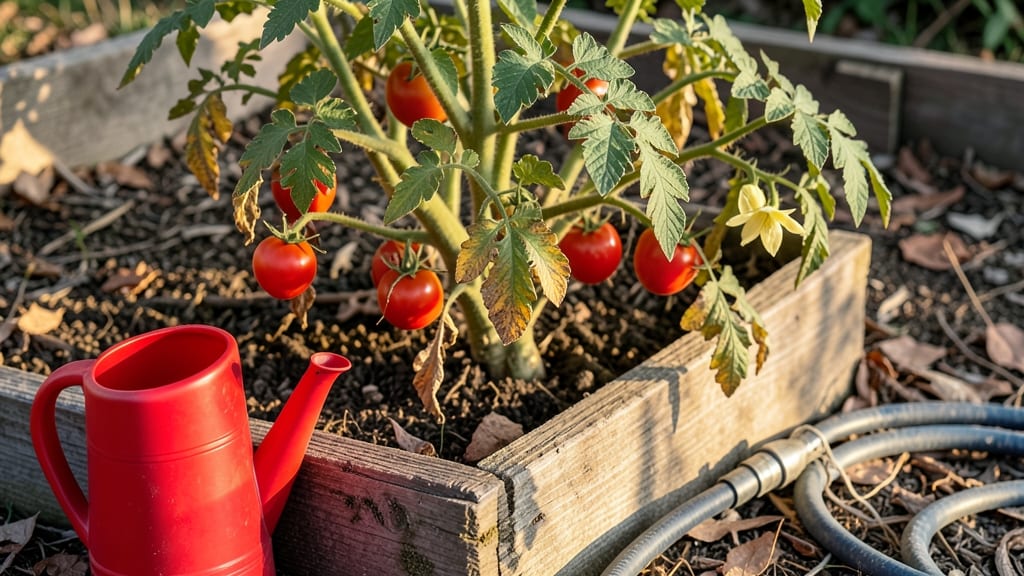
Underwatered tomato plants look like they’ve been through a drought—crispy leaf edges, sagging stems, and leaves that feel like brittle paper. 🌱 I’ve pulled my share of wilted plants back from the brink, and the fix isn’t as dramatic as you’d think.
It starts with a simple soil check that tells you exactly what your tomatoes need.
The real culprit is often inconsistent watering—either too little or too much at once. Tomatoes need 1-2 inches of water per week, but they hate soggy roots just as much as dry ones. Container plants dry out faster, while in-ground tomatoes can suffer from uneven moisture.
A quick finger test in the soil reveals the truth: if the top 2 inches are dry, it’s time to water deeply.
Within 24 hours, your plants will perk up if you water thoroughly at the base (not overhead) and keep the soil evenly moist. Mulch helps lock in moisture, and a drip irrigation setup takes the guesswork out of watering.
By the end of the week, you’ll see new growth and those crispy edges softening back to healthy green.
This works for both container and in-ground tomatoes, though containers need more frequent checks. The key is consistency—no more neglecting your plants until the leaves curl. Let’s get them back on track!
Root Causes of Tomato Thirst
When your tomato plants start looking like they’ve been left in the desert, the issue almost always boils down to one (or more) of these key factors.
Understanding why your plants are underwatered is the first step to bringing them back to life. Let’s dig into the science behind the struggle.
Tomatoes are heavy drinkers—their deep roots demand consistent moisture to transport nutrients and maintain turgor pressure (the scientific term for that plump, happy leaf look). Here’s why water shortages happen:
- Shallow Root Systems (Early Stage): Young tomato plants have limited root depth (often just 6–12 inches). If you’re only watering the surface, the roots can’t access what they need. Pro tip: Use a moisture meter to check soil depth—aim for dampness at least 6 inches down.
- Drought or Heatwaves: High temperatures increase transpiration (water loss through leaves), while dry winds accelerate evaporation. A single day above 90°F can drain soil moisture faster than your watering schedule can replace it.
- Poor Soil Retention: Sandy or rocky soils drain like sieves, offering no resistance to water flow. Without organic matter (like compost), water rushes past the roots before they can absorb it. Fix: Amend soil with coconut coir or peat moss to improve water-holding capacity.
Tomatoes hate inconsistency. Skipping watering days—or worse, alternating between soaking and drought—confuses their root systems and triggers stress responses like wilting or leaf curl.
- Surface-Level Watering: A quick sprinkle from a hose or drip irrigation only wets the top inch of soil. Roots stay thirsty while the surface dries out, creating a moisture gradient that stunts growth. Solution: Water deeply until the soil 6–8 inches down is saturated (the “fork test” works: push a trowel in—if it comes out dry, water again).
- Over-Reliance on Rain: Rainfall is unpredictable and often uneven. A downpour might soak one side of your garden while leaving another parched. Track rainfall: Use a rain gauge to ensure you’re supplementing when totals drop below 1 inch per week.
- Morning vs. Evening Watering: Watering in the early morning (before 10 AM) reduces evaporation and fungal risks, while evening water can promote mildew. Nighttime watering? Only if you’re using drip systems with proper drainage.
Even with enough water, roots might fail to absorb it due to damage or disease. Here’s what to watch for:
| Issue | Cause | Signs |
|---|---|---|
| Root Rot (Overwatering Paradox) | Too much water in poorly drained soil suffocates roots, cutting off oxygen. Ironically, this mimics underwatering symptoms! | Yellowing leaves, mushy stems, foul-smelling soil |
| Root-Bound Plants | Roots circling the pot or container restrict water uptake. Common in small or plastic pots. | Roots growing out of drainage holes, stunted growth |
| Nematode or Fungal Attack | Microscopic pests or pathogens block root function, making absorption inefficient. | Gnarled, brown roots; sudden wilting despite watering |
💡 Pro Tip: If you suspect root issues, gently dig around the base of the plant (carefully!) to inspect roots. Healthy roots should be white or tan; black/mushy roots need intervention.
Your tomato’s environment can silently sap its moisture reserves. These factors often fly under the radar but play a huge role:
- Wind Exposure: Wind increases evaporative demand, forcing plants to transpire faster. Solution: Use windbreaks (like burlap screens) or plant near taller crops (e.g., corn) to shield delicate leaves.
- High Salinity: Over-fertilizing or using tap water with high mineral content creates a hypertonic solution in the soil, making it harder for roots to absorb water. Test your water: If it leaves white residue when evaporated, flush the soil with rainwater.
- Container Size/Material: Small pots or plastic containers dry out faster than the ground. Upgrade: Use fabric grow bags or 5-gallon+ containers with drainage holes.
Now that you know the real culprits behind your tomato’s thirst, the next step is actionable fixes to revive those wilted leaves in 24 hours. Stay tuned!
Quick Fixes for Reviving Stressed Plants
Reviving an underwatered tomato plant starts with immediate action—but don’t panic! With the right steps, you can nurse your plants back to health in 24 hours or less.
Below, we’ve mapped out practical solutions based on the most common causes of wilting, plus prevention tips to keep your tomatoes thriving long-term.
---
Problem: Crusty, cracked soil or a light tap that reveals dryness down to 2+ inches. Solution: Deep, slow watering is key—don’t just splash water on top!
1. 🔥 Pre-Water Prep - Loosen the soil around the base (1–2 inches deep) with your fingers or a trowel. This helps water penetrate faster. - Pro tip: If the soil is hard as concrete, soak it first with a small amount of water to soften it up.
2. 🍳 The Right Watering Technique - Use a watering can with a long spout or a soaker hose to deliver water slowly and directly to the roots. - Water until you see moisture seeping out the bottom of the pot (or 6+ inches deep in garden soil). - For containers: Let the water drain completely—no soggy bottoms!
3. ⏰ Frequency Check - Morning watering is best (reduces evaporation and fungal risks). - Mulch after watering (straw, grass clippings, or shredded leaves) to lock in moisture.
💡 Prevention: - Test soil moisture daily in extreme heat. Stick your finger 2 inches deep—if it’s dry, water. - Upgrade to self-watering pots or drip irrigation for consistency.
---
Problem: High temps + dry air = transpiration overload (plants lose water faster than they can absorb it). Solution: Cool things down and shield roots from the sun.
1. 👨🍳 Shade Relief (Fast Act) - Temporary shade cloth (30–50% coverage) or a lightweight row cover over plants for 2–4 hours during peak sun (10 AM–2 PM). - DIY hack: Use white bedsheets draped loosely over a frame—cheap and effective!
2. 🥘 Evening Water Boost - Water deeply in the late afternoon (after 4 PM) to give roots a hydration buffer overnight. - Mist leaves lightly (early morning only) to raise humidity around the plant—but avoid evening misting (fungus risk).
3. 🎯 Root Zone Protection - Reflective mulch (white gravel or aluminum foil) around the base reduces heat absorption. - Elevate pots slightly (use bricks or pot feet) to improve airflow under the container.
💡 Prevention: - Plant in late spring (after last frost) to avoid early-season heatwaves. - Choose heat-tolerant varieties like ‘Solar Fire’ or ‘Heatmaster’ tomatoes.
---
Problem: Roots can’t access water because soil is clay-heavy, waterlogged, or root-bound. Solution: Loosen roots and improve aeration—but do it gently!
1. 🔪 Gently Repot (If Root-Bound) - Check for roots circling the pot—if you see a tight mass, it’s time to upgrade the container. - Steps: - Water the plant 1 hour before repotting. - Loosen roots with your hands, then plant in a pot 2 inches larger with fresh, well-draining soil. - Warning: Avoid repotting in extreme heat—do it on a cool, cloudy day.
2. ✨ Soil Fix for Heavy Clay or Soggy Soil - Amend soil with: - 50% potting mix + 50% perlite/pumice (for containers). - Compost + coarse sand (for garden beds). - Add worm castings (1 cup per plant) to boost microbial activity and water retention.
💡 Prevention: - Never reuse old soil—it compacts over time. - Use raised beds for clay soil to improve drainage naturally.
--- If your tomato plant is limp, yellowing, and not perking up after 12 hours, try this last-resort combo: 1. Submerge the pot (for containers) in 4 inches of water for 10–15 minutes to force hydration.
2. Trim damaged leaves (use sterilized scissors) to reduce water loss. 3. Apply a seaweed fertilizer (like Maxicrop) to jumpstart recovery—it’s packed with stress-relief hormones.
--- | Condition | Watering Time | Frequency | Extra Tip | |-----------------------------|-------------------------|-----------------------------|-----------------------------------| | Hot & Dry (90°F+) | Early morning or late evening | Every 1–2 days (deep water) | Mulch 2–3 inches thick | | Moderate Heat (70–85°F) | Morning only | Every 2–3 days | Check soil 2 inches deep | | Cloudy/Cool Weather | As needed | Every 3–4 days | Water less, not more | | Containers (Small Pots) | Daily in peak sun | Morning only | Use self-watering pots |
--- Final Reminder: 🌱 Consistency is key—tomatoes hate boom-and-bust watering. Once you revive your plant, stick to a schedule and monitor soil moisture like a hawk! With these fixes, your tomatoes should bounce back in 24–48 hours and keep producing juicy fruit all season. 🍅🔥
Frequently asked questions
How do I tell if my tomato plant is truly underwatered vs. just wilting from heat?
Check the soil first—stick your finger 2 inches deep. If it's bone-dry, that's underwatering. For heat stress, leaves often feel dry and crispy but the soil may still be damp. Morning wilting that recovers by afternoon suggests heat, while persistent droop means thirst. Also look for yellowing lower leaves (common in both cases) but brown, curled edges point to underwatering.
Will pruning wilted leaves help my underwatered tomato plant recover faster?
Yes, but only if you remove only the most damaged leaves. Trim back brown, crispy edges or completely dead leaves with clean scissors. Avoid heavy pruning—focus on reducing water loss while keeping the plant's energy on new growth. Prune in the morning so any cuts have time to dry before evening moisture could invite fungus.
Can I use ice cubes to revive an underwatered tomato plant?
Ice cubes can help in emergencies, but use them wisely. Place 3-4 ice cubes at the base of the plant in the soil—this slowly releases water without shocking the roots. Better yet, mix them with 1 cup of water and pour it directly into the soil. Avoid this method for container plants with poor drainage, as it can cause root rot if water pools.
How often should I water tomato plants in containers vs. garden beds?
Containers dry out 2-3x faster than garden beds. Water container tomatoes daily in hot weather (check soil moisture at 2 inches deep), while garden tomatoes need watering every 2-3 days unless it rains. Use your finger as a gauge—if the topsoil feels dry, it's time. Mulch helps both types retain moisture, but containers benefit most from self-watering systems.
My tomato plant perked up after watering but the leaves stayed yellow. Is this normal?
Yellowing leaves after recovery often signal root stress from previous dehydration or nutrient loss. Flush the soil with 1 cup of liquid fertilizer (like seaweed extract) to replenish nutrients. If the yellowing spreads or affects new growth, check for root rot (mushy roots) or nutrient deficiencies. Container plants are more prone to this—repot if needed with fresh, well-draining soil.