
Planting
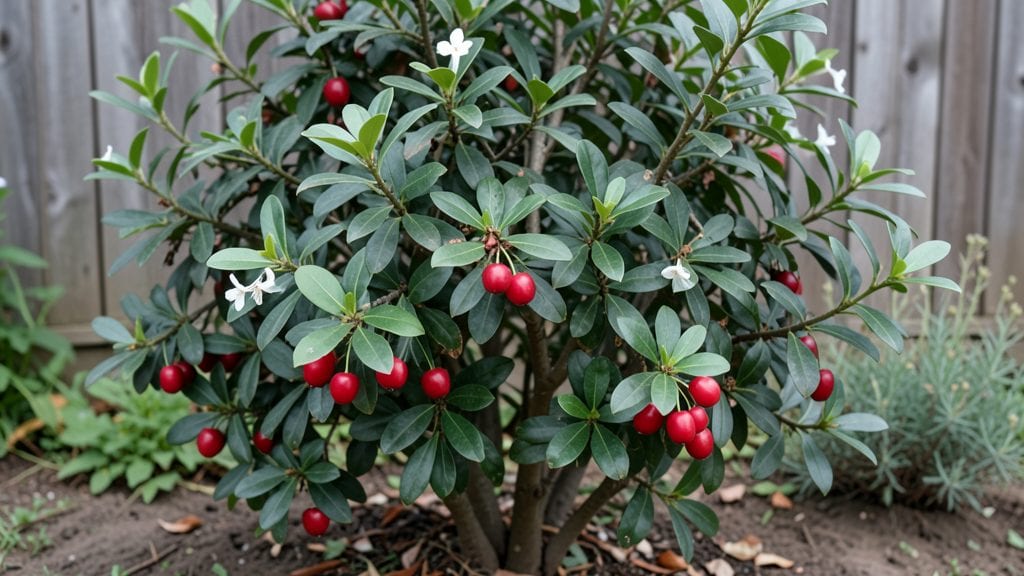
Creating a lush Eugenia plant hedge is the fastest way to transform a narrow yard into a private retreat. 🌿 I planted mine last spring, and within just six months, the glossy green leaves formed an impenetrable barrier that neighbors now envy.
The key lies in their rapid growth and dense branching—perfect for tight spaces where traditional hedges would sprawl.
These plants thrive in warm climates but adapt surprisingly well to partial shade, making them versatile for different yard orientations. Start with 3-foot spacing between plants—closer spacing speeds up the privacy effect, though you’ll need to prune more often.
A sharp pair of shears and a little patience are all you need to shape them into a polished, living wall.
By late summer, your hedge will be thick enough to block views and reduce noise, with clusters of small white flowers adding delicate contrast. The glossy foliage stays vibrant year-round, and the plants rarely suffer from pests, making them a low-maintenance choice.
Just be ready for some serious shade once they mature!
Pair them with drought-tolerant ground covers like creeping thyme or ornamental grasses to fill gaps and enhance the layered look. This combo creates a living screen that’s both functional and stunning—without the years-long wait of slower-growing options. Let’s get those Eugenia plants in the ground!
📚 In This Guide
- What you need
- Instructions
- Tips and common mistakes
- Wrapping up and next steps
What you need
- ● Eugenia plants (e.g., Eugenia myrtifolia or Eugenia uniflora): 10–20 plants per 5-foot section (adjust based on desired height and spacing—aim for 3–4 feet apart for a dense hedge).
- ● Note: Buy nursery-grown, healthy plants (1–2 feet tall) for faster establishment.
- ● Soil amendments: 2–3 bags of organic compost (per 10 linear feet of hedge).
- ● 1–2 cups of slow-release fertilizer (10-10-10 or balanced formula).
- ● Tools: Shovel or spade (for digging).
- ● Hedge shears (for trimming and shaping).
- ● Garden gloves (to protect your hands).
- ● Measuring tape or stakes (to mark planting lines).
- ● Watering can or hose (with a gentle spray nozzle).
- ● Mulch: 2–3 inches of wood chips or straw to retain moisture and suppress weeds.
- ● Erosion control fabric: Useful if planting on a slope to prevent soil runoff.
- ● Plant stakes or twine: Temporarily secure young plants until roots establish (3–4 weeks).
- ● Pruning paste: Apply to cuts to prevent disease if trimming heavily.
Step-by-Step instructions for planting a eugenia hedge
Here's how to create a lush, fast-growing privacy screen using eugenia plants—perfect for small spaces.
🌱 Step 1: Choose the Right Location and Spacing
Eugenia thrives in partial shade to full sun, but morning sun with afternoon shade works best in hotter climates. Mark your planting line with stakes and string—space plants 3-4 feet apart for a dense hedge. This gives them room to grow without overcrowding, which slows their fast growth.
Check the soil pH with a test kit—eugenia prefers slightly acidic soil (6.0-6.5). If your soil is alkaline, amend it with 1-2 inches of peat moss mixed into the top 12 inches of soil. Avoid planting in low-lying areas where water pools, as soggy roots invite rot.
🪴 Step 2: Dig Holes and Plant with Care
Dig holes twice as wide as the root ball but no deeper—this encourages roots to spread horizontally for stability. Use the 4 eugenia plants you’ve selected, gently removing each from its container. Loosen the roots if they’re circling tightly; this prevents transplant shock.
Place each plant in its hole so the top of the root ball sits level with the surrounding soil. Fill the hole with soil, pressing lightly to remove air pockets. Water deeply right away to settle the soil and eliminate gaps. A good soak helps roots make contact with the surrounding earth faster.
☀️ Step 3: Water and Mulch for Fast Establishment
Water each plant with 1 gallon of water immediately after planting, then 2 gallons weekly for the first 4 weeks. Eugenia loves moisture but hates soggy soil—water in the early morning so leaves dry by evening. You’ll know you’re doing it right when the soil feels damp 2 inches down but not waterlogged.
Spread 2 inches of mulch (like shredded bark) around each plant, keeping it 3 inches away from the stem. Mulch locks in moisture and keeps roots cool, which is especially important in hot climates. Refresh the mulch layer every 3-4 months to maintain its effectiveness.
✂️ Step 4: Prune for Shape and Encourage Bushiness
Wait 6-8 weeks before pruning—this gives plants time to establish roots. Once they’ve settled, trim back any leggy growth or overlong branches with clean, sharp pruners. Cut just above a leaf node to encourage new growth. For a uniform hedge, shape plants by trimming the outer edges at a 45-degree angle.
Prune twice a year: once in early spring to shape the hedge and again in late summer to tidy up after the growing season. Avoid heavy pruning in fall—it stresses plants before winter dormancy. You’ll see fuller growth within 2-3 weeks of pruning, as eugenia responds quickly to trimming.
🌿 Step 5: Maintain for Long-Term Privacy
Fertilize once in early spring with a balanced, slow-release fertilizer (10-10-10) to support fast growth. Spread the granules evenly around the base, then water deeply to activate them. Over-fertilizing leads to weak, leafy growth with fewer flowers—stick to the recommended amount.
Monitor for pests like scale or spider mites, which love eugenia’s glossy leaves. Spray plants with neem oil at the first sign of infestation, repeating every 7-10 days until pests disappear. With proper care, your hedge will fill in quickly, providing privacy within 1-2 years—much faster than traditional hedges.
Tips & tricks for perfect eugenia plant hedge
Creating a fast-growing privacy screen with eugenia plants is all about strategic planning and consistent care. Here are the key tricks to ensure your hedge thrives and delivers privacy within record time.
Location and Spacing: In Step 1, when choosing your planting line, consider the mature height of your eugenia plants—typically 6-8 feet tall. The 3-4 foot spacing isn't just about aesthetics; it accounts for their rapid horizontal growth. If you're planting along a fence or property line, mark your spacing with garden flags instead of string for easier visibility during planting. This spacing ensures your hedge reaches full density within 12-18 months rather than dragging out over several years.
Soil Preparation: The soil pH check in Step 1 is crucial, but here's what nobody tells you: if your soil is slightly off (say 6.6-6.8), you can often correct it just by mixing in 1 part peat moss to 3 parts soil in the planting holes. This targeted approach is more effective than amending the entire area. For alkaline soils, consider adding a thin layer of sulfur to the bottom of each hole before planting—it'll gradually acidify the root zone over time. Remember, eugenia roots are shallow, so focus your amendments where they'll do the most good.
Planting Technique: When you're loosening those circling roots in Step 2, don't just pull them apart—make small vertical cuts with your fingers or a knife to break up the tight root ball. This "root pruning" technique stimulates new root growth, helping your plants establish faster. After planting, give each hole a final press with your foot (wear sturdy shoes!) to eliminate any remaining air pockets. The immediate gallon of water should settle the soil completely—this is your chance to fix any uneven spots before they become problems.
Watering Wisdom: That 2-gallon weekly watering schedule in Step 3 is perfect, but here's the secret: water less frequently but more deeply. Once every 5-7 days with 3 gallons at a time (instead of weekly 2 gallons) encourages roots to grow deeper, making your hedge more drought-resistant. Use a rain gauge or tuna can to measure water—eyeballing it leads to inconsistent moisture levels. And if you're using a sprinkler, water in the early morning for 20-30 minutes to give leaves time to dry, preventing fungal issues.
Pro Tips for Eugenia Plant Hedge
- Creating a fast-growing privacy screen with eugenia plants is all about strategic planning and consistent care.
- Location and Spacing: In Step 1, when choosing your planting line, consider the mature height of your eugenia plants—typically 6-8 feet tall.
- This targeted approach is more effective than amending the entire area.
Frequently asked questions
How fast does a Eugenia hedge grow?
A Eugenia hedge grows at a moderate to fast pace—expect 12–24 inches per year under ideal conditions (full sun, well-draining soil, and regular watering). With proper care, you could see a 6-foot-tall privacy screen in 3–5 years. Patience pays off, but it’s one of the quicker options for compact yards!
When is the best time to plant Eugenia for a hedge?
The ideal planting window is early spring or fall—when temperatures are mild (50–75°F) and rainfall is consistent. Avoid extreme heat or frost, as young plants are sensitive. Pro tip: If you must plant in summer, water deeply daily for the first 2 weeks to help roots establish.
Can Eugenia hedges handle full sun or shade?
Eugenia thrives in partial shade to full sun, but morning sun + afternoon shade is perfect for most climates. In hot, dry areas, afternoon shade prevents leaf scorch. If your yard is fully shaded, growth may slow—supplement with balanced fertilizer (like 10-10-10) twice a year for best results.
What’s a good alternative if Eugenia isn’t available?
If Eugenia isn’t in stock, try these fast-growing, compact hedge alternatives:
- Boxwood (Buxus) – Dense, evergreen, but slower-growing.
- Abelia (Abelia × grandiflora) – Tough, fragrant, and drought-tolerant.
- Dwarf Ficus (Ficus microcarpa ‘Ginseng’) – Hardy, glossy, and great for tight spaces.
- Ligustrum (Privet) – Budget-friendly but needs pruning.
For privacy + speed, Abelia or Dwarf Ficus are top picks!
Why are my Eugenia leaves turning yellow or brown?
Yellowing leaves usually mean overwatering or poor drainage, while brown edges often signal underwatering or sunburn. Check these fixes:
- Water deeply but infrequently—soil should dry 2–3 inches down between waterings.
- Ensure well-draining soil—amend clay soil with compost or sand.
- Adjust sunlight—if leaves crisp in afternoon sun, provide shade.
- Watch for pests—aphids or spider mites can stress plants; treat with neem oil if needed.
Most issues clear up in 1–2 weeks with proper care!
Wrapping up and next steps
Transforming your compact yard into a lush, private oasis with an eugenia plant hedge is simpler—and more rewarding—than you think! 🌿 These fast-growing, low-maintenance shrubs offer year-round beauty, fragrance, and a natural barrier that’s perfect for small spaces.
Whether you’re a beginner or a seasoned gardener, the key is starting small and letting nature do the rest.
Ready to take the next step? Sketch your hedge layout today, gather your supplies, and plant your first row—your future privacy screen awaits! For extra inspiration, explore eugenia plant care tips or connect with local gardening groups to share your progress. Happy planting! 🌱