
Watering
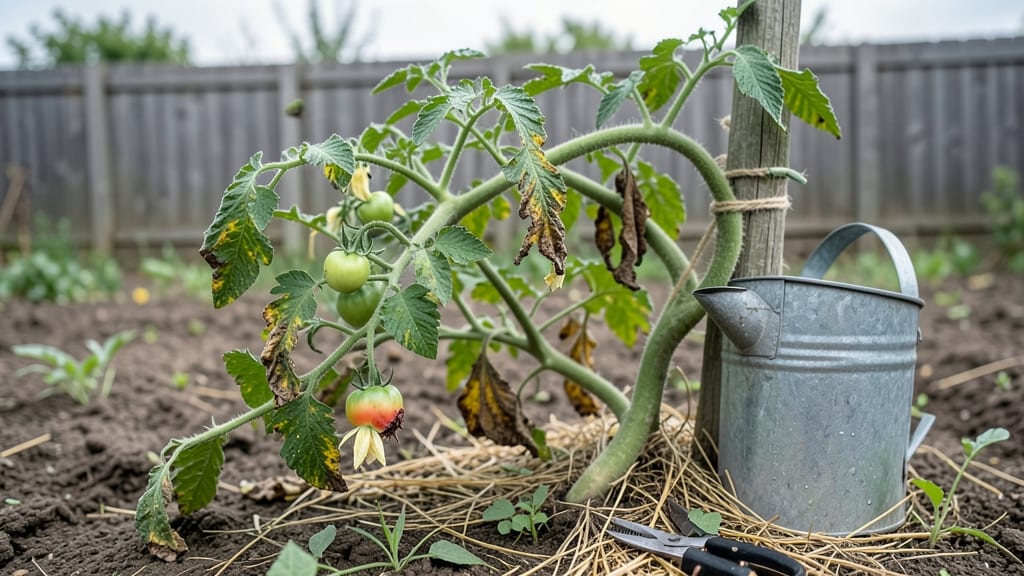
Fixing overwatered tomato plants starts with recognizing the signs—soggy soil, yellowing leaves, and stems that wobble like jelly. 🌱 I’ve salvaged plants that looked doomed by midday, and the key is acting fast before root rot takes over.
The first step is always stopping water completely until the soil dries out an inch below the surface.
Drainage is your best friend now. If your pots or garden bed don’t have holes, create them immediately—even a fork can poke drainage channels in heavy soil. For container plants, lift them to let water escape from the bottom.
Once the soil is damp but not dripping, you can ease back into watering with just 1 inch per week, letting excess run off.
Within 24 hours, you’ll see leaves perk up and new growth push out if the roots aren’t permanently damaged. The real game-changer? Amending the soil with compost or perlite to improve aeration. This prevents future soggy soil and helps roots breathe properly, so your tomatoes bounce back stronger than ever.
Prevention is simple: check soil moisture with your finger before watering, and always water at the base—not overhead. A moisture meter takes the guesswork out of it. With these tweaks, your plants will thrive instead of wilt.
Root Causes of Overwatered Tomatoes
Overwatering your tomato plants might seem counterintuitive—after all, tomatoes need plenty of water to thrive! 🌱 But when the balance tips too far, excess moisture triggers a cascade of problems that weaken your plants.
Understanding the why behind overwatering is the first step to preventing it. Let’s break down the key culprits:
Tomatoes hate soggy feet. When soil or pots lack proper drainage, water pools around the roots instead of flowing away. This creates an oxygen-deprived environment, where:
- Root asphyxiation: Roots need oxygen to absorb nutrients. Waterlogged soil forces roots to suffocate, cutting off their ability to take up water and minerals.
- Fungal invasions: Stagnant water breeds Phytophthora and Pythium—fungi that rot roots and stems. Look for dark, mushy roots or wilting despite damp soil.
- Nutrient lockout: Excess water flushes away essential nutrients like nitrogen and potassium, leaving plants starved even if they’re drowning.
Pro tip: Test your soil’s drainage by filling a container with potting mix, adding water, and timing how long it takes to drain. Ideal? 30–60 minutes. Still soggy? Amend with perlite or sand.
Tomatoes prefer consistent moisture, not sporadic drenching. When you water deeply one day and skip the next, roots struggle to adapt:
- Shallow root systems: Frequent light watering encourages roots to stay near the surface, where they’re more vulnerable to drying out—or drowning—quickly.
- Osmotic stress: Alternating between dry and waterlogged soil causes roots to swell and shrink, damaging cell walls and reducing nutrient uptake.
- Blossom-end rot: Inconsistent watering disrupts calcium absorption, leading to the classic leathery brown spots on fruit.
Pro tip: Use a drip irrigation system or soaker hose to deliver water slowly at the base, keeping soil evenly moist (but not soggy). Aim for 1–1.5 inches of water per week, adjusting for rain.
Heat and humidity don’t just affect humans—they mess with your tomatoes too. When temperatures spike or humidity stays high:
- Evaporation slows: Hot, humid air reduces water evaporation from soil, keeping it damp longer than intended. Combine this with regular watering, and you’ve got a recipe for root rot.
- Fungal spores thrive: Warm, moist conditions are perfect for Alternaria or Septoria leaf spot, which weaken plants and make them more susceptible to overwatering stress.
- Transpiration imbalance: High humidity reduces the plant’s ability to release excess moisture through leaves, forcing it to retain water—even when the soil is already saturated.
Pro tip: Monitor humidity with a hygrometer (ideal range: 40–70%). Use mulch (straw or shredded leaves) to regulate soil temperature and reduce evaporation.
Tomatoes need space to breathe—literally. When plants are too close together or buried too deeply:
- Competition for oxygen: Dense foliage traps moisture between leaves, creating a humid microclimate that encourages fungal diseases.
- Stem rot: Burying stems too deep (or planting in heavy clay) can cause the lower stem to rot, as it struggles to dry out between waterings.
- Weak root aeration: Compacted soil restricts root growth, making plants more sensitive to water stress (both drought and excess).
Pro tip: Space tomato plants 18–24 inches apart in rows 36 inches apart. If using containers, ensure they’re at least 5 gallons per plant with drainage holes.
Now that you know the why, the next step is fixing the damage—and keeping your tomatoes on track for a bountiful harvest. 🍅✨
Reviving Your Tomatoes Step by Step
Overwatered tomato plants can feel like a gardening disaster, but with the right approach, you can nurse them back to health—often faster than you think! The key is acting quickly and addressing the root cause (literally and figuratively).
Below, we’ll match common signs of overwatering to targeted fixes, plus tips to keep your plants thriving long-term.
Cause: Soggy soil starves roots of oxygen, leading to yellowing (chlorosis) and wilting. Fix:
- Stop watering immediately—let the soil dry out for 1–2 days. 🚰
- Improve drainage: Mix coarse sand or perlite into the top 6 inches of soil to break up compacted earth. For container plants, add drainage holes if missing.
- Prune damaged foliage: Snip yellow or mushy leaves with clean scissors to redirect energy to healthy growth. ✂️
- Boost airflow: Space plants wider or prop up floppy stems with stakes to speed drying.
Prevention:
- Water deeply 2–3 times per week (not daily) and only when the top inch of soil feels dry.
- Use a moisture meter or stick your finger in the soil—if it’s damp past 2 inches, hold off.
Cause: Excess moisture causes stems to weaken (from fungal rot) or triggers calcium deficiency (blossom end rot). Fix:
- For fungal rot: Remove affected stems entirely (don’t compost them—bag and discard). 🧹 Apply a copper fungicide or baking soda spray (1 tbsp baking soda + 1 quart water + a drop of dish soap) to prevent spread.
- For blossom end rot: Sprinkle crushed eggshells or calcium-rich compost around the base. Water at the soil level (not leaves) to avoid splashing rot spores.
- Switch to drip irrigation if using overhead watering—it delivers moisture directly to roots without wetting foliage.
Prevention:
- Water early in the morning to allow leaves to dry by evening.
- Mulch with straw or wood chips to retain moisture without smothering roots.
Cause: Overwatering + poor aeration suffocates roots, causing them to collapse. Fix:
- Fluff the soil gently with a fork or hands to loosen compacted areas around roots. Avoid digging too deep to prevent further damage. 🪴
- Add organic matter: Work in compost or coconut coir to improve soil structure and water retention without drowning roots.
- Transplant if needed: If roots are circling in a pot, upgrade to a larger container with fresh, well-draining potting mix.
Prevention:
- Test your soil: Aim for a mix that drains within 30–60 minutes after watering. Clay soil? Amend with peat moss or vermiculite.
- Use raised beds for heavy soils—they warm faster and drain better.
Cause: Overwatered soil attracts fungus gnats, aphids, and slugs, which stress plants further. Fix:
- Set out yellow sticky traps near plants to catch gnats. 🎣
- Handpick slugs at night (they’re most active then) or sprinkle diatomaceous earth around the base (reapply after rain).
- Spray neem oil (1 tsp per quart of water) to deter pests and treat fungal issues. Shake well and spray undersides of leaves.
Prevention:
- Let soil dry between waterings—pests thrive in perpetually damp conditions.
- Rotate crops yearly to disrupt pest life cycles.
If your tomatoes are severely wilted but stems are still firm:
- Trim all damaged leaves and stems back to 1/3 of their size to reduce water loss. 🌿
- Move the plant to a shady spot (bright indirect light) for 24–48 hours to recover.
- Fertilize lightly with a balanced liquid feed (like 10-10-10) to replenish nutrients lost to stress.
- Monitor closely: If new growth appears within 2 days, gradually reintroduce sunlight.
💡 Pro Tip: Overwatering is often a habit, not a one-time mistake. Keep a watering journal to track when/where you water—you’ll spot patterns fast!
By tackling the symptoms and the underlying issues, your tomato plants can bounce back stronger. Next up? Learn how to prevent future soggy soil disasters—because healthy tomatoes start with happy roots! 🍅✨
Frequently asked questions
How do I know if my tomato plant is overwatered vs. underwatered?
Check the soil first—stick your finger 2 inches deep. If it's soggy and cool, you're overwatering. Overwatered plants have yellowing leaves, wilting despite damp soil, and stems that feel mushy. Underwatered plants have crispy brown edges and dry, pulling soil. The key difference? Overwatered plants stay limp even when soil is wet.
Can I save a tomato plant with root rot from overwatering?
It depends on how severe it is. If only surface roots are affected, prune damaged foliage, improve drainage, and repot with fresh soil. For advanced rot (black, mushy roots), the plant may not recover. Always sterilize tools between cuts to prevent spreading fungal spores. Prevention is easier than cure—check soil moisture before watering!
What's the best way to fix drainage in heavy clay soil?
Amend your soil with organic matter like compost or coconut coir to improve aeration. For immediate fixes, mix in coarse sand or perlite (1 part to 3 parts soil). If planting in containers, use a well-draining potting mix with 20-30% perlite or vermiculite. Raised beds also help—elevating plants improves drainage and prevents waterlogging.
How long does it take to revive an overwatered tomato plant?
With proper care, you'll see improvement in 24-48 hours. Trim damaged leaves, improve drainage, and move plants to shade temporarily. If roots are severely damaged, recovery may take 1-2 weeks. Monitor closely—new growth at the stem base signals recovery. Patience is key, but act fast to prevent permanent damage.
Can I use coffee grounds to fix overwatered tomato plants?
Coffee grounds can help in moderation—they improve soil structure and provide nitrogen. However, they're not a fix for overwatering. Mix 1 cup per plant into the top inch of soil to aid recovery, but focus first on drainage and reducing moisture. Too much can compact soil further, worsening drainage issues.