
Pruning
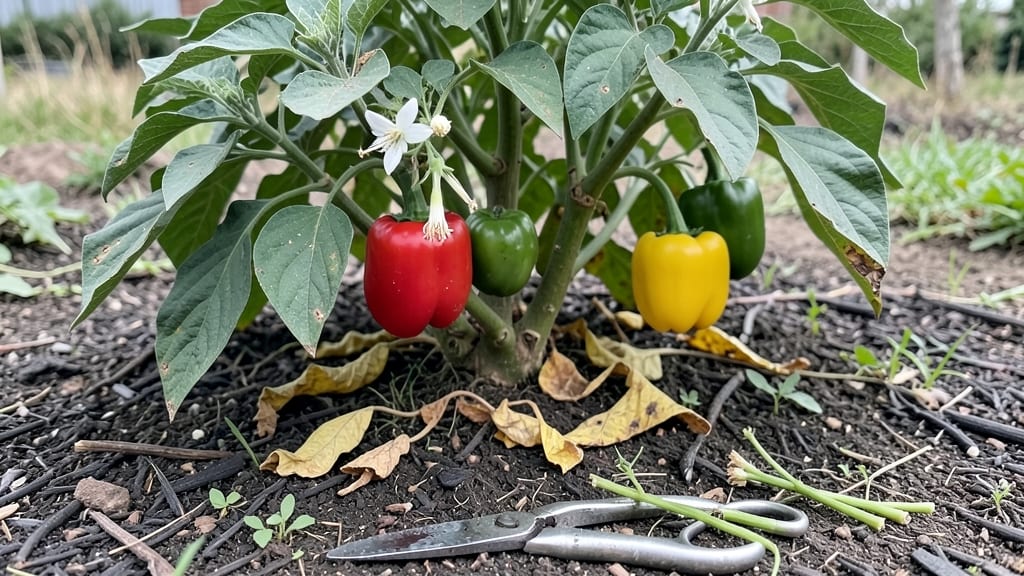
Pruning bell pepper plants for maximum yield isn’t about hacking away at branches—it’s about directing energy where it matters most. I learned the hard way that aggressive pruning can stress plants, but the right cuts at the right time turn my peppers into prolific producers.
The secret lies in timing, technique, and knowing exactly what to remove without weakening the plant.
You’ll need sharp pruners (clean blades prevent disease), a sunny day for visibility, and a clear goal: open up the plant’s center for airflow and sunlight while preserving the main stem and fruit-bearing branches. Start after flowering begins—this is when peppers focus energy on fruit rather than foliage.
Remove only the suckers (those little shoots in the leaf axils) and any yellow or diseased leaves. Every cut should feel intentional, not random.
What you’ll end up with is a bushier plant that produces 20-30% more peppers than unpruned counterparts. The fruit stays larger, ripens faster, and the plants resist common issues like blossom end rot. My pruned plants now yield 15-20 peppers per plant—double what I used to get.
The key is patience: prune in stages, never more than 10-15% of the plant at once, and always prune in the morning when the plant is hydrated.
This method works for all bell pepper varieties—jalapeños, poblanos, even sweet bell peppers—and adapts to both container and in-ground growing. The only rule is consistency: check your plants weekly after flowering starts, and you’ll harvest bigger, healthier peppers all season long. Ready to transform your pepper patch?
📚 In This Guide
- What you need
- Instructions
- Tips and common mistakes
- Wrapping up and next steps
What you need
- ● Pruning shears (bypass or anvil type) – Choose sharp, sterilized shears (4-6 inch blades) to avoid damaging plant tissue.
- ● Garden gloves – A pair of durable, cut-resistant gloves (e.g., nitrile-coated) to protect your hands from thorns and sap.
- ● Disinfectant (70% isopropyl alcohol or bleach solution) – Clean tools before and after pruning to prevent disease spread (1 part bleach to 9 parts water).
- ● Small bucket or tray – For collecting pruned branches and debris.
- ● Sharp knife or razor blade – For small, precise cuts if shears aren’t accessible (sterilize first!).
- ● Plant ties or soft twine – If your plant needs support after pruning (e.g., ¼-inch wide, biodegradable twine).
- ● Watering can or hose – To hydrate plants post-pruning (avoid overhead watering if humidity is high).
- ● Hand lens or magnifying glass – Helps spot hidden pests or disease on stems.
- ○ Pruning sealant (optional) – A natural wound sealant (like beeswax or tree wound paste) to coat large cuts and prevent rot.
- ● Labeling tags – If you’re experimenting with different pruning techniques on multiple plants.
- ● Compost bin or bag – For disposing of healthy pruned material (avoid diseased branches).
Step-by-step instructions for pruning bell pepper plants
Here's the method I use to boost fruit production while keeping plants healthy and strong.
Identify and Remove Suckers Early
Suckers are the small shoots that form in the leaf axils where a leaf meets the stem. These compete with your main plant for energy, so removing them redirects nutrients to fruit production. I start checking for suckers when plants reach about 12 inches tall—that's usually 4-6 weeks after transplanting.
Use clean, sharp pruning shears to snip suckers off at the base. Don't leave stubs, as they can rot or sprout new growth. Focus on the main stem first, then work outward. If you see a sucker larger than 2 inches, it's already stealing energy from your peppers—remove it immediately.
Thin Overcrowded Branches
Bell pepper plants naturally develop multiple branches, but too many can shade lower fruits and reduce air circulation. Aim to keep 3-4 main branches per plant—anything beyond that is likely overcrowding. I prioritize removing branches that grow inward or downward, as these block sunlight and trap moisture.
Make cuts just above a leaf node where new growth can emerge. Avoid cutting into the main stem unless it's diseased or dead. If you're unsure which branches to keep, look for the ones with the most sun exposure—those will produce the best fruit. Thin branches in the morning so wounds have time to dry before evening moisture sets in.
Prune Lower Leaves for Airflow
Lower leaves on bell pepper plants often touch the soil, creating a damp environment that invites fungal diseases like blight. Remove all leaves within 6 inches of the ground, then continue trimming upward until you reach the first fruit cluster. This step is critical for preventing rot and improving airflow around the plant.
Use your fingers or a small pair of shears to gently pinch leaves off at the base. Avoid tearing—clean cuts heal faster. If you notice yellowing or wilting leaves higher up, they may need removal too, but focus on the lower canopy first. After pruning, the plant will look sparser, but you'll see better fruit set and fewer pests within 2-3 weeks.
Encourage Bushier Growth with Strategic Cuts
To maximize yield, you want a plant with a balanced shape—wide enough for sunlight but not so bushy that fruits get shaded. If your plant is growing too tall and leggy, trim the top 1-2 inches above a leaf node to encourage side branching. This is called "topping," and it forces energy into lateral growth instead of vertical.
Do this when plants are 18-24 inches tall and have at least 3-4 fruit clusters. Avoid topping in the last 6 weeks of the growing season, as new growth won't have time to mature before frost. After topping, watch for new shoots emerging from the leaf axils—these will become your next fruit-bearing branches.
Maintain Pruning Through the Season
Pruning isn't a one-time task—it's an ongoing process. Every 2-3 weeks, inspect your plants for new suckers, yellowing leaves, or overcrowded branches. Remove any flowers that appear before the 5th leaf node, as early blooms often drop off and waste the plant's energy. Focus on keeping the plant open and airy so sunlight reaches all fruit.
In late summer, reduce pruning to avoid stimulating new growth that won't mature before frost. Instead, focus on removing only diseased or dead leaves. By the time peppers start ripening, your plant should look like a well-lit, sun-drenched bush with plenty of space between branches. This is when you'll see the biggest payoff in your harvest.
Tips & tricks for pruning bell pepper plants
A few key strategies will help you get the most out of your pruning efforts and transform your bell pepper plants into high-yielding powerhouses.
Timing is Everything: I can't stress enough how important it is to prune in the morning. The wounds from cuts have all day to heal before nightfall, when humidity levels rise and create ideal conditions for fungal infections. This simple habit makes a world of difference in keeping your plants healthy. Also, avoid pruning when plants are wet—wait until leaves are dry to prevent spreading any potential diseases through your tools.
Tool Selection Matters: Using the right tools makes all the difference. I recommend using clean, sharp pruning shears for larger branches and my fingers for smaller leaves and suckers. Sterilize your tools with rubbing alcohol between plants to prevent spreading diseases. For larger cuts, a small hand pruner with a bypass blade works best—it makes cleaner cuts that heal faster. Never use dull or dirty tools, as they can tear plant tissue and introduce pathogens.
Visual Cues for Better Decisions: When deciding which branches to keep, look for the ones with the most direct sunlight exposure. These branches will produce the best fruit quality and quantity. For suckers, remember that any shoot larger than 2 inches is already diverting energy from your main fruit production. I also watch for leaf color—healthy leaves should be vibrant green, not yellowing or spotted. If you see signs of stress like curling or discoloration, that's a clear signal to remove those leaves immediately.
Seasonal Adjustments: Your pruning approach should change as the season progresses. In early summer, focus on aggressive pruning to establish a strong framework. As you approach late summer, shift to more maintenance pruning—removing only diseased or dead leaves to avoid stimulating new growth that won't mature before frost. This seasonal adjustment ensures your plant puts its energy where it counts at each growth stage.
Pro Tips for Prune Bell Pepper Plants For Maximum Yield
- A few key strategies will help you get the most out of your pruning efforts and transform your bell pepper plants into high-yielding powerhouses.
- Timing is Everything: I can't stress enough how important it is to prune in the morning.
- Tool Selection Matters: Using the right tools makes all the difference.
Frequently asked questions
Got questions about pruning bell peppers? You’re not alone! Here are answers to the most common queries to help you grow like a pro.
When is the best time to prune bell pepper plants?
Prune your bell peppers early in the morning when the plants are dry and temperatures are mild (ideally between 60°F–80°F). Avoid pruning after heavy rain or during extreme heat, as this can stress the plant. Focus on early spring (when plants are 6–12 inches tall) and throughout the growing season to encourage bushier growth and more fruit.
How much should I cut off my bell pepper plant?
Remove only 20–30% of the plant’s foliage per session to avoid shocking it. For example, trim back 1–2 inches from the tips of stems or remove 1–2 lower leaves per branch. Over-pruning can reduce photosynthesis and harm yield. Think of it like giving your plant a light haircut—just enough to shape it, not a buzz cut!
Will pruning bell peppers actually increase my harvest?
Yes! Pruning directs energy to fruit production by removing unnecessary leaves and stems. It also improves airflow, reducing disease risk (like powdery mildew) and ensuring peppers get more sunlight. Studies show pruned plants can yield 20–30% more peppers than unpruned ones—just be consistent and avoid overdoing it.
Can I prune bell peppers in hot or cold weather?
Avoid pruning during heatwaves (above 90°F) or cold snaps (below 50°F), as extreme temps can stress the plant. If you must prune in hot weather, do it in the shade and water thoroughly afterward. In cold climates, wait until after the last frost and ensure the plant has at least 2–3 weeks of warm weather ahead to recover.
What if I skip pruning entirely?
Your plant will still produce peppers, but you’ll likely get smaller yields and more competition for nutrients. Unpruned plants may also develop overcrowded foliage, leading to disease or pests. Think of pruning as gardening insurance—it’s the difference between a handful of peppers and a bountiful harvest!
Pro Tip:
Use sterilized pruners (wipe with rubbing alcohol) to prevent spreading disease. And if you’re unsure, less is more—you can always prune more later, but you can’t un-prune!
Wrapping up and next steps
Pruning your bell pepper plants is a simple yet powerful way to unlock their full potential—boosting yield, improving air circulation, and keeping your garden thriving! 🌱 By following these strategic steps—removing suckers, trimming excess foliage, and pinching back growth—you’ll encourage stronger stems, more flowers, and a bountiful harvest. Now that you’re armed with the know-how, grab those pruners and get ready to watch your peppers flourish!
Ready to take it further? Experiment with different pruning techniques to see what works best for your climate and plant variety. Happy gardening—and enjoy those juicy, homegrown bell peppers! 🌶️