
How To
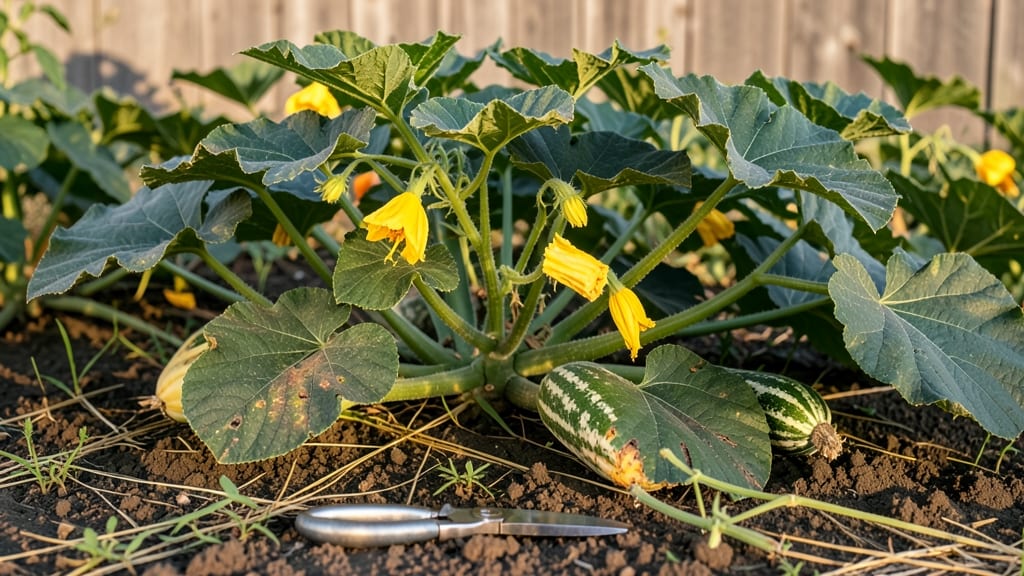
Pruning squash plants might sound intimidating, but it’s the secret weapon behind my record-breaking harvests every summer. 🌱 I used to let vines sprawl wild, only to watch fruit rot under the leaves—but trimming just three key areas transformed my garden.
The best part? You don’t need fancy tools or years of experience.
Start by removing suckers—those tiny shoots growing between the main stem and leaves—when they’re still small. Next, trim yellow or diseased leaves at the base to keep energy flowing to the fruit.
Finally, cut back overly long vines to focus growth where it matters most. These three simple cuts redirect the plant’s power to bigger, healthier squash.
📚 In This Guide
- What you need
- Instructions
- Tips and common mistakes
- Wrapping up and next steps
What you need
- ● Pruning shears or sharp bypass pruners – Choose clean, sterilized tools with sharp blades (4-6 inches long) to avoid damaging plant tissue. (1 pair recommended)
- ● Gloves – Garden or work gloves to protect your hands from thorns (common in some squash varieties) and dirt. (1 pair, preferably durable)
- ● Disinfectant (rubbing alcohol or bleach solution) – 1:9 bleach-to-water ratio to sterilize tools between cuts and prevent disease spread.
- ○ Small trowel or hand fork – For gentle soil disturbance if you need to adjust vines post-pruning. (Optional but helpful)
- ● Water spray bottle – To hydrate cut areas and reduce stress on the plant. (1 small bottle, 8-16 oz)
- ● Hose with gentle spray nozzle – For rinsing off excess sap or debris after pruning.
- ● Compost bin or bucket – To collect pruned vines for nutrient-rich compost.
- ● Plant marker or labels – If you’re pruning multiple varieties, label cut vines to track growth.
- ● Sun hat or long sleeves – For protection if pruning in hot sun or windy conditions.
Step-by-step guide to pruning squash plants for bigger harvests
Here’s the straightforward method I’ve used to double my squash yield—just three focused cuts make all the difference.
✂️ Step 1: Identify and Remove Suckers Early
Squash plants grow suckers—small shoots that form in the leaf axils between the main stem and branches. These compete with your fruit for energy. Start checking plants when they’re about 2 feet tall and pinch off any suckers you see growing from the main stem’s lower half.
Use clean pruning shears or your fingers to twist or cut the sucker off at its base. I do this every 3-4 days once the plant starts flowering. You’ll notice new growth focusing on the main stem instead of these energy thieves. If you miss a sucker, it’ll grow into a competing vine and reduce your main harvest.
✂️ Step 2: Trim Overly Long Vines to Encourage Fruit Production
Once your squash plants start flowering and setting fruit, they’ll grow long, sprawling vines. To redirect energy toward fruit production, trim back any vines that exceed 3 feet in length. Focus on the oldest vines first—they’re the most likely to be overgrown and unproductive.
Cut just above a leaf node (the point where leaves attach to the stem) to encourage new growth from that spot. This keeps the plant compact and ensures energy goes to developing fruit rather than endless vine growth. I like to do this on sunny mornings so the cuts have time to dry before evening dew.
✂️ Step 3: Prune Damaged or Diseased Leaves Immediately
Squash plants are prone to powdery mildew and other fungal diseases, especially in humid conditions. As soon as you spot yellowing, spotted, or moldy leaves, remove them completely. Use pruners to cut the leaf off at its base rather than tearing it—this prevents spreading spores to other parts of the plant.
Disease spreads fast, so don’t wait. I check my plants every morning and prune anything suspicious right away. After pruning, I toss the diseased leaves in the trash—not the compost—since fungal spores can survive and reinfect your garden. Healthy leaves mean more energy for fruit production.
🌿 Step 4: Thin Fruit Clusters for Larger Harvests
Squash plants often produce multiple small fruits in tight clusters. To grow fewer but larger squash, thin the cluster to leave just 1-2 fruits per vine. Use your fingers or pruners to gently twist off the smallest or least developed squash, leaving the largest and healthiest ones.
This step is crucial for varieties like butternut or acorn squash, where fewer, larger fruits mean better flavor and storage life. I do this when the squash are about 3 inches long, and I always leave the one with the strongest stem attachment. You’ll see the remaining squash grow faster and reach full size sooner.
Tips & tricks for perfect squash plant pruning
Here's what I've learned from years of gardening—these simple tricks will help you get the biggest, healthiest squash harvest possible.
The Right Time to Start: Begin pruning when your squash plants reach 2 feet tall and show early signs of flowering. This is when suckers and vines start competing with your fruit for energy. I always start my pruning routine right when the first flowers appear, and it makes a noticeable difference in fruit size by harvest time.
Tool Selection Matters: Use clean, sharp pruning shears for all cuts—especially when removing diseased leaves. Dull tools crush stems and create larger wounds that take longer to heal. I keep a small bottle of rubbing alcohol handy to wipe down my shears between cuts to prevent spreading disease. For suckers and small vines, your fingers work perfectly fine.
Morning Pruning Routine: I check my squash plants every morning for new suckers or diseased leaves. This daily habit prevents problems from spreading. The best time to prune is in the morning because it gives any cuts time to dry before evening dew sets in, which helps prevent fungal infections.
Visual Cues for Healthy Growth: When thinning fruit clusters, look for squash with the strongest stem attachment—they'll be the ones that grow largest. Also, pay attention to leaf color: healthy leaves should be deep green, while yellowing or spotted leaves need immediate removal. I always leave at least 1-2 healthy leaves per fruit to ensure proper photosynthesis.
Pro Tips for Prune Squash Plants
- Here's what I've learned from years of gardening—these simple tricks will help you get the biggest, healthiest squash harvest possible.
- The Right Time to Start: Begin pruning when your squash plants reach 2 feet tall and show early signs of flowering.
- Tool Selection Matters: Use clean, sharp pruning shears for all cuts—especially when removing diseased leaves.
Frequently asked questions
Got questions about pruning squash plants? You’re not alone! Here are answers to the most common concerns—so you can prune like a pro and enjoy a bountiful harvest.
When is the best time to prune squash plants?
Prune summer squash (like zucchini) when plants are 12–18 inches tall, focusing on removing suckers (side shoots) in early morning to avoid stress. For winter squash (like butternut), prune only if needed to improve airflow—usually after flowering. Always use clean, sharp shears to prevent disease.
Do I really need to prune squash plants?
Not always! Pruning is most helpful for determinate varieties (bush types) to boost airflow and fruit production. Indeterminate varieties (vining types) rarely need pruning unless they’re overcrowded or diseased. If your plants look healthy and productive, skip it—focus on watering and feeding instead.
What if I prune too much? Can I damage my squash plant?
Over-pruning can stress plants, reducing yields or inviting pests. Never remove more than 1/3 of the foliage at once. If you’ve already pruned too aggressively, stop immediately and give the plant time to recover with extra water and fertilizer. Yellowing leaves? You may have gone too far—scale back next time!
Should I prune squash plants before or after flowering?
For summer squash, prune before flowering to encourage stronger growth. For winter squash, wait until after flowering to avoid reducing fruit set. Always prioritize removing suckers (those tiny shoots at leaf junctions) over trimming large leaves—this redirects energy to fruit production.
How do I prune squash plants to prevent diseases like powdery mildew?
Prune to improve airflow—remove crowded leaves and vines touching the soil. Focus on thinning out rather than topping (cutting the main stem). Sterilize your pruners with rubbing alcohol between cuts, and avoid pruning when leaves are wet. Healthy circulation = fewer fungal issues!
Wrapping up and next steps
Pruning your squash plants isn’t just about tidying up—it’s a game-changer for bigger harvests and healthier vines! By focusing on removing suckers, thinning leaves, and trimming runners, you’ll encourage stronger growth and more fruit.
Remember, timing and clean cuts make all the difference, so grab those shears and get pruning with confidence!
Ready to see those squash vines thrive? Start small—pick one section of your garden and practice these techniques. Before you know it, you’ll be a pruning pro, reaping the rewards of juicier, more abundant squash all season long! 🌱✂️