
Pruning
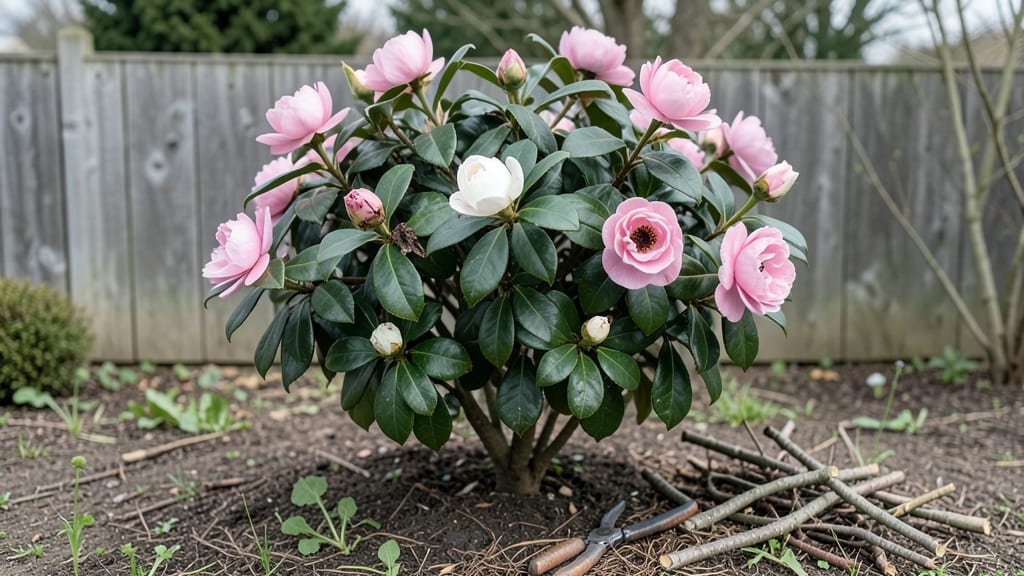
Pruning Japonica plants transforms them from ragged shrubs into showstopping year-round specimens. ✨ I’ve pruned Camellia japonicas for over a decade, and the difference between a neglected bush and a lush, blooming beauty comes down to timing, technique, and a few sharp cuts.
The key isn’t just hacking away—it’s understanding when to shape for flowers, when to clean up for health, and how to avoid the mistakes that leave plants struggling.
Most gardeners prune Japonicas once in late winter, but the real secret is light maintenance year-round. Grab your pruners and gloves, and focus on removing dead wood in early spring, shaping after blooms fade in summer, and giving a final tidy-up in fall.
You’ll need clean, sharp shears and a clear goal: open the center for airflow, encourage new growth, and keep the shape balanced. Skip this, and you’ll end up with a dense, leggy mess that never blooms properly.
What you’ll get is a Japonica that blooms heavier and more reliably every season, with glossy leaves and sturdy branches. The first year after proper pruning, you’ll notice fewer bare spots and more vibrant flowers—plus, the plant’s natural shape becomes easier to maintain.
Think of it as giving your shrub a spa day: healthier roots, better blooms, and a look that turns heads in the garden.
Works for all Japonica varieties, from Camellias to gardenias, and adapts to container or landscape planting. Here’s how to do it without stressing the plant—or yourself.
Triggers Behind Unwanted Growth
Your Japonica plant may look like it’s rebelling against your pruning efforts, but there’s always a scientific reason behind its behavior. Understanding these causes helps you adjust your approach and restore balance. Let’s break down the key factors that lead to overgrowth, legginess, or poor structure.
If you’ve ever skipped pruning season or let your Japonica (like Hibiscus syriacus or Camellia japonica) grow wild, the plant responds with uncontrolled branching. Here’s why:
- Apical dominance: The terminal bud (the topmost growth point) produces hormones that suppress side branches. When you don’t prune, this bud dominates, stretching stems upward while inhibiting lateral growth.
- Energy misallocation: Without pruning, the plant diverts resources to elongated, weak stems instead of dense foliage. This leads to leggy growth—long, sparse branches that flop under their own weight.
- Light competition: In dense foliage, lower branches get shaded out. The plant prioritizes upward growth to reach sunlight, creating a Christmas tree shape that’s structurally weak.
Actionable fix: Prune 20–30% of new growth annually to encourage bushier habits. Focus on removing the topmost stems to break apical dominance.
Cold snaps or inconsistent winter care can shock your Japonica, triggering abnormal regrowth or dieback. Here’s the science:
- Temperature fluctuations: Sudden freezes or thaw cycles damage cambium (the growth layer under bark), causing blackened stems or stunted buds. The plant may produce water sprouts—fast, weak shoots—as a survival response.
- Improper dormancy: Some Japonica varieties (like Camellia) need a cool, dry winter to set buds. If you fertilize or water heavily in late fall, the plant confuses dormancy with active growth, leading to weak, early blooms that freeze.
- Root stress: Compacted or waterlogged soil in winter restricts nutrient uptake. The plant compensates by sending up thin, brittle shoots from the base.
Actionable fix:
- Mulch 3–4 inches deep with organic matter (straw or shredded leaves) to insulate roots.
- Avoid pruning in late fall—wait until early spring (after last frost) to reduce stress.
- Use anti-desiccant sprays (like horticultural oil) to protect buds from winter winds.
Your Japonica’s growth patterns are directly tied to its environment. Too much (or too little) of the wrong inputs leads to uncontrolled or stunted growth:
| Cause | Plant Response | Scientific Explanation |
|---|---|---|
| Excess sunlight (e.g., full south exposure) | Bleached leaves, sunburn, or leaf scorch | UV radiation breaks down chlorophyll. The plant produces anthocyanins (red/purple pigments) as a stress signal while redirecting energy to protective compounds. |
| Low light (e.g., shaded indoor spots) | Long, weak stems (etiolation) | Without enough photomorphogenesis (light-driven growth), the plant stretches to reach light, producing thin, pale stems with sparse leaves. |
| Over-fertilization (especially nitrogen) | Leafy but no flowers, or soft, floppy growth | High nitrogen promotes vegetative growth at the expense of reproductive buds. The plant prioritizes leaves over blooms, leading to rank, unstructured growth. |
| Nutrient deficiencies (e.g., potassium or magnesium) | Yellowing leaves (chlorosis), weak stems | Potassium regulates cell wall strength; magnesium is central to chlorophyll. Deficiencies lead to structural collapse and poor recovery after pruning. |
Actionable fix:
- Move Japonica to morning sun + afternoon shade to balance light exposure.
- Use a balanced fertilizer (e.g., 10-10-10) in early spring, then switch to low-nitrogen, high-phosphorus (e.g., 5-10-10) to encourage blooms.
- Test soil pH—Japonica thrives in acidic soil (5.5–6.5). Amend with sulfur or peat moss if needed.
Hidden invaders can sabotage your pruning efforts by weakening the plant’s structure or forcing it to divert energy to defense. Common culprits:
- Spider mites and aphids: These sap-suckers inject toxic saliva that distorts new growth, leading to crinkled leaves and stunted shoots. The plant may produce extra water sprouts as a compensatory response.
- Fungal infections (e.g., powdery mildew, root rot): Fungi like Phytophthora block nutrient transport, causing wilting or dieback. The plant may send up weak, chlorotic growth from unaffected areas.
- Bacterial blight: Xanthomonas bacteria clog vascular tissue, leading to oozing cankers and blackened stems. The plant’s survival mode triggers abnormal branching below the damage.
Actionable fix:
- Inspect leaves weekly for webbing (mites), sticky residue (aphids), or white powder (mildew).
- Apply neem oil or horticultural soap for pests; use copper fungicide for bacterial/fungal issues.
- Prune infected branches 6 inches below damage to prevent spread.
Pro tip: 🔍 Always sterilize pruners with rubbing alcohol between cuts to avoid transmitting diseases. A sharp, clean cut he
Fixing Japonica Pruning Problems
Pruning your Japonica (or Camellia japonica) can transform it from a wild, leggy mess into a stunning, structured shrub—but only if you address the root causes. Below, we’ll tackle common issues with practical fixes, prevention tips, and step-by-step guidance to keep your plant thriving year-round.
Cause: Neglecting regular pruning or cutting too late in the season.
How to Fix It: 🔥 📅 Time It Right – Prune Japonica right after flowering (late spring to early summer) to avoid cutting off next year’s blooms. Avoid heavy pruning in fall or winter, as new growth may not harden off before cold snaps.
🍳 🌱 Shape with Purpose – Use clean, sharp pruners (sterilized with rubbing alcohol) to make 45-degree cuts just above a leaf node or bud. This encourages bushier growth. For a formal hedge, trim evenly; for a natural look, remove only the most wayward branches.
👨🍳 📏 Thin Strategically – If your plant is too dense, remove 1/3 of the oldest wood (usually the innermost branches) to improve airflow and sunlight penetration. This prevents disease and encourages new, vibrant growth.
🥘 🌱 Feed for Recovery – After pruning, apply a balanced fertilizer (10-10-10) to support regrowth. Water deeply to reduce stress.
💡 Prevention Tip:
- Schedule pruning like a doctor’s appointment—set a reminder every late spring to keep growth in check.
Cause: Freeze damage, improper pruning cuts, or fungal infections from old wood.
How to Fix It: 🔪 🌟 Inspect & Remove – In early spring, check for brown, mushy, or hollow branches—these won’t recover. Cut them back to healthy green tissue (you’ll see a clear ring where the wood dies).
⏰ 🌱 Prune for Airflow – If branches are crisscrossing, thin them out to reduce moisture buildup (which fuels fungal diseases like Camellia dieback).
🌡️ 🛡️ Protect in Winter – If your region gets harsh freezes, wrap young plants in burlap or use anti-desiccant spray to prevent moisture loss.
💡 Prevention Tip:
- Avoid heavy pruning in fall—this exposes fresh cuts to winter cold, making them vulnerable to rot.
Cause: Over-pruning blooming wood, poor nutrition, or improper timing.
How to Fix It: 🌸 📅 Prune After Flowering – Japonica blooms on old wood, so cutting back before flowers appear removes next year’s buds. Always wait until after blooms fade.
🍎 🌱 Feed for Blooms – In early spring, apply an acid-loving plant fertilizer (like one with iron and magnesium) to encourage flowering. A slow-release camellia fertilizer works best.
🎯 🌿 Avoid Top-Heavy Cuts – Never shear the top of the plant—this removes flowering stems. Instead, prune from the sides to maintain shape without sacrificing blooms.
💡 Prevention Tip:
- Label your pruning shears with a "Bloom Time" reminder to avoid accidental early cuts.
Cause: Poor airflow, overwatering, or weak branches from improper pruning.
How to Fix It: 🌿 🚿 Improve Drainage – Japonica hates soggy roots. Ensure the soil has organic matter (like compost) and raise beds if your area floods.
🔥 🍄 Treat Fungal Spots – If you see black spots or powdery mildew, prune infected leaves immediately and apply a copper fungicide or neem oil spray.
🐛 🐜 Control Pests – Scale insects or aphids love weak branches. Blast them off with soapy water or introduce ladybugs for natural control.
💡 Prevention Tip:
- Water at the base (not overhead) to keep foliage dry and discourage fungal growth.
To keep your Japonica pruning-proof, follow this simple routine:
| Season | Task | Tools Needed |
|---|---|---|
| Spring | Remove dead wood, fertilize | Pruners, fertilizer, gloves |
| Summer | Light shaping after blooms | Shears, anti-desiccant spray |
| Fall | Minimal pruning, mulch | Pruners, compost |
| Winter | Protect from frost, inspect | Burlap, fungicide (if needed) |
Final Thought: Pruning Japonica is less about cutting blindly and more about strategic shaping. With the right timing, tools, and care, you’ll have a lush, flowering powerhouse that stays healthy for decades. 🌸✂️
Frequently asked questions
When is the best time to prune my Japonica plants?
Prune Japonicas after flowering in late spring to early summer. This timing ensures you don’t accidentally remove next year’s blooms, which form on old wood. Light shaping in summer keeps the plant tidy, while minimal pruning in fall focuses on cleanup. Avoid heavy cuts in winter, as new growth may struggle to harden off before cold snaps.
Can I prune Japonicas in winter?
Winter pruning is risky unless you’re removing dead or diseased branches. Heavy cuts expose fresh wood to cold, increasing rot risk. Instead, do minimal shaping in late winter (just before buds swell) or wait until spring. For harsh climates, protect cuts with anti-desiccant spray.
How do I encourage more blooms after pruning?
Focus on old wood—never prune flowering stems before blooms fade. After pruning, apply an acid-loving fertilizer (like one with iron and magnesium) in early spring. Avoid high-nitrogen feeds, which promote leafy growth over flowers. Thin branches to improve airflow, reducing stress that can limit blooming.
What tools do I need for proper Japonica pruning?
Use sharp, clean pruners (bypass shears work best) and sterilize them with rubbing alcohol between cuts to prevent disease spread. For larger branches, grab a pruning saw. Wear gloves to protect against thorns (common in Camellias) and carry a bucket for clippings. A measuring tape helps maintain consistent height.
Why does my Japonica look leggy after pruning?
Leggy growth often happens when you remove too many top branches, breaking apical dominance. To fix it, prune 20–30% of new growth annually and focus on cutting just above leaf nodes to encourage lateral shoots. Avoid heavy shearing—thin selectively instead. Boost light exposure and use a balanced fertilizer to support bushier regrowth.