
Propagation
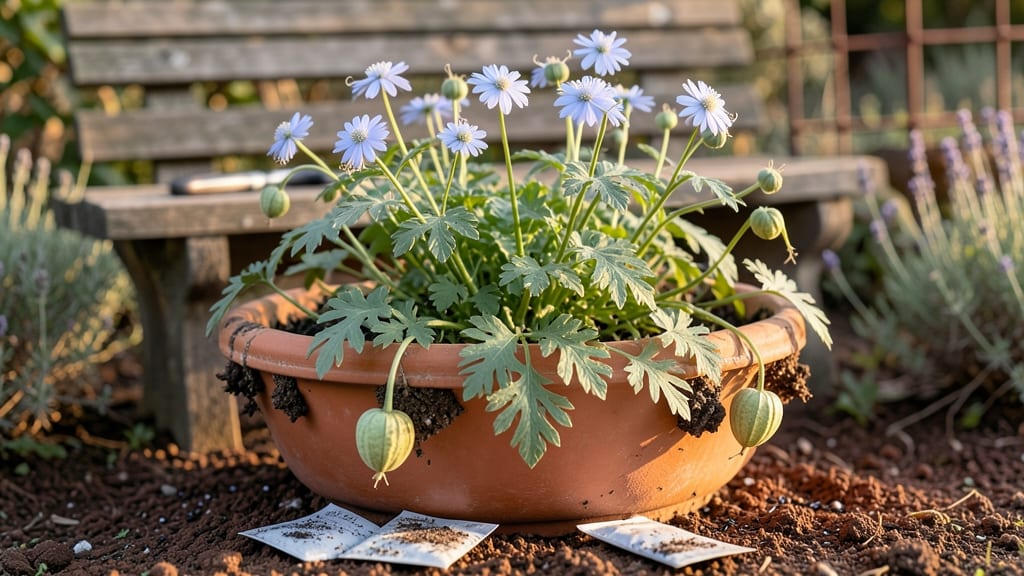
Planting nigella seeds directly outdoors in early spring unlocks those signature blue-black blooms by summer—no fuss, no fussing with transplants. I’ve scattered them in my garden beds for years, and they self-seed so reliably that I’ve stopped buying new packets.
The trick lies in timing, soil, and letting those tiny seeds do their own thing without interference.
The best time to sow nigella is 2-3 weeks before your last frost, when soil reaches 50°F—just warm enough to encourage germination without overheating. You’ll need loose, well-draining soil (amend heavy clay with compost), and a sunny spot where they can stretch toward the light without competition.
Scatter seeds ¼ inch deep, barely covering them, and space rows 12-18 inches apart—they’ll spread naturally but stay tidy.
Within 7-14 days, you’ll spot delicate green shoots pushing through the soil, followed by lacy foliage that smells faintly of cucumbers. By 6 weeks, those iconic star-shaped blooms pop up, attracting bees and butterflies while adding jewel-toned contrast to borders.
The flowers are edible too—toss them into salads for a peppery crunch, or let them dry for potpourri.
Here’s the secret: Nigella thrives on neglect. Overwatering drowns them, and overcrowding stunts their growth, but they handle drought once established. If you’re in a hotter climate, plant them in fall for spring blooms—they’ll reward you with the same effortless charm. Ready to grow these self-sufficient beauties?
📚 In This Guide
- What you need
- Instructions
- Tips and common mistakes
- Wrapping up and next steps
What you need
- ● Nigella seeds: 1 packet (5–10 grams, or ~100–200 seeds). Choose varieties like Nigella damascena (Love-in-a-Mist) or Nigella sativa (black cumin) for vibrant blooms.
- ● Well-draining potting mix: 1–2 gallons (for containers) or enough to fill your garden bed. Opt for a light, sandy loam with a pH of 6.0–7.5.
- ● Containers or garden bed: Containers: 4–6-inch pots (for seedlings) or a shallow tray (for direct sowing). Ensure they have drainage holes!
- ● Garden bed: A sunny spot with at least 6 hours of sunlight daily. Loosen soil to 6–8 inches deep.
- ● Watering can or spray bottle: With a fine rose nozzle for gentle watering.
- ○ Plant labels (optional but helpful): To track varieties and planting dates.
- ○ Gloves (optional): To protect your hands from prickly seeds.
- ● Trowel or small shovel: For digging planting holes (if sowing directly in the ground).
- ○ Seedling heat mat (optional): If starting indoors in cooler climates (70–75°F ideal).
- ○ Organic fertilizer (optional): A balanced 10-10-10 or compost tea to boost growth after germination.
- ○ Mulch (optional): Straw or shredded leaves to retain moisture and suppress weeds.
Step-by-Step instructions for planting nigella seeds
Here’s how to coax those delicate, lacy nigella blooms from tiny seeds—no fuss, just patience.
Prepare the Soil for Direct Sowing
Nigella thrives in well-drained soil with a slightly alkaline pH, so start by loosening the top 6 inches of your garden bed with a fork. Remove any rocks or debris—these seeds are small and need a clean, crumbly surface to settle into. If your soil is heavy clay, mix in 2-3 inches of coarse sand or perlite to improve drainage.
Work in a 1-2 inch layer of compost or well-rotted manure to provide nutrients without overwhelming the seedlings. The goal is soil that feels light and airy, like a fine crumble. Press down gently to create a firm seedbed—this helps the tiny nigella seeds stay in place rather than washing away during watering.
Sow Seeds at the Right Depth and Spacing
Scatter the nigella seeds directly onto the prepared soil, spacing them about 12-18 inches apart—they self-seed generously, so you won’t need to thin aggressively. Press them lightly into the soil with your fingers or the back of a rake, just enough so they make contact but don’t disappear. A good rule of thumb is to cover them with no more than ¼ inch of soil.
If birds are a problem in your area, consider sowing in a fine mesh row cover or under a cloche until germination. Water gently with a fine spray nozzle to avoid disturbing the seeds. You’ll see the first sprouts in 10-14 days, but don’t be surprised if germination takes up to 3 weeks—nigella seeds are slow to wake up.
Provide Light and Water Without Overdoing It
Nigella loves full sun, so choose a spot that gets at least 6-8 hours of direct sunlight daily. Once the seeds sprout, water lightly but consistently—keep the soil evenly moist but never soggy. Overwatering is the fastest way to invite rot or fungal diseases, especially in dense seedlings. A drip irrigation system or soaker hose keeps moisture even without disturbing the delicate stems.
After the first true leaves appear (the second set, not the initial seed leaves), reduce watering slightly. Nigella is remarkably drought-tolerant once established, and too much moisture will cause the stems to flop. Let the top 1 inch of soil dry out between waterings—this encourages deeper root growth and stronger plants.
Thin and Support for Stunning Blooms
When seedlings reach 2-3 inches tall, thin them to 12-18 inches apart to give each plant room to grow. Use sharp scissors to snip unwanted seedlings at soil level—pulling risks disturbing the roots of the ones you’re keeping. This might seem harsh, but crowded nigella produces weak stems and fewer blooms.
As the plants grow taller (they can reach 2-3 feet), you’ll notice they lean or flop in wind or rain. To keep them upright, insert 3-4 inch bamboo stakes lightly into the soil beside each plant and loosely tie the stems to them with soft garden twine or old pantyhose. This prevents the delicate stems from snapping under their own weight.
Deadhead and Prepare for Self-Seeding
Once the blooms fade, snip off the spent flower heads with clean pruners to encourage a second flush of flowers. Nigella’s unique seed pods are part of its charm, but if you want to control where they reseed, remove them before they dry completely. The pods will naturally split open and scatter seeds, so if you love nigella, let some go to seed—you’ll have volunteers popping up for years.
In late fall, after the first frost blackens the foliage, cut the stems back to 1 inch above the soil. The seeds that have fallen will germinate naturally in spring, giving you a fresh crop of self-sown nigella. This is why gardeners adore it—once established, it’s nearly self-sufficient.
Tips & tricks for perfect nigella seed planting
Nigella seeds might be tiny, but they pack a punch when planted correctly. These insights will help you avoid common pitfalls and maximize those stunning blooms.
Soil Preparation is Key: Don't skip the 6-inch soil loosening in Step 1—this creates the perfect crumbly texture nigella needs. For heavy clay soil, mix in 2-3 inches of coarse sand or perlite to prevent waterlogging, which can drown those delicate seeds before they even sprout. I've learned the hard way that compacted soil leads to poor germination rates, so take the extra time to prepare properly.
Timing Secret for Germination: Those 10-14 days until first sprouts can feel like an eternity, but patience pays off. Keep the soil consistently moist but never soggy during this period—nigella seeds need reliable moisture to break dormancy. I've found that using a fine mist sprayer prevents disturbing the tiny seeds while ensuring even water distribution. If germination takes up to 3 weeks, don't panic—this is completely normal behavior for nigella.
Thinning Technique Matters: When your seedlings reach 2-3 inches tall, resist the urge to pull weeds—this disturbs the roots of your precious nigella. Instead, use sharp scissors to snip unwanted seedlings at soil level. This precision thinning gives each plant the 12-18 inch spacing they need to develop strong stems and abundant blooms. I've seen crowded nigella produce stems so weak they flop over before flowering.
Support System for Tall Blooms: As your nigella grows toward its 2-3 foot height, you'll notice those delicate stems leaning. The 3-4 inch bamboo stakes mentioned in Step 4 are worth every minute of setup time. I recommend using soft garden twine or even old pantyhose to tie stems—this prevents stem damage while providing just enough support. Without this, wind and rain can snap those beautiful stems before they even bloom.
Pro Tips for Nigella Seeds Planting
- Nigella seeds might be tiny, but they pack a punch when planted correctly.
- Soil Preparation is Key: Don't skip the 6-inch soil loosening in Step 1—this creates the perfect crumbly texture nigella needs.
- Timing Secret for Germination: Those 10-14 days until first sprouts can feel like an eternity, but patience pays off.
Frequently asked questions
Got questions about growing nigella seeds? You’re not alone! Here are answers to the most common queries—from timing to troubleshooting—so you can confidently grow these delicate, lace-like blooms in just six weeks.
When is the best time to plant nigella seeds?
Nigella seeds thrive in cool weather—plant them outdoors 2–4 weeks before your last frost (spring) or in early fall (for winter blooms). If sowing indoors, start seeds 6–8 weeks before transplanting in biodegradable pots to avoid root disturbance. Pro tip: They germinate best in 50–70°F soil.
How long does it take for nigella seeds to germinate?
Germination can take 10–21 days—patience is key! Keep soil consistently moist (not soggy) and place pots in a bright, indirect light spot. Thin seedlings to 6–12 inches apart once they’re 2 inches tall to prevent overcrowding.
Can I grow nigella seeds in containers?
Nigella loves containers—just ensure pots have drainage holes and use a well-draining potting mix. A 6-inch-deep container works well for 1–2 plants. Place them in full sun to partial shade (6+ hours of light daily) for best results.
Why aren’t my nigella seeds sprouting?
Check these common culprits:
- Too warm: Seeds need cool temps (50–70°F) to germinate.
- Dry soil: Keep soil moist but not waterlogged.
- Old seeds: Store-bought seeds last 1–2 years; fresh seeds sprout faster.
- Depth issue: Plant seeds ¼ inch deep—deeper may deter germination.
If all else fails, try stratifying seeds (chilling them for 2 weeks) to mimic winter conditions.
Are nigella seeds annual or perennial?
Nigella is a tender annual, meaning it completes its life cycle in one growing season (6–8 weeks). However, it self-seeds prolifically—you’ll often find volunteer plants popping up the next year! Deadhead spent blooms to encourage more flowers.
Wrapping up and next steps
Growing nigella seeds is a rewarding journey—turning tiny, intricate seeds into striking, lacy blooms in just six weeks! With the right soil, sunlight, and a little patience, you’ll unlock a garden full of whimsical charm and pollinator-friendly beauty.
Whether you’re a beginner or a seasoned gardener, these delicate flowers add a touch of magic to any space.
Ready to harvest your own? Start by planting your seeds this week—your future blooms will thank you! 🌱✨