
Diseases
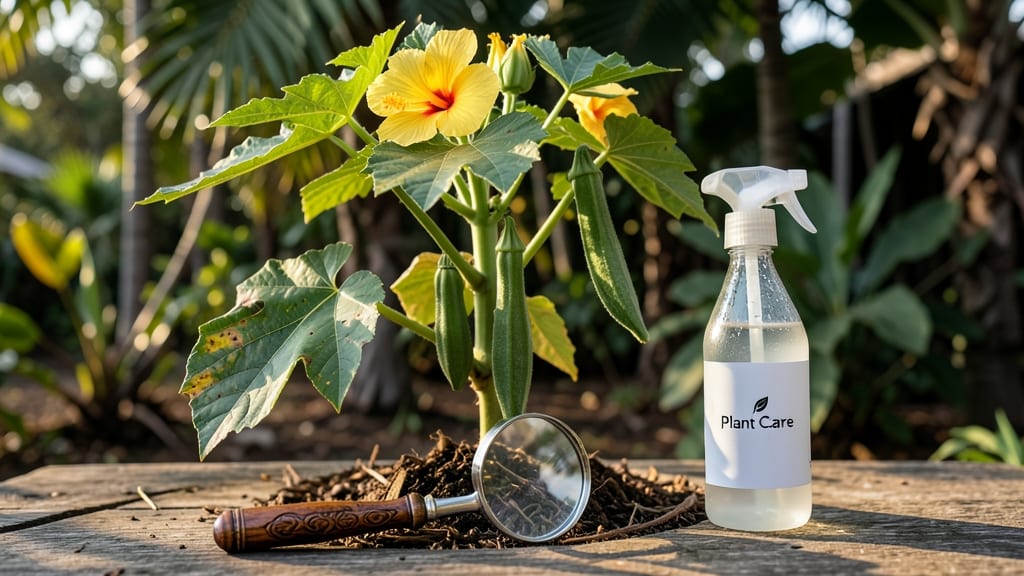
Okra plant diseases can turn your thriving crop into a sad, yellowing mess if you don’t catch them early. ✨ I’ve seen powdery mildew turn lush green leaves into dusty white webs within days, and bacterial blight reduce plants to skeletal stems overnight—both preventable with the right know-how.
The good news? Most okra diseases start with visible symptoms—spots, discoloration, or strange growths—that give you a heads-up before the plant collapses.
The worst offenders like leaf spot and powdery mildew thrive in hot, humid conditions, but simple fixes like spacing plants for airflow and using copper fungicide can stop them cold.
By the time you spot the first signs, you’ll already know exactly what to do: prune infected leaves, adjust watering, or apply organic sprays.
Your plants will bounce back faster than you think, and you’ll avoid the heartbreak of losing an entire harvest to something as simple as too much moisture.
Whether you’re fighting fungal growth or bacterial rot, these fixes work for home gardens—no fancy equipment needed. Let’s get those okra plants back to their best before the season’s over.
Root Causes Behind Okra Illnesses
Okra plants, like any other crop, are vulnerable to a range of diseases that can stunt growth, reduce yields, or even kill the plant entirely. Understanding why these issues arise is the first step to prevention and treatment.
Below, we break down the key factors that create the perfect storm for okra plant diseases—from environmental stressors to biological invaders.
Fungal diseases are the #1 culprit behind okra plant struggles, thriving when humidity and moisture linger. Here’s why they strike:
- Excessive Moisture: Okra plants love warmth but hate soggy soil. Fungi like Phytophthora (which causes root rot) and Colletotrichum (the agent behind anthracnose) spread rapidly in wet, poorly drained soil or after heavy rainfall.
Even morning dew can create a damp microclimate on leaves, giving fungi a foothold. - Actionable fix: Improve drainage with raised beds or sand amendments, and avoid overhead watering.
- Poor Air Circulation: Dense plantings or overcrowded okra beds trap humidity, creating a fungal paradise.
Diseases like powdery mildew (caused by Erysiphe or Sphaerotheca) flourish in these conditions by forming a protective white layer that blocks sunlight and stunts growth. - Actionable fix: Space plants 18–24 inches apart and prune lower leaves to enhance airflow.
- Warm, Humid Climates: Fungi love temperatures between 70–85°F (21–29°C) with high humidity—common in okra’s native tropical regions.
If your garden mimics these conditions without breaks, fungal spores germinate and multiply in days. - Actionable fix: Use mulch (straw or wood chips) to regulate soil moisture and temperature swings.
Bacterial diseases, like bacterial blight (Xanthomonas campestris) or bacterial leaf spot (Pseudomonas syringae), exploit weakened plants. Here’s how they gain entry:
- Physical Damage: Pruning, harvesting, or even harsh winds create open wounds where bacteria can infiltrate. Once inside, they multiply rapidly, causing water-soaked lesions that turn yellow or brown. - Actionable fix: Use sterilized pruners and avoid rough handling.
Apply copper-based sprays (like copper sulfate) as a preventive barrier.
- Stress from Overwatering or Drought: Okra plants under water stress (either too much or too little) produce weak, nutrient-deficient foliage, making them prime targets for bacterial infections.
Stress also triggers the plant to produce more sugars in leaves, which bacteria feast on. - Actionable fix: Water deeply but infrequently (1–1.5 inches per week) and monitor soil moisture with a trowel test.
- Contaminated Tools or Soil: Bacteria can lurk in old plant debris, compost, or garden tools.
If you’ve grown okra (or susceptible crops like peppers or tomatoes) in the same spot before, residual bacteria may still be present. - Actionable fix: Practice crop rotation and solarize soil in late summer (cover with clear plastic for 4–6 weeks to kill pathogens).
Viruses like okra mosaic virus or cucumber mosaic virus don’t spread on their own—they hitch rides on sap-sucking insects, primarily aphids, whiteflies, and beetles. Here’s how infestations lead to disease:
- Aphid Feeding: These tiny pests inject viral particles while feeding on plant sap. Once infected, okra leaves develop mottling, curling, or stunted growth, and yields drop dramatically.
- Actionable fix: Introduce ladybugs or lacewings (natural predators) or spray with neem oil to deter aphids.
- Beetle Damage: Striped cucumber beetles transmit viruses while chewing on leaves. Their feeding also creates entry points for secondary infections.
- Actionable fix: Use row covers early in the season to block beetles before they lay eggs.
- Weakened Immunity: Viruses thrive when okra plants are already nutrient-deficient or under stress (e.g., from drought or poor soil).
A healthy plant can tolerate some viral load, but a struggling one becomes a viral magnet. - Actionable fix: Feed plants with balanced organic fertilizer (e.g., 5-5-5) and compost tea to boost immunity.
Not all okra diseases come from pathogens—some stem from environmental mismanagement:
- Extreme Heat Stress: Okra thrives in 80–95°F (27–35°C) ranges, but prolonged heatwaves above 100°F (38°C) can cause heat stress, leading to leaf scorch (brown, crispy edges) or blossom drop (fewer pods).
- Actionable fix: Provide shade cloth (30–50%) during peak afternoon heat and mulch to keep roots cool.
- Nutrient Imbalances: Too much nitrogen promotes lush foliage but weak stems, making plants more susceptible to lodging (falling over) and fungal infections. Too little potassium weakens cell walls, inviting pathogens.
- Actionable fix: Test soil and amend with potassium-rich compost or wood ash (sparingly).
- Poor Soil pH: Okra prefers slightly acidic to neutral soil (pH 6.0–6.8). Alkaline soil (pH >7.5) locks out essential nutrients like iron and manganese, causing yellowing leaves (chlorosis) and stunted growth—stressors that open the door to disease.
- Actionable fix: Add sulfur or peat moss to lower pH gradually.
Pro Tip ✨: Prevention is cheaper than cure—rotate crops annually, remove infected debris immediately, and inspect plants weekly for early signs (like yellowing or spots). A little vigilance goes a long way in keeping your okra garden healthy and productive!
Quick Fixes for Common Okra Ailments
Okra plants may face a variety of diseases, but most issues can be resolved—or even prevented—with targeted action. Below, we break down practical, organic solutions for the most common problems, paired with prevention strategies to keep your okra thriving. Think of this as your go-to troubleshooting guide!
Fungal diseases like powdery mildew, downy mildew, and root rot thrive in damp conditions. Here’s how to combat them:
🔥 Remove Infected Plant Parts
- Step 1: Snip off yellowing or moldy leaves at the base (not above) to prevent spores from spreading.
- Step 2: Dispose of affected foliage in the trash (not compost) to avoid reinfection.
🍳 Apply Organic Fungicides
- Neem oil spray (1 tsp neem oil + 1 tsp mild soap + 1 quart water) – Spray early morning or evening to avoid burning leaves.
- Baking soda mix (1 tbsp baking soda + 1 quart water + a drop of dish soap) – Reapply every 7–10 days in humid weather.
- Copper-based sprays (like copper sulfate) – Use as a last resort for severe cases (follow label instructions).
🌡️ Improve Airflow & Drainage
- Prune plants to allow sunlight and air circulation between stems.
- Space plants 18–24 inches apart to reduce humidity buildup.
- Raise beds or add compost to improve drainage—okra hates soggy roots!
Aphids, spider mites, and okra pod borers can weaken plants. Here’s how to evict them:
👨🍳 Handpick & Spray
- Aphids/whiteflies: Blast off with a strong stream of water in the morning.
- Spider mites: Wipe leaves with a soapy water cloth (1 tsp castile soap per quart of water).
- Pod borers: Check pods daily—squish eggs (tiny white specks) or remove infested pods immediately.
🥘 Introduce Beneficial Insects
- Ladybugs (eat aphids) – Release 50–100 near infected plants.
- Parasitic wasps (control borers) – Buy from garden centers or attract with dill or fennel nearby.
- Neem oil spray (also deters pests) – Apply every 5–7 days.
🎯 Use Physical Barriers
- Row covers (lightweight fabric) – Protect young plants from flying pests.
- Crushed eggshells around the base – Deters slugs and cutworms.
Bacterial blight and viral infections (like mosaic virus) are trickier but not hopeless:
🔪 Remove & Destroy Infected Plants
- Pull entire plants if bacterial blight or mosaic virus is confirmed (no cure).
- Sterilize tools with rubbing alcohol between uses to prevent spread.
💡 Boost Plant Immunity
- Compost tea (1 cup compost + 5 gallons water, steep 3–4 days) – Strengthens roots and resistance.
- Silica-rich sprays (like kelp meal tea) – Helps plants fend off pathogens.
- Rotate crops – Avoid planting okra in the same spot for 3+ years to break disease cycles.
✨ Prevent Spread
- Disinfect hands/tools after handling infected plants.
- Avoid overhead watering – Use drip irrigation to keep leaves dry.
- Buy disease-resistant varieties (e.g., ‘Clemson Spineless’ or ‘Emerald’).
- Start with healthy seeds – Buy from reputable suppliers or save seeds from disease-free plants.
- Test soil pH (6.0–6.8 is ideal) – Use lime to raise pH or sulfur to lower it if needed.
- Mulch properly – Use straw or grass clippings to retain moisture without suffocating roots.
- Monitor weather – Avoid planting okra in low-lying areas prone to flooding.
Pro Tip: 💡 Early action is key! Catch issues when leaves show the first signs (yellowing, spots, or holes) for the easiest fixes. A little vigilance now saves hours of cleanup later.
Frequently asked questions about okra plant diseases
What are the first signs of fungal diseases like powdery mildew on okra?
Look for white, powdery patches on upper leaf surfaces—like dusting flour—that spread quickly in humid conditions. Early stages show as small white spots that merge into a fuzzy blanket. Affected leaves may yellow and curl, reducing photosynthesis and pod production.
Can I save okra plants infected with bacterial blight?
Unfortunately, bacterial blight (Xanthomonas campestris) has no cure—infected plants must be removed immediately to prevent spread. Sterilize tools with rubbing alcohol between cuts, and avoid composting diseased plant material. Focus on prevention next season with copper sprays and proper spacing.
Why do my okra leaves turn yellow between the veins?
This "interveinal chlorosis" typically signals nutrient deficiencies (like iron or manganese) or alkaline soil (pH >7.5). Test your soil—okra prefers pH 6.0-6.8. Amend with sulfur or peat moss if needed, and apply chelated iron supplements for quick relief during active growth.
How often should I spray neem oil to prevent okra diseases?
Apply neem oil every 7-10 days during hot, humid weather or when you first spot pests/diseases. Mix 1 tsp neem oil + 1 tsp mild soap per quart of water, and spray early morning/evening to avoid leaf burn. Rotate with baking soda sprays for fungal control to prevent resistance.
Are there disease-resistant okra varieties I should consider?
Yes! Try 'Clemson Spineless' (resistant to some fungal diseases) or 'Emerald' (tolerates heat and humidity better). These varieties maintain better vigor in challenging conditions. Always buy seeds from reputable suppliers to avoid introducing pathogens to your garden.