Watering
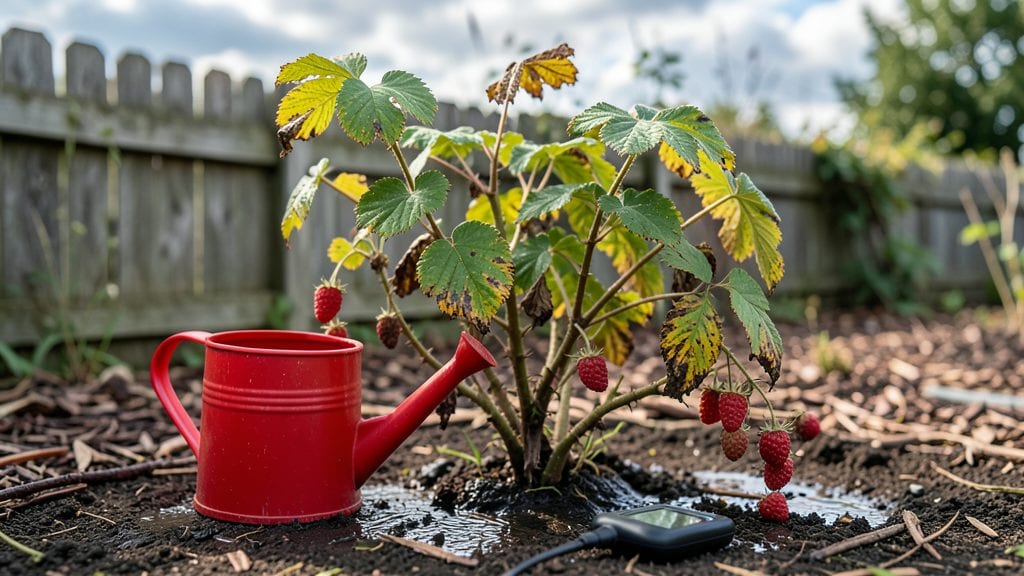
When your raspberry plant's leaves turn yellow and droop despite soggy soil, you're dealing with classic overwatering damage. 🌱 I've nursed back more than my share of waterlogged canes—sometimes it's just a quick fix, other times it takes months to fully recover.
The good news? Raspberries are tougher than they look, and with the right approach, you can bring them back to vigorous growth.
Most overwatering issues start with poor drainage or inconsistent watering habits. I check soil moisture by sticking my finger 2 inches down—if it's still damp, hold off.
Raised beds or containers help prevent this problem by letting excess water drain away, while adding compost improves soil structure so roots get oxygen instead of sitting in waterlogged conditions. Pruning back the worst-affected canes gives the plant energy to focus on recovery.
Within 2-4 weeks of proper care, you'll notice new green growth pushing through, and the plant will start sending out fresh canes. The key is consistency: water deeply but only when the top 1-2 inches of soil feel dry, and mulch to keep moisture levels steady.
By next season, your raspberries could be producing even better than before—if you catch the problem early enough, that is.
This works for both backyard patches and container-grown plants, though larger beds may need extra attention during rainy springs. The first step is always stopping the damage, but the real payoff comes from adjusting your watering routine to match your raspberries' actual needs—not what you think they need.
Let's get those roots breathing again.
Common Causes Of Too Much Water
When your raspberry plants start looking sad—wilting, yellowing, or dropping leaves—it’s often a sign they’ve been overwatered. But why does this happen? Raspberries, like many plants, are sensitive to moisture balance, and too much water disrupts their natural processes.
Let’s break down the key reasons your plants might be drowning in excess water.
Raspberries thrive in well-draining soil, but if your garden bed or containers lack proper drainage, water pools around the roots instead of flowing away. This creates anaerobic conditions—meaning oxygen can’t reach the roots—leading to:
- Root suffocation: Without oxygen, roots can’t absorb nutrients or water efficiently, causing them to rot.
- Fungal growth: Excess moisture encourages pathogens like Phytophthora, which attack roots and stunt growth.
- Nutrient leaching: Waterlogged soil washes away essential minerals, leaving plants starved even if they’re "watered."
Actionable fix: Amend heavy clay soil with compost or perlite, and ensure pots have drainage holes.
Raspberries need consistent moisture, but daily watering—especially without checking soil conditions—leads to oversaturation. Common mistakes include:
- Ignoring weather: Rainy days + extra water = double the problem. Use a rain gauge to track natural moisture.
- Shallow watering: A quick sprinkle wets only the surface, leaving deeper roots thirsty but encouraging surface evaporation.
- No "dry spell" between waterings: Raspberries prefer slightly dry topsoil between deep waterings to prevent root rot.
Actionable fix: Water deeply 2–3 times per week (adjust for heat/drought) and let the top 1–2 inches of soil dry out before repeating.
If you’re growing raspberries in pots, small or dense containers trap water like a sponge. Symptoms include:
- Slow evaporation: Plastic or unglazed pots retain moisture longer, while terracotta dries faster but may crack if roots outgrow them.
- Root-bound stress: Crowded roots in tiny pots can’t spread, leading to waterlogging even with "normal" watering.
- No aeration: Compacted potting mix (from reusing old soil) blocks airflow, suffocating roots.
Actionable fix: Use pots at least 12–18 inches deep with drainage holes, and refresh potting mix yearly with a chunky, aerated blend (e.g., 60% peat/coir, 30% perlite, 10% compost).
Raspberry canes need proper spacing and depth to avoid waterlogging. Common planting mistakes:
- Buried crowns: Planting the base too deep suffocates the root collar, trapping moisture and promoting rot.
- Overcrowded beds: Plants competing for space lead to poor airflow, increasing humidity and fungal risks.
- Low-lying areas: Planting in depressions where water pools after rain or irrigation.
Actionable fix: Plant canes with the crown 1–2 inches above soil level and space them 2–3 feet apart. Use raised beds or mounds in soggy areas.
Pro tip: 💡 Test your soil with a finger—if it stays clumpy and wet 2+ inches down after 24 hours, you’re overwatering. Adjust your routine before roots pay the price!
Revive Your Plant With These Fixes
Overwatering can turn your raspberry plant from lush and fruitful into a sad, soggy mess—but don’t worry! With the right steps, you can nurse it back to health and prevent future waterlogging woes.
Below, we’ve broken down practical solutions based on the most common causes of overwatering, along with prevention tips to keep your plant thriving.
Cause: Saturated soil cuts off oxygen, suffocating roots and causing rot.
How to Fix It:
- 🔥 Stop Watering Immediately
- Let the soil dry out completely before watering again. Stick your finger 1–2 inches into the soil—if it’s damp, wait.
- 🍳 Drain the Excess Moisture
- Gently lift the plant (if in a pot) and place it in a shallow tray of water for 10–15 minutes to help flush out excess moisture. Drain thoroughly.
- 👨🍳 Prune Damaged Foliage
- Snip off yellow or mushy leaves with clean scissors to redirect energy to healthy growth.
- ⏰ Repot or Improve Drainage (If Needed)
- If roots are black/mushy, trim them with sterilized shears and repot in well-draining soil (mix potting soil with perlite or sand).
- Add gravel or broken pottery at the pot’s bottom to boost drainage.
💡 Prevention Tip:
- Use terracotta pots (they dry faster than plastic) and self-watering pots with drainage holes.
- Water only when the top 1–2 inches of soil are dry—raspberries hate soggy feet!
Cause: Overwatering weakens stems, leading to floppy or crispy canes.
How to Fix It:
- 🌡️ Check Soil Moisture
- Press your finger into the soil—if it’s clay-like and cold, it’s too wet. Hold off on watering.
- 🥗 Provide Airflow & Sunlight
- Move the plant to a bright, indirect spot (raspberries need 6+ hours of sun/day).
- Increase airflow with a small fan (gentle breeze helps dry foliage faster).
- 🎯 Hydrate Smartly
- Water deeply but infrequently—aim for the root zone, not the leaves. Use a soaker hose or drip irrigation to avoid wetting foliage.
💡 Prevention Tip:
- Mulch lightly (1–2 inches of straw) to retain just enough moisture without smothering roots.
- Avoid watering at night—wet leaves + cool temps = fungal risks.
Cause: Overwatering creates a humid, fungus-friendly environment.
How to Fix It:
- 🔪 Trim Infected Areas
- Remove spotted or fuzzy leaves (fungus spreads fast!). Dispose of them away from the garden.
- ✨ Apply Fungicide
- Spray with a copper-based fungicide or baking soda mix (1 tsp baking soda + 1 quart water + a drop of dish soap).
- 🌡️ Improve Air Circulation
- Space plants 12–18 inches apart and prune nearby foliage to let air flow.
💡 Prevention Tip:
- Water at the base (not overhead) and early in the day so leaves dry quickly.
- Rotate pruners between plants to avoid spreading spores.
Once your raspberry plant recovers, maintain these habits to avoid future overwatering:
- Soil Test: Aim for slightly acidic soil (pH 5.5–6.5)—amend with compost if needed.
- Drip Irrigation: Automates watering and reduces waste (set to 1–1.5 inches per week in growing season).
- Monitor Weather: Adjust watering during rainy spells—raspberries can survive on natural rainfall if soil drains well.
🎯 Final Thought: Overwatering is reversible—act fast, adjust your routine, and your raspberry plant will bounce back stronger. With the right balance of drainage, sunlight, and smart watering, you’ll be enjoying sweet, plump berries in no time! 🍓💦
Frequently asked questions
How can I tell if my raspberry plant is overwatered vs. underwatered?
Check the soil first—stick your finger 2 inches deep. Overwatered plants have yellowing leaves, mushy stems, and soil that stays damp for days. Underwatered plants show crispy brown edges and dry, pulling soil. A quick test: Lift the plant—if it feels heavy with soggy soil, it's overwatered.
Can I save my raspberry plant if the roots are rotting?
Yes, but act fast! Trim away black, mushy roots with sterilized shears, then repot in fresh, well-draining soil with perlite. Water lightly until new growth appears—usually within 2-3 weeks. Avoid watering until the soil dries out completely.
Why do my raspberry leaves turn yellow when I water them?
Yellow leaves often signal root stress from poor drainage or overwatering. Check if the soil stays soggy—raspberries need moist but not waterlogged conditions. Improve drainage by adding compost or mulching, and water only when the top 1-2 inches of soil feel dry.
Is it better to underwater or overwater raspberry plants?
Overwatering is worse—it causes root rot and fungal diseases, while underwatering just slows growth. Raspberries prefer consistent moisture but hate soggy soil. Aim for 1-1.5 inches of water per week (rain or irrigation) and always check soil moisture before watering.
How long does it take for a raspberry plant to recover from overwatering?
Recovery depends on how severe the damage is. With proper care—draining soil, pruning dead foliage, and adjusted watering—you'll see new growth in 2-4 weeks. Severe cases may take up to 2 months, but healthy canes will emerge if roots are still viable.