
Diseases
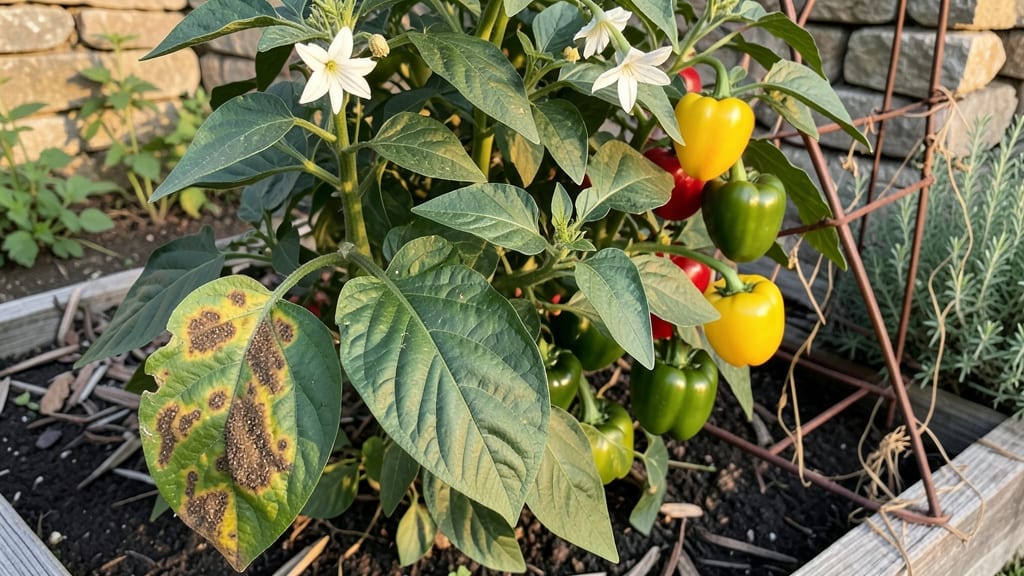
When pepper plant diseases strike, saving your harvest starts with spotting the warning signs before they spread. ✨ I’ve lost entire plants to fungal spots and bacterial wilts—until I learned to check leaves for discoloration, stems for oozing sores, and soil for that telltale musty smell.
The key isn’t guessing; it’s knowing what to look for and acting fast.
Most pepper diseases thrive in damp, crowded conditions, so proper spacing and watering make all the difference. I now keep plants 18 inches apart, water at the base in the morning, and avoid overhead sprinklers—simple tweaks that cut down on fungal infections by half.
Prevention is easier than cleanup, and it keeps your peppers productive all season.
You’ll recognize early signs: yellowing leaves, dark spots, or stunted growth. Catching these means treating with copper fungicide, neem oil, or baking soda spray before the disease takes hold. My plants recover faster when I act within 48 hours of noticing symptoms, and the harvest stays vibrant and disease-free.
This works for bell peppers, jalapeños, and even hot varieties—just adjust spacing and watering for your climate. The goal is to grow peppers that thrive, not fight. Let’s get your plants back on track before the next harvest slips away.
Root Causes of Pepper Plant Troubles
Understanding why pepper plants fall prey to diseases is the first step toward prevention. These issues rarely happen in isolation—they’re often the result of environmental stress, poor growing practices, or microbial opportunism.
Below, we break down the key triggers behind common pepper plant diseases, so you can address them before they spiral out of control.
Pepper plants thrive in well-ventilated spaces, but when they’re packed too closely together—or worse, grown in stagnant air—diseases like powdery mildew and bacterial spot flourish. Here’s why:
- Humidity buildup: Dense foliage traps moisture, creating the perfect breeding ground for fungal spores. 💧 Even in dry climates, poor airflow can lead to relative humidity levels above 70%, which fungi love.
- Spores spread faster: Without airflow, fungal spores (like those causing late blight) linger longer on leaves, increasing infection rates.
- Root stress: Overcrowded roots compete for nutrients and water, weakening the plant’s immune response.
Actionable fix: Space plants 18–24 inches apart and prune regularly to improve airflow. If growing in greenhouses, use oscillating fans to keep air moving.
Water is a double-edged sword for peppers. Overwatering drowns roots and invites fungal infections, while underwatering stresses plants, making them vulnerable to pests and secondary infections.
- Root rot (Phytophthora): Soggy soil cuts off oxygen to roots, leading to Phytophthora capsici, a water mold that thrives in waterlogged conditions. 🌊
- Bacterial leaf spot (Xanthomonas): Splashed water carries bacteria from soil to leaves, causing dark, water-soaked spots.
- Drought stress: While peppers are drought-tolerant, severe water deprivation weakens cell walls, making them easier targets for viruses like tobacco mosaic.
Actionable fix:
- Water deeply but infrequently (1–1.5 inches per week).
- Use drip irrigation or soaker hoses to avoid wetting foliage.
- Ensure pots have drainage holes and raised beds prevent water pooling.
Healthy soil is the foundation of disease-resistant peppers, but contaminated or imbalanced soil sets the stage for disaster.
- Fusarium wilt: A fungal soil pathogen that clogs xylem vessels (the plant’s water highways), causing wilting even when soil is moist. 🚫💦
- Verticillium wilt: Another soil-dwelling fungus that attacks vascular tissue, leading to yellowing leaves and stunted growth.
- Nitrogen deficiency: Too little nitrogen weakens plant vigor, while excess nitrogen promotes lush, disease-prone foliage.
Actionable fix:
- Solarize soil (cover with clear plastic for 4–6 weeks) to kill pathogens before planting.
- Test soil pH (6.0–6.8 is ideal) and amend with compost or aged manure.
- Rotate crops—never plant peppers in the same spot two years in a row.
Some pepper diseases don’t spread on their own—they hitch a ride on insects.
For example: - Aphids transmit tobacco mosaic virus (TMV) while feeding. 🐜 - Thrips spread tomato spotted wilt virus (TSWV), causing mottled leaves and deformed fruit. - Whiteflies excrete honeydew, which fosters sooty mold (a black fungal growth).
Actionable fix:
- Monitor plants weekly for pests (especially undersides of leaves).
- Use neem oil or insecticidal soap for early infestations.
- Reflective mulch (like aluminum foil) can deter thrips.
Pepper plants are sensitive to temperature swings and sudden weather changes, which lower their resistance.
- Cold snaps: Temperatures below 50°F (10°C) slow photosynthesis, weakening plants and making them susceptible to early blight.
- Heat stress: Above 90°F (32°C), peppers may develop sunscald (white, crusty patches), creating entry points for infections.
- Rainy seasons: Prolonged wet periods encourage leaf spot diseases by keeping foliage damp for extended periods.
Actionable fix:
- Use row covers in early spring to protect from cold.
- Provide afternoon shade in hot climates (e.g., shade cloth).
- Harvest promptly during rainy seasons to reduce leaf wetness.
While pesticides and fertilizers help, overuse can backfire by:
- Disrupting beneficial microbes in soil, allowing pathogens to dominate.
- Burning foliage (from over-fertilizing), creating wounds for infections.
- Encouraging resistant strains of pests/diseases (e.g., fungicides promoting powdery mildew resistance).
Actionable fix:
- Follow label instructions for chemicals—never exceed recommended doses.
- Rotate organic and synthetic treatments to avoid resistance.
- Strengthen plants naturally with compost tea or fish emulsion for balanced nutrition.
Pro Tip 💡: Prevention is cheaper than cure! Healthy peppers start with clean tools, disease-free seedlings, and proactive care. If you spot early symptoms (yellowing, spots, wilting), act fast—most diseases are easier to manage before they spread.
Fixing Fungal, Bacterial & Pest Problems
Pepper plants are tough, but diseases and pests can still wreak havoc if left unchecked. The good news? Most issues have simple, effective fixes—if you act fast. Below, we’ve mapped out practical solutions for the most common pepper plant diseases, organized by cause.
Follow these steps to nurse your plants back to health and prevent future outbreaks.
Fungi thrive in damp, warm conditions, so speed is key—remove infected parts immediately to prevent contamination.
🔥 Powdery Mildew: Scrub & Spray
Cause: White, powdery coating on leaves (usually from poor airflow or humidity). Fix:
- 🍳 Prune infected leaves with clean scissors, then dispose of them in the trash (not compost).
- 👨🍳 Spray with a homemade mix of 1 tsp baking soda + 1 quart water + a drop of dish soap.
Apply every 7–10 days. - 🌡️ Improve airflow by spacing plants 12–18 inches apart and pruning crowded foliage. - 🎯 Prevention: Water early in the morning so leaves dry quickly. Avoid overhead watering.
🍅 Early Blight: Copper Fungicide & Rotation
Cause: Dark spots with concentric rings on lower leaves (from Alternaria solani). Fix:
- 🔪 Remove and destroy all infected leaves (don’t compost).
- 🥘 Apply copper fungicide (like Bordeaux mix or copper soap) every 7–10 days for 3 weeks.
- ⏰ Rotate crops—don’t plant peppers, tomatoes, or potatoes in the same spot next year.
- 💡 Pro Tip: Mulch with straw or grass clippings (not wood chips) to reduce soil splashing onto leaves.
🍄 Anthracnose: Sterilize & Sanitize
Cause: Sunken, water-soaked spots on fruit and leaves (from wet conditions). Fix:
- 🔪 Prune infected fruit and leaves, then sterilize pruners with rubbing alcohol.
- 🥘 Use a fungicide with chlorothalonil (like Daconil) every 7–14 days.
- 🌡️ Water at the base (never overhead) and avoid wetting foliage.
- 🎯 Prevention: Space plants for good airflow and sterilize tools between uses.
Bacteria spread through contaminated tools, water, and insects. Disinfection is non-negotiable.
🍅 Bacterial Spot: Copper Sprays & Crop Rotation
Cause: Tiny, water-soaked spots with yellow halos (from Xanthomonas bacteria). Fix:
- 🔪 Remove infected leaves and sterilize pruners with bleach (1 part bleach to 10 parts water).
- 🥘 Spray with copper fungicide (like Copper Septicide) every 5–7 days.
- ⏰ Rotate crops—wait 3 years before replanting peppers in the same spot.
- 💡 Pro Tip: Use drip irrigation instead of sprinklers to keep leaves dry.
🌿 Bacterial Leaf Spot: Hydrogen Peroxide Soak
Cause: Dark, greasy spots that ooze bacteria (from Pseudomonas). Fix:
- 🔪 Snip off infected leaves and dispose of them in sealed bags.
- 🥘 Soak pruners in 10% bleach solution (1:10 bleach:water) for 10 minutes between cuts.
- 🌡️ Spray leaves with 3% hydrogen peroxide (1 part peroxide to 3 parts water) every 5 days.
- 🎯 Prevention: Sterilize all tools before and after use and avoid overhead watering.
Pests like aphids, spider mites, and thrips weaken plants, making them susceptible to disease.
🍅 Aphids: Soap Spray & Ladybugs
Cause: Sticky residue (honeydew) and curled leaves. Fix:
- 🔪 Blast off aphids with a strong stream of water (early morning).
- 🥘 Spray with insecticidal soap (like Safer’s Soap) every 3–4 days.
- 🌡️ Introduce natural predators—ladybugs, lacewings, or parasitic wasps.
- 💡 Pro Tip: Neem oil (1 tsp per quart of water) disrupts their life cycle.
🕷️ Spider Mites: Increase Humidity
Cause: Fine webbing and speckled leaves (thrive in dry heat). Fix:
- 🔪 Wipe leaves with a damp cloth to remove mites.
- 🥘 Spray with neem oil (1 tbsp per gallon of water) every 5–7 days.
- 🌡️ Boost humidity with a pebble tray or mist system (keep at 50–70% humidity).
- 🎯 Prevention: Mulch heavily to retain soil moisture and avoid drought stress.
🦟 Thrips: Blue Sticky Traps
Cause: Silver streaks on leaves and deformed fruit. Fix:
- 🔪 Remove heavily infested leaves and dispose of them.
- 🥘 Hang blue sticky traps near plants to monitor and catch adults.
- 🌡️ Spray with pyrethrin-based insecticide (like PyGanic) every 5 days.
- 💡 Pro Tip: Reflective mulch (aluminum foil) confuses thrips and reduces egg-laying.
- 🌡️ Water deeply but infrequently (1–1.5 inches per week).
- 🌿 Mulch with straw or grass clippings (not wood chips).
- 🔄 Rotate crops every 2–3 years to prevent soil-borne diseases.
- 🧼 Sterilize tools with rubbing alcohol or bleach solution.
- 🌱 Choose resistant varieties (e.g., ‘Aristotle’ or ‘Carmen’ peppers for blight resistance).
Remember: The faster you act, the easier the fix. Inspect plants weekly, and don’t wait until symptoms spread—your pepper harvest depends on it! 🌶️💪
Frequently asked questions
How do I tell if my pepper plant has a fungal disease vs. a bacterial infection?
Fungal diseases like powdery mildew or early blight often show up as powdery white coatings or dark spots with concentric rings. Bacteria, however, create water-soaked lesions that ooze yellowish fluid when pressed. Check leaf edges too—fungi usually start there, while bacterial spots appear randomly. When in doubt, examine under a magnifying glass for fungal spores.
Can I still save my peppers if they already have bacterial spot?
Yes, but act fast! Remove all infected leaves immediately and sterilize your pruners with bleach solution (1:10 ratio). Apply copper fungicide every 5-7 days and avoid overhead watering. For severe cases, consider removing the entire plant to prevent spread. Bacterial infections spread quickly, so early intervention is critical.
What's the best organic treatment for pepper plant diseases?
For fungal issues, a baking soda spray (1 tsp baking soda + 1 quart water + dish soap) works wonders. For bacterial problems, try neem oil (1 tsp per quart of water) or hydrogen peroxide (3% solution). Always combine treatments with proper spacing (18-24 inches apart) and good airflow to prevent recurrence. The key is consistency—apply every 7-10 days during active growth.
Why do my pepper plants keep getting diseases even after treating them?
This usually happens when you're not addressing the root causes: poor airflow, overhead watering, or contaminated tools. Always sterilize pruners between cuts, water at the base in the morning, and space plants properly. Check your soil too—compacted or waterlogged soil breeds pathogens. Consider solarizing your soil before replanting if diseases persist.
Are there any pepper varieties that naturally resist diseases?
Yes! Look for varieties like 'Aristotle' (resistant to multiple diseases) or 'Carmen' (blight-resistant). For hot peppers, 'Jalapeño M' has good disease resistance. While no variety is completely immune, these selections give your plants a stronger foundation. Pair them with proper care for the best protection. Always check seed packets for disease resistance ratings.