
Pruning
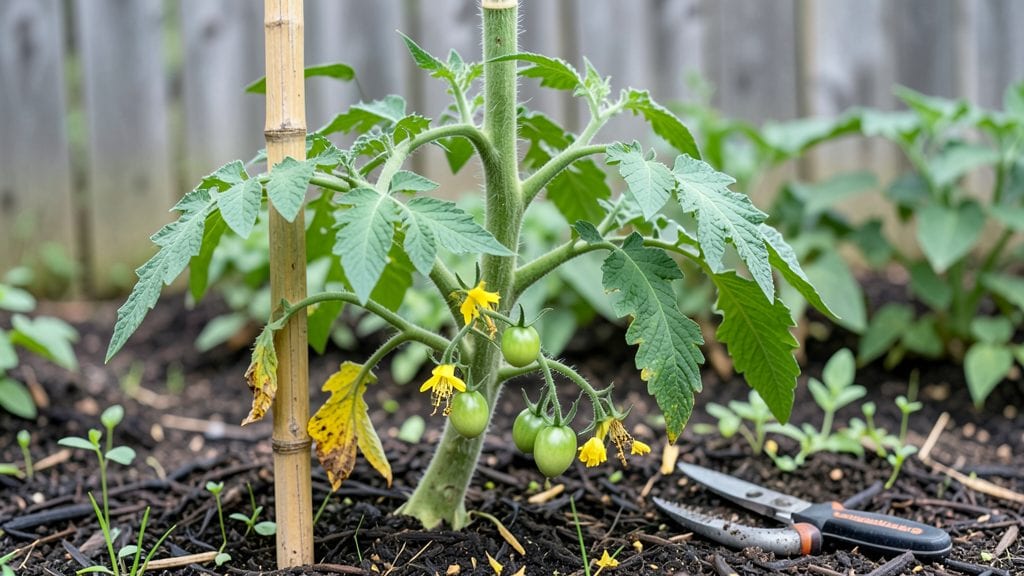
Mastering the proper way to prune tomato plants transformed my tangled vines into a fruit-loaded dream—after my first garden flopped with more leaves than tomatoes. 🌱 The secret? Timing and precision cuts for stronger stems, better airflow, and those juicy tomatoes you’re dreaming of.
Determinate varieties need minimal pruning, while indeterminate types practically beg for regular shaping.
You’ll need sharp pruners, a sunny morning for the job, and about 20 minutes to transform your plants. Start by removing suckers—the little shoots growing between the stem and branches—when they’re pencil-sized.
For indeterminate tomatoes, prune aggressively after the first flower cluster to focus energy upward. Determinate types? Just tidy up dead leaves and overcrowded stems to keep things airy.
The payoff comes in heavier fruit and fewer diseases. With proper pruning, your plants channel energy into tomatoes instead of extra foliage, and the stems stay sturdy enough to support those pound-plus heirlooms.
Plus, you’ll avoid the heartbreak of blight-ridden leaves ruining your harvest. This method works whether you’re growing in garden beds or containers.
Here’s the kicker: pruning gets easier with practice, and once you see the difference, you’ll wonder how you ever grew tomatoes any other way. The key is consistency—check your plants weekly during the growing season. Ready to turn those vines into tomato factories? Let’s get cutting!
📚 In This Guide
- What you need
- Instructions
- Tips and common mistakes
- Wrapping up and next steps
What you need
- ● Pruning shears or sharp bypass pruners – Choose sterilized, sharp tools (1 pair) to make clean cuts and prevent disease spread.
- ● Gloves – A pair of durable gardening gloves (size medium/large) to protect your hands from thorns and dirt.
- ● Disinfectant (rubbing alcohol or bleach solution) – A small bottle (4 oz) to sterilize tools before and after pruning.
- ● Garden twine or plant ties – A spool (50 ft) to secure stems to stakes or cages after pruning.
- ● Stakes or tomato cages – 5-6 ft tall stakes (2-3 per plant) or sturdy cages to support pruned plants.
- ○ Garden hose or watering can – For post-pruning hydration (optional but helpful).
- ● Compost or mulch – A bag (5-10 lbs) to replenish soil nutrients after pruning.
- ○ Plant growth regulator (optional) – A small bottle (8 oz) to control excessive growth if needed.
- ● Label markers – If you’re experimenting with different pruning techniques, labels help track progress!
- ● Knee pads – For comfort during long pruning sessions (especially for larger plants).
Step-by-Step guide to pruning tomato plants for maximum yield
Pruning tomato plants isn't just about cutting back—it's about directing energy where it matters most.
✂️ Step 1: Wait Until Plants Are Established
Hold off on pruning until your tomato plants have developed at least 3-4 true leaves and are 8-12 inches tall. This ensures the plant has enough energy to recover from cuts. I always wait until the first flower cluster appears—this is your signal that the plant is ready for shaping.
Early pruning stresses young plants and can stunt growth. Instead, focus on providing support (cages or stakes) and consistent watering during this early stage. You'll see stronger stems and better root development if you let the plant mature first.
✂️ Step 2: Remove Suckers for Better Airflow and Fruit Production
Suckers are the small shoots that grow in the V-shaped junction between the main stem and a branch. These compete with your fruit for energy, so remove them weekly to redirect nutrients. Use your fingers or clean pruners to pinch them off at the base—don’t leave a stub.
Here's the thing—don't go overboard. Indeterminate tomatoes (the vining types) need more pruning than determinate (bush) varieties. For indeterminate plants, keep 1-2 main stems and remove all suckers below the first flower cluster. You'll notice thicker stems and larger fruit as a result.
✂️ Step 3: Prune Lower Leaves to Improve Air Circulation
Once your plant reaches 3-4 feet tall, start removing the lower leaves—those touching the soil or within 6 inches of the ground. Use sharp pruners to make clean cuts just above a leaf node (where new growth emerges). This prevents soil-borne diseases like blight from spreading upward.
I like to do this on a dry, sunny morning so the cuts dry quickly and heal faster. You'll see fewer yellowed leaves and healthier stems as the season progresses. Just avoid removing more than one-third of the foliage at once—this can shock the plant.
✂️ Step 4: Thin Fruit Clusters for Larger, Healthier Tomatoes
When your plant sets fruit, you'll often see multiple tomatoes growing in one cluster. Thin these down to 1-2 tomatoes per cluster, keeping the largest and healthiest ones. This ensures the plant puts all its energy into fewer, bigger fruits instead of spreading itself thin.
Use your fingers to gently twist off excess tomatoes at the stem. Avoid cutting—this can damage the plant and invite disease. You'll notice your remaining tomatoes growing faster and larger as the season goes on. This step is especially important for heirloom varieties, which tend to produce more fruit clusters.
⏰ Step 5: Adjust Pruning as the Season Progresses
As your plant grows taller, focus on maintaining airflow by removing any yellow or diseased leaves immediately. In late summer, reduce pruning to avoid stressing the plant before harvest. By 6-8 weeks before your first frost, stop pruning entirely to let the plant focus on ripening existing fruit.
You'll know you're doing it right when your plant looks balanced—not overcrowded with leaves but still lush enough to support its fruit. A well-pruned tomato plant should have strong stems, healthy green leaves, and a manageable number of fruit clusters.
Tips & tricks for perfect tomato pruning
These precision techniques will help you transform your tomato plants into high-yielding powerhouses—without sacrificing health or productivity.
Timing Secret: The weekly sucker removal in Step 2 is non-negotiable for indeterminate varieties, but don't get carried away—over-pruning can stress the plant. I've found that removing suckers only when they're pencil-sized (about 2-3 inches long) gives the plant time to recover while still preventing energy drain. For determinate varieties, you can skip this step entirely—they're designed to produce fruit without extensive pruning.
Tool Technique: Sharp, clean pruners are your best friend for Step 3's lower leaf removal. I always sterilize my tools with rubbing alcohol between plants to prevent disease spread. For the delicate work of removing suckers in Step 2, I prefer using my fingers—it gives me more control to pinch at the exact base without damaging surrounding growth. Just be gentle with those tender tomato stems!
Seasonal Strategy: That 6-8 week frost deadline in Step 5 is flexible based on your climate. In warmer regions, you might extend pruning until 4 weeks before frost, but always stop when nights consistently dip below 50°F. I've learned the hard way that pushing too late can leave fruit underripe—better to have fewer perfect tomatoes than a bushel of green ones!
Visual Cues: When thinning fruit clusters in Step 4, look for tomatoes that are uniformly shaped and free of blemishes—these are your winners. I also check for even spacing between stems when twisting off excess fruit; this ensures good airflow and prevents future rot. Remember, you're not just removing fruit—you're sculpting the plant's energy output.
Pro Tips for Proper Way To Prune Tomato Plants
- These precision techniques will help you transform your tomato plants into high-yielding powerhouses—without sacrificing health or productivity.
- Timing Secret: The weekly sucker removal in Step 2 is non-negotiable for indeterminate varieties, but don't get carried away—over-pruning can stress the plant.
- Tool Technique: Sharp, clean pruners are your best friend for Step 3's lower leaf removal.
Frequently asked questions
Got questions about pruning tomato plants? You’re not alone! Here are some of the most common concerns—and expert answers—to help you prune like a pro.
When is the best time to start pruning tomato plants?
Begin pruning once your plants reach about 12–18 inches tall and have a few sets of true leaves. For determinate varieties (bush tomatoes), minimal pruning is needed—just remove suckers to improve airflow. For indeterminate varieties (vining tomatoes), prune regularly throughout the growing season to encourage vertical growth and fruit production.
Should I remove all suckers, or leave some for bushier plants?
It depends on your tomato type! For indeterminate tomatoes, remove most suckers (the small shoots between the stem and branches) to direct energy to fruit production. For determinate tomatoes, leave a few suckers to create a bushier plant—just avoid overcrowding. Pro tip: If you’re unsure, err on the side of less pruning for bush varieties.
What if I prune too much? Can I fix over-pruned tomato plants?
Over-pruning can stress plants, but don’t panic! If you’ve trimmed too aggressively, stop immediately and focus on watering deeply and fertilizing lightly (with a balanced 10-10-10 or compost tea). Prune lightly for a few weeks to let the plant recover. Prevention tip: Never remove more than 1/3 of the plant’s foliage at once.
Does pruning tomato plants really increase yield, or is it just for aesthetics?
Pruning does boost yield—but only if done correctly! By removing excess foliage and suckers, you improve airflow (reducing disease risk), direct energy to fruit production, and prevent overcrowding. Studies show indeterminate tomatoes can yield 20–30% more with proper pruning. Bonus: Pruned plants also produce larger, sweeter tomatoes!
Can I prune tomato plants in hot or humid weather?
Pruning in extreme heat or humidity can stress plants, increasing the risk of disease (like blight) or sunburn on exposed stems. Best times to prune: Early morning or late afternoon on cool, cloudy days. If you must prune in heat, water plants deeply first and avoid cutting during peak sun hours (10 AM–4 PM).
Wrapping up and next steps
Pruning your tomato plants might seem like a small task, but mastering it can transform your harvest—leading to healthier plants, bigger yields, and fewer pests. Remember, the key is timing, technique, and consistency, whether you’re working with indeterminate vines or compact determinate varieties.
Now that you’re armed with the right tools and knowledge, roll up your sleeves and give it a try! 🌱
Ready to take the next step? Monitor your plants weekly and adjust your pruning as they grow. Before you know it, you’ll be basking in the glory of a bountiful, homegrown tomato feast—all thanks to a little precision and care!