
Pruning
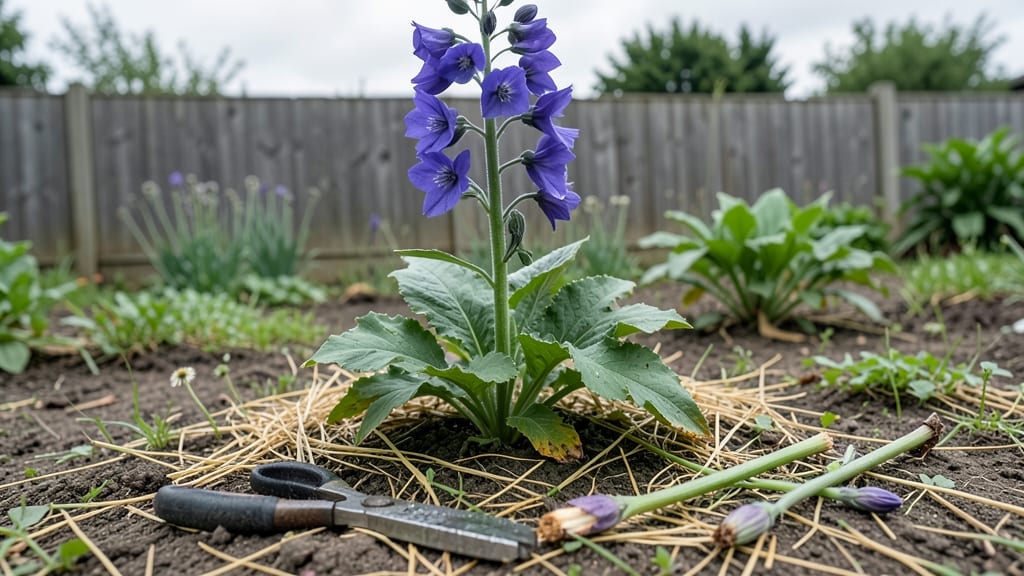
Pruning delphinium plants at the right time keeps those towering purple spikes coming back bigger every year. ✨ I learned the hard way that cutting too early or too late can stunt growth—or worse, leave you with no blooms at all.
The key is timing: wait until the flowers fade completely before making your first move.
You’ll need sharp bypass pruners (never dull shears—they crush stems) and a clear day to work. Start by snipping off the spent flower heads right at the base, then cut back the entire stem to about 6 inches above the ground.
This might look drastic, but it’s what encourages those sturdy new shoots that’ll produce next year’s blooms.
Within weeks, you’ll see fresh green growth pushing through the soil, and by late summer, those familiar spiky buds will form again. The plants stay healthier, too—less risk of fungal diseases from old, crowded stems, and more energy going into strong roots instead of seed production.
For colder climates, a light trim in late fall (after the first frost) helps protect the crown from winter moisture. Just don’t overdo it—delphiniums are tough, but they need that energy reserve for spring’s big comeback.
📚 In This Guide
- What you need
- Instructions
- Tips and common mistakes
- Wrapping up and next steps
What you need
- ● Pruning shears: Bypass pruners (sharp, clean, and sterilized with rubbing alcohol to prevent disease). Avoid anvil pruners—they crush stems.
- ● Garden gloves: Heavy-duty, cut-resistant (delphinium stems are spiky! Pick size medium/large for grip).
- ○ Disposable gloves or paper towels: For handling sap (optional but helpful if you dislike sticky residue).
- ● Garden twine or plant ties: 3–4 feet (to secure tall stems if needed post-pruning).
- ● Compost bin or bag: For disposing of pruned stems (or repurpose as mulch if disease-free).
- ● Watering can or hose: With a fine mist nozzle (to hydrate plants post-pruning).
- ● Fungicide spray: Copper-based or neem oil (if your plants show signs of mildew or blight).
- ● Plant marker flags: To label pruned stems if you’re experimenting with staggered deadheading.
- ● Knee pad or stool: For comfort when pruning mature, towering delphiniums.
- ● Camera or phone: To document your pruning progress (because before/after shots are satisfying!).
Instructions for pruning delphinium plants
Here’s how to keep your delphiniums thriving with clean, strategic cuts that boost next year’s blooms.
✂️ Step 1: Prune Dead or Damaged Stems First
Start by inspecting your delphiniums for any stems that are brown, mushy, or clearly dead. Use clean, sharp pruners to cut these back to healthy green tissue—about ½ inch above the first leaf or bud. This prevents disease from spreading to the rest of the plant. I always do this in early fall, right after the first frost blackens the foliage.
If you spot any stems with holes or signs of slug damage, snip those off immediately. Delphiniums are tough, but they won’t recover from major structural damage. Remove any flower stalks that have already bloomed—they’re done producing, and cutting them now redirects energy to root growth for next season.
✂️ Step 2: Cut Back Foliage to 6 Inches Tall
Once you’ve removed the dead stems, take your pruners to the remaining healthy growth. Cut the entire plant back to about 6 inches tall, leaving only a few sturdy stems if needed. This may seem drastic, but delphiniums store energy in their roots, and a clean cut encourages stronger regrowth in spring.
Here’s the thing—don’t worry about leaving a messy stump. Delphiniums don’t regrow from the base like some perennials. Instead, focus on cutting just above a leaf node or bud if one is visible. If you’re unsure, err on the side of shorter cuts. You can always trim more later if needed.
✂️ Step 3: Thin Crowded Stems for Better Airflow
Delphiniums often produce multiple stems from the same base, which can lead to overcrowding. After your initial cuts, assess the plant’s structure. If you have more than 3-4 strong stems emerging from the same spot, thin them out by cutting the weakest ones at the base. This ensures the remaining stems get enough nutrients and sunlight.
You’ll notice the plant looks sparser after thinning, but this is a good thing. Better airflow reduces humidity around the stems, which cuts down on fungal issues like powdery mildew. I like to do this in late winter or early spring before new growth appears—it’s easier to see what’s happening when the plant is dormant.
✂️ Step 4: Remove Seed Heads to Encourage More Blooms
If your delphiniums produced seed pods this year, now’s the time to remove them. Use your pruners to snip off any dried flower heads or seed stalks that remain. This might seem counterintuitive—after all, seeds mean more plants—but delphiniums put a lot of energy into seed production, which can weaken the mother plant.
Watch for seed heads that look like little spiky balls or elongated pods. Cut them back to the first set of healthy leaves or buds. If you’re growing delphiniums for their dramatic blooms, this step is key. It ensures the plant redirects its energy into next year’s flower stalks instead of seed production.
⏰ Step 5: Clean Up and Mulch for Winter
After pruning, gather all the cuttings and dispose of them in the trash—not the compost pile. Delphiniums can harbor diseases like powdery mildew in their stems, and you don’t want those pathogens overwintering in your compost. Once you’ve cleared the area, spread a 2-3 inch layer of mulch around the base of the plant.
This mulch layer protects the roots from freezing temperatures and keeps the soil moist during dry spells. I use shredded bark or straw because they break down slowly and improve soil structure over time. Avoid piling mulch right against the stems—leave a 1-2 inch gap to prevent rot.
Tips & tricks for pruning delphinium plants
Here's what I've learned after years of growing these striking plants—small details make all the difference in next year's towering blooms.
Tool Prep is Key: Before you start, sharpen your pruners and disinfect them with rubbing alcohol. Dull blades tear stems instead of making clean cuts, which invites disease. I also keep a small bucket nearby to collect cuttings—this makes cleanup easier and prevents accidental scattering of diseased material.
Timing Matters: Early fall after your first frost is ideal for Step 1, but don't wait too long. If you prune too late, the plant may not have enough time to prepare for winter dormancy. In Step 2, when cutting back to 6 inches, remember that delphiniums store energy in their roots—this drastic cut actually helps them build stronger stems for spring. Between us, I've seen gardeners hesitate on this step, but trust me, the results are worth it.
Visual Cues for Healthy Cuts: When making cuts in Step 1, look for where the stem meets healthy green tissue—this is your target. The cut should be at a slight angle (about 45 degrees) to help water run off. For Step 3's thinning, focus on stems that are thinner than a pencil or show signs of weakness. You'll know you've done it right when you can see light and air moving through the plant's center.
Mulch Layering: In Step 5, that 2-3 inch mulch layer isn't just for show—it's insulation. Spread it evenly but keep it 1-2 inches away from stems to prevent rot. I've found that adding a handful of compost to the soil before mulching gives roots a nutrient boost for spring. This small extra step makes a noticeable difference in next year's bloom height.
Pro Tips for Pruning Delphinium Plants
- Here's what I've learned after years of growing these striking plants—small details make all the difference in next year's towering blooms.
- Tool Prep is Key: Before you start, sharpen your pruners and disinfect them with rubbing alcohol.
- Timing Matters: Early fall after your first frost is ideal for Step 1, but don't wait too long.
Frequently asked questions
Got questions about pruning delphiniums?
You’re not alone—these striking plants can be tricky to manage! Below, we’ve answered the most common questions to help you keep your delphiniums thriving and blooming like never before.
When is the best time to prune delphiniums?
Prune delphiniums in late summer or early fall (after blooming) to encourage strong root growth for next year. Avoid pruning in spring—this can disrupt early blooming. For deadheading spent flowers, trim them back to the first set of healthy leaves to redirect energy into new growth.
How short can I cut back delphiniums?
Never cut delphiniums too aggressively! Trim them back by one-third to one-half of their height, but leave at least 6–8 inches of stem above the ground. This ensures the plant retains enough energy to regrow and store nutrients for next season.
What if I skip pruning my delphiniums?
Skipping pruning won’t kill your delphiniums, but they may produce fewer blooms and become leggy or floppy. Over time, unpruned plants can also weaken and become more susceptible to disease. A little trimming goes a long way for long-term health!
Can I prune delphiniums in winter?
Winter pruning is not recommended unless you’re in a mild climate. Cold weather can stress the plant, and pruning too late may stunt new growth before spring. Wait until after the first frost (if needed) but focus on cleanup rather than heavy pruning.
How do I know if I’ve pruned too much?
If you’ve cut back more than half the plant or left stubs shorter than 6 inches, you may have over-pruned. Signs include yellowing leaves, stunted growth, or no new shoots in spring. Next time, aim for a gentler trim—delphiniums bounce back with patience!
Do I need special tools to prune delphiniums?
Not necessarily! Use clean, sharp pruners or shears to avoid crushing stems. For large clumps, loppers work well. Sterilize tools with rubbing alcohol between cuts to prevent disease spread. No fancy tools? A sharp knife or even scissors in a pinch!
Wrapping up and next steps
Pruning your delphinium plants might seem intimidating, but with the right timing and technique, you’ll unlock next season’s stunning, towering blooms! 🌸 Remember to trim in late summer or early fall, remove spent flowers, and leave a few inches of stem—this encourages strong regrowth and prevents disease.
With patience and care, your garden will reward you with vibrant, healthy delphiniums year after year.
Ready to give it a try? Grab your pruners and head to the garden—your future floral masterpiece is waiting! 🌿