
Pests
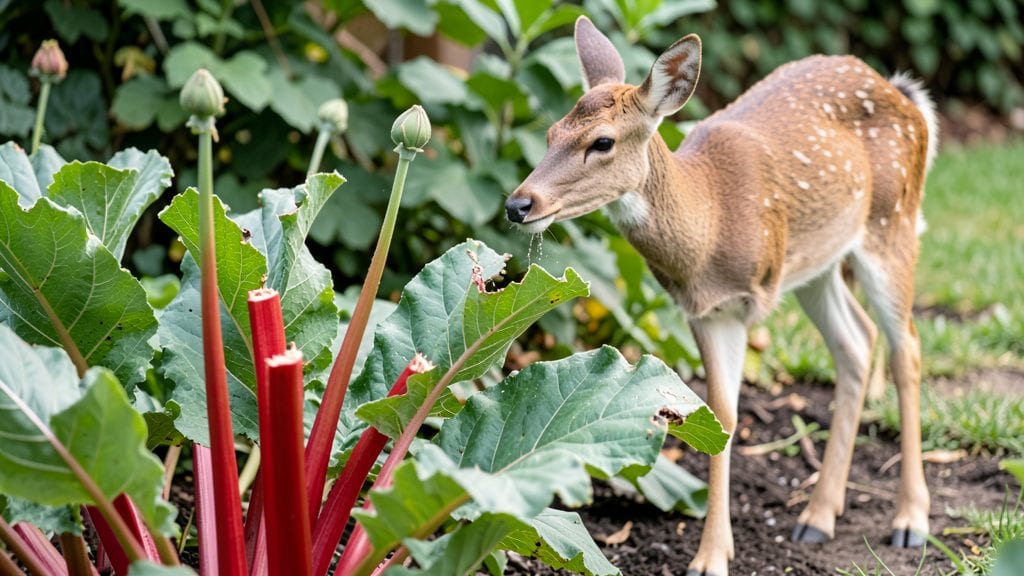
Deer and rhubarb plants create a common gardening headache because deer can't resist the plant's succulent stalks and leaves, often stripping entire beds in a single night. The best defenses are tall fencing, commercial repellent sprays, or strategic companion planting.
Deer target rhubarb because its high moisture content and tender stems offer easy, nutrient-rich meals.
Unlike tougher perennials, rhubarb lacks natural chemical defenses that repel browsers, making it a prime snack. 🌿 The problem peaks in late winter and early spring when deer are hungry after winter and before fresh spring growth appears.
If your garden already has deer damage, these three strategies work best: install 8-foot fencing (deer can jump over lower barriers), apply commercial deer repellent sprays like Liquid Fence every 2-4 weeks, or plant garlic or lavender nearby—both strongly scent deer away.
The key is combining multiple methods for maximum protection.
💡 In This Article
- Why Deer Love Rhubarb Gardens
- Top 3 Deer-Resistant Rhubarb Solutions
Why deer love rhubarb gardens
Deer gravitate toward rhubarb because its tender stalks and leaves offer a perfect combination of nutrition and accessibility. Rhubarb's high moisture content—around 90%—makes it incredibly hydrating for deer, especially during dry spring months when other plants may be less succulent.
The soft, fibrous texture requires minimal chewing effort, allowing deer to consume large quantities quickly. Unlike many garden plants that develop tougher leaves or thorns, rhubarb remains palatable throughout its growing season, making it a reliable food source. 🌱
Botanically, rhubarb lacks the chemical defenses found in many other plants. Most vegetables and fruits produce toxins like alkaloids or tannins to deter herbivores, but rhubarb's oxalic acid content (while present) isn't strong enough to repel deer.
Instead, its mild, slightly tart flavor and high sugar content in young leaves create an irresistible snack. For comparison, deer typically avoid plants like foxglove or oleander due to their toxic compounds, but rhubarb's lack of such defenses makes it a prime target.
The plant's rapid growth in spring also coincides with deer's peak hunger after winter.
Seasonal feeding patterns amplify the problem. Deer are most active during dawn and dusk, which aligns with rhubarb's peak growth periods in early spring. At this time, a mature rhubarb plant can produce 2-3 pounds of edible stalks per week—enough to sustain a deer's daily dietary needs.
Unlike woody shrubs that deer might browse occasionally, rhubarb's herbaceous nature makes it an easy, high-reward meal. The plant's upright growth habit also makes it difficult for deer to detect from a distance, giving them free access to an all-you-can-eat buffet. 🦌
Ecologically, rhubarb's appeal extends beyond its nutritional value. Deer are opportunistic feeders that prioritize plants with high water content and minimal fiber, both of which rhubarb provides.
Studies show that deer will travel up to 1 mile to access preferred food sources, and rhubarb's widespread cultivation in home gardens makes it an easily accessible delicacy.
The contrast with other garden plants is striking: while deer might nibble on lettuce or peas, they'll completely devour rhubarb given the chance. This preference creates a vicious cycle for gardeners, as even small patches of rhubarb can attract deer that will then target other vulnerable plants.
Understanding deer behavior helps explain why rhubarb gardens become battlegrounds. Deer have excellent memories and will return to successful feeding locations, often creating clear paths through gardens.
Their browsing patterns typically start with the outer leaves before moving inward, which is why you might notice your rhubarb plants looking "shredded" rather than completely stripped.
The key insight is that rhubarb's combination of high water content, soft texture, and lack of chemical defenses creates a perfect storm of appeal for deer—making it one of the most challenging plants to protect in any garden. 🌿