
Planting
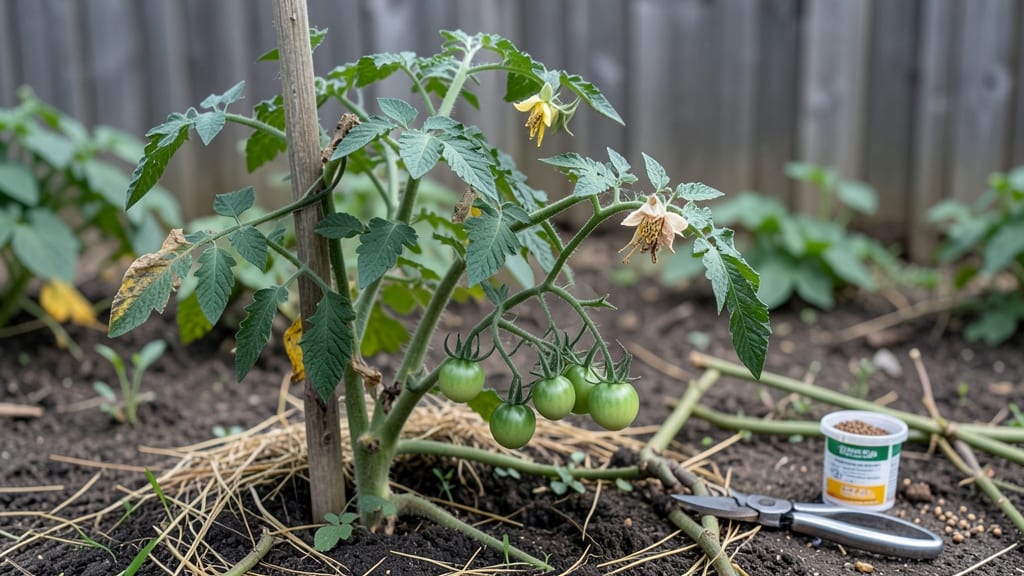
Your tomato plant’s drooping leaves don’t mean it’s a lost cause—a tomato plant fix can bring them back to life faster than you think. I’ve nursed back more than my share of sad-looking plants, and the right approach works every time.
The key is acting fast when you spot those first signs of stress, whether it’s wilting, yellowing, or crispy edges.
Most of the time, the problem boils down to three things: water, roots, or pests. Overwatering or underwatering both cause wilting, but so do compacted soil or damaged roots. I’ve even seen plants perking up after just a good drink of water and a quick check for hidden critters.
The good news? You don’t need fancy tools—just a sharp eye and a few simple steps to get them thriving again.
Within 24 hours, you’ll see those leaves firming up and standing tall if you tackle the issue right away. The fix might be as easy as adjusting your watering schedule, loosening the soil, or giving them a nutrient boost.
Even if your plant looks like it’s on its last legs, this method has saved mine from total collapse more times than I can count.
Whether your tomatoes are in pots or the ground, the same principles apply. The sooner you act, the better the results—so grab your gloves and let’s get those plants back in fighting shape. You’ll be harvesting juicy tomatoes in no time.
Root Causes Of Wilted Tomatoes
When your tomato plants start looking droopy, it’s rarely just bad luck—there’s usually a scientific reason behind it. Understanding why your plants are wilting is the first step to a fast, effective fix.
Below, we break down the most common culprits, from soil issues to environmental stressors, and explain the science behind each one.
Tomatoes thrive in well-draining soil, but if water pools around their roots, it creates an oxygen-starved environment. Roots need oxygen to absorb nutrients and transport water efficiently.
When drainage is poor—often due to compacted soil, clay-heavy mixes, or overwatering—the roots drown, leading to wilting even when the soil feels moist.
Why it happens:
- Waterlogging: Excess water displaces oxygen in soil pores, suffocating roots and triggering anaerobic respiration—a process that produces toxic ethanol and weakens root cell membranes.
- Fungal infections: Stagnant water invites Pythium or Phytophthora, pathogens that rot roots and block water uptake.
- Nutrient leaching: Poor drainage flushes away essential minerals like potassium and calcium, which are critical for osmotic regulation in plant cells.
Actionable clue: Press your finger 2 inches into the soil—if it’s soggy for more than a few hours after watering, drainage is the issue.
Tomatoes are drought-tolerant but despise inconsistency. Both overwatering and underwatering disrupt the plant’s xylem (water-transporting vessels), causing wilting through different mechanisms.
Why it happens:
| Overwatering | Underwatering |
|---|---|
|
|
Actionable clue: Check the soil 1–2 inches down—it should feel like a wrung-out sponge. If it’s dry as a bone or muddy, adjust your watering.
Tomatoes wilt under intense heat not just because of thirst, but because high temperatures physically damage their leaves and roots. Heat stress disrupts the plant’s transpiration-cooling system, leading to a vicious cycle of wilting and recovery failure.
Why it happens:
- Leaf scorch: Temperatures above 90°F (32°C) cause protein denaturation in leaf cells, turning edges crispy and blocking water uptake.
- Root shutdown: Soil temperatures above 85°F (29°C) reduce root activity by 50%, as enzymes like ATPase (which pumps nutrients) become inactive.
- Stomatal closure: To conserve water, leaves close their pores—but this also traps heat, accelerating wilting.
Actionable clue: Wilting starts on exposed leaves (like those facing south) and spreads inward. Shade cloth or mulch can lower soil temps by 10–15°F.
Not all wilting is visible. Sap-sucking insects and soil-borne pathogens silently drain your tomato’s energy, leading to collapse. These invaders disrupt the plant’s phloem (sugar-transporting tissue) and xylem, cutting off water and nutrient flow.
Why it happens:
- Sap-suckers (aphids, whiteflies, spider mites): Inject toxic saliva that clogs plant vessels, reducing water transport by up to 30%.
- Root-knot nematodes: These microscopic worms create galls on roots, reducing surface area for water absorption by 70%.
- Fungal wilts (Fusarium, Verticillium): Block xylem vessels with fungal spores, causing vascular occlusion—even well-watered plants can’t absorb moisture.
Actionable clue: Check undersides of leaves for sticky residue (honeydew) or webbing. Dig up roots—look for swollen, knotty growths (nematodes) or dark streaks (fungal wilt).
Pro Tip: 💡 Wilting patterns are your detective clues:
- Evening wilting that recovers by morning: Likely underwatering or heat stress.
- Wilting that spreads upward from the bottom: Root rot or vascular disease.
- Wilting with yellowing leaves: Nutrient deficiency (often potassium or magnesium).
Quick Fixes For Wilted Tomato Leaves
Reviving your tomato plant’s drooping leaves starts with identifying the root cause—but once you know what’s wrong, the fixes are often simpler than you think. Below, we’ve mapped the most common issues to fast, actionable solutions, plus prevention tips to keep your plants thriving long-term.
Grab your gardening gloves and let’s get to work!
Fix:
- Check the soil moisture 👨🌾 – Stick your finger 1–2 inches into the soil. If it’s soggy (overwatered) or bone-dry (underwatered), your plant is in distress.
- Adjust your watering routine 💦:
- Overwatered? Let the top 2–3 inches of soil dry out before watering again. Improve drainage by adding perlite or sand to heavy clay soil.
- Underwatered? Water deeply at the base (not the leaves) until it drains from the bottom of the pot or garden bed. Use a soaker hose for even moisture.
- Avoid soggy roots 🌱 – Ensure pots have drainage holes, and mulch around plants to retain moisture without suffocating roots.
💡 Pro Tip: Water in the early morning to reduce evaporation and fungal risks. Yellowing leaves paired with wilting? You’re likely overdoing it.
Fix:
- Provide afternoon shade 🌞 – Use shade cloth (30–50% coverage) or move potted plants to a spot with dappled sunlight during peak heat (12 PM–4 PM).
- Mulch heavily 🌿 – A 2–3 inch layer of straw or wood chips keeps roots cool and retains moisture.
- Mist leaves lightly 💦 – On scorching days, a gentle misting (early morning only) can help, but avoid wetting leaves at night to prevent disease.
🔥 Prevention: If your tomatoes are young or just transplanted, acclimate them gradually to full sun over 7–10 days.
Fix:
- Identify the culprit 🔍:
- Aphids/spider mites? Spray with a neem oil solution (1 tsp neem oil + 1 tsp mild soap per quart of water). Repeat every 5–7 days.
- Blight (brown spots)? Remove infected leaves immediately and treat with copper fungicide or a baking soda spray (1 tbsp baking soda + 1 quart water + a drop of soap).
- Root-knot nematodes? Soak seeds in hot water (122°F for 30 mins) before planting, or use marigolds as companion plants to repel them.
- Prune strategically ✂️ – Trim away heavily infested leaves and sterilize pruners with rubbing alcohol to prevent spreading.
🌡️ Prevention: Rotate crops yearly and avoid overhead watering to keep foliage dry.
Fix:
- Stake or cage immediately 🏗️ – Use tomato cages, stakes, or trellises to prevent flopping and wind damage. Secure loosely so stems aren’t crushed.
- Create a windbreak 🌳 – Plant tall grasses, corn, or a temporary bamboo fence to shield delicate plants.
- Gently straighten stems 👩🌾 – If leaves are bent but not broken, carefully reposition them to restore airflow.
✨ Prevention: Prune lower leaves to reduce wind resistance and improve air circulation.
Fix:
- Test your soil 📊 – Use a DIY soil test kit (available at garden centers) to check pH and nutrient levels. Tomatoes thrive in slightly acidic soil (6.0–6.8 pH).
- Add balanced fertilizer 💪 – Use a 5-10-10 or 10-10-10 fertilizer (NPK ratio) when flowers appear.
For organic options, try compost tea or fish emulsion. 3. Fix yellowing leaves 🍃: - Lower leaves yellow? Likely nitrogen deficiency – Add blood meal or alfalfa pellets. - Purple stems? Phosphorus shortage – Use bone meal or rock phosphate.
🎯 Prevention: Side-dress with compost every 3–4 weeks for a steady nutrient supply.
Fix:
- Water thoroughly 💧 – Give newly transplanted tomatoes a deep watering to reduce shock.
- Shade for a few days 🌿 – Use a cloche or shade cloth to protect them from direct sun while roots establish (usually 5–7 days).
- Avoid fertilizing immediately 🚫 – Wait 1–2 weeks before adding fertilizer to let roots heal.
💡 Pro Tip: Transplant on a cloudy day or in the late afternoon to minimize stress.
- Trim damaged leaves ✂️ – Remove only the worst-affected leaves to redirect energy to healthy growth.
- Boost humidity 🌧️ – Place a tray of water near potted plants or use a humidifier in greenhouses.
- Monitor daily 📅 – Check leaves, soil, and stems morning and evening for changes.
Remember: Most tomato plants bounce back within 24–48 hours if the root cause is addressed. Stay consistent with care, and your plants will be back to producing juicy, sun-ripened tomatoes in no time! 🍅🔥
Frequently asked questions
Why do my tomato leaves wilt so fast even after watering?
Fast wilting after watering usually means root stress from overwatering, compacted soil, or disease. Check for soggy soil—if it stays wet, roots suffocate. If leaves wilt by evening but perk up at dawn, it’s likely underwatering or heat stress. Test by lifting a pot: if it’s heavy, you’re overwatering.
Can I save a tomato plant with brown, crispy leaf edges?
Yes! Crispy edges often mean underwatering or salt buildup from tap water. Flush the soil with 1 inch of water to leach salts, then water deeply at the base. If edges are brown but leaves stay plump, it’s likely heat scorch—provide afternoon shade and mulch heavily.
How do I tell if wilting is from pests vs. disease?
Pests (like aphids or spider mites) cause sticky residue on leaves or webbing. Disease (e.g., blight) shows as spots or mold. Dig up roots—look for galls (nematodes) or dark streaks (fungal wilt). If stems feel mushy, it’s likely rot. Isolate the plant immediately.
Will pruning wilted leaves help my tomato plant recover?
Yes, but only remove the worst-affected leaves—never more than 30% of foliage. This redirects energy to healthy growth. Sterilize pruners with rubbing alcohol to prevent spreading disease. Avoid pruning during heatwaves, as this stresses the plant further.
How long does it take for a tomato plant to revive after a fix?
Most plants show improvement within 24–48 hours if the root cause is addressed. For severe cases (like root rot), recovery may take 1–2 weeks. Monitor daily—wilting that spreads upward from the bottom signals irreversible damage. If no improvement after 3 days, reassess the issue.