
Pruning
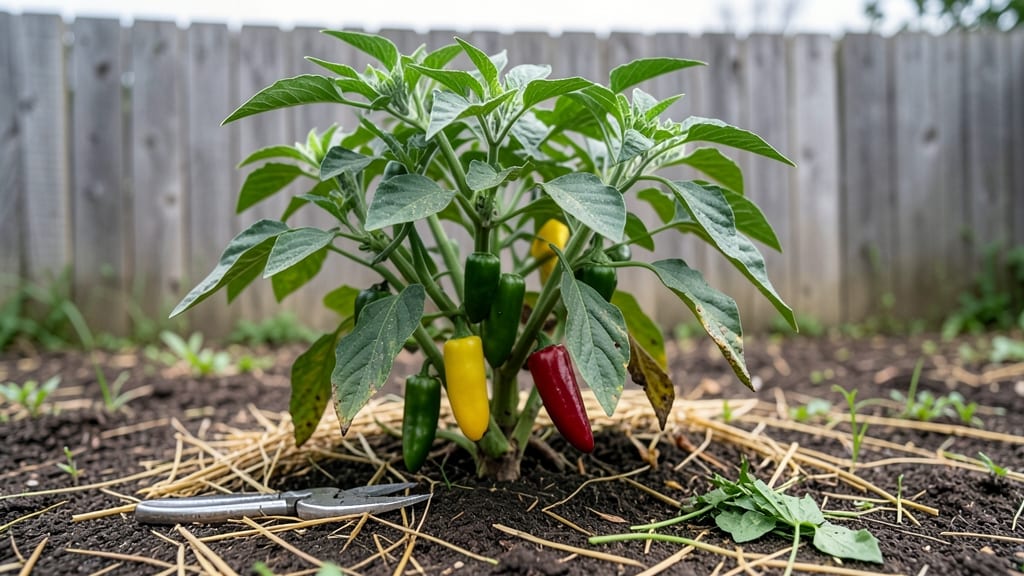
Trimming jalapeño plants isn’t just about shaping bushes—it’s about unlocking their full heat potential and keeping them productive all season. I’ve learned the hard way that skipping this step means fewer peppers and more leggy, disease-prone plants struggling to support their own weight.
The right cuts at the right time transform a scraggly plant into a compact, high-yielding machine that produces peppers until frost.
You’ll need just three tools: sharp bypass pruners, clean garden shears, and a pair of gloves (jalapenos don’t appreciate being handled roughly). The technique comes down to three key moves: removing suckers, pinching growth tips, and thinning crowded stems.
I start pruning when plants hit 12 inches tall, then repeat every 2–3 weeks until late summer. This keeps energy flowing to fruit production instead of unnecessary foliage.
What you’ll end up with is a bush that stays bushy—not top-heavy—with peppers forming along sturdy stems instead of clustered at the top. The plants resist disease better, recover faster from pests, and produce 20–30% more peppers than unpruned counterparts.
Plus, the peppers develop deeper heat when the plant focuses its energy on fewer, stronger branches.
This method works for both container-grown and in-ground jalapenos, though container plants need slightly more frequent pruning to prevent root-bound stress. The key is consistency—don’t overdo it early, and never cut more than one-third of the plant’s foliage at once. Let’s get those plants trimmed for maximum spice.
📚 In This Guide
- What you need
- Instructions
- Tips and common mistakes
- Wrapping up and next steps
What you need
- ● Pruning shears or sharp bypass pruners – Choose sterilized, sharp shears (e.g., Felco F-2 or similar) to avoid damaging stems or spreading disease. Size: 5–7 inches for precision.
- ● Garden gloves – Heavy-duty, nitrile-coated gloves (e.g., blank">Foxelli or blank">Glovesource) to protect against thorns and sap.
- ● Disinfectant (70% isopropyl alcohol or bleach solution) – 1 part bleach to 9 parts water to sterilize tools between cuts.
- ● Compost bin or bag – For trimmings (avoid leaving debris near plants to prevent pests/fungus).
- ● Watering can or hose – With a fine mist setting to hydrate plants post-pruning.
- ○ Plant growth regulator (e.g., Sea90 or kelp meal) – Optional for stressed plants after heavy pruning.
- ● Rooting hormone – If propagating cuttings (e.g., Dip ‘N Grow for jalapeño stems).
- ● Labeling tags – To mark pruned sections if experimenting with different techniques.
- ● Sunscreen (for you!) – Jalapeño plants love sun, but so does your skin—SPF 30+ recommended.
Step-by-step guide to trimming jalapeño plants
Healthy pruning boosts peppers, heat, and harvests—here’s how to do it right.
Identify Key Growth Points
Start by examining your jalapeño plants for flower clusters and side shoots. These are your targets—each flower will develop into a pepper, and side shoots steal energy from fruit production. Use sharp pruning shears to make clean cuts just above a leaf node or flower cluster. Avoid cutting into the main stem unless it’s diseased, as this reduces plant vigor.
Look for new growth that’s thicker than a pencil—these are your primary stems. Secondary shoots thinner than a pencil can be pinched off by hand. Prune in the morning when plants are hydrated and cuts heal faster. If you see yellowing leaves, prune those first—they’re sapping nutrients from your peppers.
Remove Suckers and Weak Growth
Suckers are the small shoots that grow in the V-shape between the main stem and a branch. These compete with your peppers for energy and should be removed immediately. Pinch them off with your fingers or cut with shears at the base. If left unchecked, suckers will produce tiny, bitter peppers instead of the heat-packed fruits you want.
Also trim any leggy or spindly growth—these stems stretch toward light but rarely produce fruit. Cut them back to a strong, leafy branch within 6 inches of the main stem. You’ll see new, bushier growth within 1-2 weeks as the plant redirects energy to productive areas. Avoid over-pruning—never remove more than one-third of the plant’s foliage at once.
Encourage Airflow and Light Penetration
Thin out crowded leaves to improve air circulation, which prevents fungal diseases like powdery mildew. Focus on the lower canopy, where humidity lingers and leaves touch. Remove leaves that block sunlight from reaching the middle and upper branches, where most peppers form. Aim to leave 3-4 inches of space between branches for airflow.
If your plants are in containers, prune outer leaves to allow light to reach the center. You’ll notice peppers developing more quickly in well-lit areas. Prune after harvest to maintain balance—removing spent peppers stimulates new flower clusters. Never prune when plants are stressed (under water or in extreme heat), as cuts won’t heal properly.
Maintain Shape and Productivity
Shape your jalapeños into a bushy, open form by trimming back any branches that grow inward. This creates a sunlit, productive framework where peppers ripen evenly. For determinate varieties (bush-type), prune to encourage a compact shape, while indeterminate varieties (vining) benefit from trimming to control height and focus energy on fruit production.
After the first flush of peppers, prune again to remove old or damaged leaves and any branches with no flowers. You’ll see a second wave of blooms within 2-3 weeks, leading to a prolonged harvest. Stop pruning 6-8 weeks before your first frost to let peppers mature fully. Save any pruned material—it makes great compost for next year’s plants.
Post-Pruning Care
Water deeply right after pruning to help the plant recover and reduce stress. Use 1-2 gallons of water per plant, soaking the root zone but avoiding soggy soil. Apply a balanced fertilizer (10-10-10) to support new growth, but avoid high-nitrogen feeds—they promote leafy growth over peppers. You’ll see new leaves and flowers within 7-10 days if the plant is healthy.
Monitor your plants for signs of stress like wilting or leaf drop. If you see blackened stems at pruning points, you cut too close—next time, leave a small stub (about ¼ inch) to prevent rot. Prune again in late summer to remove any remaining suckers and encourage late-season fruit. With consistent care, your jalapeños will keep producing hot, flavorful peppers well into fall.
Tips & tricks for pruning jalapeño plants
Pruning jalapeños might seem intimidating, but a few simple tricks will transform your plants into pepper-producing powerhouses. Here’s what I’ve learned from years of trial and error in the garden.
The Timing Secret: Morning is the absolute best time to prune—between 8 and 10 a.m. is ideal. This gives your plants plenty of daylight to recover before nightfall, and the leaves are fully hydrated from overnight watering. I’ve noticed that plants pruned in the afternoon often show signs of stress by evening, especially in hot climates. If you must prune later, wait until at least 4 hours before sunset to allow for healing.
Tool Technique: Always use sharp pruning shears for clean cuts, but don’t underestimate the power of your fingers. For those tiny suckers growing in the V-shape between branches, simply pinch them off with your thumb and forefinger—no tools needed. I’ve ruined more cuts than I can count by using dull shears, which tear plant tissue and invite disease. Keep your tools clean with rubbing alcohol between plants to prevent spreading any potential pathogens.
Stress Management: Never remove more than one-third of your plant’s foliage in a single session, and always avoid pruning when plants are already stressed from drought or extreme heat. I learned this the hard way when I over-pruned my plants during a heatwave, and they took weeks to recover. Focus on removing only the most problematic growth—those leggy stems and crowded leaves—and let the plant’s natural energy flow toward fruit production.
Late-Season Strategy: Give your jalapeños one final pruning in late summer to remove any remaining suckers and encourage a second wave of blooms. I’ve seen plants produce a surprising late-season harvest after this final trim, especially in warm climates. Just remember to stop pruning at least 6-8 weeks before your first frost to allow those new peppers to mature fully on the vine.
Pro Tips for Trimming Jalapeno Plants
- Pruning jalapeños might seem intimidating, but a few simple tricks will transform your plants into pepper-producing powerhouses.
- The Timing Secret: Morning is the absolute best time to prune—between 8 and 10 a.m. is ideal.
- Tool Technique: Always use sharp pruning shears for clean cuts, but don’t underestimate the power of your fingers.
Frequently asked questions
Got questions about trimming your jalapeño plants? You’re not alone! Here are answers to the most common concerns—from timing to troubleshooting—to help you grow a bountiful, fiery harvest.
When is the best time to trim jalapeño plants?
Trim your jalapeños in the morning after the dew has dried but before the heat of the day. Early spring or early summer (before flowering) is ideal for pruning to encourage bushier growth. Avoid trimming late in the season—it can delay fruit production.
How much should I cut off my jalapeño plant?
Remove 1/3 to 1/2 of the plant’s height or foliage in one session. Focus on dead, yellow, or crowded leaves first, then prune suckers (side shoots) to redirect energy to fruit production. Never cut more than 25% of the plant at once—this can stress it.
Can I use jalapeño trimmings for anything else?
Compost
healthy clippings to enrich your soil, or use them in homemade hot sauce (blanch and freeze for later). Avoid composting diseased leaves—toss those in the trash instead. Pro tip: Freeze trimmings in ice cube trays for quick flavor boosts in soups or marinades!
What if my jalapeño plant looks sad after trimming?
Don’t panic! A little wilting is normal, but if the plant stays droopy for more than a few days, it may be over-pruned or stressed. Water deeply, avoid fertilizing for a week, and keep it in partial shade until it recovers. Yellowing leaves? Check for pests or nutrient deficiencies (like nitrogen).
Will trimming make my jalapeños spicier?
Not directly—but healthy pruning boosts overall plant vigor, which can lead to more peppers and better flavor. For extra heat, focus on removing suckers (they drain energy) and keeping the plant well-watered. Stress (like over-pruning) can sometimes increase capsaicin, but it’s risky—balance is key!
How often should I trim my jalapeño plants?
Trim every 4–6 weeks during the growing season (spring to early summer). After flowering, light maintenance (removing dead leaves/pests) is enough. Stop pruning 6–8 weeks before your first frost to let the plant mature its peppers.
Wrapping up and next steps
Trimming your jalapeño plants isn’t just about keeping them tidy—it’s the secret to bigger harvests, hotter peppers, and healthier growth! 🌶️ By mastering pruning techniques, you’ll encourage more fruit production, improve airflow, and prevent disease.
Whether you’re a seasoned gardener or just starting out, every snip brings you closer to a bountiful, fiery harvest.
Ready to take your jalapeño game to the next level? Grab your pruners, roll up your sleeves, and start trimming today! For even more tips, check out our guide on when to harvest jalapeños for maximum heat—your taste buds (and spice-loving friends) will thank you!