
Watering
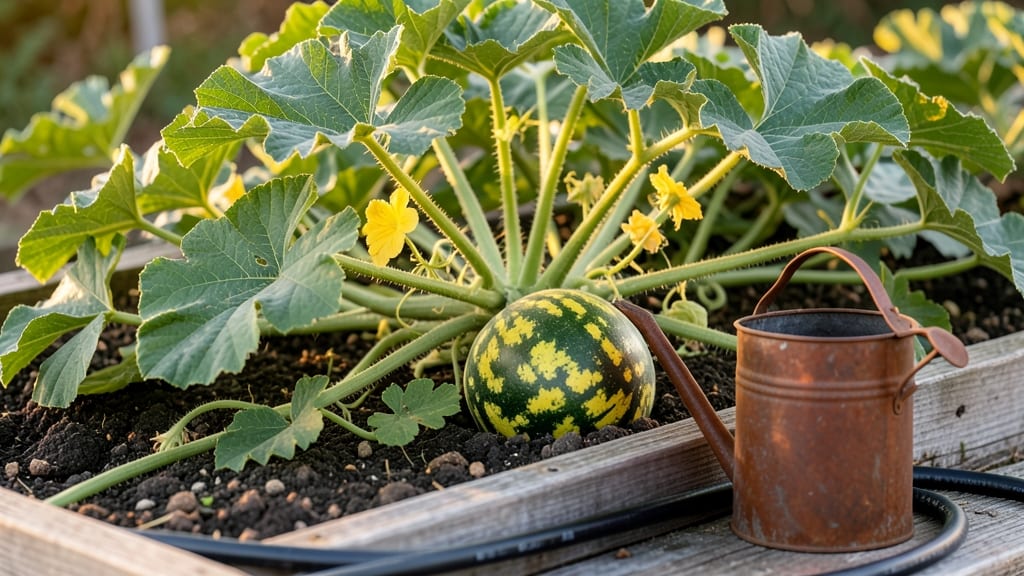
Watering watermelon plants isn’t just about keeping soil damp—it’s the secret to those explosively juicy slices you crave by summer’s end. 🌱 I’ve watched vines wither from thirst and others rot from too much love, and the difference comes down to timing, technique, and knowing when the roots are begging for a drink.
The right moisture balance turns a good harvest into a showstopper.
Start with deep waterings twice a week once the plants hit 6 inches tall, soaking the soil 6–8 inches down where the roots crave it most.
Drip irrigation wins here—it delivers steady moisture without wetting the leaves (which invites disease), and you can set it on a timer so you’re not chasing the hose every afternoon. Think of it like giving your watermelons a long, cool drink instead of a quick sip.
You’ll know you’re nailing it when the soil feels like a slightly damp sponge—not soggy, not bone-dry. Overwatering? Yellow leaves and mushy vines. Underwatering? Crispy edges and fruit that cracks before it ripens.
The goal is consistent moisture, especially when those melons start swelling. A moisture meter (or your finger) is your best friend here—stick it in and pull back: if it comes out clean, water again.
Heat and humidity throw a wrench into the game, so adjust on the fly: water more in 90°F+ days, less when rain keeps the soil clingy. Mulch with straw to lock in moisture and keep the roots cool—it’s like giving your plants a breathable blanket.
By mid-summer, you’ll be harvesting melons that practically burst with sweetness at the first slice. Now that’s what we’re talking about.
📚 In This Guide
- What you need
- Instructions
- Tips and common mistakes
- Wrapping up and next steps
What you need
- ● Watering can or hose – Opt for a gentle spray nozzle (for seedlings) or a soaker hose (for mature plants) to avoid disturbing soil.
- ○ Drip irrigation kit (optional but recommended) – Delivers consistent moisture at the root zone (1-2 emitters per plant).
- ○ Moisture meter (optional) – A handheld probe (like the GLOGER Soil Moisture Meter) helps track soil moisture levels.
- ● Organic mulch (straw, grass clippings, or wood chips) – 2-3 inches thick to retain moisture and suppress weeds.
- ● Well-draining soil mix – A blend of 60% topsoil, 30% compost, and 10% perlite for optimal aeration.
- ● Plant containers (if not in-ground) – 5-gallon pots or larger (watermelons need space!).
- ● 💡 Morning watering is best—avoid evening sessions to prevent fungal diseases.
- ● 💡 Use lukewarm water (not cold) to shock-sensitive roots.
- ● 💡 If your soil drains too fast, add hydration crystals (like Swell Gel) to lock in moisture.
- ● 🚫 Overhead sprinklers – Can spread disease or wash away soil.
- ● 🚫 Salty or hard water – Use filtered or rainwater if your tap water is high in minerals.
Step-by-Step guide to watering watermelon plants for maximum juiciness
Here’s how to keep your vines thriving—and your fruit bursting with moisture—without drowning the roots.
💧 Step 1: Establish a Deep Watering Routine at Planting
Watermelons need consistent moisture, but shallow watering leads to weak roots and cracked fruit. The first time you water after transplanting, soak the soil until it’s 12-18 inches deep—that’s about 1-1.5 gallons per plant for mature vines. Use a long-handled probe or your finger to check: the soil should feel damp all the way down, not just at the surface. This encourages roots to grow deep, where they can access water during dry spells.
I like to water in the early morning (before 8 AM) to give leaves time to dry overnight, which prevents fungal diseases like powdery mildew. Avoid evening watering—wet foliage at night invites pests and rot. If you’re using drip irrigation, place emitters near the base of the plant, not on the leaves, to keep stems dry.
☀️ Step 2: Monitor Soil Moisture Daily (Not Just When It Looks Dry)
Watermelons are thirsty, but they hate soggy roots. Stick your finger 2 inches into the soil every morning. If it feels dry at that depth, it’s time to water. The key is consistency: aim for 1-1.5 inches of water per week, split into 2-3 sessions. During heatwaves, increase to 2 inches weekly, but never let the soil dry out completely—this causes blossom-end rot and bitter fruit.
Real talk: overwatering is worse than underwatering. If the soil stays muddy for more than a day, you’re drowning the roots. Mulch with 2-3 inches of straw or black plastic to lock in moisture and keep soil temps stable. This reduces evaporation by up to 50%, so you’ll water less often without stressing the plant.
🌱 Step 3: Adjust Watering as Fruit Develops
Once watermelons start forming (about 4-6 weeks after flowering½ inch of water per day. Too much moisture now causes the fruit to split or develop a watery, seedy interior. Watch for yellowing leaves on the vines—this is your signal to reduce water. Healthy leaves should stay deep green, not wilted or limp.
Here’s the thing: watermelons need a balance. If the rind feels tough when you press it near the stem (about 2 inches from the blossom endconsistently moist but not soggy, with fruit that’s heavy for its size and the tendril near the stem turns brown.
⏰ Step 4: Handle Drought and Heatwaves Without Stress
If a heatwave hits, water deeply every 2-3 days instead of daily shallow sessions. Let the top 1-2 inches of soil dry out between waterings—this trains roots to seek moisture deeper. For extreme drought, water in two 1-hour sessions (morning and evening) to mimic natural rain cycles. Avoid sprinklers—they waste water and encourage disease.
Watch for wilting leaves that don’t perk up by midday. This means the plant is thirsty. If the soil is dry, water immediately. But if the soil is moist and leaves stay wilted, you might have root rot or a pest issue. Pull back the mulch and check the roots: healthy roots are white and firm; mushy or black roots mean overwatering or disease.
🪴 Step 5: Taper Watering as Harvest Nears
Two weeks before harvest, reduce watering to ½ inch per week. This concentrates sugars in the fruit, making it sweeter and juicier. The vines will start yellowing naturally—don’t panic, this is normal. Stop watering entirely 3-5 days before picking to let the soil dry slightly. This helps the melon detach cleanly from the vine when ripe.
Here’s how to test ripeness: press the melon’s blossom end (opposite the stem). If it feels slightly soft with a hollow sound when tapped, it’s ready. The tendril near the stem should turn brown and dry. Harvest in the morning when the fruit is cool—this preserves juiciness. Once picked, watermelons won’t sweeten further, so timing matters!
Tips & tricks for perfect watermelon plant watering
Mastering watermelon irrigation is all about balance—too little and your fruit turns bitter, too much and you risk rot. These field-tested strategies will help you grow watermelons that burst with juiciness while keeping your plants thriving.
Soil Depth Matters: When establishing that initial deep watering in Step 1, don't just eyeball it—use a long-handled probe or your finger to verify the soil stays damp down to 12-18 inches. I've seen gardeners water until the surface looks wet, only to find the lower soil bone-dry. This deep saturation encourages roots to grow downward where they can access moisture during dry spells, not just spread shallowly where evaporation happens fastest. The difference shows in fruit size and sweetness.
Morning Watering is Non-Negotiable: That early morning watering window (before 8 AM) in Step 1 isn't just about disease prevention—it's about photosynthesis efficiency. Wet leaves in the evening create a humid microclimate that invites fungal spores, but morning watering gives foliage time to dry completely before nightfall. Pro tip: If you must water in the evening during extreme heat, aim for the soil only and avoid wetting leaves entirely. I've had to redo entire watermelon beds after powdery mildew outbreaks from careless evening watering.
Mulch Like a Pro: The 2-3 inches of mulch mentioned in Step 2 isn't just for moisture retention—it's your secret weapon against temperature swings. Black plastic mulch actually warms the soil faster in spring, while straw mulch helps regulate temperatures in summer heat. I've measured soil temps under mulch that stayed 5-10°F cooler than bare soil during peak afternoon heat. This stability means more consistent root development and less stress on the plants during fruit formation. Plus, mulch reduces watering frequency by up to 50% by cutting evaporation at the soil surface.
Heatwave Survival Strategy: During those extreme drought periods in Step 4, when you're watering deeply every 2-3 days, consider splitting your watering into two 1-hour sessions—once in the morning and once in the late afternoon. This mimics natural rainfall patterns better than one long session. I've found that watermelon vines actually absorb water more efficiently this way, with less runoff. And when checking for wilting leaves, remember that some varieties naturally droop slightly in heat—only water if the leaves stay wilted past midday when soil is actually dry.
Pro Tips for Watering Watermelon Plants
- Mastering watermelon irrigation is all about balance—too little and your fruit turns bitter, too much and you risk rot.
- Soil Depth Matters: When establishing that initial deep watering in Step 1, don't just eyeball it—use a long-handled probe or your finger to verify the soil stays damp down to 12-18 inches.
- Morning Watering is Non-Negotiable: That early morning watering window (before 8 AM) in Step 1 isn't just about disease prevention—it's about photosynthesis efficiency.
Frequently asked questions
Got questions about keeping your watermelon plants happy and hydrated? You’re not alone! Here are answers to the most common concerns—so you can grow watermelons like a pro.
How often should I water watermelon plants?
Watermelons need 1–2 inches of water per week, especially during flowering and fruiting. Water deeply 2–3 times per week (or daily in extreme heat) to encourage strong roots. Avoid shallow, frequent watering—it leads to weak vines and poor fruit development. Pro tip: Mulch around plants to retain moisture!
When is the best time of day to water watermelon plants?
Water in the early morning (6–9 AM) to reduce evaporation and fungal risks. Avoid evening watering—wet leaves at night can attract pests or diseases. If you must water later, aim for mid-afternoon and ensure foliage dries quickly.
Can I use a drip irrigation system instead of hand-watering?
Drip irrigation is ideal for watermelons—it delivers water directly to the roots, saves time, and prevents leaf diseases. Set it to run slowly for 1–2 hours daily (adjust for heat). Just avoid wetting leaves to minimize mildew risks. Bonus: It’s perfect for large gardens!
What do I do if my watermelon leaves look wilted or yellow?
Wilted/yellow leaves often signal overwatering or underwatering. Check the soil:
Dry soil? Water deeply and mulch to retain moisture.
Soggy soil? Reduce watering and improve drainage (raise beds or add sand/compost).
Yellow edges? Could be nutrient deficiency—try a balanced fertilizer.
If wilting persists, inspect for pests (like aphids) or disease (like powdery mildew).
How does heat affect watermelon watering needs?
In temperatures above 90°F (32°C), watermelons need more frequent watering (up to daily in extreme heat). Water deeply in the morning to prevent stress. Shade cloth can help, but avoid smothering vines. Monitor soil moisture closely—it dries out fast in heat!
Can I reuse watermelon irrigation water?
Yes, but with caution! Reuse water from rinsing watermelons or other edible crops only if it’s free of pesticides, salts, or contaminants. Avoid water from non-food sources (like pet bowls) or stagnant water (which may harbor bacteria). When in doubt, use fresh water for your plants.
Wrapping up and next steps
Mastering the art of watering watermelon plants is your ticket to bursting, sweet fruit—and now you’ve got the soil-moisture secrets to make it happen! 🌱 By keeping the soil consistently moist (but not soggy), avoiding stress during flowering, and adjusting for your climate, you’re setting your vines up for success.
Every drop counts, so stay patient and observant as your plants thrive.
Ready to harvest the rewards? Grab your watering can, mark your calendar for those critical growth stages, and watch your garden transform into a juicy watermelon paradise. Happy growing! 🍉✨