
Companion Plants
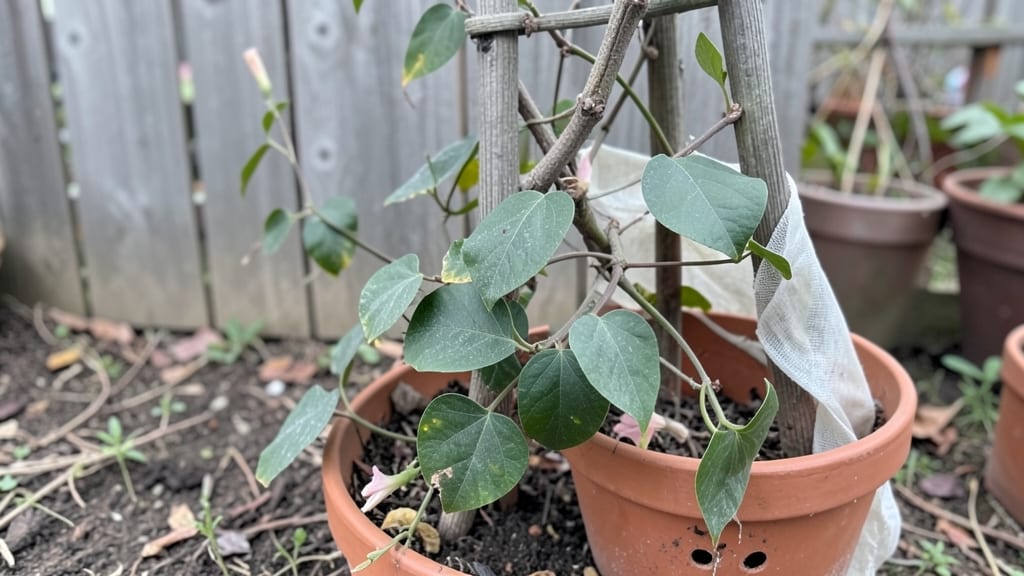
Wintering mandevilla plants isn’t as scary as it seems—my tropical vines have survived three winters with just a few smart tricks. The key is treating them like the semi-hardy survivors they are, not delicate houseplants.
I learned after my first freeze when the leaves blackened overnight, but now I know exactly how to protect them through the coldest months.
You’ll need a sunny indoor spot, sharp pruners, and a little patience. Cut back the vines by about one-third before bringing them inside, then repot into fresh, well-draining soil. The goal is to mimic their natural dormancy period—cooler temps and reduced watering keep them alive without encouraging rot.
Most people overwater in winter, which is the fastest way to kill them.
By spring, you’ll see fresh green growth within 2-3 weeks of moving them back outdoors. The plants bounce back surprisingly well if you catch early signs of stress—yellow leaves mean too much water, while crispy edges signal dry air.
With the right care, your mandevillas will reward you with vibrant blooms again by summer.
Works for both mild winters (like in Zone 9) and colder climates (with extra protection). The secret is consistency—don’t rush the process, and you’ll have thriving vines year after year. Let’s get them through winter the right way.
📚 In This Guide
- What you need
- Instructions
- Tips and common mistakes
- Wrapping up and next steps
What you need
- ● Mandevilla plant(s): Healthy, potted specimens (1–3 per container, depending on size)
- ● Containers: Pots with drainage holes (12–18 inches in diameter for mature plants; 6–10 inches for young ones)
- ● Potting mix: Well-draining blend (e.g., 60% cactus/succulent mix + 40% perlite or orchid bark)
- ● Slow-release fertilizer: Balanced (10-10-10 or 20-20-20, ½ tsp per plant)
- ● Mulch: Organic (e.g., straw or shredded leaves, 2–3 inches thick)
- ● Watering can: With a fine rose nozzle (for gentle hydration)
- ● Pruning shears: Sharp, sterilized (for trimming dead growth)
- ● Plastic wrap or frost cloth: (For light frost protection, 1–2 sheets per plant)
- ● Thermometer: Soil or air (to monitor temps below 50°F/10°C)
- ● Grow lights: LED or fluorescent (12–14 hours/day if indoors)
- ● Humidifier: Small unit or pebble tray (to combat dry indoor air)
- ● Antifungal spray: (e.g., neem oil, for fungal prevention)
- ● Label tags: For tracking plant care notes
- ● Gloves: Gardening gloves (to protect hands during pruning)
Step-by-Step instructions for wintering Mandevilla plants
Here’s how I keep my Mandevillas thriving through winter with minimal fuss.
Prune Back the Foliage
Start by cutting back the stems to about 6 inches above the base. This reduces the plant’s size so it’s easier to manage indoors or in a protected space. Use clean, sharp pruners to make clean cuts just above a leaf node—this encourages new growth in spring. Remove any dead, yellowed, or diseased leaves while you’re at it. I like to do this in early fall, just as the plant begins to show signs of dormancy.
Don’t worry if the plant looks bare—Mandevillas are tough and will bounce back. The goal is to simplify the plant’s energy demands, making it easier to care for during the colder months. If you’re pruning later in the season, wait until temperatures drop below 50°F to avoid stressing the plant.
Dig Up and Inspect the Roots
Carefully dig up the Mandevilla, shaking off excess soil to check for root rot or damage. Healthy roots should be firm and white or light tan. If you see any mushy, dark, or foul-smelling roots, trim them away with sterilized pruners. This is your chance to refresh the plant before winter storage. I like to do this on a dry, mild day to minimize stress on the roots.
Once you’ve inspected and trimmed the roots, give the plant a light watering to settle the soil around the roots. This helps reduce transplant shock if you’re planning to move it to a container for indoor care. If the plant is staying in the ground in a frost-free zone, mulch heavily with 3-4 inches of organic mulch to insulate the roots.
Choose the Right Winter Care Method
For indoor wintering, pot the Mandevilla in a 6-8 inch container with well-draining potting mix. Place it near a south-facing window where it can get bright, indirect light for 6-8 hours a day. If natural light is limited, supplement with a grow light to prevent leggy growth. Keep the soil lightly moist—never soggy—by watering only when the top 1 inch of soil feels dry.
If you’re overwintering outdoors in a frost-free zone, move the plant to a sheltered spot like a garage or under a protective cover. Wrap the pot in bubble wrap or insulating foam to shield it from cold winds. In areas with hard freezes, dig up the plant and store it in a cool, dark basement (around 50-60°F) until spring. Avoid refrigerators or unheated garages, as temperature fluctuations can stress the plant.
Monitor and Adjust Care
Throughout winter, keep an eye on your Mandevilla for signs of stress. If leaves yellow or drop, it’s often a sign of overwatering or low humidity. Reduce watering slightly and consider placing a tray of water near the plant to increase humidity. If the plant looks leggy or stretched, it needs more light—move it closer to the window or adjust your grow light setup.
In late winter (around February), you can start gradually increasing water and fertilizing lightly with a balanced, water-soluble fertilizer diluted to half strength. This jumpstarts growth before you move the plant back outdoors in spring. I like to fertilize every 2-3 weeks once new growth appears, but hold off until you see fresh leaves emerging.
Prepare for Spring Transition
About 4-6 weeks before your last frost date, begin acclimating your Mandevilla to outdoor conditions. If it’s been indoors, move it outside for 1-2 hours a day, gradually increasing exposure over 10-14 days. This process, called hardening off, helps the plant adjust to sunlight and temperature changes without shock. Watch for wilting or leaf drop—if it happens, slow down the transition.
Once temperatures stay consistently above 50°F, you can plant the Mandevilla back in the ground or return it to its outdoor pot. Prune lightly to encourage bushier growth, and resume regular watering and fertilizing. With proper winter care, your Mandevilla will reward you with vibrant blooms come spring!
Tips & tricks for perfectly wintering Mandevilla plants
Wintering your Mandevilla doesn’t have to be stressful—these tips will help you avoid common mistakes and keep your plant thriving until spring.
Timing is Everything: When pruning in Step 1, aim for early fall when your Mandevilla starts showing signs of dormancy, like slower growth or yellowing leaves. Waiting until temperatures drop below 50°F helps prevent shock, but don’t delay too long—pruning later in the season can stress the plant. If you’re unsure, check your local frost dates and plan accordingly.
Root Care Matters: During Step 2, take extra care when inspecting roots. Healthy roots should be firm and light-colored, but any sign of rot or damage means immediate trimming with sterilized tools. After repotting or mulching, give the roots a light watering to help them settle—this reduces transplant shock and prepares the plant for winter storage. In frost-free zones, that 3-4 inch mulch layer is critical for insulation.
Light and Temperature Balance: For indoor wintering in Step 3, that 6-8 hour daily light requirement is non-negotiable. If your south-facing window doesn’t provide enough light, supplement with a grow light for 4-6 hours daily to prevent leggy growth. And remember, the 50-60°F range for basement storage is ideal—fluctuations can stress the plant, so avoid refrigerators or unheated garages where temperatures might drop too low.
Spring Transition Strategy: When hardening off in Step 5, start with just 1-2 hours of outdoor exposure and gradually increase over 10-14 days. Watch for wilting or leaf drop—these are clear signs to slow down the process. Once temperatures stay consistently above 50°F, your Mandevilla is ready for full-time outdoor living again.
Pro Tips for Wintering Mandevilla Plants
- Wintering your Mandevilla doesn’t have to be stressful—these tips will help you avoid common mistakes and keep your plant thriving until spring.
- Timing is Everything: When pruning in Step 1, aim for early fall when your Mandevilla starts showing signs of dormancy, like slower growth or yellowing leaves.
- Root Care Matters: During Step 2, take extra care when inspecting roots.
Frequently asked questions
Got questions about keeping your Mandevilla thriving through winter? You’re not alone! Here are some of the most common concerns—and expert answers—to help you winterize with confidence.
Can Mandevilla survive winter outdoors in cold climates?
Most Mandevilla varieties are tropical and cannot survive freezing temps (below 30°F/-1°C). However, in USDA Zones 9-11, you can protect them with mulch, frost cloth, or containers for milder winters. In colder zones, digging and overwintering indoors is the safest bet!
When is the best time to bring Mandevilla indoors for winter?
Start moving potted Mandevilla indoors before the first frost (usually late fall, when temps drop below 50°F/10°C). For in-ground plants, lift them 2-3 weeks before frost to avoid root shock. Prune lightly before bringing them inside to reduce stress.
What’s the ideal indoor winter care routine for Mandevilla?
Place your Mandevilla near a south-facing window or under grow lights (12+ hours/day). Keep soil slightly moist but well-draining and reduce watering if humidity drops. No fertilizer is needed in winter—wait until spring to resume feeding!
Can I overwinter Mandevilla in a garage or basement?
While possible, garages or basements are risky due to temperature swings and low humidity. If you must, choose a cool (50-60°F/10-15°C), bright spot and monitor for pests. A sunroom or heated greenhouse is a much safer bet for long-term survival.
My Mandevilla leaves are dropping—what’s wrong?
Leaf drop is often caused by shock from sudden temp changes or overwatering. Ensure your plant is in a stable, warm environment (60-70°F/15-21°C) and adjust watering to every 1-2 weeks (let soil dry slightly between waterings). Yellow leaves may signal root rot—check drainage!
Wrapping up and next steps
Wintering your Mandevilla plants doesn’t have to be a challenge—with the right care, you can keep them thriving year-round! 🌱 Whether you’re bringing them indoors, mulching heavily, or choosing cold-hardy varieties, these strategies ensure your vines bounce back stronger in spring. Your effort now will reward you with lush, vibrant blooms come warmer weather.
Ready to give it a try? Start by assessing your Mandevilla’s current health and pick the method that fits your climate and setup. Grab your gloves, and let’s make next season even brighter! 🌸