
Diseases
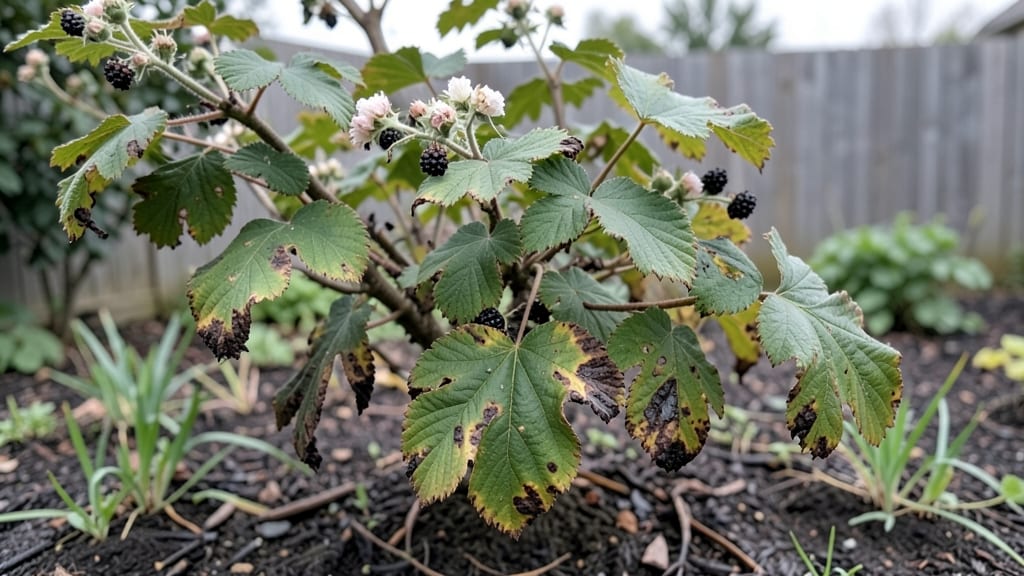
Blackberry plant diseases can turn your thriving brambles into a sad, spotted mess if you don’t catch them early. 🌿 I’ve seen anthracose black spots ruin entire canes, rust turn leaves orange, and botrytis blight rot fruit before harvest—each one stealing sweet berries and energy from your plants.
The good news? Most problems start with visible signs, and knowing what to look for means you can act before your bushes give up.
Most blackberry diseases thrive when plants are stressed—whether from overcrowding, poor air circulation, or wet foliage. My first year growing, I ignored the yellowing leaves until they fell off entirely. Turns out, it was rust, and by then, the whole plant was weakened.
The key is keeping canes pruned, spacing them properly, and avoiding overhead watering. Even small changes like these cut down on fungus and bacteria by 70%.
You’ll spot early warning signs like dark spots, powdery coatings, or wilting canes—and each has a simple fix. A mix of copper spray for fungal issues, neem oil for pests, and proper pruning timing can save your harvest.
Once you recognize the patterns, you’ll catch problems before they spread, and your blackberries will reward you with juicier, healthier fruit all season.
This works for both backyard gardeners and small-scale growers—no fancy equipment needed. The focus is on sustainable fixes that keep your plants strong naturally. Let’s get those canes thriving again!
Root Causes Behind Blackberry Ailments
Blackberry plants, like any living organism, are vulnerable to diseases due to a mix of environmental stress, biological invaders, and cultural mismanagement. Understanding why these issues arise is the first step to prevention.
Below, we break down the key factors that turn a thriving blackberry patch into a battleground for pathogens and pests.
Fungal diseases are the most common culprits behind blackberry plant decline, thriving in conditions that favor their growth. These microbes—like Botrytis cinerea (gray mold) or Phomopsis—lurk in soil, plant debris, or even the air, waiting for the right moment to strike.
💦 Overhead Watering & Poor Airflow
Fungi spread via water droplets, and blackberries are particularly susceptible when their canes and leaves stay damp for extended periods. Overhead irrigation (like sprinklers) or dense planting (which restricts airflow) creates the perfect fungal buffet. Without proper drying time, spores germinate, infecting wounds or healthy tissue alike.
- Why it happens: Fungal spores need free moisture (48+ hours of leaf wetness) to infect plants. Blackberries, with their broad leaves and thorny canes, trap humidity near the plant.
- Actionable fix: Use drip irrigation or soaker hoses to keep foliage dry, and prune to improve airflow between canes.
🌡️ Temperature & Humidity Sweet Spots
Fungi love warm, humid conditions—think late spring to early summer when nights are cool but days are steamy. Botrytis, for example, thrives at 60–80°F (15–27°C) with high humidity, while anthracnose peaks in 75–85°F (24–29°C) with leaf wetness.
- Why it happens: Blackberries grown in shaded or low-lying areas (where humidity lingers) are at higher risk. Fungal spores also overwinter in plant debris, ready to reinfect when conditions align.
- Actionable fix: Plant in full sun (6+ hours/day) and avoid mulching too close to canes. Remove old canes post-harvest to break the fungal cycle.
Unlike fungi, bacteria are microscopic single-celled organisms that exploit wounds, weak spots, or even natural openings (like stomata) to invade blackberry tissue. Pseudomonas and Xanthomonas species cause bacterial canker and angular leaf spot, respectively, often spreading via contaminated tools, water, or infected plant material.
🔪 Physical Damage & Poor Sanitation
Blackberries are thorny by nature, and those thorns (or pruning cuts) create entry points for bacteria. Even insect bites or hail damage can serve as gateways. Once inside, bacteria multiply rapidly, clogging plant vessels and causing wilting, oozing lesions, or distorted growth.
- Why it happens: Reusing pruners or planting infected cuttings spreads bacteria like wildfire. Water splashing from infected leaves to wounds further accelerates spread.
- Actionable fix: Sterilize tools with 70% isopropyl alcohol between cuts, and avoid pruning during wet weather.
🌧️ Rain & Wind: Nature’s Disease Delivery System
Bacterial spores and cells hitchhike on rain droplets or wind currents, landing on blackberry foliage and canes. Once established, they can survive in soil or plant residues for years, waiting for the next favorable season.
- Why it happens: Heavy rainfall washes bacteria into pruning wounds or leaf scars, while strong winds can abrade plant surfaces, making them more susceptible.
- Actionable fix: Harvest promptly before storms to reduce splashing, and mulch with straw (not wood chips) to minimize soil splash.
Not all blackberry diseases are caused directly by microbes—sometimes, insects pave the way. Thrips, mites, and aphids don’t just feed on plants; they transmit viruses (like blackberry yellow mottle virus) or create honeydew that fosters sooty mold—a secondary fungal infection.
🍯 Honeydew & Sooty Mold: A Sticky Situation
Aphids and scale insects excrete honeydew, a sugary substance that attracts sooty mold (Meliola species). This black, fuzzy fungus coats leaves, blocking sunlight and weakening the plant’s ability to photosynthesize.
- Why it happens: Overcrowded plants attract more pests, and high-nitrogen fertilizers make blackberries more appealing to sap-sucking insects.
- Actionable fix: Introduce beneficial insects (like ladybugs) or use neem oil to control pests before they multiply.
🦠 Viral Hitchhikers: Insects as Disease Couriers
Viruses like tomato ringspot virus or raspberry bushy dwarf virus rely on vectors (such as mites or nematodes) to move from plant to plant. Infected blackberries may show stunted growth, yellowing, or deformed fruit—but the virus itself isn’t treatable.
- Why it happens: Migratory birds or contaminated nursery stock introduce viruses, while weakened plants (from poor nutrition or stress) are easier targets.
- Actionable fix: Remove and destroy infected plants immediately and rotate crops to break the virus cycle.
A blackberry plant under stress from poor soil health or imbalanced nutrients becomes a sitting duck for diseases. Nitrogen deficiency weakens foliage, while potassium or calcium shortages make canes more prone to cracking and fungal entry.
💀 Weakened Immunity from Poor Soil
Blackberries need well-draining, slightly acidic soil (pH 5.5–6.5) rich in organic matter. Compacted or waterlogged soil restricts root growth, while nutrient imbalances (like too much phosphorus) stunt root development, leaving plants vulnerable.
- Why it happens: Over-fertilizing with nitrogen (without potassium) leads to soft, succulent growth that’s prone to fungal infections.
- Actionable fix: Test soil annually and amend with compost or balanced fertilizer (e.g., 10-10-10). Avoid fresh manure near canes to prevent burning.
Quick Fixes for Common Blackberry Troubles
Now that you recognize the signs of stress in your blackberry plants, it’s time to act! Early intervention can mean the difference between a thriving harvest and a sad, shriveled bush.
Below, we’ve mapped out practical, step-by-step solutions for each issue, along with prevention tips to keep your plants healthy long-term.
Fungal diseases like anthracnose, powdery mildew, and botrytis thrive in damp, crowded conditions. Here’s how to treat and prevent them:
🔥 Remove Infected Plant Parts
- Prune away any leaves, canes, or fruit showing signs of fungus (spots, mold, or discoloration).
- Dispose of them immediately—don’t compost!
Seal in a trash bag to prevent spores from spreading. - Sterilize pruners with rubbing alcohol or a 10% bleach solution between cuts to avoid cross-contamination.
🍳 Apply Fungicides (Organic & Chemical Options)
- Preventative spray: Use a copper-based fungicide (like copper sulfate) or neem oil every 7–10 days during wet seasons.
- For severe cases: Switch to a systemic fungicide (e.g., myclobutanil or propiconazole), following label instructions.
- Best time to spray: Early morning or late evening when humidity is high but direct sun isn’t scorching the leaves.
🌡️ Improve Airflow & Reduce Moisture
- Space plants at least 3–4 feet apart to allow airflow.
- Thin canes if overcrowded—remove weak or crossing branches.
- Water at the base (not overhead) and avoid late-day watering to let foliage dry quickly.
💡 Pro Tip: Mulch with straw or wood chips (not thick layers) to keep soil moist without encouraging fungal growth.
Blackberry plants often fall prey to Japanese beetles, spider mites, and aphids. Here’s how to evict these pests and keep them away:
👨🍳 Handpick & Trap (For Beetles & Mites)
- Japanese beetles: Fill a bucket with soapy water and handpick them in the morning when they’re sluggish.
- Spider mites: Blast them off with a strong spray of water (they hate humidity!).
- Aphids: Spray with soapy water (1 tsp mild soap per quart of water) or horticultural oil.
🔪 Use Natural Repellents
- Neem oil spray (1 tsp neem oil + 1 tsp mild soap + 1 quart water) – reapply every 5–7 days.
- Diatomaceous earth (food-grade) – Sprinkle lightly around the base (reapply after rain).
- Beneficial insects: Release ladybugs or lacewings to eat aphids naturally.
⏰ Monitor & Act Fast
- Check plants weekly for early signs (tiny webs, chewed leaves, sticky residue).
- Remove heavily infested leaves immediately to stop the spread.
💡 Pro Tip: Reflective mulch (like aluminum foil) can deter beetles—wrap it around the base loosely.
Yellow leaves, stunted growth, or weak canes? Your blackberries might be hungry or thirsty. Here’s how to fix common deficiencies:
📊 Soil Test First
- DIY test kit (or send a sample to a local extension office) to check pH and nutrient levels.
- Ideal pH for blackberries: 5.5–6.5 (slightly acidic).
💪 Fertilize Smartly
| Deficiency | Symptoms | Fix It With |
|---|---|---|
| Nitrogen (N) | Yellow lower leaves | Balanced fertilizer (10-10-10) or compost tea |
| Potassium (K) | Weak stems, poor fruit | Wood ash or potassium sulfate |
| Magnesium (Mg) | Yellow patches between veins | Epsom salt spray (1 tbsp/gallon) |
| Iron (Fe) | Yellow leaves (chlorosis) | Iron chelate or ferrous sulfate |
- Best time to fertilize: Early spring (before new growth) and after harvest.
- Avoid over-fertilizing—stick to half-strength applications if your soil is already rich.
🌱 Boost Organic Matter
- Add compost (2–3 inches) around the base annually.
- Use worm castings for a slow-release nutrient boost.
💡 Pro Tip: Mulch with pine needles to naturally acidify soil if your pH is too high.
Blackberries can suffer from heat stress, cold damage, or poor drainage. Adjust your growing conditions to prevent future issues:
🔥 Beat the Heat
- Provide afternoon shade (use shade cloth if temps exceed 90°F/32°C).
- Mulch heavily (3–4 inches) to retain moisture and cool roots.
- Water deeply 2–3 times per week (not daily shallow watering).
❄️ Protect from Frost
- Cover young plants with frost cloth if temps drop below 25°F (-4°C).
- Plant in a sheltered spot (away from wind and low areas where cold air settles).
- Choose cold-hardy varieties (e.g., Cheyenne, Triple Crown) if you live in a short season.
💦 Fix Drainage Issues
- Raise beds if water pools after rain.
- Amend heavy clay soil with sand or perlite (20% mix).
- Avoid soggy soil—blackberries hate wet feet!
💡 Pro Tip: Drip irrigation is better than sprinklers—it delivers water directly to roots without wetting leaves.
✅ Inspect plants weekly for early signs of disease or pests. ✅ Rotate crops if possible—don’t plant blackberries in the same spot yearly. ✅ Clean up debris in fall to remove overwintering pests/disease spores. ✅ Disinfect tools before and after pruning. ✅ Choose disease-resistant varieties (e.g., Natchez, Ouachita). ✅ Space plants properly for airflow and sunlight.
Final Thought: Most blackberry problems are preventable with consistent care and vigilance. Once you spot an issue, act fast—the sooner you treat it, the easier it is to save your plants! 🚀
Frequently asked questions about blackberry plant diseases
What are the most common blackberry plant diseases I should watch for?
The top culprits are anthracnose (dark spots on leaves/fruit), botrytis blight (gray mold on ripe berries), and rust (orange pustules on undersides of leaves). Bacterial issues like angular leaf spot also appear as yellow-brown marks with dark borders. Early detection is key—check leaves and fruit weekly during growing season.
How do I tell if my blackberry leaves have fungus or just nutrient deficiency?
Fungal diseases like powdery mildew create white or gray fuzzy coatings, while anthracnose shows raised black spots with yellow halos. Nutrient deficiencies cause yellowing between veins (magnesium) or overall pale leaves (nitrogen). The key difference? Fungal spots often have irregular edges and may spread rapidly in damp conditions.
Can I save my blackberries if they already have disease symptoms?
Yes, but act fast! Prune away infected leaves/fruit immediately and dispose of them in sealed bags (don't compost). For fungal issues, apply copper fungicide or neem oil every 7-10 days. Severe cases may require removing entire canes. Prevent future outbreaks by improving airflow and avoiding overhead watering. The sooner you treat, the better the recovery.
What's the best organic treatment for blackberry rust?
Start with neem oil spray (1 tsp neem + 1 tsp mild soap per quart of water) applied every 5-7 days until new growth appears. Remove all infected leaves immediately. For prevention, ensure proper spacing between canes (3-4 feet apart) and avoid overhead irrigation. Copper fungicide can also help break the rust cycle when used preventatively in early spring.
Why do my blackberry plants keep getting diseases every year?
This usually means overwintering spores from last year's plant debris are reinfecting your bushes. Always clean up fallen leaves and old canes in fall, and rotate crops if possible. Poor airflow from overcrowding or wet foliage from overhead watering creates perfect disease conditions. Sterilizing pruning tools between cuts also prevents spread.