
Companion Plants
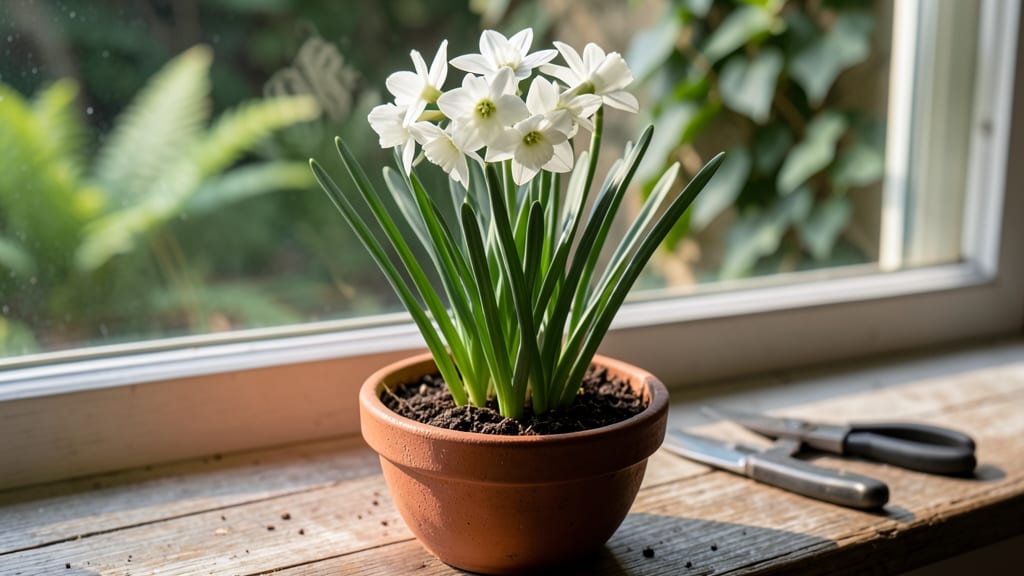
These blind daffodil plants—like Narcissus tazetta—thrive in full sun and multiply like crazy, turning your garden into a fragrant, sun-drenched carpet that spreads effortlessly each year. 🌱 The secret lies in their love of well-draining soil and a little patience while they establish.
Plant them in fall, 4-6 inches deep and 4-6 inches apart, in spots where they’ll get at least 6 hours of sunlight daily. Blind daffodils hate soggy roots, so amend heavy soil with compost or sand.
Once established, they’re nearly maintenance-free—just deadhead spent blooms and let the foliage yellow naturally before cutting it back.
By spring, you’ll wake up to clusters of tiny, fragrant flowers that hummingbirds adore. These plants naturalize so aggressively they’ll outcompete weeds, and their honey-scented blooms perfume the air for weeks. Pair them with lavender or Russian sage for a low-maintenance, sun-loving combo that keeps coming back.
Perfect for borders, slopes, or under trees where other plants struggle. The key is planting them right the first time—after that, they’ll handle the rest. Let’s get those bulbs in the ground before winter arrives!
When Flowers Stay Hidden
If your Narcissus pseudonarcissus (the classic "blind" daffodil) is refusing to bloom despite its lush foliage, don’t panic—there’s always a reason behind it. These hardy perennials are notorious for their delayed or absent flowering, but understanding the science behind it helps you take action.
Below, we break down the most common culprits and why they rob your daffodils of their showstopping blooms.
Daffodils are slow starters. Blindness in young plants (under 2–3 years old) is normal—they prioritize building a robust root system and foliage before diverting energy to flowers. This survival strategy ensures they’ll thrive for decades, but it can be frustrating if you’re eager for color.
Why it happens:
- Energy allocation: Photosynthesis feeds the leaves first. The plant stores nutrients in its corms (bulb-like structures) to fuel future growth, delaying blooming until it’s "strong enough."
- Dormancy phase: Some daffodils need 2–3 years to mature, especially if planted from small bulbs. Even if they push up green shoots, they may skip flowering entirely in their first season.
- Genetic quirks: Certain cultivars (like ‘Geranium’ or ‘Tête-à-Tête’) are slower to bloom than others. Check your variety’s expected timeline!
Actionable fix: 💡 Patience is key. Let the plant establish itself fully. If it’s 3+ years old and still blind, move to the next cause.
Daffodils are clump-formers, and when their roots get too cramped, they’ll focus on survival over reproduction. Over time, this leads to blindness as the plant redirects energy to spread rather than bloom.
Why it happens:
- Competition for nutrients: A mature daffodil colony can produce dozens of bulbs in a small area. When roots tangle, they compete for water and minerals, stunting flower production.
- Lack of dormancy cues: If the soil stays too moist or warm in late summer/fall, the plant may not trigger the hormonal signals needed to form flower buds for the next season.
- Poor soil aeration: Compacted or clay-heavy soil restricts root growth, forcing the plant into a "starvation mode" where flowering takes a backseat.
Actionable fix: 🔥 Dig up and divide every 3–5 years to reset growth. Here’s how:
- 👨🍳 Dig carefully in early summer (after foliage yellows) to avoid damaging corms.
- 🔪 Separate bulbs with a knife, discarding small or soft ones. Replant the healthiest clusters 6 inches deep in loose, well-draining soil.
- ⏰ Water lightly for 2 weeks post-planting to encourage root establishment.
Daffodils are sun-worshippers, but too little—or even too much—of the right kind of light can trigger blindness. Unlike shade-loving perennials, they demand full sun (6+ hours/day) to set flower buds.
Why it happens:
- Insufficient sunlight: Less than 6 hours of direct sun weakens photosynthesis, leaving the plant energy-starved. It may produce leaves but skip flowering entirely.
- Late-season shade: If nearby trees or structures block fall sunlight, the plant may not receive the short-day photoperiod needed to trigger flower bud formation.
- Reflective heat stress: Intense afternoon sun (e.g., in desert climates) can overheat the corms, causing them to divert energy to cooling mechanisms instead of blooming.
Actionable fix: 🌡️ Optimize sunlight exposure:
- Move plants to a south-facing bed (Northern Hemisphere) or north-facing in the Southern Hemisphere.
- Use light-colored mulch (like straw) to reflect heat in hot climates.
- If shade is unavoidable, choose taller daffodil varieties (like ‘Ice Follies’) that can reach sunlight above other plants.
Daffodils are drought-tolerant but hate soggy feet or nutrient deficiencies. Both extremes can lead to blindness by disrupting the plant’s hormonal balance.
Why it happens:
Issue
Why It Causes Blindness
Overwatering
Excess moisture drowns roots and triggers fungal diseases (like Botrytis), forcing the plant to divert energy to defense instead of flowering. It also delays dormancy, preventing the hormonal shift needed for buds.
Underwatering
Drought stress stops photosynthesis, leaving the plant too weak to produce flowers. In extreme cases, it may abort flower buds entirely.
Nitrogen overload
Too much nitrogen fertilizer (especially in spring) promotes leafy growth at the expense of blooms. Daffodils need a balanced NPK ratio (e.g., 5-10-10) to encourage flowering.
Phosphorus deficiency
Phosphorus is critical for flower development. If soil tests show low P (<15 ppm), the plant may produce leaves but no buds.
Actionable fix: ✨ Get the balance right:
- 💧 Water deeply but infrequently: Aim for 1 inch per week (more in extreme heat). Let soil dry slightly between waterings.
- 📊 Test soil pH: Daffodils thrive in pH 6.0–7.0. Adjust with lime (to raise pH) or sulfur (to lower it).
- 🍎 Fertilize wisely: Apply a low-nitrogen, high-phosphorus fertilizer (like 5-10-10) in early fall to encourage next year’s buds.
Pro tip: If your daffodils are 3+ years old and still blind, rule out pests or diseases (like Narcissus fly larvae) by inspecting corms for holes
Fixing common daffodil struggles
Reviving and maintaining healthy blind daffodil plants (or any daffodils that refuse to bloom) starts with diagnosing the root cause—and then taking action. Below, we’ve mapped out practical solutions for the most common issues, paired with prevention tips to keep your garden thriving year after year.
Cause: Too many bulbs competing for nutrients and space. Fix:
- 🔥 Divide and Conquer – Dig up clumps every 3–5 years in early summer (after foliage yellows). Separate bulbs with at least 6 inches of space between them.
- 👨🍳 Replant Strategically – Choose a sunny spot with well-draining soil. Mix in compost to enrich the soil before replanting.
- 🌡️ Prevent Future Crowding – Plant new bulbs in odd-numbered groups (3, 5, or 7) to encourage blooming and reduce competition.
Pro Tip: 💡 If dividing feels overwhelming, try lifting only the outer bulbs and leaving the center intact—this keeps some blooms while thinning others.
Cause: Daffodils need full sun (6+ hours/day) but can suffer from heat stress or weak growth in shade. Fix:
- 🌞 Adjust Planting Location – Move clumps to a south- or west-facing spot for optimal sunlight. If shade is unavoidable, choose partial shade (3–6 hours of sun).
- ✨ Provide Afternoon Shade – In hot climates, use lightweight shade cloth (30–50%) during peak afternoon heat to prevent bulb burn.
- 🌡️ Mulch for Temperature Control – Apply 2–3 inches of mulch (straw or shredded bark) to regulate soil temperature and retain moisture.
Pro Tip: 🌡️ If your daffodils are in full shade, consider replacing them with shade-tolerant alternatives like snowdrops or hellebores—they’ll thrive where daffodils won’t.
Cause: Overwatering or underwatering stresses bulbs, leading to poor blooms or rot. Fix:
- 👨🍳 Water Deeply but Infrequently – Water once a week (or when the top 2 inches of soil are dry) during growing season. Stop watering entirely once foliage yellows in late spring.
- 🌧️ Improve Drainage – If your soil stays soggy, amend it with sand or perlite to prevent bulb rot. Plant on a slight mound to encourage runoff.
- 🔥 Drought Recovery – If bulbs look wilted, soak the soil deeply for 10–15 minutes, then let it dry out. Avoid letting them sit in standing water.
Pro Tip: 💡 Never water daffodil leaves—this promotes fungal diseases. Aim for soil-level watering only.
Cause: Excess moisture, poor airflow, or infected soil. Fix:
- 🔪 Remove Infected Foliage – Snip off yellow or spotted leaves with clean pruners and dispose of them in the trash (not compost).
- 🌡️ Apply Fungicide – Spray bulbs with neem oil or copper fungicide in early spring to prevent basal rot and leaf spot.
- 🌱 Improve Air Circulation – Space plants 8–12 inches apart and avoid mulching too heavily (keep mulch 2–3 inches away from bulb bases).
Pro Tip: ✨ Prevent future infections by rotating crops—don’t plant daffodils in the same spot year after year.
Cause: Wildlife digs up bulbs, or slugs/snails munch on leaves. Fix: - 🦔 Deter Squirrels & Raccoons – Plant bulbs 12+ inches deep or use chicken wire cages around clumps.
Sprinkle hot pepper flakes near the soil line as a natural repellent. - 🐌 Stop Slug & Snail Damage – Set up beer traps (bury a cup filled with beer) or use iron phosphate bait (pet-safe). - 🌱 Handpick Chewed Leaves – If pests are minimal, simply remove damaged foliage and monitor.
Pro Tip: 🎯 Plant daffodils near tulips—their toxicity deters many pests naturally!
Cause: Poor soil leads to weak growth and no blooms. Fix: - 📊 Test Your Soil – Use a DIY soil test kit to check pH (ideal: 6.0–7.0).
Amend with lime (to raise pH) or sulfur (to lower pH) if needed. - 💪 Feed in Early Spring – Apply a balanced fertilizer (10-10-10) when shoots emerge. Avoid high-nitrogen fertilizers—they promote leaves over blooms. - 🍎 Boost with Organic Matter – Mix in well-rotted manure or bone meal (high in phosphorus) to encourage flowering.
Pro Tip: 🌱 Compost tea is a gentle, natural way to feed bulbs without overloading them.
Cause: Bulbs planted at the wrong time or disturbed during critical growth phases. Fix: - 🔥 Plant in Fall (6–8 Weeks Before Frost) – For most climates, October–November is ideal.
If you miss the window, wait until next fall. - 🌱 Let Foliage Die Back Naturally – Never cut leaves until they yellow and wither (6–8 weeks after blooming)—this feeds the bulb for next year! - 🌡️ Adjust for Late Bloomers – If your daffodils bloom too late, they may need more sunlight or cooler soil.
Try moving them to a north-facing bed in hot climates.
Pro Tip: ⏰ Mark your calendar—daffodils need consistent care timing to perform well!
To keep your blind daffodils blooming beautifully: ✅ Divide every 3–5 years ✅ Plant in full sun (6+ hours/day) ✅ Water deeply but infrequently ✅ Test and amend soil annually ✅ Monitor for pests/diseases early ✅ Never cut foliage until fully yellow
With these fixes, your daffodils will naturalize, multiply, and bloom like clockwork—year after year! 🌼💛
Frequently asked questions about blind daffodil plants
What makes blind daffodils different from other daffodil varieties?
These sun-loving perennials produce smaller, tightly clustered flowers that often lack petals (hence "blind"), but they make up for it with intense fragrance and aggressive naturalizing habits. Varieties like Narcissus tazetta thrive in full sun and spread rapidly, creating dense ground covers that return year after year with minimal effort.
When is the best time to plant blind daffodil bulbs?
Plant them in fall (6-8 weeks before your first frost), typically between October and November in most climates. This gives roots time to establish before winter dormancy. For spring planting, use pre-chilled bulbs or wait until next fall—they won’t bloom the first year but will establish for future seasons.
Why aren’t my blind daffodils blooming after 2-3 years?
Young plants often take 2-3 years to mature and bloom. If they’re older but still "blind," check for overcrowding (divide clumps every 3-5 years), poor sunlight (they need 6+ hours of sun daily), or excess nitrogen (use a balanced 5-10-10 fertilizer instead).
How do I prevent pests from digging up my blind daffodil bulbs?
Use chicken wire cages or plant bulbs 12+ inches deep to deter squirrels and raccoons. For slugs and snails, set up beer traps or apply iron phosphate bait. Their toxic sap also naturally repels many pests—plant them near tulips for extra protection!
Can blind daffodils grow in containers or small gardens?
Yes! They thrive in containers with well-draining soil, especially varieties like ‘Geranium’ or ‘Tête-à-Tête’. Use pots at least 6 inches deep and plant 3-5 bulbs per container. Place them in full sun and water moderately—avoid soggy soil to prevent rot.