
Diseases
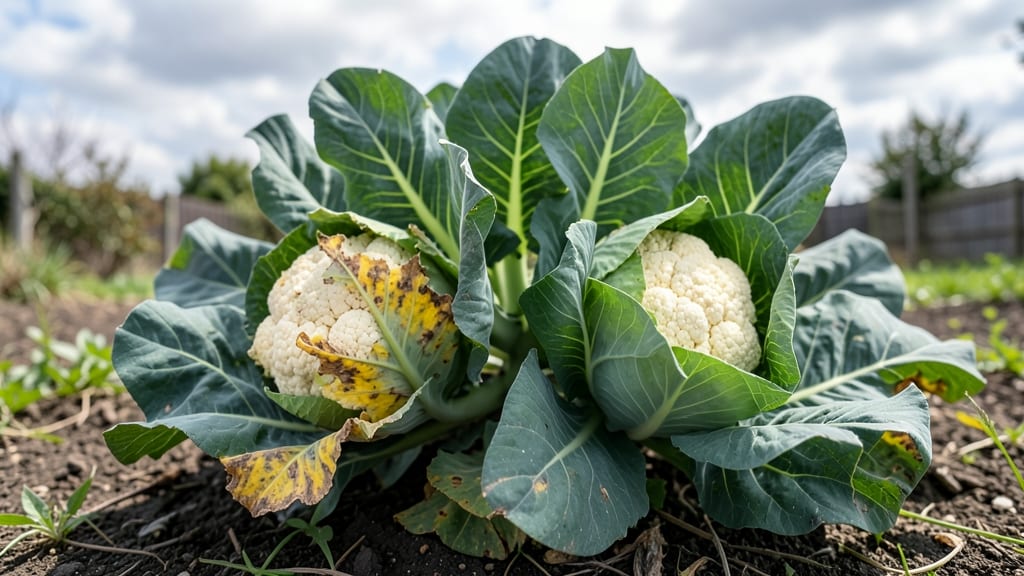
The plant diseases that plague cauliflower can turn your harvest from head-turning to heartbreaking in weeks. I’ve seen clubroot twist roots into gnarled knots and black rot turn heads into mushy messes—both diseases spread faster than you’d think if you wait too long.
The key to saving your plants isn’t just spotting the problem early; it’s knowing exactly what to do once you see those first yellow patches or stunted growth.
Most cauliflower diseases love two things: soggy soil and crowded plants. Clubroot thrives in acidic, wet conditions, while black rot hitches a ride on infected seeds or tools. Powdery mildew? That’s the opportunist that moves in when humidity hangs around like an unwelcome guest.
The good news? Prevention is simpler than you’d expect—just a few tweaks to your watering routine, spacing, and cleanup habits can slash your risk by 70% or more.
You’ll learn to recognize each disease by its telltale signs—clubroot’s swollen roots, black rot’s V-shaped leaf lesions, or mildew’s white dusting—and how to treat them without resorting to harsh chemicals.
Organic options like copper sprays, neem oil, and proper rotation can work just as well, if not better, than store-bought fungicides. The goal isn’t just to save a plant; it’s to build a system where diseases become rare visitors instead of regular guests.
Whether you’re growing a single head for your dinner table or tending rows for market, these strategies adapt to any scale. Early action isn’t just about saving this season’s crop—it’s about setting up next year’s garden for success. Let’s get those plants fighting back.
Root Causes Behind Plant Troubles
Cauliflower plants, like all crops, are vulnerable to diseases due to a mix of environmental, biological, and cultural factors. Understanding why these issues arise is the first step to prevention and treatment.
Below, we break down the most common culprits behind cauliflower plant diseases—from fungal infections to bacterial attacks—and explain the science behind their spread.
Cauliflower thrives in cool, moist climates, but when conditions stray too far from ideal, diseases take hold. Fungal pathogens like Plasmodiophora brassicae (clubroot) and Erysiphe cruciferarum (powdery mildew) flourish in:
- Excess Moisture: Overhead irrigation or poor drainage create a damp, humid microclimate—perfect for fungal spores to germinate. Botrytis cinerea (gray mold) thrives in wet foliage, while Alternaria brassicae spreads rapidly in stagnant water.
- Extreme Temperatures: While cauliflower prefers 60–70°F (15–21°C), heat stress weakens plants, making them susceptible to Xanthomonas campestris (black rot). Conversely, cold snaps can trigger Fusarium oxysporum infections.
- Low Light: Shady or crowded plants develop weak stems and thick leaves, trapping moisture and inviting fungal growth.
💡 Pro Tip: Space plants 18–24 inches apart for airflow, and water at soil level (not overhead) to reduce humidity around leaves.
Diseases don’t appear out of nowhere—they’re carried by spores, bacteria, or infected plant debris. Here’s how they invade:
- Soil-Borne Pathogens: Fungi like Rhizoctonia solani (damping-off) survive in soil for years, infecting seedlings during germination. Pythium species thrive in waterlogged soil, causing root rot.
- Airborne Spores: Wind or splashing water disperses fungal spores (e.g., Leptosphaeria maculans, which causes blackleg). Bacterial diseases like Pseudomonas syringae (bacterial leaf spot) hitch rides on rain or tools.
- Contaminated Tools/Seeds: Pruners, gloves, or even seed packets can harbor pathogens. Clubroot spores, for example, cling to garden tools and reinfect soil.
✨ Prevention Hack: Sterilize tools with 70% isopropyl alcohol, and rotate crops to starve soil-borne diseases (avoid planting brassicas in the same spot for 3+ years).
Stressed cauliflower plants are easy targets. Common stressors include:
- Nutrient Deficiencies: Low calcium (e.g., from high nitrogen fertilizer) leads to blossom end rot-like symptoms, while zinc or boron deficiencies weaken cell walls, inviting fungal entry.
- Physical Damage: Insects (like flea beetles) create wounds that bacteria exploit. Even hail or rough handling can open doors for Erwinia carotovora (soft rot).
- Improper Transplanting: Shocked seedlings (from temperature swings or rough handling) fail to establish roots, making them prone to Fusarium or Phytophthora infections.
🎯 Action Step: Harden off seedlings gradually (acclimate to outdoor temps over 5–7 days) and use balanced fertilizer (e.g., 10-10-10) to avoid nutrient imbalances.
Water and organic matter can unintentionally introduce pathogens:
- Recycled Water: Irrigation water from ponds or untreated sources may contain Pythium or Phytophthora spores.
- Infected Mulch: Grass clippings or untreated compost can harbor Sclerotinia sclerotiorum (white mold) sclerotia.
- Animal Activity: Wildlife (e.g., deer or rabbits) may spread spores via their droppings or by damaging plants.
🔥 Safety Measure: Use chlorinated or filtered water for irrigation, and opt for disease-free mulch (e.g., straw or heat-treated wood chips).
By addressing these root causes—environment, pathogens, plant health, and contaminants—you can drastically reduce the risk of cauliflower diseases. The key is proactive care: monitor conditions, rotate crops, and act at the first sign of stress or infection.
How to Fix Common Cauliflower Ailments
Cauliflower plants are tough, but when diseases strike, quick action can save your crop. Below are practical, step-by-step solutions for the most common fungal and bacterial threats—plus prevention tips to keep your plants thriving. Let’s turn those yellowing leaves and mushy heads into healthy harvests!
Fix:
- Remove infected plants immediately 🔪 – Dig up and discard (do not compost) to prevent spread.
- Disinfect tools and soil – Use a 10% bleach solution (1 part bleach to 9 parts water) or hydrogen peroxide (3%) to sterilize pruners and containers.
- Adjust soil pH – Club root thrives in acidic soil (pH < 6.5). Test your soil and amend with lime (calcium carbonate) to raise pH to 6.8–7.2. Apply 1–2 lbs of lime per 100 sq ft and re-test in 3–6 months.
- Rotate crops – Avoid planting brassicas (cauliflower, broccoli, cabbage) in the same spot for 3–4 years.
- Use resistant varieties – Try ‘Snowball Y Improved’ or ‘Purple of Sicily’ if club root is recurrent.
Prevention Tips: ✅ Solarize soil in late summer: Cover beds with clear plastic for 4–6 weeks to kill pathogens. ✅ Improve drainage – Raised beds or sandy soil amendments reduce waterlogging, a club root trigger. ✅ Plant in well-aged compost – Fresh manure can worsen the problem.
Fix:
- Prune and destroy infected leaves 🌿 – Cut off yellowed or V-shaped lesions and dispose in the trash (not compost).
- Apply copper fungicide – Spray with copper hydroxide or copper sulfate (follow label rates) every 7–10 days during wet periods.
- Remove plant debris – Clear old crop residues from the garden bed to eliminate bacteria.
- Avoid overhead watering – Use drip irrigation or soaker hoses to keep leaves dry.
Prevention Tips: 💡 Crop rotation is key – Don’t plant brassicas in the same area for 2–3 years. 💡 Use disease-free seeds – Purchase from reputable suppliers to avoid contaminated stock. 💡 Space plants properly – Good airflow reduces humidity, slowing bacterial spread.
Fix:
- Remove infected foliage 🍃 – Clip off yellowed leaves with mildew and dispose of them.
- Spray with neem oil or baking soda mix 🧂 – Combine 1 tbsp baking soda + 1 tsp dish soap + 1 gallon water. Spray every 7–10 days in the morning (avoid direct sunlight).
- Improve airflow – Thin plants if overcrowded and stake tall varieties to prevent leaf dampness.
- Apply fungicidal sprays – Use fixed copper or potassium bicarbonate (e.g., "MilStop") as a preventative.
Prevention Tips: ✨ Water at the base – Never wet leaves, especially in the evening. ✨ Avoid nitrogen overload – Too much fertilizer promotes lush, mildew-prone growth. Use a balanced 10-10-10 or 5-10-10 instead. ✨ Plant resistant varieties – Try ‘Snowball 80’ or ‘Cheddar’ for better mildew resistance.
Fix:
- Pull and compost infected plants 🌱 – If caught early, remove the entire plant and solarize the soil (see club root tips).
- Disinfect hands and tools – Use rubbing alcohol between plants to avoid cross-contamination.
- Reduce soil moisture – Soft rot thrives in soggy conditions. Improve drainage with organic matter (compost, perlite).
- Apply hydrogen peroxide spray (3%) – Drench soil and leaves weekly to inhibit bacterial growth.
Prevention Tips: 🌡️ Monitor soil temperature – Soft rot worsens in warm, wet soil (>70°F). Use mulch to regulate temperature. 🎯 Harvest promptly – Pick cauliflower heads at the right size to avoid overmaturity and rot. 🚫 Avoid injury – Rough handling bruises plants, inviting bacterial entry.
Fix:
- Remove infected plants and debris 🧹 – Dig up matted white growth and discard (do not compost).
- Apply compost tea or mycorrhizal fungi – Boosts plant immunity naturally.
- Use row covers – Protect young plants with floating row covers to prevent spore spread.
- Solarize soil – Bake infected beds with clear plastic for 4–6 weeks in summer.
Prevention Tips: 💡 Improve sanitation – Keep garden beds free of weeds and old plant matter. 💡 Avoid excessive nitrogen – Too much promotes weak stems prone to collapse. 💡 Plant in well-drained soil – White mold loves compacted, waterlogged areas.
- Rotate crops – Never plant brassicas in the same spot two years in a row.
- Test soil annually – Balanced pH (6.5–7.0) and nutrients prevent stress-related diseases.
- Inspect plants weekly – Catch problems early with morning inspections (pests/diseases are most visible then).
- Use organic mulch – Straw or grass clippings suppress soil-borne pathogens and retain moisture.
Final Pro Tip: 🌿 Healthy plants fight disease better! Feed cauliflower with compost tea or fish emulsion every 3–4 weeks for strong, resilient growth. With these fixes, your cauliflower will bounce back—and next season will be even stronger!
Frequently asked questions about cauliflower plant diseases
What are the most common signs of clubroot in my cauliflower plants?
Look for stunted growth, yellowing leaves, and swollen, gnarled roots that resemble tiny cabbages. The soil may also appear to have small, tumor-like growths when you dig around the base. This fungal disease thrives in acidic soil, so test your pH—clubroot rarely appears in soil above 6.8.
Can I still harvest cauliflower if it has black rot?
Only if the disease is caught very early and only the outer leaves are affected. Once you see V-shaped yellow lesions on leaves or the head starts to rot, discard the entire plant immediately. Black rot spreads rapidly through sap, contaminating your entire harvest if left unchecked.
How do I know if my cauliflower has powdery mildew vs. a nutrient deficiency?
Powdery mildew appears as a white, powdery coating on leaves (especially undersides) that worsens in humid conditions. Nutrient deficiencies cause yellowing between leaf veins (nitrogen) or brown spots (magnesium) but won't have that fuzzy texture. Test with a baking soda spray—if it clears up, it's mildew.
Will solarizing my soil really kill cauliflower diseases?
Covering infected beds with clear plastic for 4–6 weeks in summer heats soil to 122–140°F, killing 99% of fungal spores and bacteria. This is especially effective for clubroot, white mold, and damping-off. Just remove all plant debris first and keep the plastic tightly sealed.
Can I use the same fungicide on all cauliflower diseases?
No—copper fungicides work for black rot and powdery mildew, but clubroot requires lime to raise pH and crop rotation. For bacterial diseases like soft rot, hydrogen peroxide (3%) is safer than copper. Always match the treatment to the specific pathogen to avoid resistance and ensure effectiveness.