
Diseases
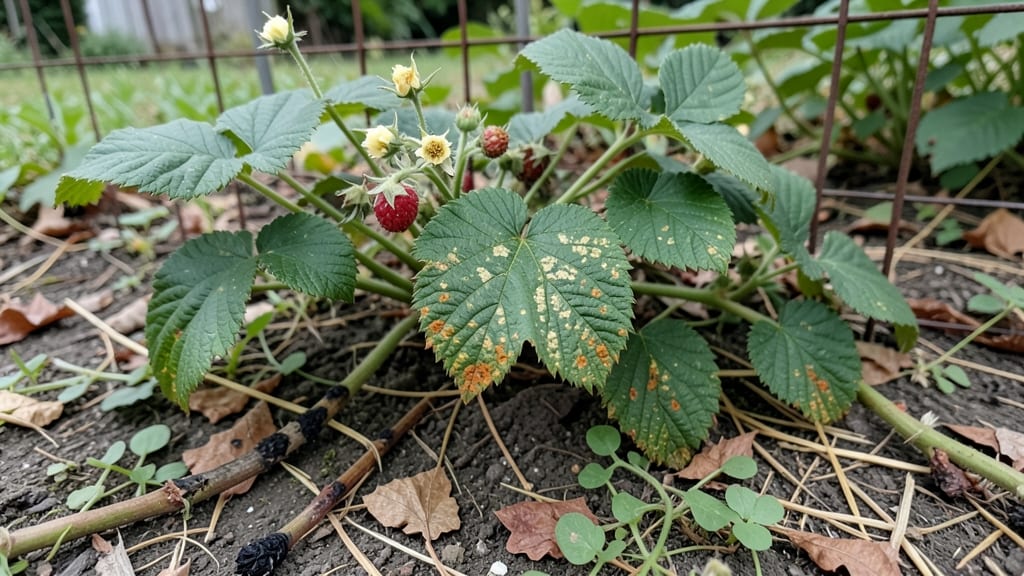
Raspberry plant diseases can turn your thriving patch into a sad, spotty mess faster than you think. 🌿 I’ve watched cane blight turn healthy canes to mushy black in just a few days, and rust make leaves look like they’ve been dusted with orange powder—both signs your plants are fighting an invisible battle.
The good news? Most of these issues have clear fixes once you know what to look for.
Fungal infections like powdery mildew and cane blight thrive in damp, crowded conditions, while bacterial spots show up as dark, greasy splotches on leaves. Viral diseases, though rarer, often arrive via aphids or contaminated tools, leaving stunted growth and deformed fruit.
The key to saving your berries? Spotting symptoms early—yellowing leaves, strange spots, or weak canes—and acting fast with the right treatments.
You’ll learn to diagnose each disease by its unique markings, then tackle it with organic sprays, pruning techniques, or even resistant varieties. Proper spacing and sanitation cut the risk dramatically, and I’ll show you exactly how.
Within weeks, your plants can bounce back stronger than before—no more mystery wilting or unexplained die-off.
Whether you’re dealing with a single affected cane or a full patch of trouble, this guide gives you the tools to turn things around. Let’s get those berries back on track—starting with the first step toward a cure.
Root Causes Behind Raspberry Ailments
Raspberry plants, like any living organism, are vulnerable to diseases—but understanding why these issues arise is the first step to prevention. Below, we break down the science behind the most common triggers, from environmental stressors to biological invaders. Knowledge is your best defense! 🌱🛡️
Fungi are the #1 culprit behind raspberry diseases like Botrytis cinerea (gray mold) and Phytophthora root rot. Here’s why they thrive:
- High Humidity + Warmth: Fungal spores love moist, stagnant air (think 70–80% humidity). Overhead watering or poor airflow creates the perfect breeding ground. 💡 Pro Tip: Water at the base early in the day to let foliage dry before nightfall.
- Poor Drainage: Waterlogged soil suffocates roots, weakening plants and inviting Phytophthora. Compacted or clay-heavy soils trap excess moisture. ✨ Fix: Amend soil with compost or perlite to improve aeration.
- Wounded Canes: Pruning cuts, hail damage, or thorn injuries create entry points for spores. Fungi like Didymella applanata (fruit rot) exploit these openings.
Bacteria such as Xanthomonas fragariae (bacterial leaf spot) and Pseudomonas syringae (canker) multiply when conditions favor their growth. Key triggers include:
- Rain or Overhead Irrigation: Splashing water carries bacteria from soil or infected debris onto leaves and canes. 🌡️ Warning: Avoid wetting foliage during rainy seasons.
- Contaminated Tools: Pruners, trellises, or even gloves can harbor bacteria between uses. A single cut with a dirty blade = instant infection risk.
- Stress from Overcrowding: Dense plantings reduce airflow, trapping moisture and bacteria. 🎯 Solution: Space raspberries 18–24 inches apart and thin canes annually.
Raspberries under duress are far more susceptible to diseases. Common stressors:
| Factor | How It Helps Diseases | Prevention |
|---|---|---|
| Nutrient Deficiencies (e.g., low nitrogen or potassium) | Weakens cell walls, making plants easier targets for pathogens. | Test soil annually; amend with balanced fertilizer (e.g., 10-10-10). |
| Extreme Temperatures (frost damage or heatwaves) | Shocked plants produce stress hormones that attract pests/diseases. | Use row covers in spring/fall; mulch to regulate soil temp. |
| Poor Air Circulation (tight trellises, thick mulch) | Traps humidity, slowing evaporation and prolonging moisture on leaves. | Prune for open canopies; elevate mulch to allow airflow. |
Insects like Japanese beetles or raspberry sawfly larvae don’t just munch—they damage plant tissue, creating gateways for diseases. For example:
- Beetle Feeding: Chewed leaves and canes expose plants to Botrytis or anthracnose.
- Sap-Sucking Bugs (e.g., aphids): Their honeydew residue fosters sooty mold, which blocks sunlight and stresses the plant.
- Borer Holes: Wood-boring insects (like raspberry crown borers) create tunnels where fungi like Fusarium can colonize.
🔥 Action Step: Monitor for pests early; use neem oil or insecticidal soap as a preventive barrier.
Quick fixes for sick raspberry plants
When your raspberry plants show signs of distress—whether it’s yellowing leaves, black spots, or mushy canes—acting fast is key to saving your harvest. Below, we break down the most effective solutions for each common raspberry disease, along with preventive steps to keep your plants thriving.
Think of this as your raspberry plant first-aid kit!
Fungal diseases like powdery mildew, botrytis fruit rot, and cane blight thrive in damp conditions. Here’s how to tackle them:
🔥 Prune and Burn Infected Parts
- Step 1: Use sterilized pruners (wipe with rubbing alcohol) to cut off all affected canes, leaves, or fruit.
- Step 2: Remove debris immediately and burn or compost it (never leave it in the garden—fungal spores can linger).
- Step 3: Thin out crowded canes to improve airflow (fungi love humidity!).
🍳 Spray Fungicides (Organic or Chemical)
- For powdery mildew: Mix 1 tsp baking soda + 1 tsp horticultural oil + 1 tsp dish soap per liter of water.
Spray under leaves every 7–10 days. - For botrytis or cane blight: Use a copper fungicide (like Bordeaux mixture) or a biological option like Serenade ASO (contains beneficial bacteria). - Pro tip: 💡 Apply fungicides in the morning so leaves dry quickly—moisture fuels fungi!
🌡️ Adjust Growing Conditions
- Water at the base (avoid overhead sprinkling).
- Mulch with straw to keep soil moist but reduce humidity near foliage.
- Space plants 2–3 feet apart for better airflow.
Bacterial diseases like crown gall or bacterial leaf spot are trickier because they can’t be cured—only managed. Here’s how:
⏰ Remove and Replace Infected Plants
- Step 1: Dig up entire infected plants (including roots) and dispose of them in the trash (not compost).
- Step 2: Solarize the soil (cover with clear plastic for 4–6 weeks in hot sun) to kill lingering bacteria.
- Step 3: Plant new raspberries in a different location—bacteria can persist in soil for years.
👨🍳 Use Copper Sprays (Preventative Only)
- Copper fungicide sprays (like Copper Soap) can reduce bacterial spread but won’t eliminate it.
- Apply every 2 weeks during wet seasons as a preventative.
🎯 Strengthen Plant Resistance
- Choose resistant varieties (e.g., ‘Heritage’ for bacterial leaf spot).
- Avoid overhead watering (bacteria spread via splashing water).
- Rotate crops—don’t plant raspberries in the same spot yearly.
Some diseases (like anthracnose) are worsened by pests. Here’s how to break the cycle:
🔪 Trap and Remove Pests
- Handpick aphids or spider mites (they spread viruses).
- Use neem oil spray (1 tsp neem oil + 1 tsp dish soap per quart of water) to deter pests.
- Install yellow sticky traps to catch flying insects.
✨ Boost Plant Health Naturally
- Fertilize with compost (healthy plants resist diseases better).
- Apply a layer of wood ash around the base (raises pH slightly, deterring fungi).
- Encourage beneficial insects (ladybugs, lacewings) by planting marigolds nearby.
| Disease Type | Preventative Action | When to Do It |
|---|---|---|
| Fungal | Prune for airflow | Early spring & fall |
| Water at soil level | Always | |
| Apply fungicide spray | Before wet seasons | |
| Bacterial | Solarize soil | Late summer |
| Choose resistant varieties | At planting time | |
| Viral | Remove infected plants | Immediately |
| Control pest vectors | Season-long |
Remember: Prevention is easier than cure! By staying vigilant with pruning, spacing, and hygiene, you’ll keep your raspberry patch healthy and productive. And if all else fails? Grow a backup row—nature’s insurance policy! 🌱
Frequently asked questions
What are the most common signs of raspberry plant diseases?
Look for yellow or brown spots on leaves, blackened or mushy canes, white powdery coatings (mildew), or greasy-looking lesions. Fruit may also show dark rot or fail to develop properly. Catching these early—before they spread—makes treatment much easier.
Can I save my raspberry plants if they already have a fungal infection?
Yes, but act fast! Prune all infected parts immediately with sterilized tools, then apply a fungicide like copper spray or a baking soda mixture. Improve airflow by thinning canes and watering at the base. Most fungal issues (like powdery mildew) respond well to these steps if caught early.
Why do my raspberry plants get diseases more often in humid weather?
Fungi and bacteria thrive in 70–80% humidity because moisture lingers on leaves and soil. Overhead watering or poor airflow creates the perfect breeding ground. To prevent this, water early in the day and space plants 2–3 feet apart for better circulation.
Are there raspberry varieties that resist diseases better?
Varieties like ‘Heritage’ (resistant to bacterial leaf spot) or ‘Boyne’ (tolerates cane blight) are great choices. Always check seed packets or nursery labels for disease-resistant tags—it’s the easiest way to reduce future problems.
How do I know if my raspberry plant has a viral disease?
Viruses often cause stunted growth, deformed leaves or fruit, and yellowing patterns (like mosaic patterns). Unlike fungi or bacteria, viruses can’t be cured—only prevented by removing infected plants immediately and controlling pests (like aphids) that spread them.