
Pests
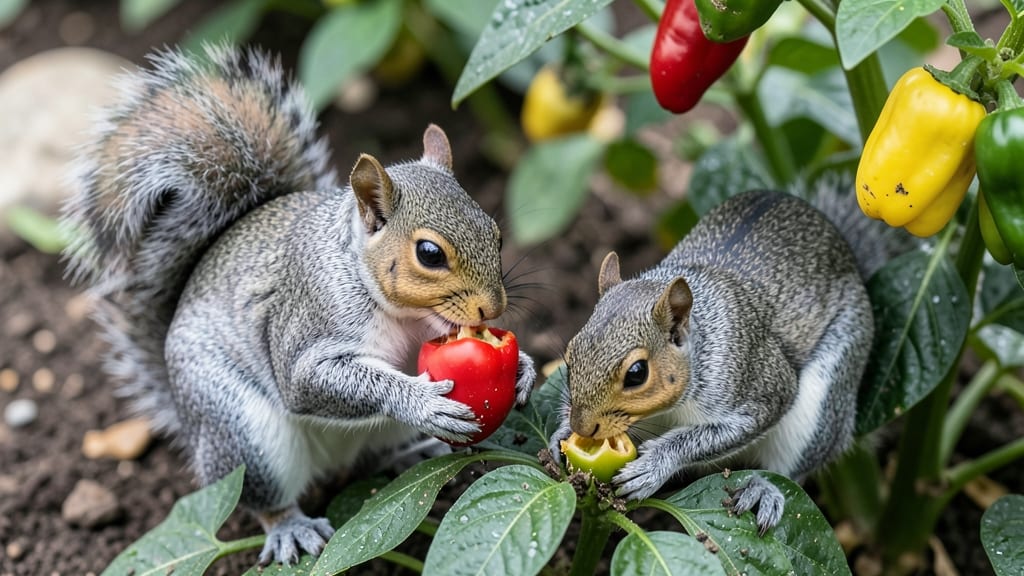
Squirrels do eat pepper plants, targeting leaves, stems, and even peppers before ripening, which can stunt growth or destroy crops entirely. Their foraging habits make them persistent garden pests, especially in fall when food is scarce.
Squirrels aren't picky eaters—they'll snack on nearly anything in your garden, and pepper plants are no exception. 🌱 Their attraction stems from the high water content and natural sugars in peppers, which provide quick energy.
What's worse is their habit of gnawing stems, which can sever water flow to your plants. I've seen entire harvests wiped out when squirrels target young seedlings, making early prevention crucial.
The damage often starts at dawn or dusk when squirrels are most active, so keeping an eye on your garden during these times can help you catch them in the act.
What sets squirrels apart from other garden pests is their intelligence and adaptability. Unlike deer or rabbits, squirrels can learn to bypass simple deterrents like scare tactics. They'll even chew through plastic netting if they're desperate enough for food.
That's why combining multiple strategies—like physical barriers, repellents, and habitat disruption—often works best. For example, I've had success with motion-activated sprinklers paired with predator urine scents, which confuse them long enough for peppers to mature.
💡 In This Article
- Why Squirrels Target Pepper Plants
- Effective Squirrel-Proofing Methods for Pepper Gardens
Why squirrels target pepper plants
Squirrels view pepper plants as a high-value food source due to their nutrient profile. Young pepper leaves contain 15-20% water content by weight, providing essential hydration during dry seasons, while the stems offer structural carbohydrates that squirrels can easily digest.
The key factor is their foraging strategy—squirrels prioritize foods that are both calorie-dense and easy to access, and peppers fit this perfectly during fall when natural acorns and nuts become scarce. 🔥 Unlike deer that browse at ground level, squirrels climb plants to reach foliage, creating distinctive jagged edge damage on leaves that's unmistakable.
The scent plays a crucial role too. Pepper plants emit volatile organic compounds (VOCs) that contain sulfur-based aromas, which act as natural attractants for many small mammals. These compounds are particularly noticeable in stressed plants, sending chemical signals that squirrels interpret as "ripe and ready."
What's fascinating is how their chewing patterns differ from rabbits: squirrels make precise, diagonal cuts through stems (about 1/8-inch thick) to sever vascular bundles, while rabbits typically pull leaves clean off. This stem damage is especially destructive because it disrupts the plant's water transport system.
Seasonal scarcity drives their behavior most dramatically. Studies show squirrel pepper plant attacks peak in September-October when natural food sources dwindle. Their metabolism requires 2,000-3,000 calories per day during this period, and a single pepper plant can provide 50-100 calories worth of nutrition.
The problem worsens in urban gardens where squirrels have lost their natural forest habitats and must rely on cultivated plants for survival. This ecological shift explains why suburban gardens often see more severe damage than rural ones.
Another critical factor is their memory and learning ability. Squirrels remember successful food sources with remarkable precision—one study found they could recall 3,000+ hiding spots for food. When they discover a pepper garden, they'll return repeatedly, often bringing their entire family group.
This collective foraging makes individual deterrents far less effective, as the colony will quickly adapt to single solutions like motion-activated sprinklers. The intelligence gap between squirrels and other pests like deer becomes obvious here—they can even learn to remove physical barriers over time.
What most gardeners don't realize is how the plant's growth stage affects squirrel interest. Seedlings are particularly vulnerable because their tender leaves offer easier access to nutrients with minimal chewing effort. Mature plants with thick stems become less appealing, but the damage done in early stages can be irreversible.
The plant's natural defense compounds (like capsaicin in hot peppers) actually make them more attractive to squirrels, as these chemicals break down during digestion, providing additional metabolic benefits. 💫
Comparing their behavior to other pests reveals important distinctions. Deer typically avoid pepper plants due to their spicy compounds, while rabbits prefer to graze on softer plants like lettuce. Squirrels, however, have developed a tolerance for capsaicin through evolutionary adaptation in regions where chili peppers are native.
This biological advantage means traditional pepper-based repellents often fail against them, requiring more sophisticated deterrent strategies.