
Watering
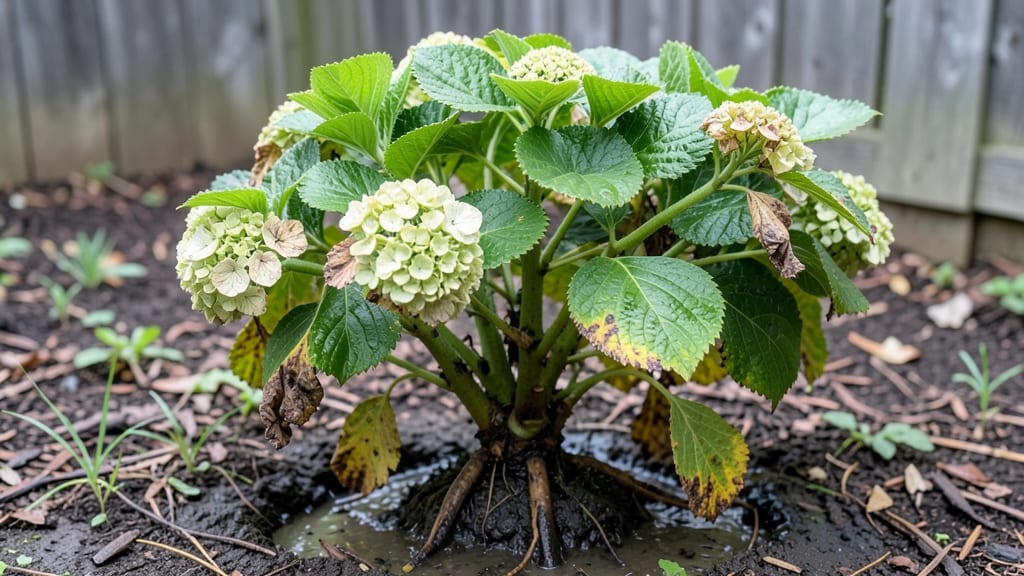
That droopy, sad-looking overwatered hydrangea plant—with its yellowing leaves, limp stems, and that unmistakable soggy soil stench—is a scene I’ve seen too often after rain or overzealous watering, and the good news is... that these plants can bounce back faster than you think.
The key isn’t just cutting back on water but fixing the root of the problem (literally).
Here’s the hard truth: hydrangeas hate soggy feet, and once roots start rotting, they can’t recover on their own.
You’ll need to adjust your watering routine, improve drainage, and maybe even trim back the damage—though don’t panic, because even severely stressed plants can rebound in just a few days with the right care. The first step is always checking the soil.
Within 72 hours, you’ll see new signs of life—firm stems, perky leaves, and that familiar hydrangea resilience. The blooms might not be showstopping at first, but the plant will start redirecting energy to recovery.
Think of this as a reset button for your hydrangea’s health, and soon you’ll have a bush that’s thriving again, not just surviving.
This works for both in-ground plants and container-grown hydrangeas—just scale the adjustments to your setup. Whether you’re dealing with a backyard bush or a patio pot, the principles stay the same. Let’s turn that wilting mess into a comeback story.
Root Causes Behind Soggy Hydrangeas
If your hydrangea plant looks more like a sad, drooping puddle than a vibrant bush, overwatering is likely the culprit. But why does this happen so often? Let’s dig into the science—and the mistakes—behind soggy soil and wilting blooms.
Hydrangeas thrive in moist but well-drained soil, but when drainage fails, water pools around roots instead of flowing away. This creates a waterlogged environment, cutting off oxygen and suffocating roots.
- Clay-heavy soil: Compact clay holds water like a sponge, preventing it from draining. Test your soil by squeezing a handful—if it forms a tight ball, drainage is poor.
- Lack of organic matter: Soil rich in compost or peat improves aeration, but dense, nutrient-poor soil repels water, leading to surface runoff and saturated roots.
- Improper planting depth: If the root crown sits below the soil line, water pools around it, encouraging rot. Always plant so the crown is level with or slightly above the soil.
Fix it: Amend clay soil with sand, perlite, or compost to improve drainage. For containers, use a mix of 50% potting soil + 50% perlite/pine bark.
Hydrangeas don’t need daily drinks—they prefer deep, infrequent watering. When you water too often or too lightly, you:
- Encourage shallow roots: Frequent surface watering keeps roots near the top, where they’re more prone to drying out and drowning when overwatered.
- Disrupt natural moisture cycles: Plants rely on dry periods to signal roots to seek deeper water. Constant moisture tricks them into staying shallow.
- Create fungal havens: Wet foliage and soggy soil breed Phytophthora and Pythium, fungal pathogens that attack roots.
Fix it: Water only when the top 1–2 inches of soil are dry. Use the finger test: Stick your finger in the soil—if it’s damp below 1 inch, wait.
Potted hydrangeas are especially vulnerable because containers dry out faster but also drain slower than garden beds. Common container pitfalls:
| Problem | Why It Happens |
|---|---|
| No drainage holes | Water sits at the bottom, creating a root rot zone. |
| Overpotting | Too much soil retains moisture longer than roots can absorb it. |
| Terracotta pots in shade | Porous terracotta dries quickly in sun but stays damp in shade. |
Fix it: Always use pots with drainage holes and elevate them on saucers. For terracotta, move pots to bright, indirect light to balance moisture.
Even with perfect watering habits, weather can sabotage your hydrangea:
- Heavy rainfall + no runoff: If your garden has poor slope or compacted soil, rainwater pools around roots.
- High humidity: Slow evaporation means soil stays wet longer, delaying recovery after watering.
- Cold, wet springs: Hydrangeas planted in fall may struggle if winter soil stays soggy.
Fix it: After heavy rain, check if soil is muddy or standing water exists. If so, let it dry out 2–3 days before watering again.
Don’t wait for wilting—watch for these early warnings:
- 🍂 Yellowing leaves (especially lower ones): A classic sign of root suffocation.
- 🌱 Mushy, black stems: Fungal rot spreads fast in wet conditions.
- 🕳️ Soil smells sour or like rot: A sure sign of anaerobic (oxygen-free) soil.
- 🌡️ Slow growth despite frequent watering: Roots can’t absorb nutrients in waterlogged soil.
Pro tip: If you’re unsure, lift the pot—a soggy, heavy plant needs drying out. For garden hydrangeas, dig down 2 inches; if it’s damp, hold off on watering.
Revive Your Hydrangeas Fast
Overwatered hydrangeas can feel like a lost cause, but with the right steps, you can nurse them back to health—sometimes in just 3 days. The key is acting quickly, diagnosing the root cause, and applying targeted fixes.
Below, we’ll break down the most common signs of overwatering and the easy, actionable solutions to save your plant.
Signs: Yellowing leaves, mushy stems, soil that smells sour or rotten, or water pooling at the base.
How to Fix It:
- Stop Watering Immediately 🚰
- Let the soil dry out completely before watering again. Hydrangeas prefer moist (not soggy) soil.
- Repot If Needed 🏺
- If roots are black/mushy or the soil is compacted, remove the plant and trim away damaged roots with sterilized scissors.
- Repot in fresh, well-draining soil (a mix of peat, perlite, and pine bark works well).
- Improve Drainage 🪴
- Add a layer of gravel or sand at the bottom of the pot to prevent future waterlogging.
- Ensure pots have drainage holes—if not, drill them!
- Water Only When Necessary 💧
- Stick your finger 1-2 inches into the soil. Water only when it feels dry.
- Morning watering is best—it gives excess moisture time to evaporate.
💡 Pro Tip: If your hydrangea is in the ground, create a small trench around the base to redirect excess water away from the roots.
Signs: Wilting despite wet soil, black/brown stems, or leaves falling off easily.
How to Fix It:
- Prune Damaged Foliage ✂️
- Snip off yellow, brown, or mushy leaves to redirect energy to healthy growth.
- Apply Fungicide (If Needed) 🍄
- If root rot is severe, use a copper-based fungicide to prevent fungal spread.
- Boost Airflow 🌬️
- Move the plant to a sunnier spot (but avoid scorching afternoon sun).
- Space plants 6-12 inches apart to improve circulation.
- Adjust Watering Schedule ⏰
- Water deeply but infrequently—once every 5-7 days (adjust based on climate).
🔥 Quick Fix: Mix 1 part hydrogen peroxide (3%) with 4 parts water and water the plant to oxygenate the roots and kill fungus.
Signs: None yet—but if you’ve had issues before, take these steps now!
How to Avoid It: ✅ Use the Right Pot – Terracotta pots dry out faster than plastic. ✅ Mulch Properly – Add 2-3 inches of mulch (like bark or straw) to retain moisture without suffocating roots. ✅ Check Soil Type – Hydrangeas love acidic, well-draining soil. Amend clay soil with compost. ✅ Monitor Weather – Adjust watering during rainy seasons or high humidity.
🎯 Golden Rule: "When in doubt, wait." Most hydrangeas recover faster from underwatering than overwatering—so err on the dry side!
🌟 Bonus: If your hydrangea is still struggling after a week, it may need foliar feeding with a balanced fertilizer (like 10-10-10) to rebuild strength.
Now, grab your gloves and get to work—your hydrangea’s comeback starts today! 🌿✨
Frequently asked questions
How do I know if my hydrangea is overwatered vs. underwatered?
Check the soil first: if it's soggy or smells rotten, you're overwatering. Yellowing leaves (especially at the bottom) and mushy stems are classic overwatering signs. For underwatering, leaves will be crispy or brown at the edges, and the soil will pull away from the pot. Always stick your finger 1-2 inches deep—if it's bone dry, it needs water.
Can I save a hydrangea with black, mushy stems?
You can try! First, prune away all blackened stems down to healthy green tissue. Then repot in fresh, well-draining soil and stop watering for 3-5 days to let roots recover. If the rot is severe, treat with a copper fungicide to prevent spread. Move to a sunnier spot to help dry out excess moisture.
Why does my potted hydrangea stay soggy even after I water?
Most likely, your pot lacks drainage holes or uses heavy soil that doesn't dry properly. Terracotta pots help, but they need to be in bright light to evaporate moisture. For containers, use a mix of 50% potting soil + 50% perlite and always place pots on saucers. If the soil stays damp for more than 24 hours, it's holding too much water.
How long does it take for an overwatered hydrangea to recover?
With proper care, you'll often see improvement in 3-7 days. New growth may appear within a week if you've stopped watering and improved drainage. Severe cases (like root rot) can take 2-4 weeks to fully recover. The key is patience—don't water again until the top 2 inches of soil are completely dry.
Can I use coffee grounds to fix overwatered hydrangeas?
Coffee grounds can actually make things worse for overwatered plants—they break down quickly, creating a soggy, acidic environment that suffocates roots. Instead, focus on improving drainage and using compost or perlite to aerate the soil. If you want acidity, use pine needles or sulfur instead. The priority is fixing drainage first!