
Watering
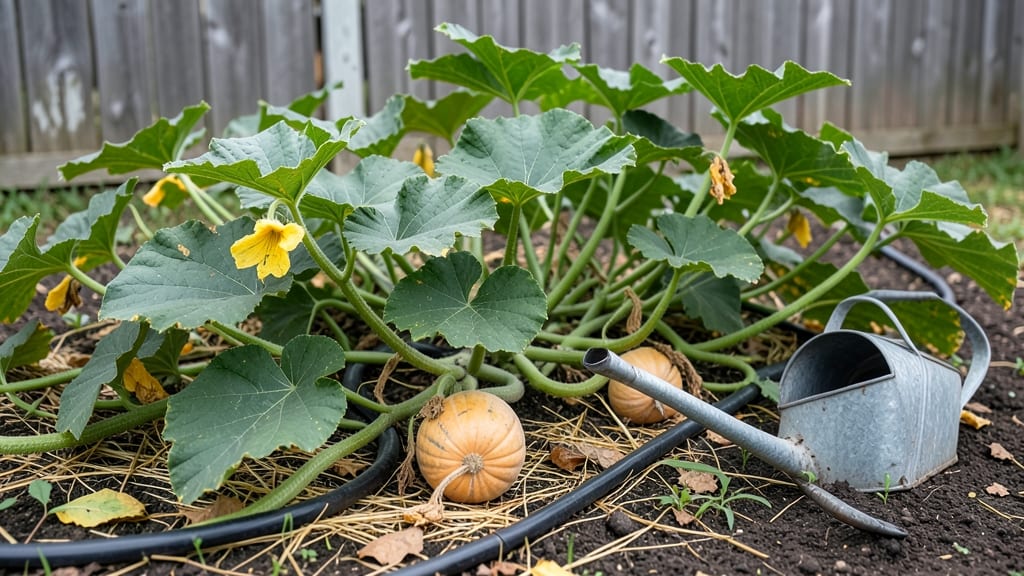
Watering pumpkin plants correctly keeps those sprawling 🎃 vines lush and your harvest heavy with fruit.
Pumpkin plants demand consistent moisture to thrive—but overwatering can drown their sprawling vines and rot their fruit. Mastering the right watering technique is the difference between a bountiful harvest and wasted effort.
Too little water and your plants wilt; too much, and you risk root rot or powdery mildew. The key lies in deep, infrequent watering that keeps the soil evenly moist without turning it into a swamp.
In this guide, I’ll walk you through the exact watering schedule by growth stage, how to spot signs of trouble, and the best tools to keep your pumpkins thriving from seedling to harvest.
How often to water pumpkin plants for maximum growth and fruit production
Pumpkins are thirsty plants, but their sprawling vines and heavy fruit demand a precise watering strategy. Too little water stunts growth, while too much causes root rot and blossom-end rot in fruit.
The key lies in maintaining consistent soil moisture—never letting the top 1-2 inches dry out—while adjusting for your climate and growth stage.
Think of pumpkins like a desert oasis: they need deep, infrequent drinks rather than shallow sips. When I first planted my Jack Be Little pumpkins, I learned the hard way that morning watering (before 10 AM) prevents fungal diseases like powdery mildew, which thrives in damp leaves.
Let’s break down the science-backed schedule by each growth phase to ensure your vines flourish and your fruit swells.
During the seedling stage, your pumpkin plants are delicate and need gentle care. Water lightly every 2-3 days, ensuring the soil stays moist but not soggy. Overwatering here can cause damping-off, a fungal disease that kills young sprouts.
I once lost half my seedlings because I used a sprinkler—never do that. Instead, use a watering can with a fine rose attachment to deliver precise moisture.
As vines begin to sprawl aggressively (typically 3-6 weeks after planting), increase watering to every 3-5 days. This is when roots deepen, and they’ll need 1-2 inches of moisture at all times.
A simple trick I use is the finger test: stick your index finger 1-2 inches deep into the soil. If it feels dry, it’s time to water. If it’s damp, wait another day.
The flowering stage is critical—this is when pumpkins set fruit, and stress (even from inconsistent water) can cause blossoms to drop. Now, water every 2-3 days, aiming for 2 inches of soil moisture.
I’ve found that drip irrigation works best here because it delivers water directly to the roots without wetting the leaves, reducing disease risk. If you’re hand-watering, focus on the base of the plant, not the foliage.
When fruit begins to swell and mature (typically 8-12 weeks in), your pumpkins are water hogs. They need daily or every-other-day watering, with 2-3 inches of moisture at all times.
This is when I switch to a soaker hose buried in the soil—it keeps the roots hydrated without overwatering. Skimping now leads to small, deformed fruit, while overdoing it can cause blossom-end rot, a common issue in pumpkins.
Extreme weather throws a wrench into even the best-laid plans. During heatwaves (>90°F), water daily in the early morning to combat evaporation. Check soil moisture twice daily and aim for 3 inches of depth.
A 50% shade cloth can also help prevent leaf scorch. Conversely, during droughts, deep-soak the soil 3-4 inches down every 1-2 days and use black plastic mulch to lock in moisture.
Rainfall complicates things, too. After a heavy downpour, let the soil dry slightly before watering again. I measure rainfall with a tipping bucket rain gauge—if it’s over 1 inch, I hold off on supplemental watering for 24 hours.
Overwatering in rainy seasons leads to root rot, which can kill your plants quickly. Always prioritize soil moisture over schedule—adjust based on what the earth tells you, not a calendar.
Finally, don’t forget that container-grown pumpkins dry out faster than in-ground plants. If you’re growing
Signs your pumpkin plants are overwatered or underwatered (and how to fix it)
Pumpkin plants wilt dramatically when their water needs aren't met—but the signs of overwatering and underwatering look nearly identical at first glance. Both conditions stress your vines and fruit, but the fixes couldn't be more different. Let's decode the subtle clues your plants are screaming for help.
First, check the soil moisture by sticking your finger 1-2 inches deep. If it feels soggy and clumps together, you're likely overwatering. If it's bone-dry and crumbly, your pumpkins are thirsty. The key is maintaining consistent moisture without waterlogging the roots—especially during flowering and fruiting stages.
Overwatered pumpkin plants show yellowing leaves starting from the bottom, mushy stems, and a foul odor around the base. Underwatered plants, meanwhile, develop crispy leaf edges, drooping vines, and fruit that feels lightweight. Both scenarios can lead to powdery mildew or root rot, but the solutions are polar opposites.
Overwatering vs. Underwatering: Quick Fixes
| Issue | Signs | Fix |
|---|---|---|
| Overwatering |
|
|
| Underwatering |
|
|
Pro Tip: Always water in the morning to prevent fungal diseases.
For overwatered plants, focus on drainage improvements. Amend the soil with compost or sand to loosen it, and consider raising beds if your garden soil is naturally dense.
If you notice root rot, trim away any black, mushy roots and replant in fresh, well-draining soil. Drip irrigation is your best friend here—it delivers water directly to the roots without oversaturating the soil.
When your pumpkins are underwatered, prioritize deep watering sessions. Aim for 1-2 inches of water per week, delivered slowly to encourage root growth. Spread straw or wood chips around the base to retain moisture and suppress weeds.
If your vines are wilting by midday, it’s a clear sign they need more frequent watering—especially during summer heat when evaporation speeds up.
Remember, powdery mildew thrives in both overwatered and underwatered conditions, so keep an eye out for white, powdery spots on leaves. If you spot it, prune affected foliage and apply a neem oil spray for prevention. The goal is balanced moisture—not soggy soil or drought-stressed vines.