
Diseases
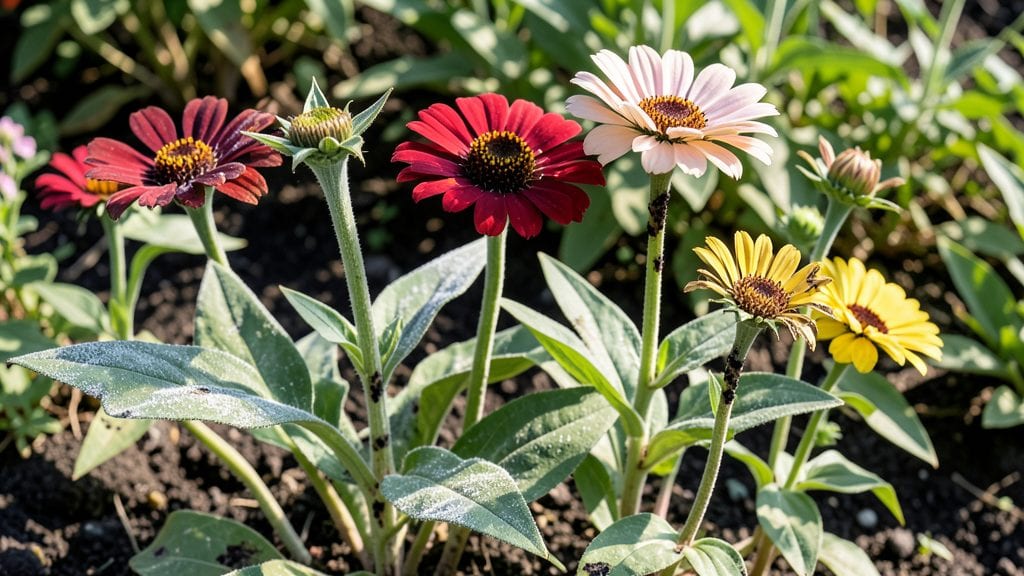
Zinnia plant diseases can turn vibrant blooms into sad, spotted messes faster than you'd think. I've lost entire beds to powdery mildew and rust over the years, but I've also learned how to spot these issues early and stop them before they spread.
The key is knowing what to look for—those white dusty patches or rust-colored spots aren't just cosmetic problems.
Most fungal issues start with too much moisture on the leaves, whether from overhead watering or humid afternoons. Zinnias love sun, but they hate soggy feet and damp foliage. I now water at the base in the morning and avoid planting them where they'll get afternoon shade.
A little prevention goes a long way—especially when you're growing zinnias for their bold, cheerful blooms.
Once you spot trouble, act fast with neem oil or a baking soda spray (1 teaspoon per quart of water with a drop of dish soap). For stubborn cases, fungicides like copper-based sprays work, but I've found that improving airflow and spacing plants reduces recurrence.
Your goal is to keep those zinnias thriving through summer heat without sacrificing their stunning colors.
This works for both garden beds and containers, and the same principles apply whether you're growing dwarf zinnias or towering Benary's Giants. Early detection saves your season—let's get those plants back to their best before the next heatwave hits.
Root Causes of Zinnia Struggles
Zinnia plants may seem resilient, but they’re not immune to disease—especially when environmental or cultural factors create the perfect storm for pathogens. Understanding why these issues arise is the first step to stopping them before they take hold.
Below, we break down the key triggers behind common zinnia diseases, from fungal invaders to environmental stress.
Zinnias thrive in well-drained soil, but excess moisture—whether from overwatering, poor drainage, or prolonged humidity—turns their leaves into a buffet for fungal pathogens like Alternaria and powdery mildew. Here’s why it happens:
- Fungal Favorites: Fungi like Alternaria and Botrytis (gray mold) spore and spread aggressively in wet foliage (think dew-soaked leaves at dawn or evening).
High humidity (above 70%) creates a greenhouse effect, trapping moisture against leaves. - Root Rot Risks: If soil stays soggy for days, Phytophthora or Pythium fungi attack roots, cutting off water and nutrient uptake. Symptoms? Wilting, yellowing, and a foul smell at the base. - Poor Airflow: Crowded plants or dense foliage trap humidity, while plastic mulch (without ventilation) can bake the soil by day and drown roots by night.
💡 Pro Tip: Space zinnias 12–18 inches apart for airflow, and water at the base (not overhead) in the early morning so leaves dry by sunset.
Zinnias don’t attract diseases—they’re opportunists waiting for the right moment. Fungal spores are everywhere (soil, wind, tools, even compost), but they only cause trouble when:
- Weakened Plants: Stress from nutrient deficiencies (especially nitrogen or magnesium), transplant shock, or herbicide drift makes zinnias vulnerable.
A plant low on iron (chlorosis) or struggling with aphid infestations (which excrete honeydew, a fungal magnet) becomes an easy target. - Old or Damaged Leaves: Yellowing, torn, or senescing leaves provide entry points for pathogens. Prune regularly to remove debris—it’s a fungal breeding ground! - Contaminated Tools/Soil: Reusing pruners, gloves, or pots without sterilizing them can spread spores from one plant to the next.
Even compost tea made from diseased plant material can harbor Fusarium or Verticillium.
✨ Prevention Hack: Drench soil with a 1:10 hydrogen peroxide solution (3% food-grade) before planting to kill dormant spores. Repeat every 4–6 weeks.
Zinnias are heat-lovers, but extreme or erratic temperatures throw them off balance, making them susceptible to disease:
- Cool Nights + Warm Days: Nighttime temps below 50°F (10°C) slow plant metabolism, while daytime heat stresses them.
This osmotic imbalance weakens cell walls, letting powdery mildew latch on. - Frost or Heat Shock: A sudden freeze or heatwave above 95°F (35°C) can cause sunscald (white/brown patches) or blossom drop, both of which create wounds for Botrytis to exploit. - Poor Hardiness: Young zinnias or tender varieties (like ‘Benary’s Giant’) are more prone to damping-off (a soil-borne Pythium infection) when soil temps hover around 60–68°F (15–20°C).
🎯 Action Step: Use row covers for early spring/fall plantings and mulch with straw to moderate soil temps. Avoid planting zinnias in low-lying areas where cold air pools.
Healthy soil = healthy zinnias. When soil is depleted, compacted, or imbalanced, diseases thrive. Here’s how:
- Compacted or Clay Soil: Poor drainage leads to root asphyxiation, making plants prone to Phytophthora (a water mold).
Test your soil—ideal pH for zinnias is 6.0–7.0. - Excess Nitrogen: Too much nitrogen (from over-fertilizing) produces soft, lush growth—a fungal snack. Symptom? Stems collapse under stem rot or Alternaria leaf spot. - Lack of Potassium/Magnesium: Deficiencies weaken cell walls, making zinnias more susceptible to bacterial or viral hitchhikers (like Tomato Spotted Wilt Virus, spread by thrips).
🔥 Fix It: Amend soil with compost + perlite for drainage, and use a balanced fertilizer (10-10-10) at planting, then switch to low-nitrogen (5-10-10) when buds form.
Some zinnias don’t die from disease directly—they’re sabotaged by pests that pave the way for pathogens:
- Aphids & Whiteflies: Their sticky honeydew feeds fungal growth (like sooty mold), clogging stomata and suffocating leaves.
- Thrips: These tiny bugs scratch plant surfaces, creating wounds for Tomato Spotted Wilt Virus (TSWV) to enter.
- Slugs & Snails: They chew holes in leaves, leaving entry points for Botrytis or Alternaria.
👨🍳 Quick Fix: Spray with neem oil (fungicidal + pest-repellent) or introduce beneficial nematodes to control soil-dwelling pests.
Not all zinnia diseases start in the garden—some hitch a ride from the nursery or seed packet:
- Seed-Borne Fungi: Some Alternaria or Fusarium strains live dormant on seeds until germination. Symptom? Seedlings collapse (damping-off) or develop dark lesions.
- Infected Transplants: Buying zinnias from a crowded, poorly ventilated nursery can mean they’re already carrying powdery mildew or gray mold.
💡 Smart Shopper Tip: Buy from reputable growers and soak seeds in 1% hydrogen peroxide for 10 minutes before planting to kill surface spores.
How to Treat and Prevent Zinnia Troubles
Zinnia diseases can be frustrating, but with the right approach, you can nurse your plants back to health—or better yet, prevent issues before they start! Below are practical, step-by-step solutions tailored to the most common zinnia ailments, plus pro tips to keep your blooms thriving.
Problem: Yellowing leaves, powdery white patches, or soft, mushy stems mean fungi are at work.
🔥 Fix Powdery Mildew
Powdery mildew coats leaves in a chalky film, weakening your zinnias. Here’s how to banish it fast: - 🍳 Spray with a Fungicide Mix Mix 1 tsp baking soda + 1 tsp dish soap + 1 quart water in a spray bottle.
Apply early in the morning (avoid direct sunlight—it can burn leaves). Repeat every 5–7 days until symptoms fade. - Pro Tip: 💡 Add 1 tbsp horticultural oil for extra fungal-fighting power.
- 🌡️ Boost Airflow & Light Fungi thrive in damp, shady spots. Space plants 12–18 inches apart and prune crowded foliage. If growing in containers, move pots to a sunnier spot (zinnias need 6+ hours of sunlight daily).
- 🔪 Remove & Dispose of Infected Parts Snip off heavily mildewed leaves with clean pruners. Do not compost—bag and trash them to stop spores from spreading.
🍄 Treat Leaf Spot & Rust
These diseases cause brown spots, yellowing, or orange pustules on leaves. - ⏰ Early Intervention is Key At the first sign of spots, spray leaves with a copper fungicide (like Copper Soap) or a neem oil solution (1 tsp neem oil + 1 quart water + a drop of soap).
Reapply every 7–10 days.
- 🌧️ Water at the Base, Not the Leaves Fungal spores latch onto wet foliage. Water zinnias at soil level in the early morning so leaves dry by evening.
- 🌿 Strengthen Plant Immunity Feed zinnias with a balanced fertilizer (10-10-10) every 4–6 weeks to encourage robust growth. Healthy plants resist diseases better!
Problem: Sticky leaves, chewed edges, or tiny webs mean pests are feasting on your zinnias.
🕷️ Banish Spider Mites
These tiny pests cause yellow stippling and fine webbing. - 👨🍳 Blast Them Off Spray plants with a strong stream of water to knock mites off.
Repeat 2–3 times over a week. - 🌿 Introduce Beneficial Bugs Release lacewings or ladybugs (available at garden centers)—they devour mites naturally. - 🌡️ Keep Them Dry Spider mites love low humidity. Use a hygrometer to keep humidity below 60% and avoid overhead watering.
🐜 Get Rid of Aphids
Aphids cluster on new growth, causing stunted buds and sticky honeydew. - 🔪 Squish or Spray For small infestations, crush aphids with your fingers (gross but effective!).
For larger groups, spray with soapy water (1 tsp mild soap per quart of water). - 🌿 Attract Predators Plant marigolds or dill nearby—they attract aphid-eating hoverflies and parasitic wasps.
The best cure? Stop diseases before they start! - ✨ Choose Disease-Resistant Varieties Opt for ‘Benary’s Giant’ or ‘Profusion’ zinnias—they’re bred to resist common fungal issues. - 🌡️ Rotate Plant Locations Avoid planting zinnias in the same spot year after year.
Fungal spores build up in soil—move them every 2–3 years. - 🌱 Practice Crop Rotation If zinnias follow tomatoes, peppers, or other nightshades (which share fungal risks), rotate them with marigolds or basil to break disease cycles. - 🧼 Sterilize Tools & Pots Clean pruners with rubbing alcohol between uses, and disinfect containers with a 10% bleach solution before replanting.
Final Thought: 🎯 With quick action, proper care, and a little prevention, your zinnias can bounce back stronger than ever. Keep an eye out for early warning signs, and don’t hesitate to prune, spray, or relocate when needed. Happy gardening! 🌼
Frequently asked questions
What are the most common signs of zinnia fungal infections?
Look for powdery white patches on leaves (powdery mildew), dark brown spots with yellow halos (leaf spot), or orange rust-colored pustules (rust fungus). These appear most often on older leaves when humidity is high. Check the undersides of leaves first—they’re where spores often settle.
Can I still save zinnias with severe disease symptoms?
Early intervention is key! For mild cases, prune infected leaves immediately and treat with neem oil or copper fungicide. Severe infections may require removing the entire plant to prevent spread. Always sterilize tools between cuts to avoid cross-contamination. Healthy zinnias often recover with proper care and airflow.
Why do my zinnias get diseases even when I water them properly?
Diseases often strike when other factors are present: poor airflow (crowded plants), contaminated soil, or stress from temperature swings. Even proper watering can’t prevent fungal growth if leaves stay wet overnight. Use drip irrigation at soil level and space plants 12-18 inches apart for better airflow.
Are there zinnia varieties that resist diseases better?
Yes! Disease-resistant varieties like 'Profusion' or 'Benary's Giant' handle fungal pressure better. They’re bred to tolerate common issues like powdery mildew and leaf spot. For extra protection, choose compact varieties that allow better airflow between plants.
How often should I check my zinnias for early disease signs?
Inspect your zinnias every 3-4 days during warm, humid weather. Focus on new growth and leaf undersides—these are prime spots for fungal spores. Morning checks work best when dew is still present. Early detection gives you the best chance to stop outbreaks before they spread.